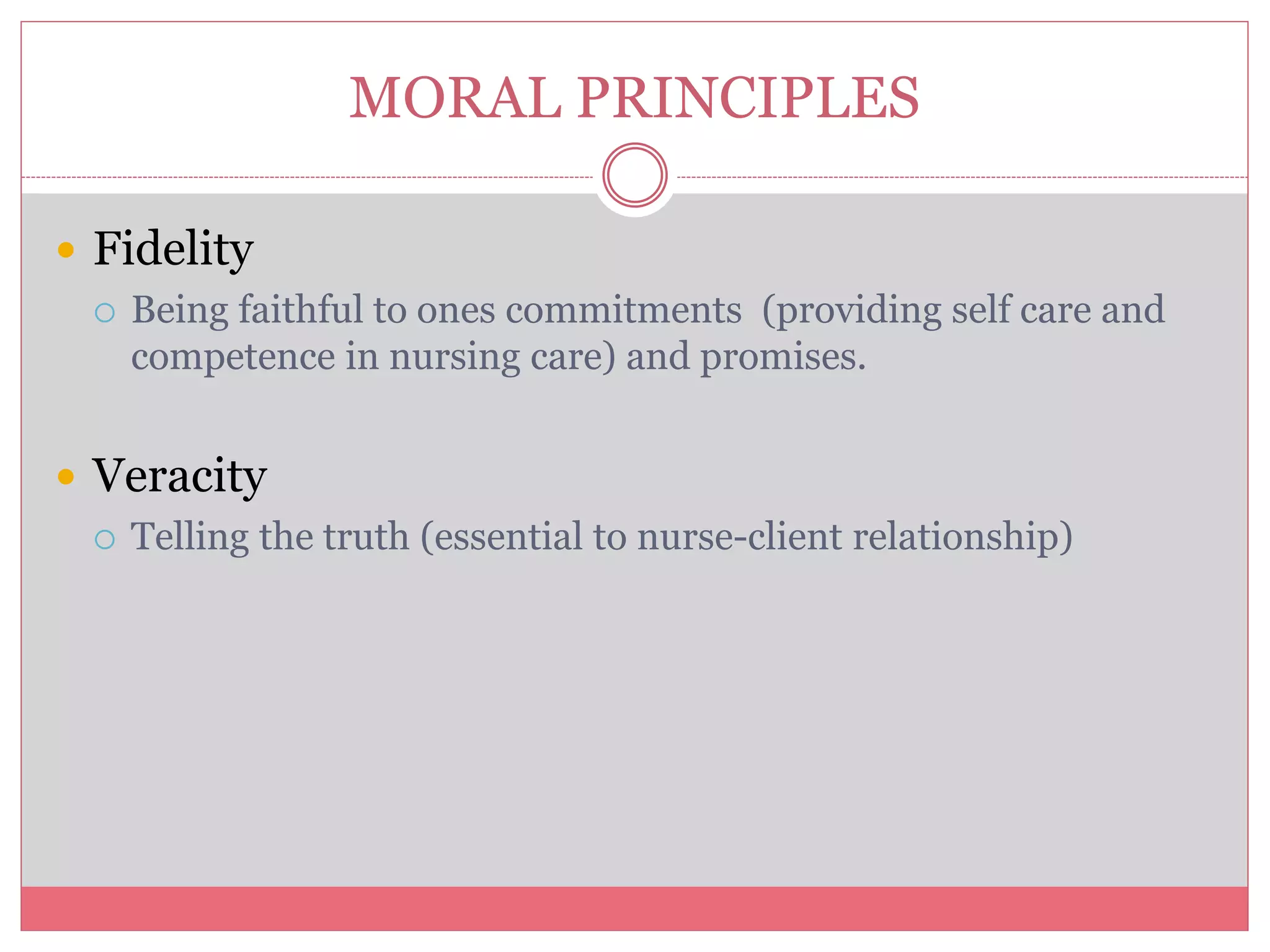
When a nurse is telling the truth, keeping promises, and building trust, they are actively applying the fundamental ethical principles of veracity and fidelity to establish a therapeutic relationship. Truth-telling ensures patients have accurate information to exercise autonomy, while keeping promises demonstrates accountability and reliability. Together, these practices form the cornerstone of safe, patient-centered care and clinical integrity.
Core Ethical Principles: Veracity and Fidelity Defined
In professional healthcare, ethical practice relies on established moral frameworks that guide clinical decision-making. Among these frameworks, veracity and fidelity directly govern how nurses communicate with patients, collaborate with interprofessional teams, and carry out clinical obligations.
- Ethical Foundations
- Veracity & Fidelity
- Professional Practice Actions
- Transparent Communication
- Honor Commitments
- Respect Patient Autonomy
- Therapeutic Nurse-Patient Relationship & Patient Trust
Understanding Veracity in Clinical Practice
Veracity is the ethical obligation to tell the truth and avoid deliberate deception or omission of vital medical facts. In nursing, veracity extends beyond avoiding blatant falsehoods; it requires transparent, timely, and age-appropriate communication regarding diagnoses, treatment plans, procedural risks, and clinical errors.
When nurses uphold veracity, they acknowledge that patients possess the ethical and legal right to accurate knowledge about their own health status. Withholding information—even out of a desire to protect a patient from emotional distress—can undermine patient autonomy and damage the therapeutic bond.
Understanding Fidelity in Healthcare Delivery
Fidelity refers to the duty of loyalty, fairness, advocacy, and keeping promises made to patients, families, and professional colleagues. When a nurse tells a patient, "I will return in fifteen minutes with your pain medication," maintaining fidelity means fulfilling that commitment or promptly informing the patient if an emergency causes an unavoidable delay.
Fidelity encompasses broader professional commitments, including:
- Adhering to professional codes of ethics, such as the American Nurses Association (ANA) Code of Ethics for Nurses.
- Preserving patient confidentiality under HIPAA and institutional policies.
- Maintaining clinical competence through continuous education.
- Advocating for patient safety and preferences against systemic barriers.
The Role of Truth-Telling (Veracity) in Patient Autonomy and Consent
Truth-telling is not merely a moral virtue; it is a clinical prerequisite for informed consent and self-determination. A patient cannot make meaningful choices about their body or care plan if the information provided to them is incomplete, inaccurate, or sugarcoated.
Facilitating Informed Consent
Informed consent relies on full disclosure. While physicians typically bear the primary responsibility for explaining surgical or invasive procedures, nurses consistently reinforce this information, answer patient questions, and assess patient comprehension.
If a nurse observes that a patient does not fully understand the risks of an upcoming procedure, veracity requires the nurse to advocate for the patient by contacting the provider to clarify details before the consent form is signed.
Managing Medical Errors with Transparency
Errors occur even in highly optimized clinical environments. When a medication administration error or clinical lapse takes place, ethical nursing standards demand honest disclosure.
Nurses must follow institutional policies for error reporting and patient notification. Truthful disclosure after an incident reassures patients that the care team prioritizes integrity over self-protection, which reduces litigation risk and preserves trust.
The Impact of Keeping Promises (Fidelity) on Clinical Outcomes
In stressful healthcare environments, patients often experience heightened vulnerability, anxiety, and loss of control. Small commitments made by nursing staff carry significant psychological weight.
Psychological Safety and Anxiety Reduction
When nurses consistently follow through on verbal commitments, patients feel secure and valued. For example, addressing a call light promptly, delivering warm blankets when requested, or updating a family member at an agreed-upon time signals reliability.
Conversely, repeated unfulfilled promises—even minor ones—lead to patient frustration, increased physiological stress, and a reluctance to communicate critical symptoms to the care team.
Enhancing Treatment Adherence
Patients are significantly more likely to adhere to complex treatment regimens, dietary modifications, and rehabilitation exercises when they trust their healthcare providers. Fidelity builds this trust over time. When patients recognize that their nurses consistently keep promises and advocate for their well-being, they demonstrate higher compliance with post-discharge instructions and clinical recommendations.
Practical Framework for Building and Maintaining Patient Trust
Building trust is a systematic clinical skill that combines active listening, ethical adherence, and intentional communication techniques. Nurses can apply the following framework to foster robust therapeutic relationships in any care setting.
| Dimension | Actionable Nursing Strategy |
|---|---|
| Active Engagement | Sit at eye level, maintain open posture, practice silence. |
| Clear Expectations | Explain the 'why' behind clinical interventions clearly. |
| Realistic Commitments | Set achievable timeframes; communicate delays proactively. |
| Respect Boundaries | Honor personal preferences, modesty, and privacy needs. |
1. Establish Clear Expectations Early
During initial assessments, clearly explain planned care interventions, medication schedules, and physician rounding times. Setting realistic expectations prevents misunderstandings and allows patients to anticipate daily routines.
2. Make Realistic Commitments
Avoid making grand promises that fall outside direct nursing control, such as promising specific physician arrival times or immediate test results. Instead, commit to controllable actions: "I will check with the laboratory for your blood test results and update you within the hour."
3. Practice Transparent Delays Management
When clinical emergencies disrupt scheduled tasks, proactively inform waiting patients as soon as safely possible. A brief explanation—such as, "I apologize for the delay; I was called to assist with an urgent situation on the unit, but I am here now to give you your medication"—preserves fidelity and demonstrates respect for the patient's time.
4. Protect Confidentiality and Privacy
Treat patient information with strict confidentiality. Discussions regarding clinical cases must occur in private spaces, away from public corridors, nurses' stations, or visitors. Preserving privacy reinforces the patient's trust in the nurse's professional integrity.
Comparative Analysis of Core Nursing Ethical Principles
To understand how truth-telling and promise-keeping relate to the broader scope of nursing ethics, consider the core bioethical principles defined below:
| Ethical Principle | Core Definition | Primary Clinical Focus | Practical Example in Nursing |
|---|---|---|---|
| Veracity | The duty to tell the truth completely and accurately. | Communication, transparency, informed consent. | Explaining potential side effects of chemotherapy without minimizing risks. |
| Fidelity | The duty to keep promises, fulfill commitments, and remain loyal. | Professional relationships, advocacy, reliability. | Returning to a patient's room precisely when promised to administer pain relief. |
| Autonomy | Respecting an individual's right to self-determination and decision-making. | Patient rights, refusal of treatment, care choices. | Honoring a mentally competent patient's decision to sign a Do Not Resuscitate (DNR) order. |
| Beneficence | The obligation to act for the benefit of the patient. | Promoting health, healing, and patient comfort. | Initiating early mobilization protocols to prevent post-operative respiratory complications. |
| Non-Maleficence | The duty to do no harm, intentionally or unintentionally. | Safety, error prevention, risk reduction. | Double-checking high-alert medication dosages with a second registered nurse before administration. |
| Justice | The principle of fairness and equal distribution of care resources. | Equity, advocacy, unbiased treatment. | Allocating equal nursing attention to patients regardless of insurance status or background. |
Navigating Complex Scenarios: When Truth-Telling and Promise-Keeping Conflict
Ethical practice is rarely straightforward. Nurses routinely encounter complex clinical scenarios where telling the truth or keeping a promise poses moral dilemmas.
Family Requests to Withhold Diagnosis
A common challenge occurs when family members request that a diagnosis (such as terminal cancer) be withheld from the patient to prevent emotional harm.
- Ethical Resolution: Under standard ethical and legal guidelines (including the International Council of Nurses Code of Ethics), the nurse’s primary obligation is to the patient, not the family. Nurses must assess the patient’s desire for information, uphold veracity, and collaborate with the physician and ethics committee to provide compassionate, truthful disclosure while supporting the family.
Confidentiality vs. Harm Prevention
A patient may share sensitive information—such as suicidal ideation or plans to harm another person—and ask the nurse to promise not to tell anyone.
- Ethical Resolution: Fidelity does not require keeping promises that compromise safety. The nurse must explain the professional duty of safety: "I care about your safety, so I cannot keep this secret. I must share this with the care team to protect you." This maintains honesty (veracity) while setting clear professional boundaries.
Frequently Asked Questions
What is the difference between veracity and fidelity in nursing?
Veracity is the obligation to tell the truth and provide accurate information, whereas fidelity is the duty to keep promises, fulfill commitments, and remain loyal to professional obligations and patient advocacy.
Why is building trust essential in the nurse-patient relationship?
Building trust establishes psychological safety, reduces patient anxiety, facilitates open communication of critical health symptoms, and leads to improved treatment adherence and clinical outcomes.
What should a nurse do if telling the truth might upset a patient?
A nurse should provide the truth compassionately, using clear, age-appropriate language while offering emotional support. Withholding clinical truth without a therapeutic rationale undermines patient autonomy and violates professional ethics.
How does keeping minor promises impact clinical care?
Fulfilling minor commitments—such as returning with water or checking test results—demonstrates reliability. It assures patients that the care team will also be dependable during major clinical events or emergencies.
Can a nurse break a promise of confidentiality made to a patient?
Yes. Confidentiality must be breached if a patient discloses intent to harm themselves or others, or if child or elder abuse is suspected. Nurses must clearly explain these mandatory reporting limits to patients.
Practical Action Plan for Clinical Practice
To maintain truth-telling, promise-keeping, and trust-building in daily practice, nurses and clinical teams should implement these practical actions:
- Conduct Daily Ethics Assessments: Reflect on patient interactions at the end of each shift to evaluate whether commitments were met and communication was clear and truthful.
- Standardize Handoff Communication: Utilize structured handoff protocols (such as SBAR) at shift change to ensure promised interventions, outstanding test results, and patient preferences are clearly communicated to incoming staff.
- Engage in Ethics Education: Participate in institutional ethics committee discussions, continuing education units (CEUs), and simulation workshops focusing on difficult disclosures and professional boundary setting.
- Use Visual Reminders: Write shift goals and scheduled medication windows on patient room whiteboards to maintain shared expectations and transparent progress tracking.