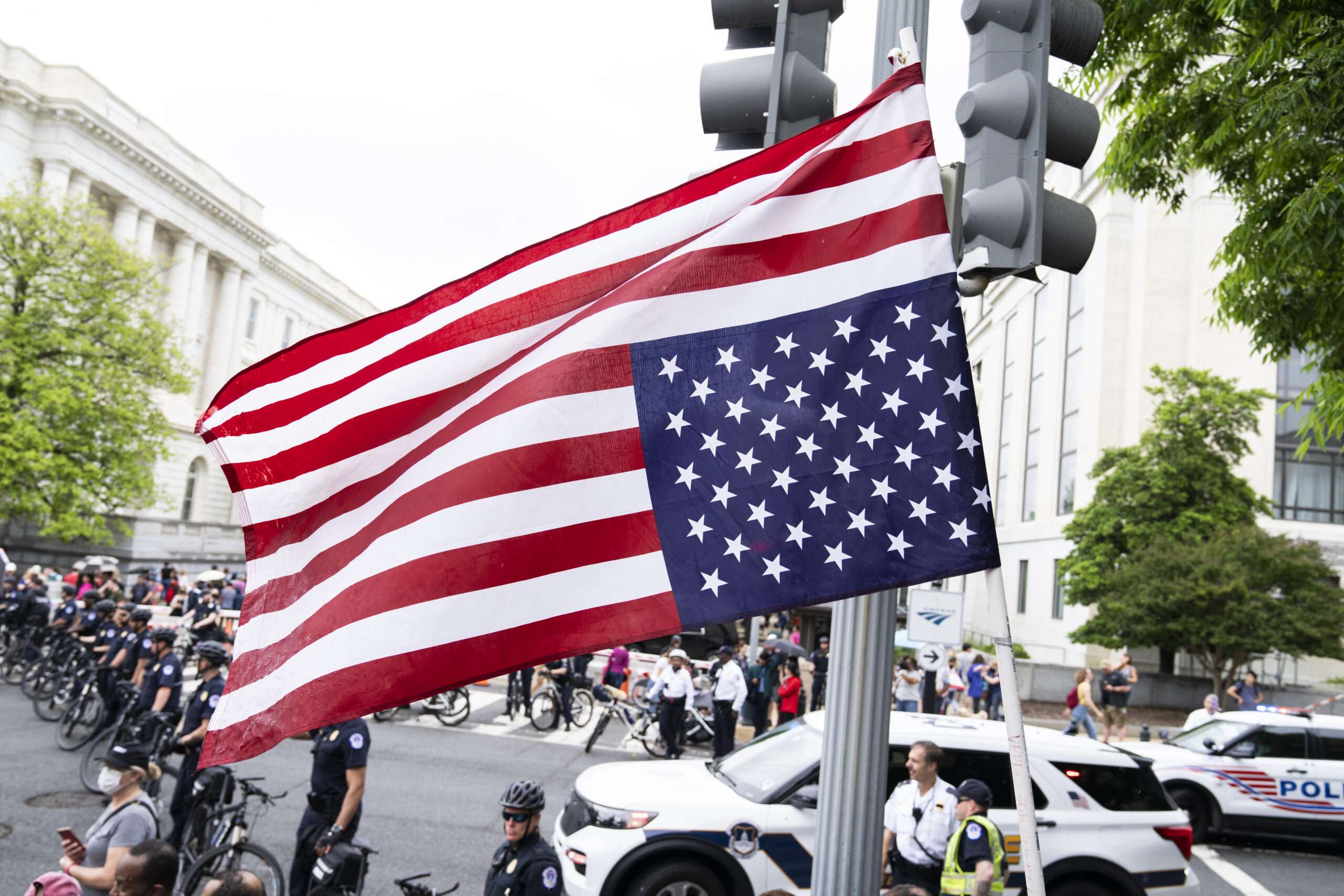
In May 2024, reporting revealed that an upside-down American flag was displayed outside the home of Supreme Court Justice Samuel Alito in January 2021. Historically defined as a statutory signal of dire distress, the inverted flag had recently been adopted by the "Stop the Steal" movement following the 2020 presidential election. The incident ignited widespread national debate surrounding judicial ethics, symbolic speech, and the impartiality of the nation's highest court.
Historical and Legal Context of the Inverted American Flag
To understand the public reaction to the flag displayed at Justice Alito's home, one must first examine the formal legal standards governing the display of the United States flag. The etiquette and proper usage of the flag are codified under federal law in Title 4 of the United States Code.
According to 4 U.S.C. § 8(a), "The flag should never be displayed with the union down, except as a signal of dire distress in instances of extreme danger to life or property."
Historically, this provision served a practical nautical and military purpose:
- Maritime Distress: Ships at sea inverted their ensigns to signal to passing vessels or shore stations that the crew faced imminent catastrophic danger, such as sinking, fire, or severe mutiny.
- Military Fortifications: Outposts or military garrisons flew the flag upside down to signal to friendly forces that the position was under siege or overwhelmed.
- Civilian Emergencies: Early American communities used the inverted flag as an emergency beacon during natural disasters or major civil crises before modern telecommunications existed.
Under traditional federal guidelines, flying the flag upside down outside of genuine life-threatening emergencies is considered a violation of standard flag etiquette, though the U.S. Flag Code acts as a voluntary set of guidelines rather than an enforceable criminal statute due to First Amendment protections established in Texas v. Johnson (1989).
Evolution into Political Protest and the "Stop the Steal" Movement
Over the late 20th and early 21st centuries, the upside-down flag evolved from an emergency distress signal into an overt form of political expression. Various political movements across the ideological spectrum have utilized the inverted flag to signal that the nation itself is in political, economic, or moral distress.
During the anti-Vietnam War protests of the 1960s and 1970s, activists inverted the flag to convey that American foreign policy was destroying the country's foundational values. In later decades, civil rights advocates, Tea Party activists, and anti-government movements adopted the symbol during periods of political dissatisfaction to signify national crisis.
The 2020 Post-Election Period
The symbolic meaning of the inverted flag underwent a distinct shift between November 2020 and January 2021. Following the 2020 U.S. presidential election, supporters of outgoing President Donald Trump who disputed the election results adopted the upside-down American flag as a primary visual symbol of the "Stop the Steal" movement.
During this timeframe, the inverted flag became widely associated with:
- Rejection of Electoral Results: Expressing the belief that the election was illegitimate or fraudulent.
- Political Distress: Signaling a conviction that the American republic faced constitutional failure.
- The Events of January 6, 2021: Displaying the symbol during rallies outside the U.S. Capitol and inside the building during the Capitol breach.
Consequently, by mid-January 2021, the inverted flag carried a dual identity: its codified historical definition as a distress signal, and a highly specific political message aligned with efforts to overturn the 2020 presidential election.
The 2021 Alito Residence Incident: Timeline and Disclosures
In May 2024, The New York Times published photographs establishing that an inverted American flag flew on the front lawn of Justice Samuel Alito's primary residence in Alexandria, Virginia, on January 17, 2021. The timing of the display was central to the subsequent public controversy.
Timeline of Events: [Nov 3, 2020] --> Presidential Election held [Jan 6, 2021] --> U.S. Capitol Breach by protesters [Jan 17, 2021] --> Inverted flag photographed at Alito residence [Jan 20, 2021] --> Presidential Inauguration of Joe Biden [May 2024] --> Public reporting by The New York Times reveals 2021 incident
The placement occurred less than two weeks after the January 6 Capitol attack and three days prior to the inauguration of President Joe Biden. Because the Supreme Court was actively hearing and preparing to consider cases stemming from the 2020 election and the events of January 6, critics argued that the display presented a clear conflict of interest.
Shortly after the initial report, additional coverage revealed that another controversial flag—the "Appeal to Heaven" or Pine Tree flag—was flown outside Justice Alito's vacation home in Long Beach Island, New Jersey, during the summer of 2023. The "Appeal to Heaven" flag, originally commissioned by George Washington during the Revolutionary War, had similarly been adopted in recent years by Christian nationalist groups and right-wing political activists.
Justice Samuel Alito's Response and Explanation
Following the media disclosures, Justice Alito publicly addressed the reports, offering an explanation regarding how the upside-down flag came to be displayed outside his family home.
In a statement provided to news outlets and in subsequent formal letters sent to members of the U.S. Senate and House of Representatives, Justice Alito stated:
- No Personal Involvement: Alito maintained that he had no role whatsoever in displaying the upside-down flag.
- Spousal Action: He attributed the decision entirely to his wife, Martha-Ann Alito, stating that she placed the flag upside down during a heated disagreement with neighbors.
- Neighborhood Conflict: According to Alito's account, the conflict began when neighbors placed political signs near the Alito residence containing vulgarities directed at Mrs. Alito, along with personal verbal confrontations.
- Lack of Political Intent: Alito stated that his wife displayed the flag as a personal expression of distress resulting from the neighborhood dispute, rather than as a political statement concerning the 2020 election or the events of January 6.
In his letter to lawmakers, Justice Alito emphasized that Supreme Court justices cannot control the independent expressive actions of their spouses, noting that under traditional standards of judicial ethics, a spouse retains individual constitutional rights.
Judicial Ethics, Impartiality, and Recusal Standards
The revelation of the flag display prompted intense scrutiny from legal scholars, judicial ethics experts, and members of Congress regarding whether Justice Alito violated federal judicial ethics standards.
The Code of Conduct and Federal Law
Judicial behavior in the United States federal court system is governed by statutory law and ethical canons:
- 28 U.S.C. § 455: The federal recusal statute specifies that any justice, judge, or magistrate judge of the United States "shall disqualify himself in any proceeding in which his impartiality might reasonably be questioned."
- Code of Conduct for Justices of the Supreme Court: Formally adopted by the Court in November 2023, Canon 2 states that justices should avoid "impropriety and the appearance of impropriety in all activities."
Ethics experts who criticized Justice Alito argued that the standard under 28 U.S.C. § 455 is objective: it does not depend on whether Justice Alito himself intended to make a political statement, but whether a reasonable member of the public, knowing the facts, would question his impartiality. Critics contended that flying a symbol associated with the "Stop the Steal" movement created a strong appearance of partisan bias.
Demands for Recusal
Following the disclosures, congressional leaders—including Senate Judiciary Committee Chairman Dick Durbin and Representative Jamie Raskin—called on Justice Alito to recuse himself from several high-profile Supreme Court cases, including:
- Trump v. United States: Examining whether former presidents possess absolute immunity from federal criminal prosecution for official acts performed while in office.
- Fischer v. United States: Challenging the federal government's application of an obstruction statute (18 U.S.C. § 1512(c)(2)) against individuals charged in connection with the January 6 Capitol breach.
Justice Alito formally rejected the requests for recusal. In his response to Congress, he concluded that a reasonable, unbiased observer aware of all the surrounding circumstances—specifically that his wife raised the flag independently during a local neighborhood dispute—would not find cause to question his impartiality under federal law.
Comparative Framework: Flag Symbolism and Judicial Ethics
To contextualize the legal and ethical dimensions of the controversy, the following table compares the statutory definitions, political interpretations, and judicial ethical standards associated with the symbols involved.
| Feature / Metric | Traditional Statutory Definition | Modern Political Symbolism | Applicable Judicial Ethics Standard |
|---|---|---|---|
| Inverted U.S. Flag | Signal of dire distress in extreme danger to life/property (4 U.S.C. § 8(a)). | Associated with "Stop the Steal" and election contestation post-2020. | Canon 2 / 28 U.S.C. § 455: Must avoid the appearance of political bias. |
| "Appeal to Heaven" Flag | Revolutionary War naval flag commissioned by George Washington (1775). | Adopted by Christian nationalist and conservative political groups. | Canon 2 / 28 U.S.C. § 455: Evaluated based on public perception of impartiality. |
| Spousal Political Activity | Protected speech under the First Amendment of the U.S. Constitution. | Often attributed to the household or public official by public perception. | Historical precedent permits independent spousal expression, subject to appearance standards. |
| Recusal Mandate Standard | Triggered when a judge has personal bias or direct financial interest. | Invoked by critics when symbolic actions suggest ideological alignment with litigants. | Objective "reasonable person" standard under federal statutory guidelines. |
Broader Impact on Public Trust and Supreme Court Ethics Reforms
The Alito flag controversy did not occur in isolation. It emerged during a period of heightened public debate surrounding the governance, transparency, and ethical oversight of the Supreme Court.
Unlike lower federal judges, who are subject to the Code of Conduct for United States Judges and can face disciplinary reviews by regional circuit judicial councils, Supreme Court justices operate under a distinct legal structure. The Code of Conduct adopted by the Supreme Court in late 2023 lacks an independent enforcement mechanism or formal external body to investigate potential ethics violations. Instead, individual justices remain the sole arbiters of their own recusal decisions.
The controversy led to several key outcomes:
- Legislative Proposals: Congressional lawmakers introduced legislation aimed at establishing an enforceable code of ethics for Supreme Court justices, including mandatory recusal review panels and investigative offices.
- Public Perception: Public opinion polls conducted in mid-to-late 2024 indicated declining public confidence in the Court's political neutrality, with critics arguing that symbols displayed at justices' homes undermine the appearance of nonpartisan jurisprudence.
- Defense of Judicial Independence: Proponents of the Court and defenders of Justice Alito countered that political opponents were weaponizing local family disputes to pressure conservative justices into recusal, which they argued would compromise judicial independence and allow political actors to alter the Court's composition on major cases.
Key Takeaways for Evaluating Judicial Symbolism and Ethics
Understanding the controversy requires balancing statutory definitions of American flag etiquette against modern political speech and judicial ethical frameworks. When evaluating similar developments regarding the judiciary:
- Distinguish Between Legal and Political Meaning: Symbols often possess formal statutory definitions (such as the U.S. Flag Code) that differ significantly from how they are utilized in contemporary political movements.
- Understand the Objective Recusal Standard: Federal law under 28 U.S.C. § 455 evaluates impartiality from the perspective of an objective, reasonable observer, making the public context of a symbol just as critical as the personal intent behind it.
- Recognize the Boundaries of Household Expression: Modern judicial ethics continues to grapple with the constitutional boundaries between a judge's duty of strict political neutrality and a family member's individual right to political expression.
- Monitor Structural Ethics Reforms: The ongoing debates surrounding Supreme Court ethics focus primarily on whether self-policed standards are sufficient or whether formal enforcement mechanisms are necessary to preserve long-term public trust in the legal system.
What does an upside-down American flag traditionally mean under U.S. law?
Under Title 4 of the United States Code (4 U.S.C. § 8(a)), an inverted American flag is a recognized signal of dire distress, reserved strictly for instances of extreme danger to life or property. Historically used by maritime vessels and military outposts in emergencies, it serves as an official signal for help rather than a standard political display.
Why did the upside-down flag at Justice Alito's house cause controversy?
The flag display generated controversy because, between late 2020 and early 2021, the inverted flag was adopted by the "Stop the Steal" movement to protest the results of the 2020 presidential election. Because the Supreme Court was actively adjudicating cases related to the election and the January 6 Capitol breach, critics argued that displaying the symbol compromised the appearance of judicial impartiality.
What was Justice Samuel Alito's explanation for the upside-down flag?
Justice Alito stated that he had no role in flying the flag upside down and that it was placed there entirely by his wife, Martha-Ann Alito. He explained that she displayed the flag inverted during a tense dispute with local neighbors who had placed political signs containing personal insults directed at her near their property.
Did Justice Alito recuse himself from January 6 cases following the reports?
No, Justice Alito declined to recuse himself from cases involving the 2020 election or the events of January 6, including Trump v. United States and Fischer v. United States. In formal letters to members of Congress, he stated that a reasonable, impartial observer aware of the full factual context would not conclude that his impartiality was compromised.
What is the "Appeal to Heaven" flag that was also linked to Justice Alito?
The "Appeal to Heaven" (or Pine Tree) flag was a historic Revolutionary War flag commissioned by George Washington in 1775. In recent years, it has been adopted by conservative political groups and Christian nationalist organizations. Reports revealed that this flag was flown at Justice Alito's New Jersey vacation home during the summer of 2023.