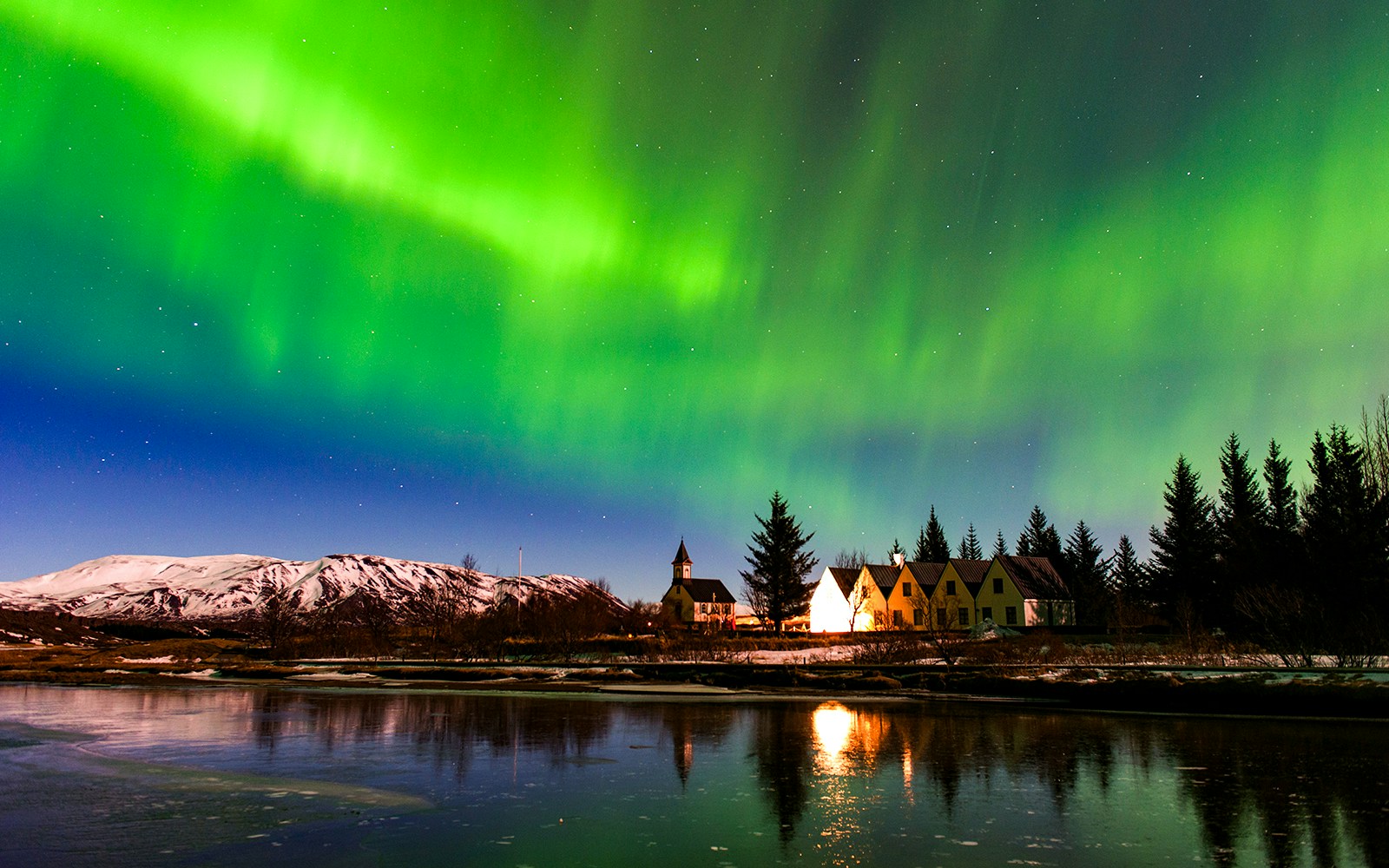
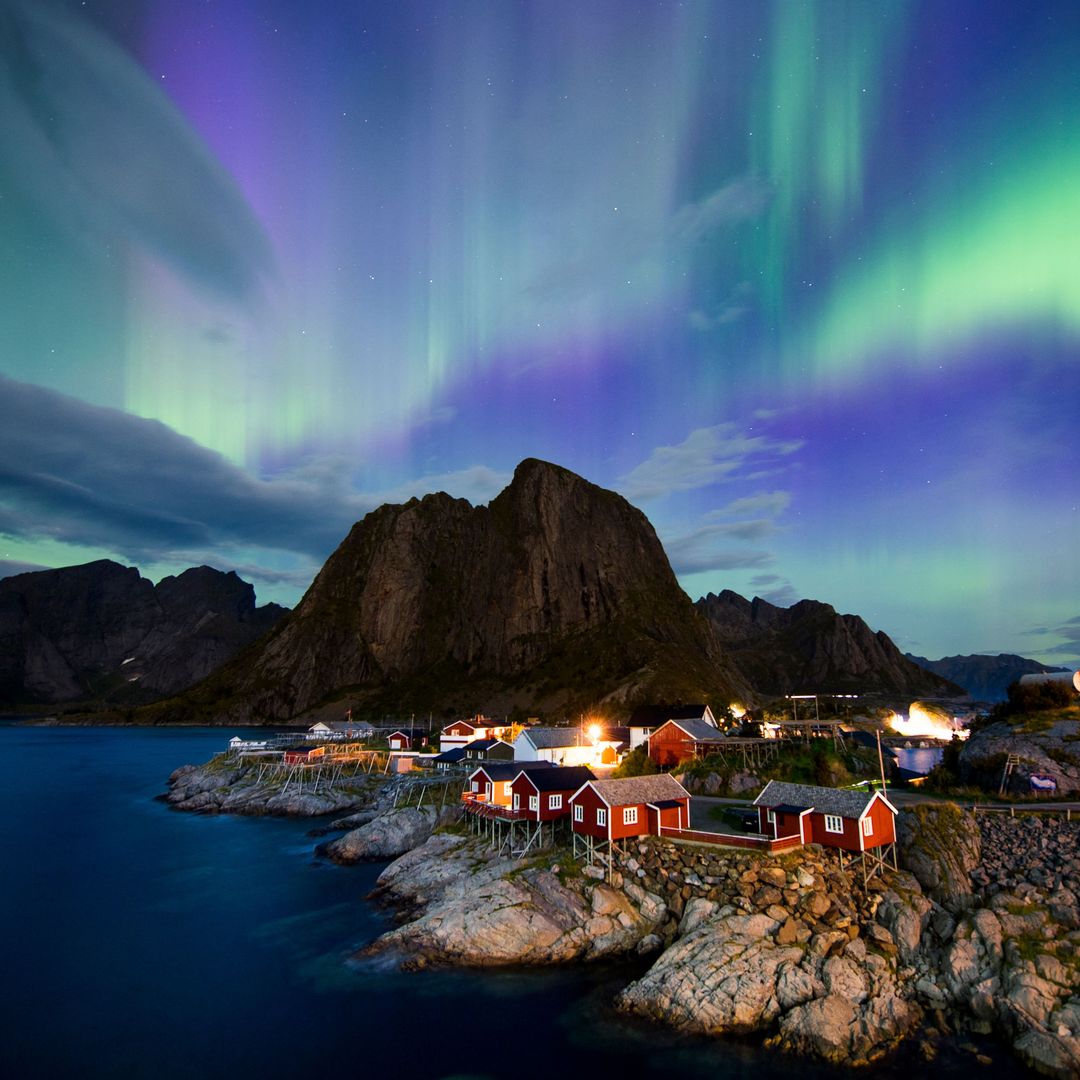
October marks the official opening of the aurora borealis season across the high latitudes of the Northern Hemisphere, offering a compelling window for travelers seeking dark skies, crisp autumn air, and manageable weather conditions before the deep winter freeze sets in. Because the Earth's axial tilt during the autumn equinox enhances geomagnetic activity, October frequently delivers high-frequency auroral displays that rival mid-winter observations while providing distinct practical advantages for visitors.
Understanding the Science and Timing of October Auroras
The science behind the northern lights involves interactions between the Earth's magnetosphere and charged particles ejected from the Sun during solar wind streams and coronal mass ejections. When these solar particles collide with gases in the upper atmosphere—primarily oxygen and nitrogen—they excite the gas molecules and release photons of light, creating the characteristic green, purple, pink, and red ribbons that dance across the night sky.
October holds a special place in the auroral calendar due to the Russell-McPherron effect, a mechanism tied to the autumn and spring equinoxes. During these periods, the interplanetary magnetic field is particularly well-aligned to crack open the Earth's magnetospheric shield, allowing solar wind particles to flood into the upper atmosphere more efficiently. Consequently, historical geomagnetic data shows a semi-annual surge in auroral activity around the equinoxes, making October an exceptionally productive month for sightings.
Furthermore, October offers a transitional climate advantage. While December and January feature twenty-four-hour darkness in the Arctic Circle, they also bring extreme sub-zero temperatures, heavy snowstorms, and treacherous driving conditions. October preserves hours of lingering twilight and genuine darkness while maintaining relatively moderate autumn temperatures, unfrozen fjords that mirror the colorful sky, and open infrastructure that allows independent travelers to navigate freely without specialized expedition gear.
Prime Global Destinations for October Aurora Viewing
Choosing the right destination dictates your success rate, as cloud cover poses the single greatest obstacle to successful aurora viewing. The sub-arctic auroral oval sits directly above several accessible regions that combine high magnetic latitudes with diverse microclimates.
Tromsø and Northern Norway
Tromsø serves as the undisputed hub for Arctic science and aurora tourism. Situated at latitude 69°49' N, it sits right under the auroral oval. In October, Tromsø experiences rapidly shortening days, transitioning from roughly eleven hours of daylight at the start of the month to less than seven hours by Halloween. The coastal climate brings mild maritime weather, though it also introduces maritime moisture and cloud cover. Local guides frequently utilize the region's deep fjords and interior valleys to drive across the border into Finland or Sweden if local coastal skies become overcast, making flexibility a primary asset for travelers based here.
Icelandic Ring Road and Rural Outskirts
Iceland offers the unique advantage of an entire country situated beneath the auroral oval. In October, daylight hours drop to roughly nine to eleven hours, providing ample nighttime dark skies. While Reykjavik provides a vibrant cultural base, light pollution requires travelers to venture into rural areas, such as the Snæfellsnes Peninsula, the South Coast near Vik, or the remote Westfjords. October weather in Iceland can be dynamic, featuring high winds and sudden rainstorms, necessitating a robust four-wheel-drive vehicle and constant monitoring of the Icelandic Meteorological Office's cloud cover and aurora forecast portals.
Swedish Lapland and Abisko
Abisko National Park, located in Swedish Lapland, is globally renowned for the "Blue Hole of Abisko"—a unique microclimate created by local wind patterns and the shelter of the Scandinavian Mountains that maintains clear skies even when surrounding regions remain clouded over. Accessible via the overnight Arctic Circle Train from Stockholm, Abisko provides exceptional infrastructure, including the Aurora Sky Station on Mount Nuolja. October in Abisko brings crisp, stable autumn weather, early dustings of snow on the peaks, and pristine dark skies far removed from urban light pollution.
Finnish Lapland and Glass Igloos
Finland's northernmost province, Lapland, offers a magical blend of deep wilderness and modern hospitality. Locations like Rovaniemi, Levi, and Inari provide structured northern lights excursions, reindeer safaris, and specialized glass-roofed igloos that allow travelers to watch the sky from the comfort of a heated bed. October in Finnish Lapland marks the onset of Ruska, the autumn foliage season, where the landscape transitions from vibrant reds and golds into crisp winter white, providing stunning foregrounds for night photography.
Interior Alaska and the Yukon Territory
In North America, interior Alaska and Canada's Yukon Territory present premier continental viewing locations. Fairbanks, Alaska, sits directly under the auroral oval and benefits from a dry interior climate that minimizes cloud cover compared to coastal regions. October brings crisp, clear autumn nights with temperatures hovering around freezing. Further east, Whitehorse in the Yukon offers vast wilderness expanses, minimal light pollution, and established outfitters specializing in autumn aurora expeditions before the heavy winter snowfall blankets the interior highways.
| Destination | Typical October Weather | Best Microclimate Advantage | Accessibility | Average Nightly Darkness (Mid-October) |
|---|---|---|---|---|
| Tromsø, Norway | Cool, maritime, changeable | Option to drive inland for clear skies | International airport, excellent road network | ~11 hours |
| Iceland (Ring Road) | Windy, dynamic, coastal rain | Regional mobility via the Ring Road | Keflavik International Airport, 4x4 required | ~10 hours |
| Abisko, Sweden | Crisp, stable, dry | The "Blue Hole" microclimate for clear skies | Arctic Circle Train from Stockholm | ~11 hours |
| Finnish Lapland | Cold, crisp, early snow | Deep wilderness and specialized glass igloos | Rovaniemi/Kittilä airports, well-paved roads | ~12 hours |
| Fairbanks, Alaska | Cold, dry interior climate | High statistical probability of clear skies | Ted Stevens International Airport + local flight | ~12 hours |
Interpreting Forecasts and Solar Data
Relying on accurate meteorological and geomagnetic data transforms aurora hunting from a game of pure chance into an informed pursuit. Understanding the key metrics published by space weather agencies ensures you know when to step outside and where to direct your gaze.
- Sun: Coronal Mass Ejection
- Solar Wind Stream
- Earth's Magnetosphere
- Auroral Oval Activation
- Visual Display in October Sky
- Auroral Oval Activation
- Earth's Magnetosphere
- Solar Wind Stream
The Kp-index remains the most widely cited metric for auroral activity. Measured on a scale from 0 to 9, the Kp-index quantifies geomagnetic disturbance over a three-hour window. A Kp of 0 or 1 indicates quiet conditions with auroras restricted to high polar latitudes, whereas a Kp of 5 or higher signals a geomagnetic storm, pushing visible aurora displays much further south into Central Europe and the northern United States. For prime Arctic locations like Tromsø or Fairbanks, a Kp-index of 2 or 3 is often sufficient to produce overhead displays if skies are dark and clear.
Beyond the Kp-index, advanced observers monitor real-time solar wind data provided by monitoring satellites such as the Deep Space Climate Observatory (DSCOVR). Two critical telemetry data points dictate immediate auroral potential:
- Solar Wind Speed ($V$): Measured in kilometers per second ($\text{km/s}$). Baseline solar wind speeds hover around 300 to 400 $\text{km/s}$. When speeds spike above 500 or 600 $\text{km/s}$, energetic particles arrive at Earth with greater force, intensifying auroral movement and brightness.
- Interplanetary Magnetic Field ($Bz$ component): Measured in nanoTeslas ($\text{nT}$). The $Bz$ indicator measures the North-South orientation of the solar magnetic field relative to Earth. For an aurora to ignite, the $Bz$ value must turn negative (southward). A strongly negative $Bz$ (e.g., $-5\text{ nT}$ to $-15\text{ nT}$ or lower) unlocks the Earth's magnetic defense, allowing solar particles to cascade into the upper atmosphere.
Cloud cover forecasts remain equally vital. Travelers should consult local meteorological services—such as the Norwegian Meteorological Institute (yr.no) or the Icelandic Meteorological Office (vedur.is)—to analyze low, medium, and high-level cloud layers. A high-altitude cirrus cloud deck can entirely obscure a vibrant auroral display even if the Kp-index spikes to 6.
Essential Viewing and Photography Tips for October
Successfully capturing and enjoying the northern lights in October requires physical preparation for crisp autumn temperatures, proper clothing strategies, and technical camera configurations.
Clothing and Thermal Management
While October is warmer than January, standing motionless in the dark for hours while waiting for an active substorm causes body temperature to drop rapidly. Layering is non-negotiable. Begin with a moisture-wicking merino wool base layer to manage perspiration. Add an insulating mid-layer of fleece or heavy down, followed by a windproof and waterproof outer shell. Footwear requires insulated, waterproof winter boots with thick rubber soles paired with moisture-wicking thermal socks, as cold ground conducts heat away from the body quickly. Accessories—including windproof mittens, balaclavas, and chemical hand warmers—ensure comfort during extended night vigils.
Camera Equipment and Technical Settings
Smartphones have advanced significantly in low-light computational photography, enabling casual observers to capture striking auroral glows with dedicated night-mode settings. However, capturing the intricate curtains, rays, and fast-moving coronas of a strong aurora requires a digital mirrorless or DSLR camera mounted on a sturdy tripod to eliminate camera shake during long exposures.
- Mount the Camera: Secure the camera firmly to a heavy tripod. High winds in coastal Iceland or northern Norway will blur long exposures instantly.
- Lens Selection: Use a fast, wide-angle lens with a large maximum aperture (f/2.8 or wider, such as f/1.4 or f/1.8) to maximize light intake.
- Manual Focus: Switch the lens to manual focus and point it toward a bright star or distant horizon light. Use the camera's live-view screen to zoom in digitally and fine-tune the focus until the star is a pinpoint. Never rely on autofocus in pitch-dark conditions.
- Exposure Settings: Set the aperture wide open (e.g., f/2.8), adjust the ISO between 1600 and 6400 depending on ambient darkness and auroral intensity, and set the shutter speed between 2 seconds (for fast-moving, high-intensity curtains) and 10 seconds (for faint, static arcs).
- Battery Conservation: Lithium-ion batteries drain rapidly in cold weather. Keep spare batteries in an inner jacket pocket close to your body heat until you are ready to swap them out.
Frequently Asked Questions
What is the absolute best week in October to see the northern lights?
There is no single guaranteed week, but historical geomagnetic data and stable weather patterns point to the middle two weeks of October (roughly October 10th through October 24th) as optimal. This window balances enhanced equinoctial geomagnetic activity with manageable autumn weather before severe winter storms take hold across the Arctic.
Can I see the northern lights in October without booking a guided tour?
Yes, independent viewing is entirely feasible if you rent a reliable vehicle—preferably a four-wheel-drive car equipped with winter tires—and stay outside major urban centers where street lighting washes out the night sky. Renting a car also grants you the mobility to drive away from localized cloud pockets toward clear skies reported on regional weather portals.
Why does the aurora look grey or white to my naked eye instead of green?
Human eyes rely on rod cells in low-light conditions, which excel at detecting motion and contrast but struggle to process color in the dark. Consequently, faint auroras often appear as drifting grey or white clouds to the naked eye. Digital camera sensors accumulate light over multiple seconds, revealing the vivid green, pink, and purple hues that define the phenomenon.
Is October too early for snow in the Arctic?
October is a transitional shoulder month. While major coastal cities like Tromsø may experience rain or wet sleet, higher elevations, interior valleys, and northern locations like Abisko or Finnish Lapland frequently receive their first substantial snow dustings. This early snow cover significantly enhances the aesthetic appeal of landscape photography without blocking major transportation routes.
How do I protect my camera gear from condensation when returning indoors?
Moving freezing camera equipment directly into a warm, humid cabin causes ambient moisture to condense instantly on the cold glass and inside the camera body, risking electrical damage. Place your camera and lenses inside a sealed airtight plastic bag before entering the warm building, and let the equipment acclimate to the indoor temperature slowly over one to two hours before opening the bag.
Maximizing Your Arctic Expedition
Planning a successful October northern lights excursion requires balancing flexibility, scientific literacy, and physical preparedness. Rather than anchoring your entire itinerary to a single stationary hotel, consider a flexible road-trip framework or base yourself in northern hubs with active tour operators who monitor microclimates hourly. By tracking real-time solar wind metrics, maintaining patience during lulls in geomagnetic activity, and dressing adequately for crisp autumn nights, you position yourself to witness one of nature's most awe-inspiring spectacles under comfortable early-season conditions.