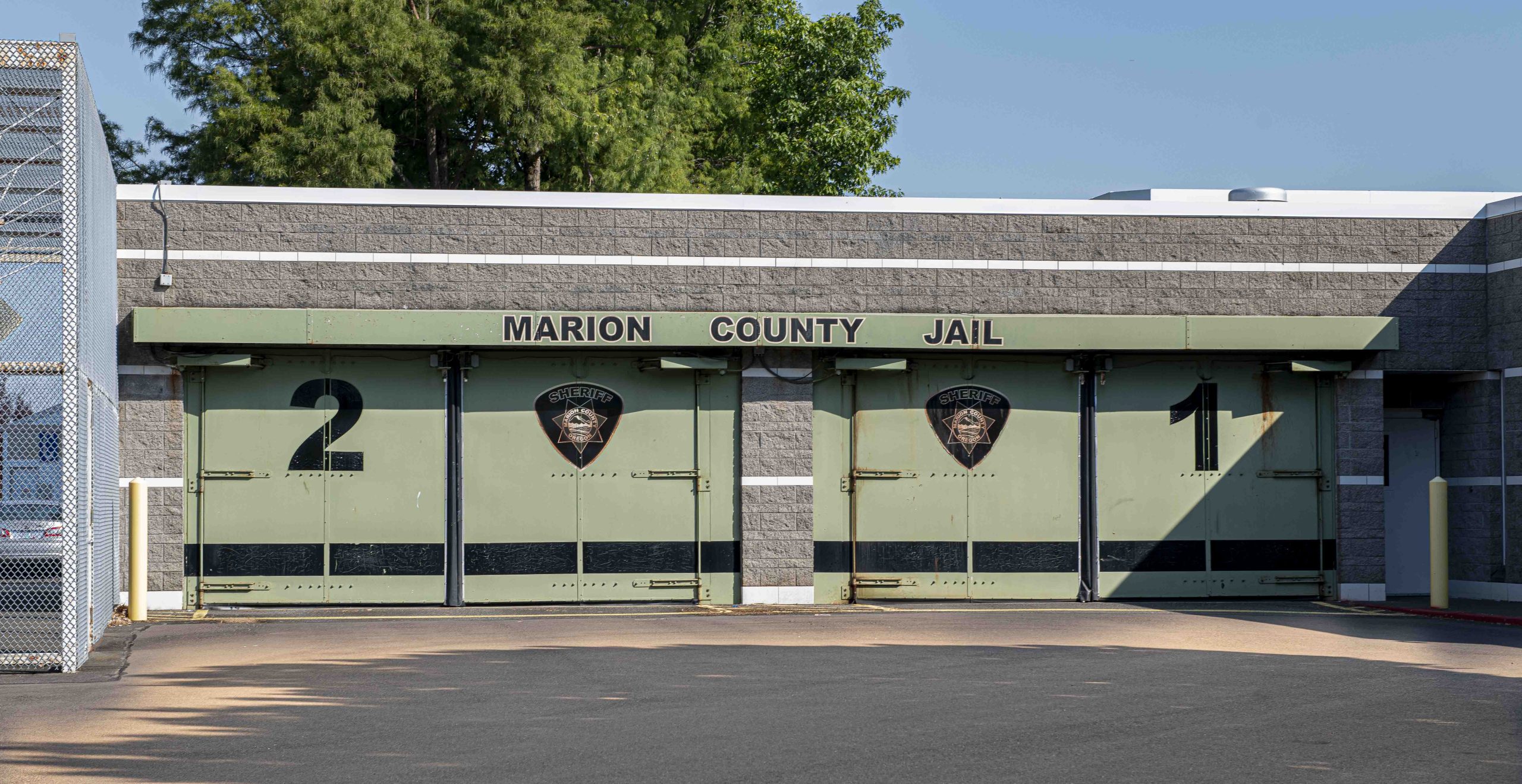
While "Marion County" can refer to several jurisdictions across the United States, this guide focuses on the most frequently searched public safety databases: Marion County, Oregon (including the Salem metropolitan area) and Marion County, Florida (Ocala). The technical standards, legal privacy frameworks, and CAD (Computer-Aided Dispatch) access protocols described herein reflect the state of public records access in 2026.
Accessing the Marion County dispatch log in 2026 is a vital process for journalists, legal professionals, and concerned residents who seek to understand the landscape of local public safety. As emergency communication technology has evolved into Next-Generation 911 (NG911) systems, the way we consume and interpret dispatch data has become more complex. Modern logs are no longer just simple text entries; they are metadata-rich records of police, fire, and medical responses that provide a window into the operational efficiency of our local government.
The Architecture of Modern Dispatch Logs in 2026
By 2026, the transition to NG911 has integrated multimedia data—including text-to-911, video streams, and automated telematics—into the standard dispatch flow. When you view a Marion County dispatch log, you are viewing a filtered version of the CAD system. These systems act as the central nervous system for first responders, coordinating resources from multiple agencies including the Marion County Sheriff’s Office, City Police Departments (such as Salem, OR or Ocala, FL), and Fire Districts.
The logs are typically categorized into three primary streams:
- Law Enforcement Logs: These include calls for service ranging from traffic stops and welfare checks to high-priority felony reports. In 2026, many agencies have moved toward "active event" maps that delay sensitive information by 15–30 minutes to ensure officer safety.
- Fire and EMS Logs: These logs track medical emergencies, structure fires, and hazardous material incidents. Due to evolving HIPAA (Health Insurance Portability and Accountability Act) interpretations in 2026, patient-specific data is more aggressively scrubbed from public-facing logs than in previous years.
- Historical Archives: Public records requests now often yield "Total Response" reports, which include the time from the initial 911 connection to the moment the first unit arrives on the scene, providing a transparent look at response times.
How to Access Marion County Dispatch Logs
Accessing these logs depends heavily on which Marion County you are investigating. In 2026, the platforms have become more streamlined, often utilizing centralized web portals that offer both live feeds and searchable archives.
Marion County, Oregon (METCOM and WRECC)
In Oregon, Marion County emergency communications are primarily handled by two major entities: METCOM 9-1-1 (North Willamette Valley) and WRECC (Willamette Regional Emergency Communications Center).
Public Access Protocol for Oregon
Live Web Portals Most residents utilize the active incident maps provided by METCOM. These portals provide real-time updates on active fire and medical calls, though law enforcement logs are often subject to a strategic delay.
Standardized Reporting In 2026, Oregon law requires that all dispatch centers provide a daily summary log that includes the incident number, time of call, nature of the call, and the responding unit ID. These are generally available via the Sheriff's Office "Daily Activity" page.
Marion County, Florida (Ocala/Marion Public Safety)
The Marion County Sheriff’s Office (MCSO) in Florida maintains one of the most robust public-facing CAD interfaces in the Southeast.
Public Access Protocol for Florida
Florida Sunshine Law Compliance Florida’s broad public records laws ensure that dispatch logs are highly accessible. In 2026, the MCSO "Current Calls" application allows users to filter by agency (Ocala Police, Sheriff, or Fire Rescue) and view the status of calls in real-time.
Mobile Integration The 2026 version of the Marion County Public Safety App provides push notifications for "Major Public Safety Events," though certain domestic violence and sexual assault calls are automatically redacted per Marsy’s Law.
Comparing Regional Dispatch Log Systems (2026 Standards)
The following table outlines the differences in how dispatch logs are managed and accessed in the two most prominent Marion County jurisdictions as of 2026.
| Feature | Marion County, Oregon (METCOM/WRECC) | Marion County, Florida (MCSO/OPD) |
|---|---|---|
| Primary Platform | METCOM Active Incident Web Portal | MCSO Public CAD Interface |
| Real-Time Latency | 5–10 Minutes for Fire/EMS; Variable for Police | Near Real-Time (30-second refresh) |
| Historical Data Access | Formal PRR (Public Records Request) | Searchable Online Archives (Last 30 Days) |
| HIPAA Redaction Level | High (Aggressive scrubbing of address/vitals) | Moderate (Cross-street proximity only) |
| Encryption Status | Digital P25 Phase II (Most Police Encrypted) | Digital P25 Phase II (Tactical Encrypted) |
| NG911 Capability | Full Multimedia Integration | Full Multimedia Integration |
| Data Format | JSON/CSV Export available for Media | Web-view only for General Public |
Interpreting Dispatch Codes and Terminology
Navigating a dispatch log requires an understanding of specific nomenclature. While many agencies in 2026 have moved toward "Plain Talk" (Clear Speech) to comply with FEMA and NIMS (National Incident Management System) standards, shorthand codes still appear in the technical logs.
- CAD (Computer-Aided Dispatch): The software used by dispatchers to track the status of units and calls.
- Clearance Code: A final notation on a log entry indicating how the call was resolved (e.g., "Report Taken," "Handled by Officer," "Unable to Locate").
- Disposition: The final status of the incident. In 2026 logs, look for codes like "A" for Arrest, "C" for Citation, or "GOA" for Gone on Arrival.
- Priority Levels:
- Priority 1: Life-threatening emergency or crime in progress.
- Priority 2: Urgent but not immediately life-threatening.
- Priority 3: Routine service calls or report-taking.
Privacy Restrictions and Redacted Information
In 2026, the tension between public transparency and individual privacy is at an all-time high. Several legislative and technical barriers may prevent certain information from appearing in the Marion County dispatch log:
- Marsy’s Law: Specifically in Florida (and similar victim rights laws in Oregon), the names and exact addresses of crime victims are often withheld from the public log to prevent harassment.
- Sensitive Calls: Calls involving mental health crises (often logged as "Welfare Checks" or "Section Requests"), juvenile matters, or ongoing undercover operations are frequently hidden from public view until the investigation is concluded.
- Radio Encryption: By 2026, almost all law enforcement dispatch primary channels in Marion County are encrypted. This means that while you can see the log entry on a website, you can no longer listen to the live audio via traditional police scanners. The log remains the primary source of public information.
Step-by-Step: How to Request a Full Dispatch Transcript
If the online daily log does not provide the depth of information you need, you may submit a formal request. Follow these steps for the 2026 administrative process:
- Identify the Jurisdiction: Determine if the incident was handled by the Sheriff, City Police, or County Fire.
- Gather Incident Details: You must have the date, approximate time, and location. Having the "Case Number" or "Incident Number" from the public log will significantly speed up the process.
- Submit via Public Records Portal: In 2026, both Marion County, OR and Marion County, FL use digital portals (such as GovQA or NextRequest).
- Specify the Record Type: Request the "CAD Event Report" or "Dispatch Call Log." This is different from a "Police Report." The CAD report shows every keystroke the dispatcher made and every unit that was dispatched.
- Pay Administrative Fees: While simple logs are often free, detailed CAD reports involving audio recordings or extensive redaction may incur fees ranging from $15 to $50 per hour of labor.
The Role of AI in 2026 Dispatch Logging
A significant development in 2026 is the use of Artificial Intelligence (AI) in dispatching. AI-assisted call-taking now automatically categorizes incidents based on the caller’s voice and keywords. This has led to more accurate "Nature of Call" descriptions in the dispatch logs. However, it also means that the initial log entry might be generated by an algorithm before a human dispatcher reviews it. Users should be aware that "Initial Call Type" in the log might change significantly once an officer arrives on the scene and provides a "Final Disposition."
Frequently Asked Questions
Why can't I see the exact address of an incident in the Marion County log?
In 2026, privacy regulations (including NG911 privacy standards) often require dispatchers to "blur" addresses to the hundred-block level (e.g., 1200 Block of Main St instead of 1234 Main St). This protects the privacy of residents while still informing the public about activity in their neighborhood.
How often is the Marion County dispatch log updated?
Most active CAD maps in Marion County update every 60 to 300 seconds. However, historical daily logs are typically published once every 24 hours, usually by 8:00 AM the following day, reflecting the previous day’s full activity.
Are there any calls that are never shown on the public log?
Yes. Calls involving sensitive tactical situations, domestic violence (in some jurisdictions), and certain types of sexual assault are excluded from public-facing logs to protect victim safety and investigative integrity. Additionally, administrative tasks (like "Vehicle Maintenance") are often filtered out.
Can I get 911 audio recordings from the dispatch log?
The log itself is a text-based record. To obtain the audio associated with a log entry, you must file a formal Public Records Request. Note that in 2026, audio containing private medical information or "screams of agony" may be legally redacted or withheld entirely.
What does "Self-Initiated" mean on a log entry?
This indicates that the officer or deputy found the incident themselves (such as a traffic stop or suspicious person) rather than being sent there by a 911 dispatcher.
Leveraging Dispatch Data for Community Safety
Understanding the Marion County dispatch log is the first step in active community participation. In 2026, this data allows residents to identify crime trends, monitor emergency response times, and hold local agencies accountable. By utilizing the official portals and understanding the technical nuances of CAD reporting, you can ensure you are receiving the most accurate and timely information available.
For those requiring detailed historical data for neighborhood analysis or legal discovery, always ensure you are using the official county portals rather than third-party "scraper" sites, which may not reflect the 2026 redaction updates or real-time corrections made by dispatch supervisors.