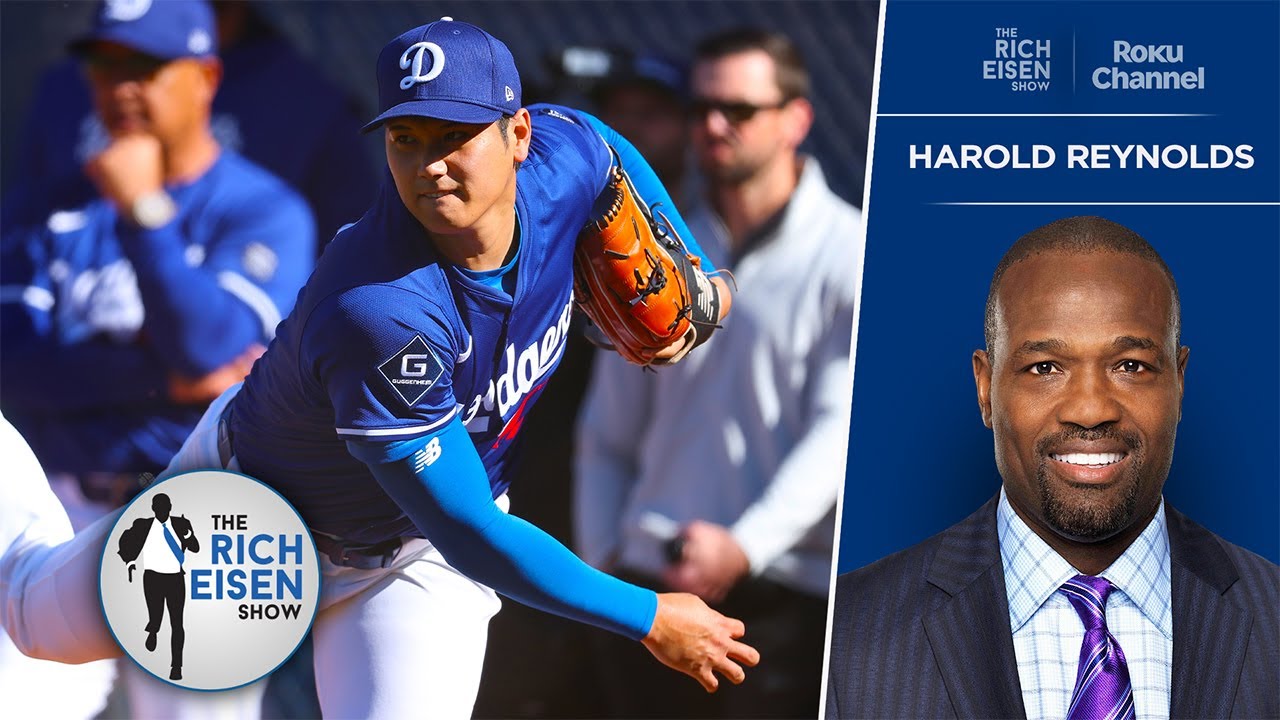
As of 2026, Harold Reynolds remains a cornerstone of baseball media, serving as a primary studio analyst for MLB Network’s flagship program, MLB Tonight. A founding member of the network since its 2009 inception, Reynolds utilizes his twelve years of Major League experience to provide technical breakdowns, particularly through his signature "Demo Field" segments.
Harold Reynolds has navigated a broadcasting career that spans over three decades, evolving from a standout second baseman for the Seattle Mariners into one of the most recognizable voices in sports media. His journey is not merely a story of a player-turned-announcer; it is a narrative of how modern baseball analysis is delivered to a global audience. By blending old-school fundamentals with the high-tech requirements of a 24/7 sports network, Reynolds has maintained a relevant and authoritative presence in the 2026 broadcasting landscape.
From the Diamond to the Studio: The Early Transitions
Before becoming a staple of cable television, Harold Reynolds was a two-time All-Star and a three-time Gold Glove winner. His playing career, which primarily featured a ten-year stint with the Seattle Mariners (1983–1992) followed by seasons with the Baltimore Orioles and California Angels, provided the intellectual foundation for his media career. Unlike analysts who rely solely on statistics, Reynolds’ perspective is rooted in the "middle infielder’s view" of the game—a position that requires constant communication, defensive positioning, and a deep understanding of baserunning.
Reynolds’ transition into media began shortly after his retirement in 1994. He joined ESPN in 1996, where he became a lead analyst on Baseball Tonight. During his decade-long tenure at ESPN, he helped define the "highlight-heavy" era of sports journalism. His ability to explain the nuances of a double-play pivot or a lead-off jump in terms that were accessible to casual fans while respecting the intelligence of die-hard enthusiasts set him apart. This period established his reputation for high energy and a relentless positivity that remains his trademark in 2026.
The Foundation of MLB Network’s Identity
When MLB Network launched on January 1, 2009, Harold Reynolds was one of the first major hires. His arrival signaled the network’s intent to create a "player-centric" environment. Over the last seventeen years, Reynolds has been instrumental in shaping the tone of the network, moving away from the more structured, rigid reporting of traditional news outlets and toward a conversational, clubhouse-style atmosphere.
In his current 2026 role, Reynolds is most frequently seen on MLB Tonight, the Emmy Award-winning program that serves as the network's heartbeat. His chemistry with hosts like Greg Amsinger and fellow analysts like Dan Plesac has become a hallmark of the channel’s programming. The longevity of this team is a rarity in sports media, and Reynolds’ role as the energetic "spark plug" of the studio remains unchanged. He often serves as the bridge between the younger, data-driven analysts and the veteran viewers who value the traditional aspects of the game.
Mastering the “Demo Field”: A Technical Deep Dive
Perhaps the most significant contribution Harold Reynolds has made to baseball broadcasting is the popularization of the "Demo Field." Located within MLB Network’s Studio 42, this scaled-down replica of a baseball field allows Reynolds to physically demonstrate the mechanics of the game.
In 2026, these segments have become more sophisticated, incorporating augmented reality (AR) to overlay statcast data onto Reynolds’ physical movements. When breaking down a play, Reynolds focuses on several key areas:
- Infield Mechanics: He provides detailed explanations of glove work, the "transfer" from glove to hand, and the footwork required for various fielding scenarios.
- Baserunning Strategy: Reynolds was a premier base-stealer (leading the American League in 1987), and he uses the Demo Field to show the technical difference between a "good lead" and a "great jump."
- Situational Awareness: He often walks through specific "what-if" scenarios, explaining the mental checklist a player goes through before a pitch is delivered.
These demonstrations provide a level of technical depth that standard commentary cannot match. For the 2026 audience, which includes a generation of players raised on specialized coaching and YouTube tutorials, Reynolds’ ability to "show rather than tell" remains a high-value asset for the network.
Evolution into National Booth Commentary
While Reynolds is primarily known for his studio work, his career has also seen him occupy the most prestigious seats in the industry. His stint with FOX Sports, which included calling the 2014 and 2015 World Series alongside Joe Buck and Tom Verducci, showcased his versatility. While studio work allows for preparation and multi-game analysis, live color commentary requires split-second reactions.
His time in the national booth was not without debate. Reynolds’ style, which emphasizes traditional fundamentals and "eye-test" scouting, sometimes clashed with the burgeoning "sabermetric" community. However, this friction only served to highlight his role in the baseball ecosystem. He represents the "human element" of the game—the psychological pressure of a ninth-inning at-bat or the physical toll of a 162-game season. In 2026, he continues to contribute to major event coverage, including the All-Star Game and the MLB Draft, bringing that same experiential authority to the broadcast.
Comparative Career Milestones and Roles
To understand the breadth of Harold Reynolds’ influence, it is helpful to look at the different phases of his career and the specific roles he has filled within the media landscape.
| Era | Network | Primary Role | Key Contribution |
|---|---|---|---|
| 1996–2006 | ESPN | Baseball Tonight Analyst | Popularized highlight-driven technical analysis. |
| 2007–2008 | MLB.com/SNY | Lead Analyst | Transitioned into digital media and regional broadcasting. |
| 2009–Present | MLB Network | MLB Tonight / Hot Stove | Founding member; developed the "Demo Field" concept. |
| 2014–2015 | FOX Sports | World Series Color Commentator | Provided expert analysis for the sport's biggest stage. |
| Current (2026) | MLB Network | Senior Studio Analyst | Mentoring new talent and leading AR-integrated breakdowns. |
The 2026 Landscape: Reynolds’ Current Impact and Mentorship
As of 2026, the landscape of baseball broadcasting has shifted toward a heavy integration of sports betting, real-time analytics, and localized streaming services. Within this environment, Harold Reynolds serves as a stabilizing force. His current role at MLB Network has expanded to include a mentorship component. He is often paired with recently retired players who are making their first foray into television, helping them translate their on-field knowledge into concise, broadcast-ready insights.
Furthermore, Reynolds remains a key figure in the network's coverage of youth baseball and the MLB Draft. His genuine enthusiasm for the "future of the game" makes him the ideal ambassador for events like the RBI (Reviving Baseball in Inner Cities) program and the Breakthrough Series. By focusing on the developmental aspects of the sport, Reynolds ensures that his broadcasting role transcends mere entertainment, contributing instead to the long-term health of the game.
Challenges and Adaptations in Modern Media
The journey hasn't been without its pivots. The rise of advanced metrics (SABR) initially created a divide between traditionalists like Reynolds and the "new school" of analysts. However, by 2026, Reynolds has successfully integrated these worlds. While he may still prioritize "the way the ball came off the bat," he effectively uses exit velocity and launch angle data to validate his observations.
This adaptation is critical for any broadcaster wishing to remain relevant in the mid-2020s. Reynolds has avoided the trap of becoming a "curmudgeon" about the game’s changes. Whether discussing the impact of the pitch clock or the nuances of the shifting defensive rules, he approaches the topics with the curiosity of a player rather than the skepticism of a critic.
Frequently Asked Questions
What is Harold Reynolds' current role at MLB Network in 2026?
Harold Reynolds serves as a senior studio analyst, primarily featured on MLB Tonight and Hot Stove. He is responsible for providing expert technical analysis, leading defensive demonstrations in Studio 42, and contributing to the network's coverage of major events such as the World Series and the MLB Draft.
How long has Harold Reynolds been with MLB Network?
Reynolds has been with MLB Network since its launch on January 1, 2009. He was one of the original analysts hired to establish the network's identity and has remained a fixture of its programming for seventeen years.
Did Harold Reynolds ever win an Emmy for his broadcasting work?
Yes, as part of the MLB Tonight team, Reynolds has been a recipient of multiple Sports Emmy Awards. The show itself has won the "Outstanding Studio Show - Daily" category several times, recognized for its innovative use of technology and the expertise of its analysts.
What was Harold Reynolds' signature contribution to baseball television?
His most notable contribution is the "Demo Field" segment. He pioneered the use of a physical studio space to recreate and explain the technical mechanics of fielding, baserunning, and situational play, which has since been emulated by other sports networks.
How does Reynolds balance traditional scouting with modern analytics?
While Reynolds often emphasizes the "eye test" and player intangibles, his 2026 broadcasts frequently incorporate Statcast data. He uses these metrics to support his physical demonstrations, showing how a player’s specific mechanics lead to the data points seen on the screen.
Following Reynolds’ Coverage Throughout the 2026 Season
For viewers looking to engage with Harold Reynolds’ analysis, the best point of entry remains the nightly broadcasts of MLB Tonight. During the regular season, he provides a comprehensive look at the day’s most pivotal plays, focusing on the "game within the game" that often escapes the casual viewer.
To get the most out of his insights, pay close attention to his segments during the post-season. This is where Reynolds’ experience in high-pressure environments shines, as he breaks down the subtle managerial decisions and player adjustments that define October baseball. His ability to anticipate a move before it happens remains one of the most compelling reasons to tune in to MLB Network in 2026.