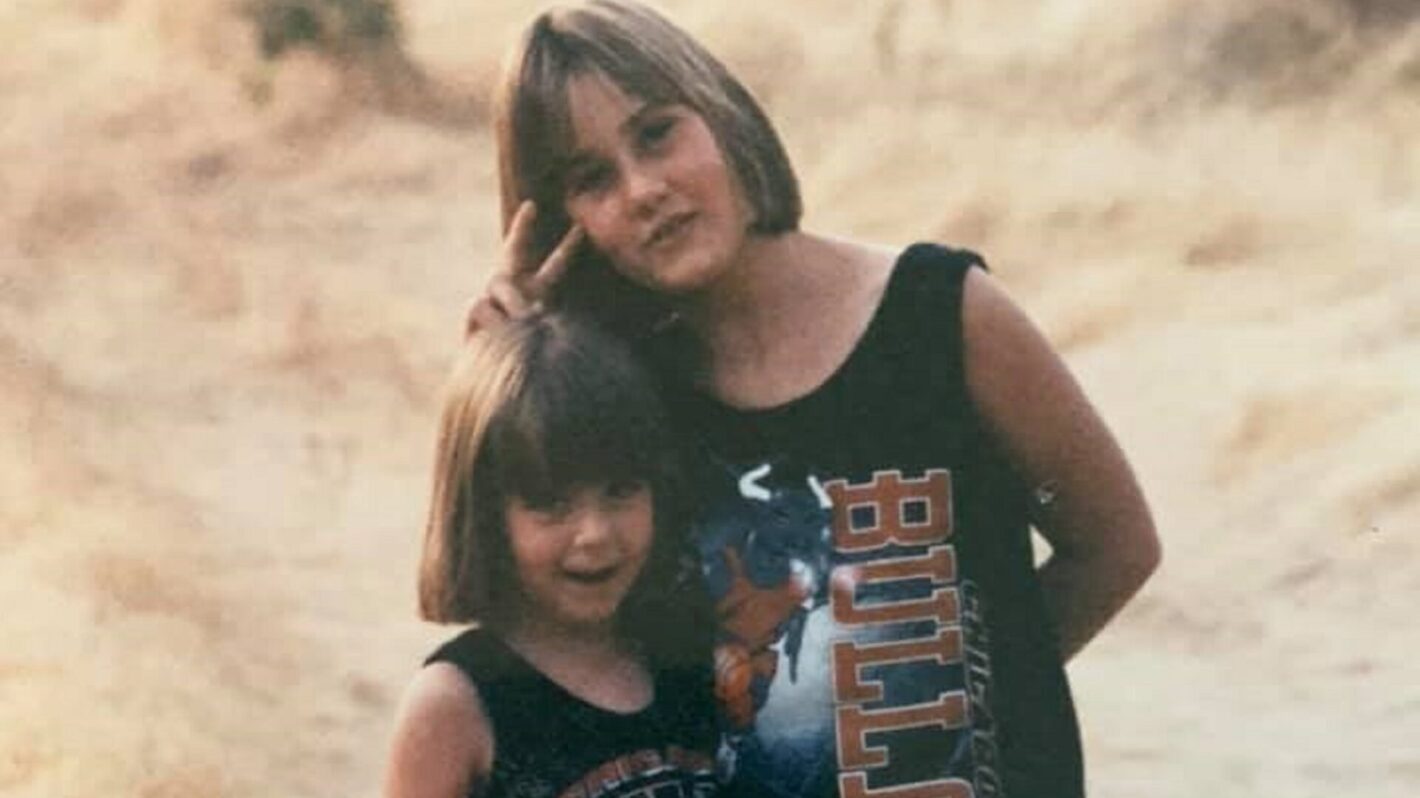
The disappearance of 17-year-old Alissa Turney in May 2001 remains one of Arizona’s most complex cold cases. Following the July 2023 acquittal of her stepfather, Michael Turney, through a judge-directed verdict of non-guilt, the legal proceedings against him officially concluded. Today, Alissa’s sister, Sarah Turney, leads nationwide missing-person advocacy efforts while public interest continues to center on unsolved cold-case mechanics and victims' rights.
Key Milestones in the Alissa Turney Case Timeline
Understanding the current landscape of the Alissa Turney case requires examining a timeline spanning more than two decades. Alissa vanished on May 17, 2001, after her last day of junior year at Paradise Valley High School in Phoenix, Arizona. Initial reporting categorized her as a runaway, heavily influenced by statements provided by her stepfather, Michael Turney, and a handwritten note left in her bedroom.
For years, the investigation remained dormant until Phoenix Police Department detectives re-examined the files in 2008. The re-investigation revealed that Michael Turney had maintained an extraordinary degree of surveillance over Alissa, including covert video recording, wiretapped home phone calls, and rigorous monitoring of her daily activities. A search warrant executed at the family residence in 2008 uncovered 26 homemade pipe bombs, assault rifles, silencers, and hundreds of gallons of gasoline, along with a written manifesto outlining a planned attack on a union hall.
Michael Turney was subsequently federalized and convicted on weapons charges, serving nearly a decade in federal prison before his release in 2017. However, no homicide charges were filed regarding Alissa’s disappearance during that period.
The investigative trajectory shifted dramatically between 2019 and 2020 due to the persistent public advocacy of Sarah Turney, Alissa’s younger sister. Utilizing modern digital platforms, Sarah released secretly recorded audio tapes, family videos, and investigative records through social media and her podcast, Voices for Justice. The massive public pressure and renewed law enforcement review culminated in August 2020, when a Maricopa County grand jury indicted Michael Turney for second-degree murder.
- 2001: Alissa Turney disappears from Phoenix, AZ; initial runaway classification.
- 2008: Police search residence; find pipe bombs; Michael Turney imprisoned on federal weapons charges.
- 2019-2020: Sarah Turney launches public digital campaigns; grand jury indicts Michael Turney.
- July 2023: Judge grants directed verdict of acquittal under Arizona Rule 20.
- 2019-2020: Sarah Turney launches public digital campaigns; grand jury indicts Michael Turney.
- 2008: Police search residence; find pipe bombs; Michael Turney imprisoned on federal weapons charges.
The 2023 Directed Verdict and Its Legal Implications
The legal proceedings against Michael Turney reached a pivotal conclusion in July 2023 in the Maricopa County Superior Court. After weeks of prosecution testimony detailing Michael Turney's obsessive surveillance, alleged abusive behavior, and conflicting statements, defense attorneys filed a motion under Arizona Rules of Criminal Procedure Rule 20 for a judgment of acquittal.
Under Rule 20, a trial judge must enter a judgment of acquittal if there is no substantial evidence to warrant a conviction. Substantial evidence is defined as evidence that reasonable persons could accept as adequate and sufficient to support a conclusion of a defendant's guilt beyond a reasonable doubt. On July 18, 2023, Presiding Judge Joseph Kreamer granted the defense motion, taking the decision out of the jury's hands and acquitting Michael Turney of second-degree murder.
Judge Kreamer cited the absence of physical evidence, the lack of identified human remains, no clear crime scene, and insufficient direct evidence linking Michael Turney to Alissa’s death at the time of her disappearance. While the state presented extensive circumstantial evidence regarding Michael’s abusive behavior and controlling tendencies, the court ruled that suspicion and character evidence alone could not bridge the legal threshold required for a criminal homicide conviction.
Because a directed verdict of acquittal functions as a formal acquittal under the United States Constitution, the Fifth Amendment’s Double Jeopardy Clause prevents Michael Turney from ever being retried for the murder of Alissa Turney by the State of Arizona, regardless of whether new evidence, including the discovery of remains, comes to light in the future.
Family Dynamics and Sarah Turney’s Continuing Advocacy
The transformation of the Turney family dynamic over twenty-five years illustrates the deep psychological burden borne by families of missing persons. For years after Alissa’s disappearance, Sarah Turney believed her father's assertions that Alissa had run away to California. As Sarah matured and gained access to public records, investigative notes, and her father's archived recordings, her perspective underwent a radical shift.
Sarah became her sister’s chief advocate, effectively pioneering the use of short-form social media content and long-form investigative podcasting to compel official action. Her work highlighted the systemic barriers cold case investigations encounter when initial reports treat missing teenagers as voluntary runaways.
Following the July 2023 acquittal, Sarah Turney publicly expressed profound disappointment with the court’s ruling while reiterating her commitment to cold-case reform. She has channeled her experience into broader national initiatives:
- Voices for Justice Media: Operating a dedicated podcast network that covers unsolved missing persons and homicide cases, prioritizing ethical true-crime storytelling.
- Board Leadership at Season of Justice: Serving on the board of Season of Justice, a non-profit organization dedicated to providing financial grants for advanced DNA testing and investigative genetic genealogy (IGG) in cold cases.
- Legislative and Investigative Reform Advocacy: Promoting changes in how law enforcement agencies process initial missing juvenile reports, ensuring immediate risk evaluations rather than default runaway classifications.
Sarah Turney's ongoing work emphasizes that while legal avenues against a primary suspect may close due to judicial rulings, the fundamental objective—recovering Alissa's physical remains and assisting other families in similar situations—remains active.
Critical Case Elements and Comparative Evidence Overview
The prosecution and defense in the state's case against Michael Turney presented starkly different interpretations of the evidence accumulated over two decades. The key evidentiary components highlighted during the legal proceedings include:
| Evidentiary Component | Prosecution Argument / Claim | Defense Argument / Court Finding | Legal Impact / Trial Outcome |
|---|---|---|---|
| Physical Evidence & Remains | Absence of body explained by passage of time and concealment efforts by suspect. | Complete absence of physical crime scene, DNA, blood, or recovered remains. | Crucial factor in acquittal: Judge ruled lack of corpus delicti evidence created reasonable doubt. |
| Surveillance Tapes & Audio | Demonstrated obsessive control, stalking behavior, and abusive psychological dynamics. | Represented an overprotective father's security measures; did not prove physical murder. | Deemed character/behavioral evidence insufficient to establish direct causation of death. |
| Federal Weapons Conviction (2008) | Showed propensity for violence, illegal armaments, and extreme erratic behavior. | Unrelated to the 2001 disappearance; excluded from proving specific intent for murder in 2001. | Prejudicial value outweighed probative value regarding the specific charge of homicide. |
| Handwritten "Runaway" Note | Forged or coerced note left in Alissa’s bedroom to delay police investigation. | Consistent with a troubled adolescent voluntary runaway narrative provided in 2001. | Contested handwriting analyses left jury/court without definitive physical proof of forgery. |
| Witness Statements & Admissions | Reported inconsistent statements made by Michael Turney across two decades to family/police. | Statements were misconstrued, taken out of context, or stemmed from deteriorating mental state. | Insufficient standalone proof to satisfy the burden of proof beyond a reasonable doubt. |
Key Insights and Lessons for Cold Case Investigations
The resolution of the legal proceedings surrounding Alissa Turney provides critical insights into the intersection of modern public advocacy, evidentiary standards, and criminal justice procedures.
The Limits of Circumstantial Evidence in "No-Body" Homicides
Prosecuting cold cases without physical remains (known legally as no-body homicide prosecutions) presents extraordinary legal hurdles. While prosecutors across the United States regularly secure convictions based entirely on circumstantial evidence, courts maintain strict standards regarding the chain of inferences. If the inference of guilt relies on stacking assumptions—such as assuming bad character equals lethal violence—a judge may intervene via Rule 20 to prevent a case from reaching a jury.
The Role and Boundaries of Social Media Advocacy
Sarah Turney’s efforts demonstrated that public digital campaigns can successfully re-engage law enforcement agencies and force grand jury re-evaluations of cold files. However, the legal system operates independently of public consensus. Public awareness can compel police resources and grand jury indictments, but in-court trials demand evidence that meets statutory burdens of proof under judicial oversight.
The Impact of Early Classification Errors
One of the most consequential aspects of the Turney case was the initial 2001 classification of Alissa as a runaway juvenile. In missing-person cases, the first 48 hours are critical for gathering forensic evidence, securing video surveillance, and preserving physical crime scenes. When law enforcement defaults to a runaway classification, vital physical evidence is often lost permanently, complicating potential prosecutions decades later.
Frequently Asked Questions About the Alissa Turney Case
Was Michael Turney convicted for Alissa Turney's disappearance?
No. Michael Turney was acquitted of second-degree murder on July 18, 2023, after Judge Joseph Kreamer granted a defense motion for a directed verdict under Rule 20, citing insufficient evidence to sustain a conviction.
Can Michael Turney be tried again if new evidence or Alissa’s remains are found?
No. Under the Fifth Amendment of the U.S. Constitution, the Double Jeopardy Clause prohibits a defendant who has been acquitted—including through a judge-directed verdict—from being retried for the same crime by the same jurisdiction.
Have Alissa Turney’s remains ever been located?
No. Despite extensive searches conducted by law enforcement officers, forensic teams, and private investigators across Arizona over the past two decades, Alissa Turney’s physical remains have never been recovered.
What is Sarah Turney doing today?
Sarah Turney continues her work as a podcaster, media producer, and victim advocate. She serves on the board of directors for the non-profit organization Season of Justice and advocates for systemic improvements in missing-person and cold-case investigations nationwide.
What was the pipe bomb incident involving Michael Turney in 2008?
During a 2008 search of the Turney household related to Alissa’s disappearance, Phoenix police discovered 26 improvised explosive devices (pipe bombs), large quantities of firearms, and a written manifesto. Michael Turney pleaded guilty to federal weapons charges and served nearly a decade in federal prison before being released in 2017.
Actions to Support Missing Persons and Cold Case Reform
For individuals following unsolved cases and seeking to engage constructively in cold case resolution, practical avenues of support exist across advocacy, technology, and community reporting.
- Support Advanced DNA Funding: Organizations like Season of Justice provide financial assistance to law enforcement agencies for investigative genetic genealogy (IGG) and advanced forensic testing, which often lack state funding.
- Report Missing Person Information Responsibly: If you possess information regarding historical missing-person cases in Arizona or elsewhere, submit tips directly through verified channels such as the National Center for Missing & Exploited Children (NCMEC) or local law enforcement tip lines rather than unverified online forums.
- Advocate for Law Enforcement Cold Case Units: Engage with local policy leaders to support dedicated funding for specialized cold-case units within city police departments and county sheriff offices.
- Practice Ethical Media Consumption: Focus on victim-centered media outlets that respect legal standards, emphasize official resources, and actively promote missing-person profiles over sensationalism.