Alison Luchs is a distinguished American art historian and curator emerita, recognized globally for her transformative research and stewardship of Italian Renaissance sculpture. For over four decades, her work at the National Gallery of Art in Washington, D.C., and her extensive publications—most notably on Venetian sculpture and the Lombardo family—have defined modern standards for curatorial precision and iconographic analysis.
As of 2026, Luchs continues to be regarded as a foundational figure in the study of 15th and 16th-century European art. Her career represents a bridge between the traditional connoisseurship of the mid-20th century and the interdisciplinary, archival-driven methodology of the 21st century. Her contributions extend beyond the walls of the museum, influencing how scholars and the public alike perceive the materiality, emotional depth, and mythological complexity of Renaissance stone and bronze.
The Academic Foundation of a Curatorial Career
The professional trajectory of Alison Luchs began with a rigorous academic grounding that favored linguistic proficiency and deep archival engagement. She earned her undergraduate degree from Swarthmore College in 1970, a period during which the humanities were undergoing a shift toward more specialized, research-intensive frameworks. She later pursued her doctorate at Johns Hopkins University, completing her PhD in 1976.
Luchs’s doctoral work focused on the architecture and sculpture of the Italian Renaissance, specifically within the context of Florence and Venice. Her dissertation, Cino da Pistoia and the University of Bologna, demonstrated an early interest in the intersection of civic life, education, and the commemorative function of sculpture. This period of her life established the methodology she would use throughout her career: a relentless search for primary documents paired with a keen eye for the stylistic nuances that distinguish individual hands in large workshop environments.
By the time she joined the staff of the National Gallery of Art (NGA) in the late 1970s, Luchs had already developed a reputation for intellectual rigor. Her early roles at the Gallery involved the cataloging and systematic study of one of the world's finest collections of Renaissance art, a task that required not only aesthetic judgment but also an understanding of conservation science and provenance history.
Tenure at the National Gallery of Art
Alison Luchs’s tenure at the National Gallery of Art spanned several decades, during which she rose to become the Curator of Italian and Spanish Sculpture. Her influence on the NGA is most visible in the permanent galleries housing the Widener and Kress collections. These collections, which include masterpieces by Donatello, Verrocchio, and Desiderio da Settignano, were the primary focus of her stewardship.
A curator’s role is multifaceted, involving the acquisition of new works, the preservation of existing ones, and the public interpretation of the entire collection. Luchs excelled in making the "difficult" medium of sculpture accessible. Unlike painting, sculpture requires the viewer to understand three-dimensional space, lighting, and the tactile quality of materials like Carrara marble or cast bronze. Luchs’s gallery installations were often praised for their pedagogical clarity, allowing viewers to see the evolution of form and the technical mastery of the artists.
In 2026, her work is still seen in the way the NGA presents its Renaissance holdings. She was instrumental in the physical renovation and reinstallation of the sculpture galleries in the West Building, ensuring that the lighting and sightlines respected the original intent of the Renaissance masters while meeting modern conservation standards.
The Specialized Study of Venetian Sculpture and Tullio Lombardo
While Luchs’s expertise is broad, her most significant scholarly impact lies in the study of Venetian Renaissance sculpture. For much of the 20th century, Venetian art history was dominated by the study of painting—specifically the works of Titian, Tintoretto, and Veronese. Sculpture in the Republic of Venice was often treated as a secondary or decorative concern.
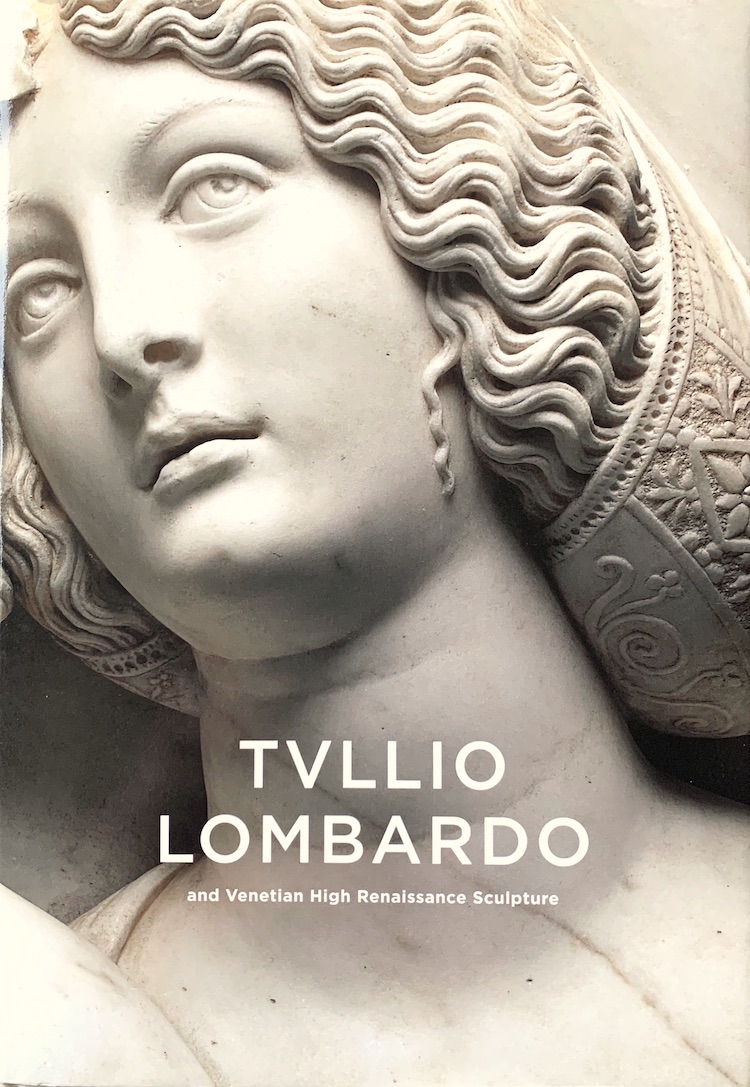
Luchs challenged this hierarchy with her landmark publication, Tullio Lombardo and Ideal Portrait Sculpture in Renaissance Venice: 1490–1530 (1995). In this work, she examined the rise of the "all'antica" (in the style of the ancients) portrait bust and relief in Venice. She focused on Tullio Lombardo, a sculptor who moved away from the grit of medieval realism toward a poetic, idealized classicism.
Her research highlighted the Double Portrait reliefs, which depict pairs of figures in states of romantic or melancholic contemplation. Luchs argued that these works were not merely decorative but were intended for the private studies of elite Venetian humanists. By linking these sculptures to the contemporary literary culture of Venice—such as the poetry of Pietro Bembo—she provided a holistic view of how sculpture functioned as a medium for intellectual and emotional expression.
Iconography and the Study of Mythological Motifs
Beyond formal portraiture, Alison Luchs carved out a unique niche in the study of mythological and "marginal" motifs. Her 2010 book, The Mermaids and the Cupids: Ambiguity, Italian Renaissance Sculpture, and the National Gallery of Art, stands as a testament to her ability to find profound meaning in seemingly decorative elements.
This study focuses on the presence of sea-creatures, hybrid monsters, and putti (cupids) in Renaissance sculpture. Luchs investigated why these figures, often dismissed as mere ornamentation, appeared so frequently on religious monuments, fountains, and furniture. She proposed that:
- Ambiguity was intentional: Renaissance artists used these figures to bridge the gap between the sacred and the profane, or the human and the elemental.
- Cultural Transmission: These motifs were often revived from Roman sarcophagi and adapted to suit the Christian and humanist sensibilities of 15th-century Italy.
- Technical Virtuosity: Carving complex, intertwined hybrid figures allowed sculptors to demonstrate their mastery over the hardest stones.
Her work in this area shifted the scholarly conversation toward the "language of ornament," encouraging other historians to look closer at the edges of the frame to understand the core of the Renaissance worldview.
Major Exhibitions and Collaborative Projects
Luchs was a key figure in several high-profile exhibitions that brought international scholarship to the American public. These projects often involved years of cross-institutional collaboration and resulted in massive, authoritative catalogs.
One of the most significant was the 2019 exhibition Verrocchio: Sculptor and Painter of Renaissance Florence. While Andrea del Verrocchio is often remembered as the teacher of Leonardo da Vinci, Luchs and her colleagues sought to re-establish him as a primary genius in his own right. Luchs’s contributions to the catalog and the curation focused on Verrocchio’s innovative use of bronze and his ability to capture psychological tension in three dimensions.
Summary of Key Scholarly Works and Contributions
The following table outlines the primary publications and focus areas that define Luchs's professional output:
| Publication/Project Title | Year | Primary Subject Matter | Significance |
|---|---|---|---|
| Tullio Lombardo and Ideal Portrait Sculpture | 1995 | Venetian Renaissance Sculpture | Re-centered Venetian sculpture in the study of the High Renaissance. |
| The Mermaids and the Cupids | 2010 | Iconography & Ornament | Explored the symbolic and decorative role of hybrid creatures. |
| Verrocchio: Sculptor and Painter | 2019 | Florentine Quattrocento | Major retrospective emphasizing Verrocchio's independent mastery. |
| Desiderio da Settignano | 2007 | 15th-century Florentine Marble | Focused on the delicacy and technical refinement of low-relief carving. |
| National Gallery of Art Systematic Catalogue | Various | Italian Sculpture | Created the definitive modern record of the NGA's Renaissance holdings. |
Professional Methodology and Curatorial Ethics
Throughout her career, Luchs has been a proponent of a "slow" art history—one that prioritizes looking over theorizing. In an era where digital reproductions are often used as substitutes for the real object, she has consistently advocated for the importance of direct physical encounter.
In her role as a senior technical editor for museum catalogs, she emphasized clarity and factual density. She often cautioned against over-attribution, the practice of assigning a famous name to an anonymous work without sufficient evidence. Her approach to curatorial ethics involved:
- Transparency in Provenance: Ensuring that the history of an object’s ownership is fully documented and scrutinized.
- Conservation Partnership: Working closely with conservators to understand how a piece was made (e.g., identifying the specific quarry of a marble) before drawing stylistic conclusions.
- Public Accessibility: Writing for an audience that includes both specialist scholars and curious museum-goers, avoiding jargon while maintaining intellectual depth.
As of 2026, these standards remain the benchmark for the National Gallery of Art’s curatorial department, serving as a template for the next generation of art historians.
Frequently Asked Questions
What is Alison Luchs's most famous discovery?
While her career is defined more by comprehensive synthesis than a single "discovery," she is most famous for her re-evaluation of Tullio Lombardo’s Double Portraits. She successfully linked these enigmatic sculptures to the specific intellectual and literary circles of early 16th-century Venice, solving a long-standing puzzle regarding their intended purpose.
Is Alison Luchs still active in the art world?
Yes, in 2026, she holds the title of Curator Emerita at the National Gallery of Art. While she has stepped back from the daily administrative duties of the museum, she continues to publish scholarly articles, participate in international symposia, and mentor doctoral students in the field of Renaissance sculpture.
How did her work change the National Gallery of Art?
Luchs was instrumental in professionalizing the documentation of the sculpture collection. Before her tenure, many records were incomplete or based on outdated 19th-century scholarship. She brought the collection into the modern era through the Systematic Catalogue project, which provides a rigorous, scientific account of every major piece in the gallery.
Why is her work on "mermaids" considered important?
It shifted the focus of art history from "high art" subjects (like the Madonna or David) to the "ornamental" and "mythological" subjects that populated the Renaissance imagination. By studying mermaids and sea-monsters, she showed how Renaissance people viewed the natural world and the boundaries of human identity.
Where can I find her written work?
Most of her major books are published through the National Gallery of Art in association with university presses like Princeton or Yale. Her shorter essays and research notes are frequently found in The Burlington Magazine, Artibus et Historiae, and the Journal of the Warburg and Courtauld Institutes.
Engaging with the Scholarship of Alison Luchs
For those interested in exploring the world of Renaissance sculpture, the work of Alison Luchs provides an ideal entry point. Her writing manages to be both deeply learned and remarkably evocative, capturing the tactile beauty of the objects she studies.
To follow in her footsteps, students and enthusiasts should focus on the following actions:
- Visit the National Gallery of Art: Spend time in the West Building’s sculpture galleries, specifically observing the lighting and placement of the Kress and Widener collections.
- Study the Lombardo reliefs: Access her 1995 book to understand how a single artist can redefine a city's aesthetic identity.
- Read the Systematic Catalogues: For a masterclass in technical art history, examine the NGA’s published catalogs on Italian sculpture, which feature her detailed entries on material, condition, and history.
Alison Luchs remains a vital voice in 2026, reminding the art world that while technologies change, the fundamental human drive to create and understand beauty remains constant across the centuries.