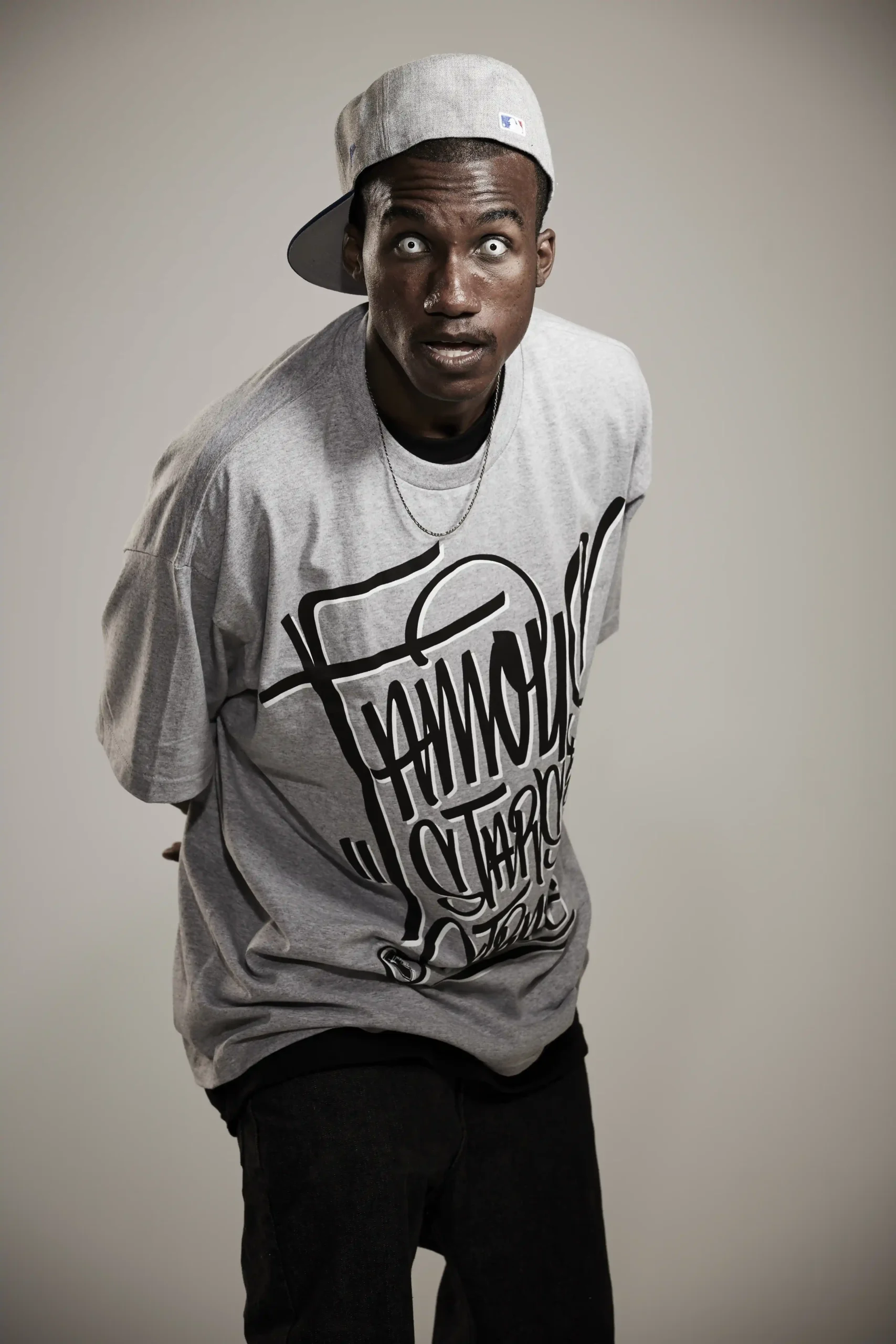
As of 2026, Hopsin (Marcus Jamal Hopson) has released five studio albums, one collaborative mixtape, and over 50 singles, including his iconic "Ill Mind of Hopsin" series. His estimated net worth stands at approximately $8 million, a figure driven largely by his independent business model and full ownership of his masters through his label, Undercover Prodigy.
Marcus Hopson, known professionally as Hopsin, remains one of the most polarizing and technically proficient figures in independent hip-hop. Emerging from the shadows of a failed stint at Ruthless Records in the late 2000s, he built a global brand defined by his signature white contact lenses, aggressive lyricism, and self-taught production. His career trajectory provides a blueprint for independent success, illustrating how a DIY ethos can translate into a multi-million dollar enterprise without the traditional backing of "Big Three" record labels.
The Evolution of Hopsin’s Discography: From Ruthless to Independence
Hopsin’s musical journey is characterized by a fierce pursuit of creative control. His discography is not merely a collection of songs but a chronological documentation of his personal and professional struggles.
The Ruthless Records Era (2007–2009)
His debut studio album, Gazing at the Moonlight, was released in 2009 under Ruthless Records. This period was fraught with tension, as Hopsin felt the label—once a powerhouse under Eazy-E—was failing to promote its artists effectively. Songs like "Sexy Cyber" and "Pans in the Kitchen" showcased his quirky, Eminem-influenced style, but the album failed to achieve commercial success. This lack of momentum led Hopsin to seek a release from his contract, eventually leading to the formation of his own label.
The Funk Volume Powerhouse (2010–2015)
After departing Ruthless, Hopsin co-founded Funk Volume with Dame Ritter. This era produced his most culturally impactful work.
- Raw (2010): This album established his presence in the underground scene. The lead single, "Sag My Pants," became a viral sensation, known for its scathing disses toward mainstream figures like Lil Wayne, Drake, and Lupe Fiasco.
- Knock Madness (2013): This project saw Hopsin experimenting with a more polished sound while maintaining his "preachy" yet technical delivery. It debuted at number 76 on the Billboard 200.
- Pound Syndrome (2015): Often cited as his most cohesive work during the Funk Volume years, this album solidified his fanbase. It included hits like "Fly" and "Ill Mind of Hopsin 7," which explored his growing disillusionment with religion.
The Undercover Prodigy Era (2016–2026)
Following a highly public and bitter split from Funk Volume in early 2016, Hopsin founded Undercover Prodigy. This move allowed him to retain 100% ownership of his creative output. His 2017 album, No Shame, was released through a partnership with 300 Entertainment, but he soon returned to a purely independent model. Between 2018 and 2026, Hopsin shifted toward a "singles-first" strategy, releasing high-production music videos for tracks like "The Purge," "Lowkey," and "Your House," which collectively garnered hundreds of millions of views.
The "Ill Mind of Hopsin" Series: A Cultural Phenomenon
No discussion of Hopsin's discography is complete without the "Ill Mind of Hopsin" saga. This series of standalone tracks served as his primary vehicle for social commentary, personal venting, and technical displays.
The series began as simple freestyle videos but evolved into high-budget cinematic experiences. "Ill Mind of Hopsin 5" remains his most famous entry, a scathing critique of youth culture and societal decay that has amassed over 115 million views on YouTube. Each subsequent entry tackled a specific theme: Ill Mind 7 focused on his loss of faith, Ill Mind 8 targeted his former business partner Dame Ritter, and Ill Mind 9 addressed the fallout of his relationship with the mother of his child. By 2026, the series remains a cornerstone of hip-hop YouTube history, proving that viral, long-form lyrical content could compete with mainstream radio hits.
Comprehensive List of Studio Albums and Major Projects
The following table summarizes Hopsin's primary body of work, excluding minor guest features and unreleased demos.
| Project Title | Release Year | Primary Label | Key Singles |
|---|---|---|---|
| Gazing at the Moonlight | 2009 | Ruthless Records | "Sexy Cyber", "Pans in the Kitchen" |
| Haywire (Mixtape with SwizZz) | 2009 | Funk Volume | "Lucifer Effect", "Bad Habits" |
| Raw | 2010 | Funk Volume | "Sag My Pants", "Kill Her" |
| Knock Madness | 2013 | Funk Volume | "Hop is Back", "Old Us", "Rip Your Heart Out" |
| Pound Syndrome | 2015 | Funk Volume | "Fly", "Crown Me", "Ill Mind of Hopsin 7" |
| No Shame | 2017 | Undercover Prodigy / 300 | "The Purge", "Happy Ending", "Witch Doctor" |
| Post-2018 Singles Collection | 2018–2025 | Undercover Prodigy | "Lowkey", "Alone With Me", "Your House" |
Analyzing Hopsin's Net Worth in 2026
Hopsin’s estimated net worth of $8 million is a result of a highly diversified and efficient business model. Unlike artists signed to traditional "360 deals," Hopsin retains a significant portion of every dollar he generates.
Independent Streaming Revenue
With over 3 million monthly listeners on Spotify and nearly 5 million subscribers on YouTube, Hopsin’s back catalog generates passive income. Because he owns the master recordings for the majority of his work—especially those under Undercover Prodigy—he earns roughly $3.00 to $4.00 per 1,000 streams, compared to the $0.50 or less that artists on major labels typically receive after recoupment.
Touring and Merchandise
Historically, Hopsin has been a road warrior. His world tours across North America, Europe, and Australia have been consistently profitable. By managing his own merchandise through his official website, he captures the full retail margin on apparel, which is a significant contributor to his annual liquid cash flow.
Direct-to-Consumer Model
Hopsin was an early adopter of the direct-to-consumer approach. By building a mailing list and a dedicated community, he bypasses middlemen. His "Undercover Prodigy" website serves as a hub for music, merch, and exclusive content. In 2026, his ability to mobilize his "Prodigy" fanbase for limited-edition drops and virtual events continues to bolster his financial standing.
Acting and Production
Beyond music, Hopsin has earned income through acting roles in projects like Fame (2009) and the TV series Murder in the First. Furthermore, as a self-taught producer who handles the majority of his own beats, he saves hundreds of thousands of dollars in production costs that other rappers would typically owe to outside producers and engineers.
Technical Prowess: The Producer and Director Roles
One aspect that differentiates Hopsin from his peers is his technical involvement in the creative process. He is not just a lyricist; he is a multi-disciplinary artist.
- Production: Hopsin primarily uses FL Studio to craft his beats. His production style is characterized by dark, minor-key piano melodies and aggressive, West Coast-inspired drum patterns. By producing his own music, he maintains a consistent "sonic brand" that fans recognize instantly.
- Video Direction: Many of Hopsin’s most famous music videos were directed or co-directed by him. His understanding of framing, lighting, and visual storytelling—best seen in the "Ill Mind" series—has allowed him to create professional-grade visuals on an independent budget, further increasing the ROI of his projects.
- The White Lenses: While often dismissed as a gimmick, the white contact lenses were a calculated branding move. They provided a distinct visual identity that made him instantly recognizable in an oversaturated market, a strategy that arguably contributed to his early viral success.
Frequently Asked Questions
Why does Hopsin wear white contact lenses?
Hopsin originally began wearing the lenses to distinguish himself from other rappers and to create a "character" for his music. He has stated in interviews that they help him tap into a more aggressive, confident persona on stage and in videos. In recent years, he has appeared more frequently without them, signaling a shift toward a more vulnerable and personal phase of his career.
Is Hopsin still retired?
Hopsin has "retired" or threatened to quit the music industry several times, most notably in 2014 when he claimed he was moving to Australia. However, these instances were largely reactions to industry stress or personal turmoil. As of 2026, he remains active, though he focuses more on high-quality single releases rather than the traditional album cycle.
How much does Hopsin make per YouTube video?
While YouTube CPMs (cost per mille) vary, a Hopsin music video with 10 million views can generate anywhere from $20,000 to $50,000 in ad revenue alone. This does not account for the surge in streaming numbers on Apple Music and Spotify that typically accompanies a new video release.
What happened to Funk Volume?
Funk Volume disbanded in 2016 following a dispute between Hopsin and co-founder Dame Ritter. Hopsin accused Ritter of financial mismanagement and taking too high a percentage of the company's earnings. The split resulted in Hopsin leaving the label he helped build and starting Undercover Prodigy from scratch.
Does Hopsin write his own lyrics?
Yes, Hopsin is widely recognized for writing 100% of his lyrics. He is known for his complex rhyme schemes, multi-syllabic patterns, and "storytelling" ability, which has earned him respect from lyrical legends like Tech N9ne and Eminem.
Exploring the Hopsin Catalog: A Practical Guide
For listeners looking to understand Hopsin’s impact, the best approach is to follow the chronological evolution of his "Ill Mind of Hopsin" series. Start with Ill Mind 5 for social commentary, Ill Mind 7 for a deep dive into his personal philosophy, and Ill Mind 8 to understand his business struggles.
After the singles, the album Pound Syndrome offers the best representation of his peak independent success. For those interested in his more recent, introspective work, the singles released between 2021 and 2025 under Undercover Prodigy demonstrate his growth as both a producer and a man. His career serves as a masterclass in the "ownership" era of music, proving that longevity in hip-hop is possible when an artist controls both the microphone and the ledger.