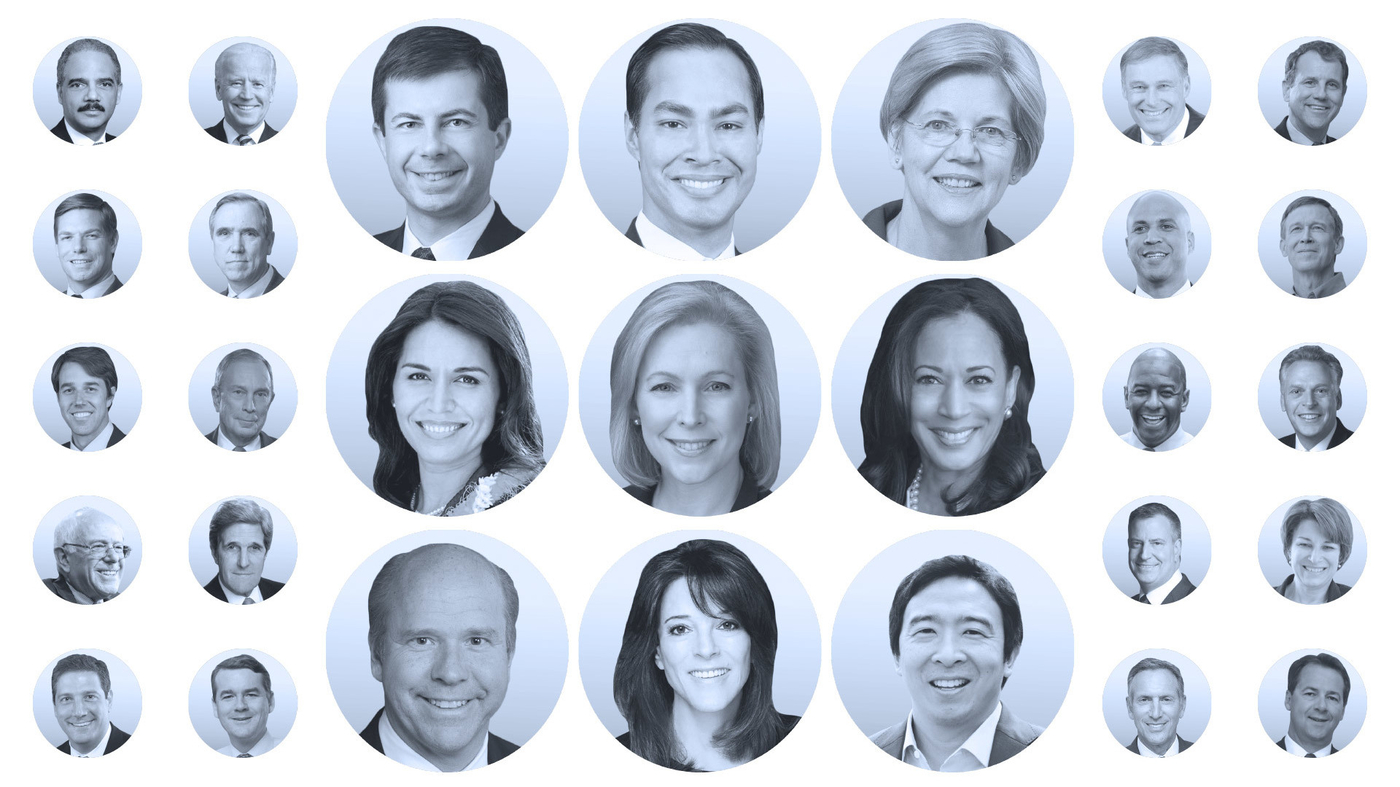
The 2020 United States presidential election featured one of the largest fields of primary and general election contenders in modern political history, comprising dozens of major-party hopefuls, third-party representatives, and independent challengers. Accessing a verified profile for every candidate who ran requires examining official Federal Election Commission records, primary debate qualifications, and general election ballot access metrics to establish an accurate historical ledger.
Understanding the Scope of the 2020 Presidential Candidate Field
The sheer volume of individuals who formally registered committees with the Federal Election Commission (FEC) for the 2020 presidential election cycle numbered in the hundreds, including fringe and write-in contenders. However, serious academic, journalistic, and archival tracking typically focuses on candidates who cleared specific institutional hurdles, such as qualifying for official primary debates, raising a substantial campaign war chest, or securing ballot access in multiple states.
To establish a verified profile for these figures, researchers look past self-reported campaign rhetoric and examine audited financial reports, ballot qualification petitions, and official state election board certifications. The field can be broadly categorized into the Democratic Party primaries, which drew over two dozen prominent figures; the Republican Party primary challengers to incumbent President Donald Trump; and a diverse ecosystem of third-party and independent candidates who appeared on various state ballots in November 2020.
Major Democratic Primary Contenders and Their Verified Profiles
The 2020 Democratic presidential primary featured twenty-nine major declared candidates, making it the most diverse and crowded primary field in modern political history. Establishing verified profiles for these figures involves reviewing their prior public service, campaign finance filings with the FEC, and ultimate performance across the state primary and caucus contests.
Joe Biden, who ultimately secured the Democratic nomination and the presidency, entered the race with a verified political resume spanning decades as a U.S. Senator from Delaware and Vice President of the United States. His campaign navigated a slow start in early contest states like Iowa and New Hampshire before consolidating moderate support ahead of the South Carolina primary and Super Tuesday.
Other prominent contenders included Senators Bernie Sanders of Vermont and Elizabeth Warren of Massachusetts, both of whom ran robust progressive campaigns characterized by grassroots fundraising models. Pete Buttigieg, the former mayor of South Bend, Indiana, emerged as an unexpected early frontrunner by winning the Iowa caucuses, while Senator Kamala Harris of California brought extensive prosecutorial and legislative experience before her campaign concluded prior to the voting phase. Each of these profiles is anchored by verifiable legislative votes, executive actions, and publicly disclosed financial contributions managed through regulated committee structures.
Republican Primary Challengers and Incumbent Verification
The Republican Party nomination process for 2020 was streamlined due to the incumbency of President Donald Trump, yet it still featured notable intra-party challenges that required formal candidate registration and vetting.
Former Governor Bill Weld of Massachusetts and former U.S. Representative Joe Walsh of Illinois formally launched primary challenges against President Trump, focusing their platforms on conservative critiques of the incumbent administration's fiscal policies and governance style. Additionally, former South Carolina Governor and U.S. Representative Mark Sanford mounted a brief primary campaign.
Verifying the profiles of these challenger candidates involves analyzing their historical legislative records, gubernatorial executive orders, and the logistical challenges they faced as state Republican parties increasingly canceled primary and caucus contests in a show of institutional support for the sitting president. Consequently, their campaign profiles are defined less by delegate counts and more by their ideological positioning within the pre-Trump and post-Trump conservative movement.
Third-Party and Independent Candidates on the 2020 Ballot
Beyond the two major political parties, the 2020 general election featured several prominent third-party and independent candidates who secured varying degrees of ballot access across the fifty states and the District of Columbia. A verified profile for these figures requires examining state-by-state petition requirements, as ballot access laws differ significantly across jurisdictions.
| Candidate Name | Political Affiliation | Primary Platform / Focus | Notable Ballot Access Metric |
|---|---|---|---|
| Jo Jorgensen | Libertarian Party | Individual liberty, deregulation, non-interventionist foreign policy | Appeared on the ballot in 43 states and DC |
| Howie Hawkins | Green Party | Ecosocialism, Green New Deal, Medicare for All | Appeared on the ballot in 30 states |
| Kanye West | Independent / Birthday Party | Criminal justice reform, economic nationalism | Appeared on the ballot in 12 states |
| Don Blankenship | Constitution Party | Traditional conservatism, protectionist trade policy | Appeared on the ballot in 17 states |
Evaluating these third-party profiles provides essential context regarding alternative political movements during the 2020 cycle. While none of these candidates secured electoral votes, their aggregate vote totals in battleground states remain a frequent subject of analysis for political scientists assessing the broader dynamics of the general election.
Campaign Finance, Compliance, and Official FEC Documentation
A critical component of any verified political profile from the 2020 election cycle is the examination of campaign finance data. Under federal election law, any individual raising or spending more than $5,000 in connection with a federal election is required to register a principal campaign committee with the Federal Election Commission and file regular financial disclosure reports.
These disclosures provide transparent, verified data regarding:
- Total monetary contributions received from individual donors, political action committees (PACs), and party committees.
- Operating expenditures, including media advertising, staff salaries, travel, and polling expenses.
- Debts and obligations owed by the campaign committee upon termination or suspension of the race.
Reviewing these filings ensures that a candidate's profile is supported by objective financial metrics rather than unverified estimates. Candidates who suspended their campaigns early often faced complex wind-down procedures to settle outstanding debts and properly disburse remaining campaign funds in compliance with federal regulations.
Frequently Asked Questions About 2020 Presidential Candidates
How many total candidates ran for president in 2020?
Over 1,200 individuals registered candidate committees with the Federal Election Commission for the 2020 presidential election cycle. However, this total includes write-in candidates, exploratory committees, and individuals who did not actively campaign; the number of serious contenders who participated in official debates or appeared on multiple state primary ballots was roughly thirty-five across all parties.
Where can I find official, verified financial records for 2020 candidates?
Official financial records for all registered 2020 presidential candidates are publicly accessible through the Federal Election Commission's online database. These records include quarterly and monthly reports detailing campaign contributions, expenditures, cash-on-hand, and outstanding debts.
Did any independent candidates win electoral votes in 2020?
No third-party or independent candidates won electoral votes in the 2020 presidential election. The electoral vote distribution was contested exclusively between the Democratic ticket led by Joe Biden and Kamala Harris, and the Republican ticket led by Donald Trump and Mike Pence.
What criteria determined participation in the 2020 Democratic primary debates?
The Democratic National Committee established strict criteria for debate participation, which evolved throughout the primary cycle. Requirements typically included achieving specific thresholds in verified national or early-state public opinion polls and demonstrating grassroots fundraising support by reaching a minimum number of unique individual donors.
How did state-level ballot access laws affect third-party candidates in 2020?
State-level ballot access laws varied dramatically, creating significant logistical and financial hurdles for third-party and independent candidates. While major-party nominees automatically qualified for the ballot in all fifty states, third-party contenders like Libertarian Jo Jorgensen and Green Party Howie Hawkins had to navigate individual state petition signature requirements, filing fees, and legal challenges to secure their spots.
Verifying Historical Records and Archival Research
Researchers, journalists, and historians examining the roster of the 2020 presidential election must rely on primary sources, including FEC filings, state board of elections certification documents, and authenticated debate transcripts. By cross-referencing these institutional archives, analysts can construct accurate, objective profiles that transcend transient campaign narratives and provide a permanent record of the individuals who sought the nation's highest office.