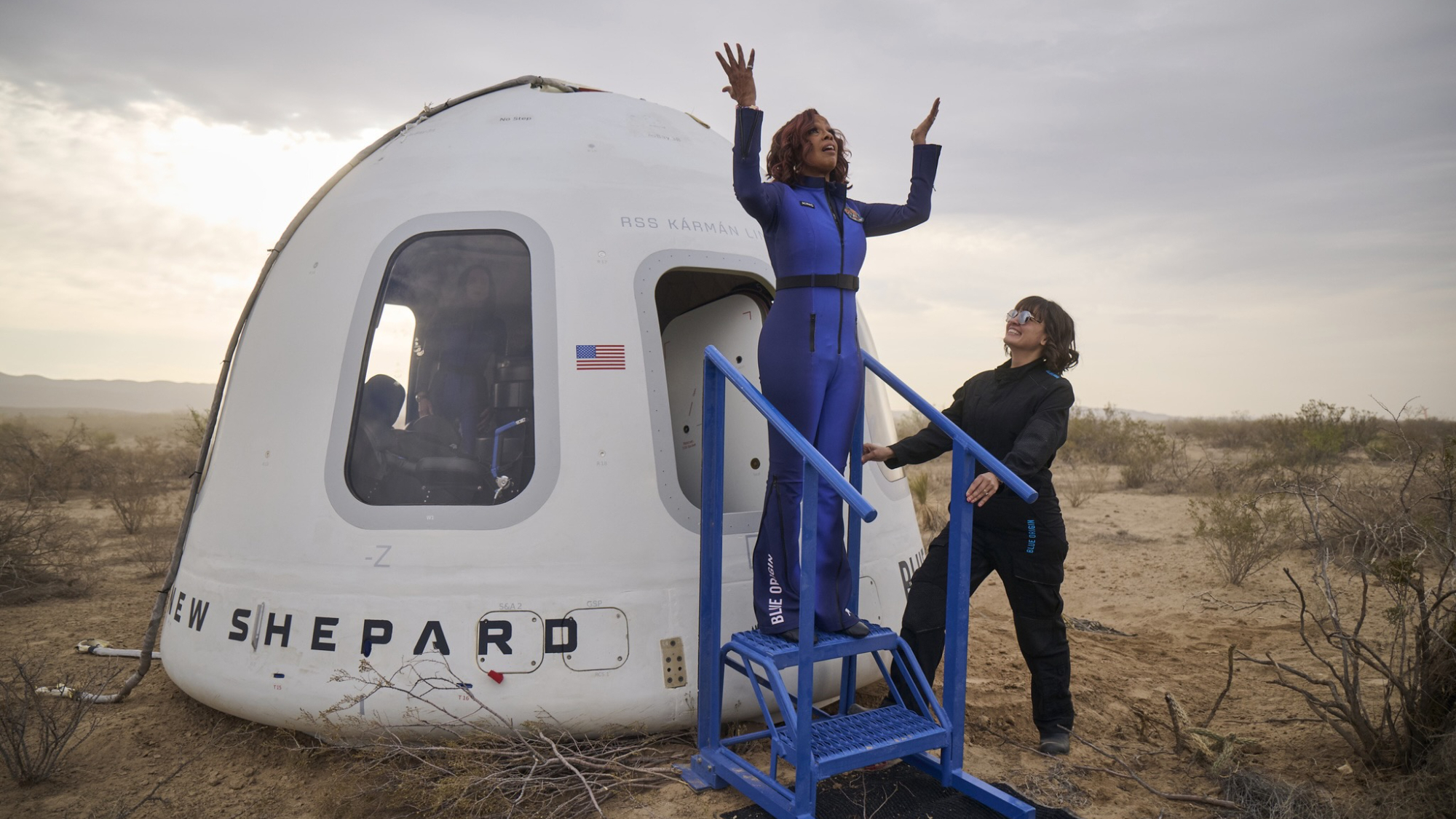
The history of all-female space operations is defined by a transition from symbolic "firsts" to the operational integration seen in 2026. While the first all-female spacewalk occurred in 2019 with Christina Koch and Jessica Meir, the era of all-female mission crews and ground support represents a critical milestone in technical autonomy and gender parity within aerospace engineering and exploration.
The Evolution of Women in Space Exploration
For decades, the presence of women in space was characterized by isolation—single female researchers or pilots embedded within predominantly male crews. This began with Valentina Tereshkova in 1963, who remains the only woman to have flown a solo space mission. However, as mission durations increased and the International Space Station (ISS) became a permanent fixture of low Earth orbit (LEO), the focus shifted toward collaborative team dynamics and diverse crew compositions.
The concept of an "all-female crew" initially manifested not in the spacecraft itself, but in the specific execution of Extravehicular Activities (EVAs), commonly known as spacewalks. Before 2019, every spacewalk involving a woman also included a male counterpart. The shift toward all-female operational units was not merely a matter of social progress; it was a matter of logistics, training, and the availability of hardware. In 2026, as we look back at the development of the Artemis program and the expansion of commercial space stations, these early milestones serve as the foundation for modern mission planning.
The transition to all-female teams required a re-evaluation of human factors engineering. Historically, space hardware—from seat liners to spacesuits—was designed using anthropometric data heavily skewed toward male physiological averages. The movement toward all-female operational segments forced agencies like NASA and the ESA to standardize equipment that accommodates a wider range of body types, ensuring that mission success is never dictated by the sizing of a pressurized glove or a hard upper torso.
The Historic 2019 All-Female Spacewalk
The most significant milestone in the history of all-female space operations occurred on October 18, 2019. Astronauts Christina Koch and Jessica Meir exited the International Space Station to replace a failed power controller, known as a Battery Charge/Discharge Unit (BCDU). This event was originally scheduled for March of that year but was delayed due to a technical limitation regarding available spacesuit sizes—a moment that highlighted the systemic challenges facing female astronauts.
When the mission finally proceeded in October, it was a purely operational necessity, not a staged event. Koch and Meir spent seven hours and 17 minutes outside the station. This mission was significant because it proved that an all-female team could handle the most physically demanding and high-risk aspects of orbital maintenance without the "buffer" of a male lead. The success of this EVA led to several subsequent all-female spacewalks, solidifying the role of women as primary technical operators in microgravity.
The 2019 spacewalk also served as a catalyst for ground-based changes. For the first time, the entire support structure—including the flight controllers, the capsule communicator (CAPCOM), and the mission managers—featured a heavy concentration of female leadership. This holistic approach demonstrated that the "crew" extends beyond the individuals in the vacuum of space to the hundreds of engineers managing the telemetry from Earth.
Key Figures in All-Female Space History
Several pioneers have paved the way for the current 2026 landscape of gender-diverse space exploration. Their contributions range from endurance records to technical leadership in both government and private sectors.
Christina Koch
Christina Koch is a central figure in modern space history. Beyond her role in the first all-female spacewalk, she held the record for the longest single spaceflight by a woman (328 days) until recent missions. Her work as a flight engineer provided essential data on how the female body responds to long-term microgravity, specifically regarding bone density and cardiovascular health. In 2026, her experience remains vital for the planning of long-duration Mars transits.
Jessica Meir
A comparative physiologist by training, Jessica Meir’s contribution to the all-female milestone was bolstered by her expertise in how organisms survive in extreme environments. Her role in the 2019 EVA was a culmination of years of training in the Neutral Buoyancy Laboratory, where she mastered the complexities of the Extravehicular Mobility Unit (EMU).
Peggy Whitson
While much of her early career involved mixed-gender crews, Peggy Whitson’s leadership at Axiom Space has been instrumental in the rise of commercial all-female opportunities. As the first female commander of the ISS and the woman with the most cumulative time in space, Whitson transitioned from NASA to the private sector to lead missions that prioritize diverse crew configurations. Her work has bridged the gap between government-funded exploration and the new commercial space economy.
Svetlana Savitskaya
Historical context requires mentioning Svetlana Savitskaya, the second woman in space and the first woman to perform a spacewalk (1984). Although she worked alongside male cosmonauts, her technical proficiency in welding and metal cutting in vacuum conditions proved that the physical rigors of space were well within the capabilities of female explorers, countering the prevailing biases of the Soviet space program at the time.
Technical Barriers and Hardware Evolution
One of the primary reasons all-female crews were delayed for decades was the "hardware gap." Standard NASA spacesuits, designed in the late 1970s, were built in sizes that favored larger frames. The "Small" size suit was discontinued in the 1990s due to budget cuts, leaving many female astronauts to struggle with "Medium" suits that were often too bulky, leading to fatigue and reduced manual dexterity.
The push for all-female missions necessitated the development of the Exploration Extravehicular Mobility Unit (xEMU). These suits, which are central to the 2026 Artemis missions, feature:
- Highly Modular Components: Allowing for a custom fit for a much wider range of percentiles (from the 1st to the 99th percentile of the population).
- Improved Shoulder Mobility: Utilizing bear-ball joints that allow for a broader range of motion, which is critical for smaller-framed individuals performing heavy-duty tasks.
- Enhanced Life Support Systems: Tailored for the specific metabolic rates of individual astronauts rather than a generic average.
As of 2026, the integration of these technical advancements has made all-female crews a standard option for mission planners. The focus has shifted from "can they fit into the suits" to "who are the most qualified individuals for this specific orbital increment."
Comparison of Landmark All-Female Milestones
The following table outlines the progression of all-female operational achievements leading into the current era.
| Year | Event/Mission | Primary Figures | Significance |
|---|---|---|---|
| 1984 | First Female Spacewalk | Svetlana Savitskaya | Demonstrated female capability in high-risk EVAs. |
| 2019 | First All-Female Spacewalk | Koch & Meir | First time a female duo managed an EVA without male support. |
| 2020 | Consecutive All-Female EVAs | Koch & Meir | Proved the 2019 event was an operational standard, not a one-off. |
| 2023 | Axiom Mission 2 (Ax-2) | Peggy Whitson (Cmdr) | First private mission led by a female commander. |
| 2024 | Artemis II (Preparation) | Christina Koch | Selection of the first woman for a lunar flyby mission. |
| 2026 | Artemis Lunar Operations | Various | Integration of female astronauts in sustained lunar surface sorties. |
The Role of All-Female Ground Control and Mission Support
Space exploration is often viewed through the lens of the astronauts, but the move toward all-female operational environments began on the ground. In recent years, NASA and private entities like SpaceX and Blue Origin have seen "all-female consoles" in Mission Control.
The presence of an all-female ground team during an all-female spacewalk is a powerful logistical statement. It indicates a pipeline of talent that extends from aerospace engineering and orbital mechanics to medical supervision and communications. Key roles such as the Flight Director and the CAPCOM (the individual who speaks directly to the astronauts) have seen a significant increase in female occupancy.
This shift is critical because it addresses the "unconscious bias" that once influenced mission architecture. When the engineers designing the missions and the controllers managing the risks share the physiological perspectives of the crew, the resulting protocols are more efficient. For example, scheduling rest cycles and nutritional requirements in 2026 is now informed by data specifically derived from female biological responses to the stressors of spaceflight.
Future Outlook: Lunar Exploration and Gender Parity in 2026
As of 2026, the focus has moved beyond the International Space Station to the lunar surface. The Artemis Program has been the primary driver for this shift. One of the stated goals of Artemis is to land the first woman and the next man on the Moon. This is not merely a symbolic gesture; it is a recognition that sustainable lunar exploration requires the full spectrum of human talent.
In the current 2026 landscape:
- Lunar Gateway Operations: The small space station orbiting the moon is frequently staffed by gender-diverse crews, with several planned increments featuring majority or all-female staff.
- Commercial Habitats: With the retirement of the ISS approaching, private stations are competing for contracts by offering specialized research environments. These environments often utilize all-female crews for specific biomedical studies that require a controlled gender variable.
- Long-Duration Simulation: On Earth, HERA (Human Exploration Research Analog) and other Mars simulation habitats are using all-female crews to study group dynamics and resource management in isolation, providing data that will be used for the first crewed missions to Mars in the coming decades.
The "all-female crew" has evolved from a historical curiosity to a vital component of the aerospace industry's operational repertoire.
Frequently Asked Questions
Who performed the first all-female spacewalk?
The first all-female spacewalk was performed by NASA astronauts Christina Koch and Jessica Meir on October 18, 2019. They were tasked with replacing a failed battery charge/discharge unit on the exterior of the International Space Station. This event was a major turning point, as it was the first time in over 200 spacewalks that a team did not include at least one man.
Why did it take so long for an all-female crew to perform a spacewalk?
The delay was largely due to a lack of properly sized equipment. Historically, spacesuits were built in large and medium sizes, with the small size discontinued due to cost. In March 2019, an intended all-female spacewalk was cancelled because only one medium-sized suit was ready for flight. This highlighted the need for more inclusive hardware design, which has been addressed with the new xEMU suits used in 2026.
Are there any missions with a 100% female crew planned for the Moon?
As of 2026, NASA and its international partners focus on gender-diverse crews for the Artemis lunar landings to maximize mission expertise. While there are no current 100% all-female "Moon-landing" missions officially scheduled for the immediate future, all-female support crews and secondary mission segments are common, and the first woman to walk on the moon is a central figure of the Artemis III mission.
What are the main physiological differences studied in all-female space crews?
Research focuses on how microgravity affects bone density, vision (SANS - Space-Associated Neuro-ocular Syndrome), and cardiovascular health. Interestingly, some data suggests women may be more resilient to certain radiation-induced health issues and eye-pressure changes compared to their male counterparts, making them excellent candidates for the long-duration travel required for Mars missions.
Which woman has spent the most total time in space as of 2026?
Peggy Whitson currently holds the record for the most cumulative days in space among American astronauts (and women globally). Her career spans multiple decades, including several ISS expeditions and leadership roles in commercial spaceflight with Axiom Space. Her extensive time in orbit has provided a wealth of data on human endurance.
Practical Resources for Following Female Space Missions
To stay informed about the latest developments in all-female missions and gender parity in space exploration as we move through 2026, readers should utilize official agency portals. These platforms provide real-time updates on crew assignments and technical milestones.
- NASA’s Artemis Page: Follow the specific progress of the astronauts selected for lunar missions and the development of the xEMU suits.
- European Space Agency (ESA) - Women in Space: Offers insights into the contributions of European female astronauts and the "Reserve" astronaut program.
- United Nations Office for Outer Space Affairs (UNOOSA): Focuses on the "Space4Women" project, which provides mentorship and data on gender statistics in the global space sector.
- Commercial Providers: Websites for SpaceX and Axiom Space frequently post mission manifests that detail the roles of female pilots and mission specialists in the growing private space economy.
For those interested in the technical history, the NASA History Office maintains archives of the early Mercury 13 (the group of women who underwent secret astronaut testing in the 1960s) through the modern milestones of the 21st century.