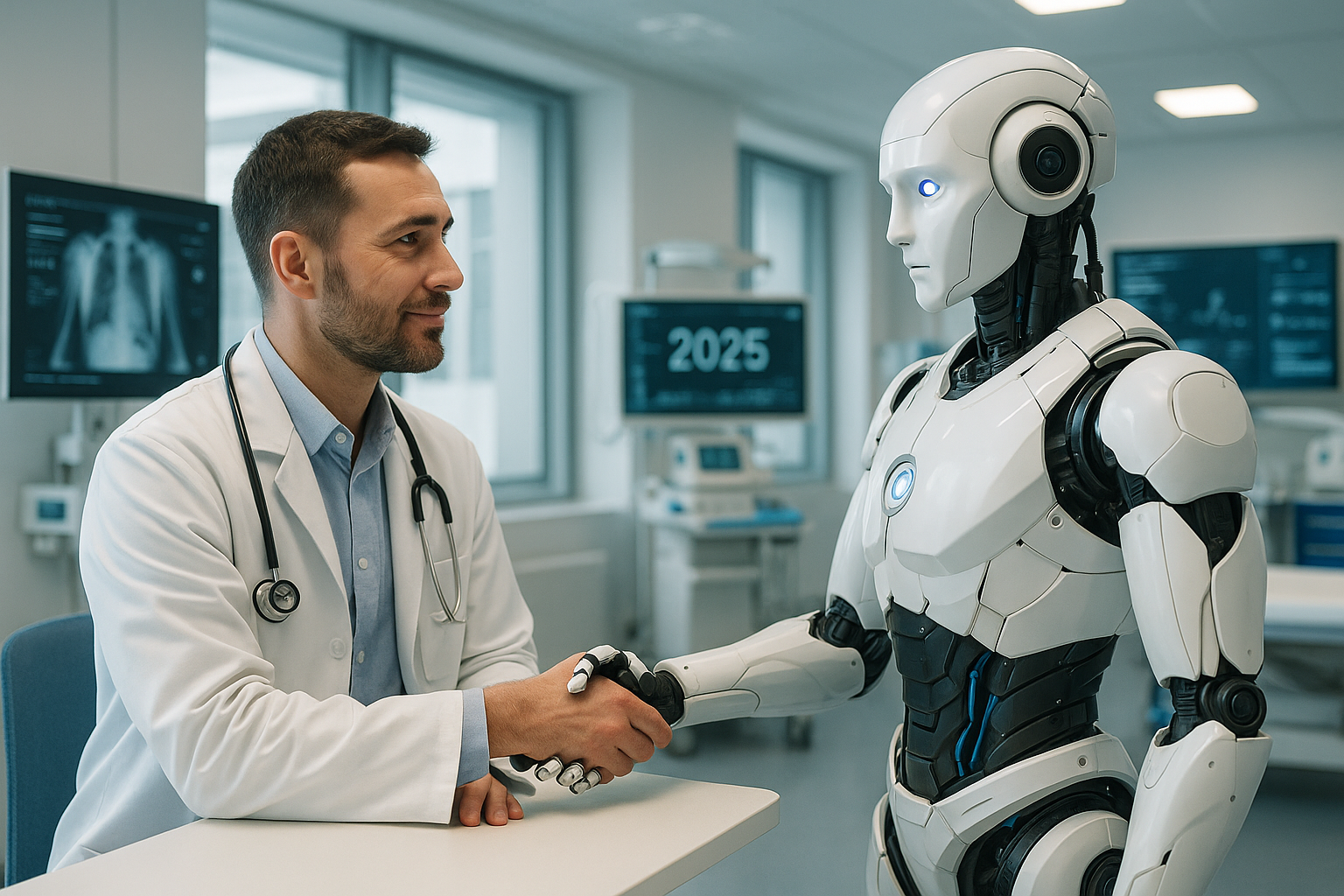
Artificial intelligence will not replace physicians, but physicians who use artificial intelligence will increasingly replace those who do not. Rather than a total displacement of human clinicians by autonomous machines, modern healthcare is experiencing a structural augmentation. Advanced algorithms and large language models excel at pattern recognition, administrative automation, and data synthesis, yet they lack empathy, tactile clinical judgment, ethical accountability, and contextual awareness.
As artificial intelligence systems become deeply integrated into clinical workflows, understanding the boundary between media-driven hype and operational reality is essential for patients, medical professionals, and healthcare administrators. This comprehensive analysis evaluates the current technological capabilities of medical AI, examines the irreplaceable elements of human clinical practice, and outlines how the healthcare workforce is evolving to incorporate these innovations safely and effectively.
Understanding the Hype: What Media Portrayals Claim About Medical AI
Public discourse surrounding artificial intelligence in medicine is frequently dominated by sensationalized narratives. Headlines suggest that autonomous diagnostic supercomputers will soon render human doctors obsolete, diagnosing every pathology from a simple glance at a scan while eliminating human error entirely. This perspective stems from rapid technological milestones in specialized computational tasks, such as algorithms detecting diabetic retinopathy, malignant skin lesions, or structural anomalies on chest radiographs with high statistical sensitivity.
However, hype often conflates statistical pattern matching with genuine clinical comprehension. When an algorithm correctly identifies a fractured bone or an area of concern on an MRI, it is executing advanced mathematical correlation, not clinical reasoning. It does not understand the patient's pain scale, socioeconomic constraints, or underlying medical history unless those parameters are systematically encoded into structured data fields.
Furthermore, commercial interests and venture capital investments can distort public perception. Software vendors frequently market proprietary systems using terminology that implies near-autonomous decision-making capabilities. In practice, regulatory bodies such as the U.S. Food and Drug Administration (FDA) evaluate these tools as Software as a Medical Device (SaMD), almost universally classifying them as decision-support systems that require human clinician validation before any intervention occurs.
The Technological Reality: Where AI Excels in Modern Healthcare
While autonomous replacement is a misconception, the operational utility of AI within clinical environments is profound. Algorithms excel in data-dense, repetitive domains where human cognitive fatigue and cognitive overload create vulnerabilities. By managing high-volume, structured, and unstructured information streams, artificial intelligence improves diagnostic speed and operational efficiency.
Radiology, pathology, and dermatology represent primary domains of success. In radiology, computer vision models flag micro-calcifications in mammograms or subtle hemorrhages in head CT scans, directing human attention to high-risk areas and reducing false-negative rates during high-volume shifts. In pathology, digital slide scanners assisted by machine learning can quantify mitotic cell divisions or identify micrometastases in lymph node biopsies with remarkable consistency.
Beyond diagnostics, natural language processing (NLP) and generative AI models are transforming clinical administration. Physicians spend a substantial portion of their working hours on electronic health record (EHR) documentation, billing codes, and inter-facility correspondence. Ambient AI scribes listen to patient-provider consultations, automatically drafting clinical notes, summarizing medical histories, and proposing preliminary diagnostic codes. This administrative relief directly mitigates physician burnout, allowing practitioners to redirect their focus toward direct patient interaction and complex medical decision-making.
Why Physicians Remain Irreplaceable: The Human Element of Medicine
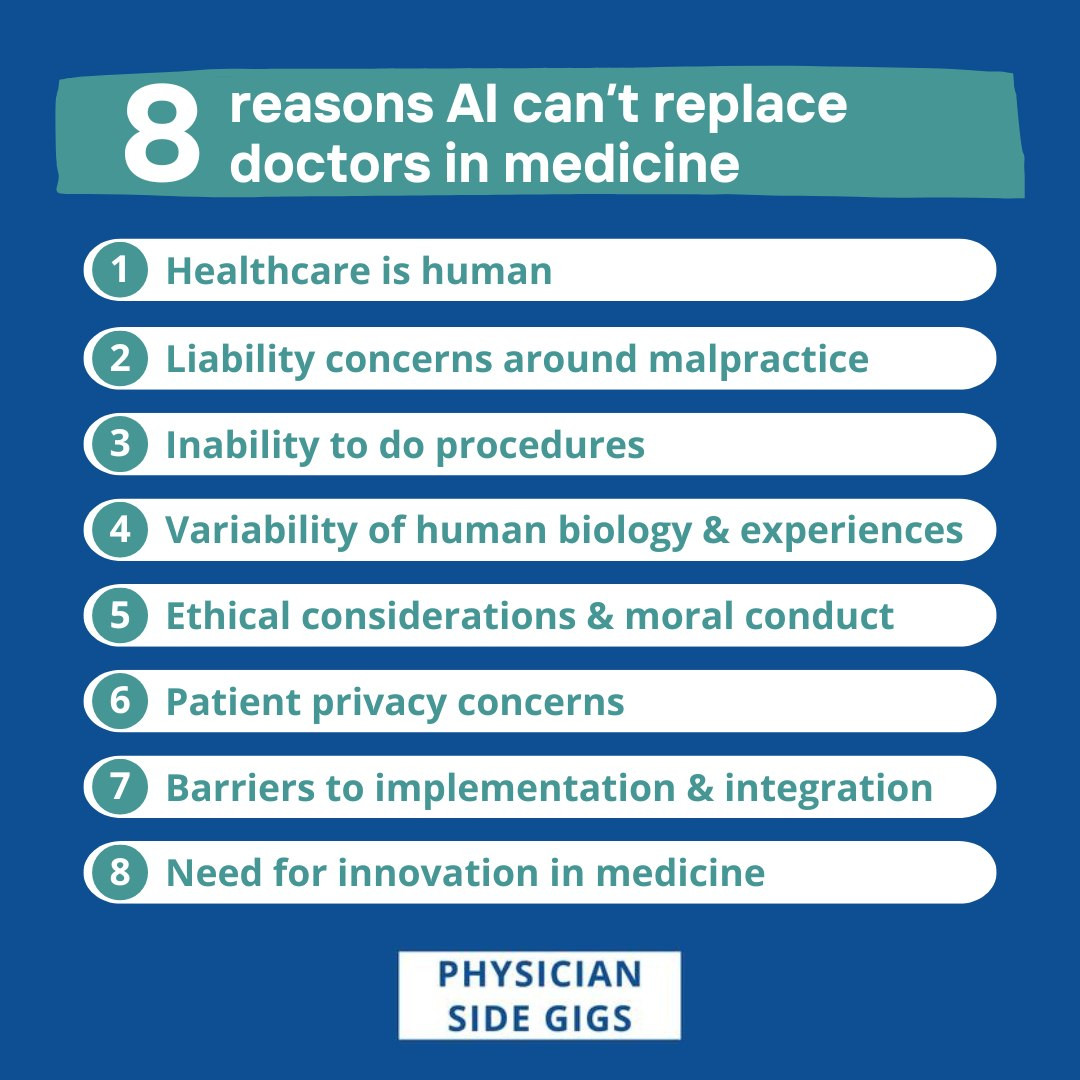
The fundamental practice of medicine extends far beyond matching symptoms to diagnoses. Several critical dimensions of clinical care remain entirely outside the capability of artificial intelligence systems, rooted instead in human interpersonal dynamics, ethics, and physical presence.
Empathy and trust form the cornerstone of the therapeutic alliance. Patients share sensitive, emotionally charged information—such as fears regarding terminal diagnoses, substance use history, or domestic challenges—based on perceived human empathy and confidentiality. A machine cannot offer genuine reassurance, share emotional resonance, or sit beside a frightened patient to help them process a life-altering medical prognosis.
The Clinical Decision-Making Divide
| AI Strengths (Pattern Matching) | Human Strengths (Clinical Wisdom) |
|---|---|
| Processing high-resolution scans | Interpreting ambiguous patient cues |
| Scanning massive medical cohorts | Delivering difficult prognostic news |
| Drafting EHR documentation | Navigating complex ethical dilemmas |
| Detecting statistical anomalies | Applying compassionate bedside care |
Clinical judgment under uncertainty also requires nuanced human wisdom. Medicine is rarely a collection of textbook cases; real-world patients present with overlapping chronic conditions, conflicting pharmacological interactions, and unique personal values. When a patient refuses a standard-of-care intervention due to cultural beliefs or financial hardship, a physician must dynamically recalibrate the treatment plan. This demands shared decision-making, ethical deliberation, and moral responsibility—attributes that algorithms lack entirely.
Liability and accountability represent another insurmountable barrier. Artificial intelligence systems cannot hold a medical license, face malpractice litigation, or bear moral responsibility for a patient's adverse outcome. Accountability must rest with a licensed human professional who retains the final authority to accept, modify, or reject algorithmic recommendations.
Comparative Overview: Human Physicians vs. Artificial Intelligence Systems
To evaluate how clinical responsibilities are divided between human practitioners and computational tools, the following matrix contrasts their core competencies across key healthcare domains.
| Evaluation Domain | Human Physicians | Artificial Intelligence Systems |
|---|---|---|
| Primary Advantage | Empathy, adaptability, and ethical judgment | Speed, consistency, and massive data ingestion |
| Error Vulnerability | Fatigue, cognitive bias, and memory lapses | Algorithmic bias, data drift, and "hallucinations" |
| Accountability | Full legal, ethical, and professional liability | Zero legal standing; vendor or hospital assumes liability |
| Interaction Style | Empathetic, conversational, and culturally aware | Literal, data-driven, and structurally rigid |
| Regulatory Status | Licensed by medical boards and governed by ethics | Regulated as medical devices requiring validation |
This functional divergence demonstrates that AI functions best as an advanced cognitive co-pilot rather than an independent practitioner. The integration of these systems changes the nature of medical work, shifting the physician's role from a memorizer of facts and manual record-keeper to an orchestrator of diagnostic data and a compassionate healer.
Operational Hurdles and Safety Risks in Medical AI Adoption
Integrating artificial intelligence into clinical environments introduces significant technical, legal, and ethical challenges that temper the pace of adoption. Recognizing these obstacles is vital for distinguishing realistic technological progress from speculative fiction.
Algorithmic bias is a pervasive hazard. If a machine learning model is trained predominantly on historical health data from specific demographic cohorts, its diagnostic accuracy declines when applied to underrepresented populations. This disparity can exacerbate existing healthcare inequities, leading to misdiagnoses or delayed treatments for marginalized patient groups.
Data privacy and security represent additional vulnerabilities. Modern medical AI systems require vast repositories of patient health information to train and refine their underlying models. Ensuring compliance with data protection frameworks, such as the Health Insurance Portability and Accountability Act (HIPAA) in the United States or the General Data Protection Regulation (GDPR) in Europe, demands rigorous anonymization and cybersecurity measures to prevent data breaches.
Furthermore, model opacity—frequently termed the "black box" problem—complicates clinical trust. Deep learning networks often arrive at a conclusion through complex, multi-layered mathematical weightings that even their creators cannot fully trace line-by-line. When a physician cannot verify why an algorithm flagged a specific tissue sample as malignant, accepting that recommendation requires a leap of faith that runs counter to evidence-based medical training.
The Evolving Healthcare Workforce: Collaboration Over Competition
Rather than forecasting a zero-sum replacement scenario, health economists and medical educators anticipate a profound restructuring of the healthcare workforce. Medical schools and residency programs are beginning to incorporate digital health literacy, data science principles, and critical appraisal of algorithmic outputs into their core curricula. Future physicians must understand how algorithms function, how to identify potential biases in software outputs, and how to communicate AI-assisted findings to patients transparently.
At the same time, specialized technical roles are expanding within healthcare systems. Clinical informaticians, AI ethicists, and medical data engineers now work alongside physicians and nurses to monitor model performance, detect data drift, and ensure that software tools remain clinically safe and accurate over time.
Ultimately, the integration of artificial intelligence represents an opportunity to return medicine to its human-centric roots. By delegating administrative burdens and high-volume data processing to computational systems, the healthcare industry can empower physicians to dedicate more time, attention, and empathy to their patients.
What Steps Should Clinicians and Healthcare Leaders Take Regarding AI Adoption?
Navigating the intersection of artificial intelligence and clinical practice requires a deliberate, proactive strategy. Healthcare organizations and individual practitioners must implement structured governance frameworks to evaluate, deploy, and monitor these technologies safely.
- Conduct Rigorous Local Validation: Never deploy commercial medical AI tools based solely on vendor claims. Validate software performance using institutional patient datasets to ensure accuracy across diverse local populations.
- Establish Clear Governance Protocols: Form multidisciplinary oversight committees comprising clinicians, legal counsel, and IT specialists to review algorithmic tools and define clear lines of accountability for AI-assisted decisions.
- Prioritize Transparent Patient Communication: Inform patients when artificial intelligence is utilized in their diagnostic pathway or documentation, ensuring informed consent and maintaining trust.
- Invest in Continuous Professional Education: Train medical staff not only on how to operate new software interfaces, but also on how to recognize algorithmic limitations, automated bias, and error states.
- Maintain Human-in-the-Loop Mandates: Enforce strict institutional policies prohibiting fully autonomous clinical decision-making, ensuring that a licensed human physician always reviews and authorizes final medical interventions.