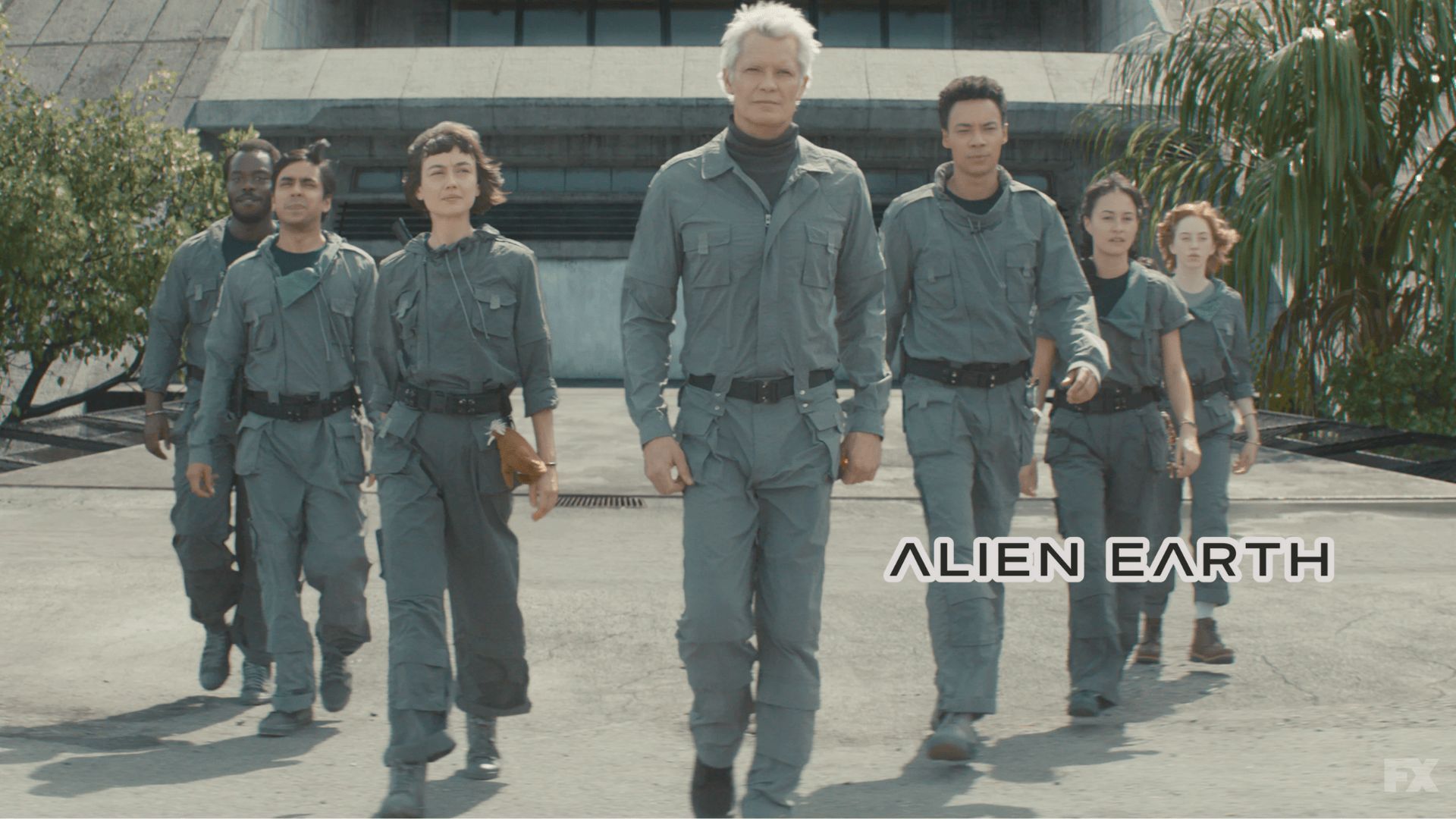
Alien Earth Season 1 Episode 6 unlocking cosmic secrets marks a major narrative pivot, shifting the series from planetary survival mechanics to macro-level cosmological inquiries. As the inaugural season progresses past its introductory world-building phases, this specific installment forces its characters to confront the broader physics, ancient histories, and extraterrestrial architectures that govern their hostile environment. Viewers following the serial trajectory find that the sixth episode functions as a crucial exposition hub, answering long-standing questions regarding the origin of the anomalous planetary phenomena while introducing deeper philosophical and technical complexities.
The narrative architecture of the episode relies heavily on environmental storytelling, archival discovery, and high-stakes character revelations. Rather than relying solely on action set-pieces, the script allocates significant runtime to deciphering alien symbology, archaeological strata, and orbital telemetry data retrieved in earlier episodes. This thematic pivot appeals directly to viewers invested in hard science fiction, speculative evolution, and complex lore-building. By dissecting the structural components, thematic beats, and technical revelations of this installment, audiences can better appreciate how the writers weave hard scientific concepts into a speculative narrative framework.
Narrative Context and Narrative Arc Progression
To understand the weight of Alien Earth Season 1 Episode 6 unlocking cosmic secrets, one must examine its placement within the broader first-season arc. The initial episodes of the series establish a baseline of isolation, focusing primarily on ecological adaptation, resource scarcity, and the psychological toll of habitation on an unyielding world. Characters navigate toxic atmospheres, erratic weather patterns, and aggressive indigenous fauna. However, by the midpoint of the season, narrative breadcrumbs point toward an artificial or manipulated origin for the planet's extreme conditions.
Episode 6 synthesizes these disparate clues into a cohesive framework. The protagonists transition from passive survivors to active investigators, utilizing recovered artifacts and derelict technology arrays to map the planet's true status within a larger interstellar network. This shift alters the stakes: the struggle is no longer merely about enduring another planetary cycle, but about understanding whether the world is a natural cosmic anomaly or a deliberately engineered construct designed for purposes yet unknown. The pacing deliberately slows during investigative sequences, allowing the audience to process dense theoretical frameworks alongside the cast.
Deciphering the Cosmic Secrets: Key Lore Revelations
The core conceit of the episode revolves around the translation and interpretation of non-human data structures. Throughout the runtime, the science team within the story confronts physical and digital archives left behind by an antecedent civilization. These revelations are not handed to the audience through heavy exposition dumps; instead, they are unspooled through empirical observation, linguistic pattern recognition, and hardware interfacing.
Central to this process is the recovery of a planetary mapping array that reveals the world’s geographical layout is synchronized with distant stellar alignments. The narrative introduces concepts of stellar cartography and gravitational lensing, suggesting that the planet's core is artificially stabilized by orbital megastructures.
- Artifact Interfacing: Characters must bridge incompatible technological interfaces, highlighting the logistical and physical challenges of communicating with non-human intelligence.
- Archival Decryption: Linguistic and mathematical algorithms are deployed to translate ancient logs, revealing historical records of interstellar migration and planetary seeding.
- Environmental Synchronization: The episode links local seismic anomalies directly to remote stellar events, proving that the planet's ecosystem is tethered to a larger galactic apparatus.
These discoveries challenge the characters' fundamental assumptions about their place in the universe. The realization that their home is a deliberate focal point rather than a random rock in space shifts the genre tone closer to cosmic horror and grand-scale space opera.
| Investigation Phase | Primary Objective | Key Technical Challenge | Narrative Outcome |
|---|---|---|---|
| Phase One | Data Retrieval | Environmental hazard and hardware degradation | Extraction of raw telemetry logs from a subterranean vault. |
| Phase Two | Linguistic Translation | Non-human syntax and multidimensional math | Decoding architectural schematics of the planetary grid. |
| Phase Three | Stellar Alignment | Correlating local anomalies with distant star systems | Confirmation of artificial planetary stabilization. |
Character Dynamics and Psychological Fallout
Unlocking cosmic truths invariably exerts a heavy toll on those who bear witness to them. Episode 6 does not treat these revelations as mere plot points; it explores how profound existential knowledge fractures interpersonal relationships and challenges personal belief systems. The ensemble cast splits ideologically when confronted with the implications of the cosmic archive. Some characters view the revelations as a roadmap to liberation, while others perceive them as confirmation of human insignificance on a galactic scale.
This ideological friction drives the dramatic tension of the episode. The dialogue shifts from tactical survival instructions to philosophical debates regarding determinism, free will, and the ethics of technological intervention. Performers convey psychological strain through subdued, naturalistic acting choices that contrast sharply with the scale of the cosmic phenomena surrounding them. The emotional core remains grounded in the vulnerability of the characters, ensuring that the high-concept science fiction never overwhelms human stakes.
Production Design and Visual Execution
A defining element of Alien Earth Season 1 Episode 6 unlocking cosmic secrets is its distinct visual language. The production design team utilizes a stark, brutalist aesthetic combined with ethereal, non-organic geometries to represent the antecedent civilization's technology. Abandoned facilities feature massive scale differentials, making human characters appear minuscule against towering monoliths and sprawling holographic star maps.
Cinematography favors wide aspect ratios and deep focus, ensuring that background data displays and planetary vistas remain legible and immersive. Lighting design plays a crucial role: harsh, clinical blues and sterile whites inside the alien structures contrast with the earthy, muted tones of the natural planetary exterior. Sound design further enhances the atmosphere, blending low-frequency acoustic vibrations with ambient electronic scoring that accentuates the vastness of interstellar space and the oppressive weight of planetary containment.
Common Viewer Misinterpretations and Narrative Nuances
Due to the dense scientific terminology and complex plotting of the episode, certain narrative developments are frequently misconstrued by audiences. Clarifying these points ensures a more accurate appreciation of the overarching story arc.
- Misconception of Planet Origin: Some viewers assume the planet is a naturally formed world that happened to attract alien life, whereas the episode explicitly confirms it is an artificial construct built to harvest or redirect stellar energy.
- The Nature of the Archive: The data recovered is not a proactive warning or a message meant for human consumption; it is a passive historical log left behind by a vanished civilization, meaning the characters must interpret its context without direct guidance.
- Character Motivations: Actions taken by the science team are sometimes misread as reckless, whereas they are calculated risks driven by the imminent failure of planetary life-support systems.
Frequently Asked Questions
What are the main cosmic secrets revealed in Alien Earth Season 1 Episode 6?
The episode reveals that the planet is an artificially engineered construct anchored by a stellar alignment grid, suggesting it was designed by an antecedent civilization for macro-scale energy manipulation rather than natural habitation.
How do the characters manage to translate the alien technology?
The translation is achieved by utilizing universal mathematical constants and pattern-recognition software to bridge gaps between human computing frameworks and non-human data storage formats.
Does Episode 6 resolve the primary mysteries of the first season?
No, while it answers fundamental questions about the planet's origin, it opens up larger questions regarding the current status of the antecedent civilization and the external forces threatening the planetary grid.
Is prior scientific knowledge required to follow the episode's plot?
While the episode incorporates advanced theoretical concepts such as stellar cartography and gravitational physics, the narrative presents them through accessible character-driven explanations and visual demonstrations.
Where does Episode 6 fit within the overall season structure?
It serves as the narrative turning point and exposition hub of the first season, bridging early survival survival tropes with macro-level science fiction world-building.
Strategic Viewing and Next Actions
To fully grasp the implications of Alien Earth Season 1 Episode 6 unlocking cosmic secrets, viewers should re-examine key background details from earlier episodes, particularly archival clues found in the third and fourth installments. Pay close attention to environmental audio cues and background data displays, as production designers frequently embed foreshadowing elements within set dressings. Tracking the subtle shifts in character alliances throughout this episode will also provide essential context for the political and existential conflicts that dominate the remainder of the season.