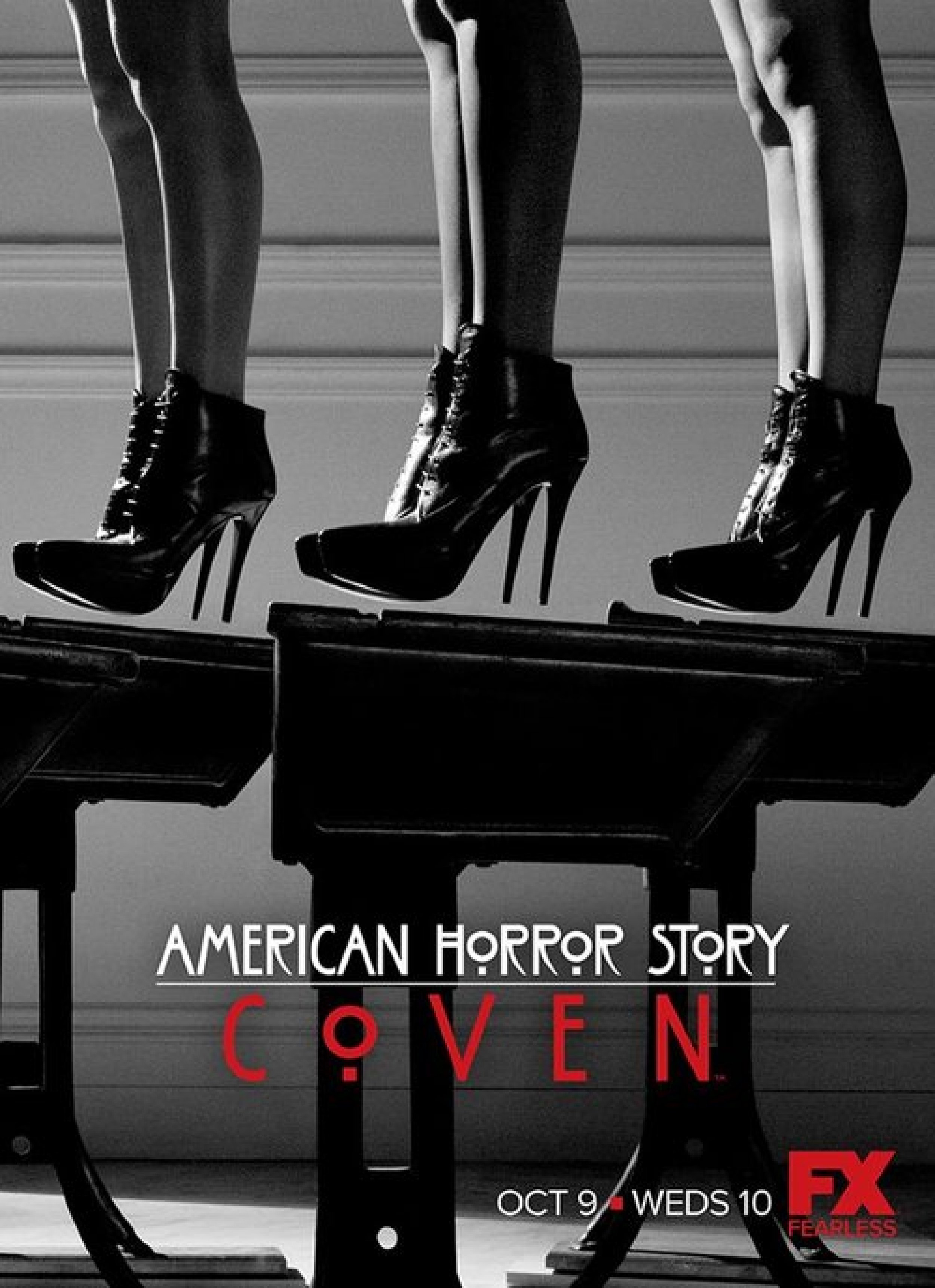
American Horror Story: Coven, the third season of Ryan Murphy and Brad Falchuk's acclaimed anthology series, blends supernatural horror, southern gothic aesthetics, and dark humor to explore generational trauma, female empowerment, and the complex sociopolitical history of New Orleans. Set primarily in 2013 with frequent historical flashbacks, the narrative centers on a clandestine boarding school for young witches struggling to survive amidst external persecution and internal power struggles.
The Premise and Setting of Miss Robichaux's Academy
The narrative framework of Coven revolves around Miss Robichaux's Academy for Exceptional Young Ladies, a historic safe haven disguised as a respectable finishing school in New Orleans, Louisiana. Run by the formidable headmistress Cordelia Foxx (played by Sarah Paulson), the academy is dedicated to protecting and training the dwindling lineage of Salem descendants. These young women possess distinct, specialized gifts ranging from telekinesis and psychometry to vitalum fortis—the power to resurrect the dead.
Unlike conventional horror tropes that depict witches as isolated hermits or servants of malevolent forces, Coven positions witchcraft as a lineage-based community burdened by survival instincts. The geographical backdrop of New Orleans is vital to the story's identity. The city functions almost as a character itself, steeped in voodoo traditions, centuries-old architecture, jazz history, and a rich tapestry of syncretic spiritual practices. This setting allows the series to explore the historical friction between Salem descendants and the Voodoo practitioners of Louisiana, led by the immortal queen Marie Laveau (Angela Bassett).
Key Characters and Factional Dynamics
At the heart of the season's narrative tension is the volatile dynamic between two opposing magical factions: the white Salem witches and the Black Voodoo practitioners. This conflict is complicated further by the return of Fiona Goode (Jessica Lange), the reigning Supreme—the most powerful witch of her generation—whose vanity and desperation to escape aging drive the season's central crises.
Fiona’s arrival at the academy disrupts the education of the new generation of initiates, which includes:
- Zoe Benson (Taissa Farmiga): A young woman who discovers her witch heritage after a fatal tragedy, bringing a sense of moral compass and investigative drive to the academy.
- Madison Montgomery (Emma Roberts): A narcissistic Hollywood teen star equipped with telekinetic abilities who views her powers through a lens of privilege and entitlement.
- Queenie (Gabourey Sidibe): A descendant of Tituba with pain-infliction abilities, navigating feelings of isolation due to her racial background within the Salem lineage.
- Nan (Jamie Brewer): A clairvoyant initiate possessing a sweet disposition that masks a sharp, perceptive understanding of those around her.
Alongside these students, the coven is haunted by historical figures brought into the modern era, most notably Madame Delphine LaLaurie (Kathy Bates), a notorious 19th-century socialite and serial killer subjected to immortality and eternal torture by Marie Laveau. The interaction between LaLaurie and the modern witches exposes deep-seated historical prejudices, forcing the characters to confront the violent racial legacy of the American South.
Major Themes: Power, Matriarchy, and Intersectionality
Coven distinguishes itself within the American Horror Story canon by centering its narrative almost entirely on female power, sisterhood, and matriarchal structures. The concept of the "Supreme"—a single witch who holds supreme dominion and embodies all magical gifts—serves as both a focal point for ambition and a critique of absolute authority. Fiona Goode's refusal to cede power mirrors patriarchal anxieties about aging and obsolescence, reframing them through a uniquely feminine lens.
However, the season's exploration of intersectionality and race has been a subject of critical discussion. By juxtaposing the Salem witches with Marie Laveau's voodoo coven, the show attempts to examine historical racism and cultural appropriation. While the performances of Angela Bassett and Gabourey Sidibe received widespread acclaim for bringing depth and dignity to complex roles, critics have often noted that the series occasionally skirts the edges of systemic oppression, using real-world atrocities like slavery and Jim Crow as stylistic window dressing for a supernatural melodrama.
| Character / Faction | Primary Magical Ability / Role | Cultural & Historical Roots |
|---|---|---|
| Fiona Goode | The reigning Supreme (telepathy, transmutation, etc.) | Salem witch lineage; embodiment of aging Hollywood vanity |
| Marie Laveau | Voodoo Queen (immortality pacts, resurrection, curses) | Historical New Orleans Voodoo tradition |
| Cordelia Foxx | Headmistress; later possesses Second Sight | Salem witch lineage; maternal protection and botanical magic |
| Madame LaLaurie | Immortal captive and domestic servant | 19th-century Louisiana slaveowner and serial killer |
| The Council | Governing body of witches (protection and justice) | International Salem judiciary system |
Evolution of the Narrative and the Search for the Next Supreme
The primary plot engine of Coven is the impending demise of Fiona Goode and the arduous trial known as the Seven Wonders. Because a Supreme cannot truly rise until the current one fades, the young initiates at Miss Robichaux's Academy are forced to undergo rigorous testing to determine which among them will inherit the mantle. This competition strips away superficial rivalries, forcing the characters to confront their deepest insecurities and moral failings.
Concurrently, the coven faces existential threats from outside forces. The Council of Witches investigates the academy following a series of disappearances, while a group of witch hunters—operating under the guise of corporate executives—launches a systematic extermination campaign against magical practitioners. These overlapping conflicts elevate the stakes from a localized coming-of-age drama to a war for the very survival of witchcraft in the modern world.
Cultural Impact and Legacy within the Anthology
Upon its broadcast in late 2013 and early 2014, Coven became the highest-rated season of American Horror Story up to that point, capturing a massive youth and pop-culture following. Its distinct aesthetic—characterized by wide-brimmed black hats, sunglasses, velvet capes, and sardonic one-liners—cemented it as a touchstone for modern witch fashion and gothic television.
The season's impact proved enduring enough that Ryan Murphy revisited the characters in the eighth season, American Horror Story: Apocalypse (2018), which served as a direct crossover tying Coven to the first season, Murder House. This reunion allowed the surviving members of Miss Robichaux's Academy to demonstrate their collective strength on a global scale, resolving lingering character arcs and cementing their status as fan favorites in the broader television landscape.
Frequently Asked Questions
What is the main plot of American Horror Story: Coven?
The season follows a group of young witches at a New Orleans boarding school learning to control their powers while navigating internal power struggles, historical prejudices, and external threats from Voodoo practitioners and mortal witch hunters.
Is Coven connected to other seasons of American Horror Story?
Yes, while American Horror Story is primarily an anthology series with standalone seasons, Coven shares direct narrative continuity with Apocalypse (Season 8), where several main characters return to play a pivotal role in the storyline.
Who is the most powerful witch in Coven?
The title of Supreme is held initially by Fiona Goode and is later claimed by her daughter, Cordelia Foxx, after she successfully performs the grueling trial of the Seven Wonders, unlocking her full potential.
Where was American Horror Story: Coven filmed?
While interior scenes were largely shot on sets in California, the exterior establishing shots and location sequences were filmed on location in New Orleans, Louisiana, utilizing historic architecture such as the LaLaurie Mansion and various Garden District properties.
What are the Seven Wonders in the context of the show?
The Seven Wonders are a set of seven supreme magical abilities—Telekinesis, Concilium, Transmutation, Divination, Vitalum Fortis, Descensum, and Pyrokinesis—that an aspiring Supreme must successfully demonstrate to prove her worthiness of leadership.