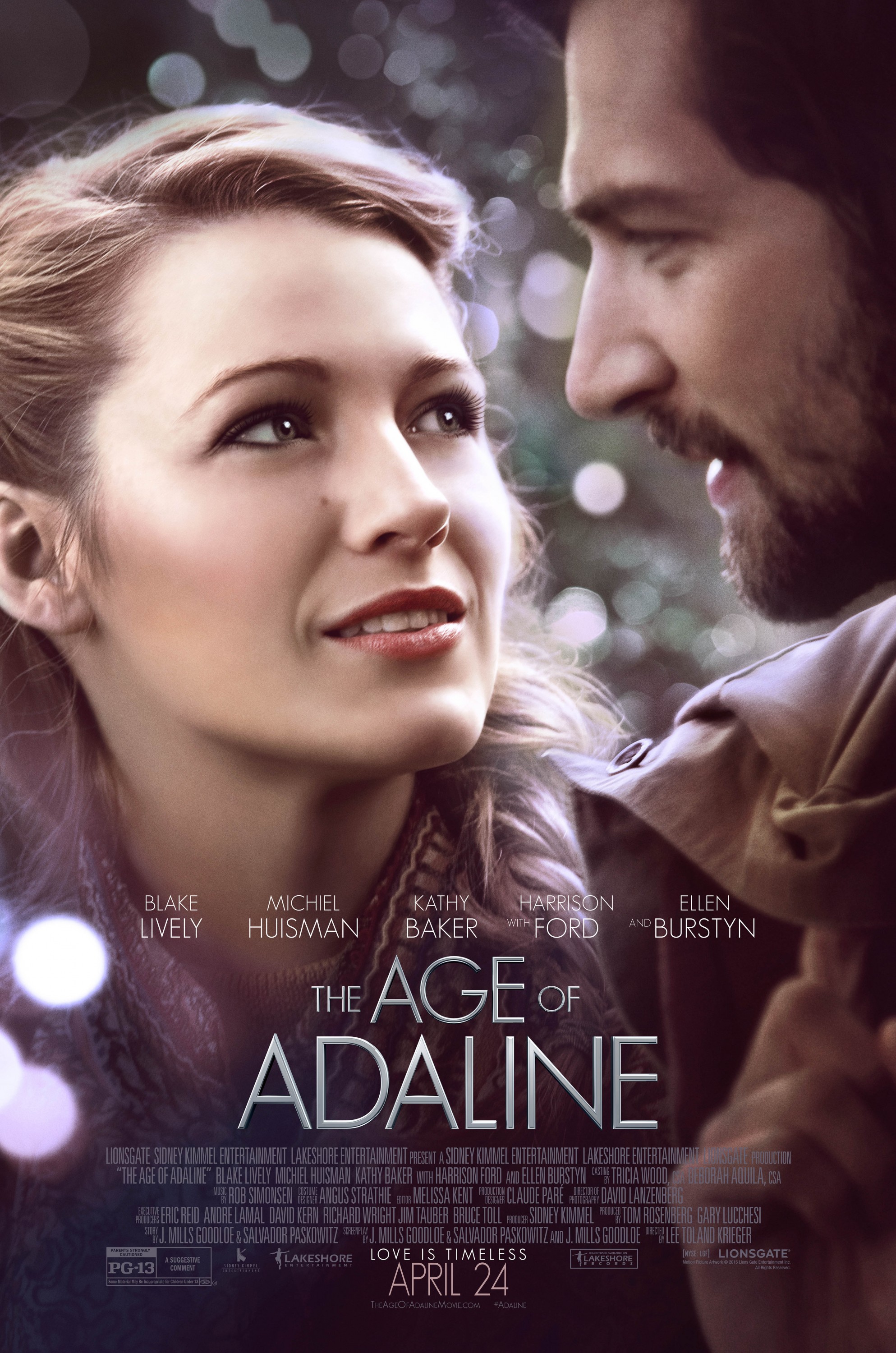
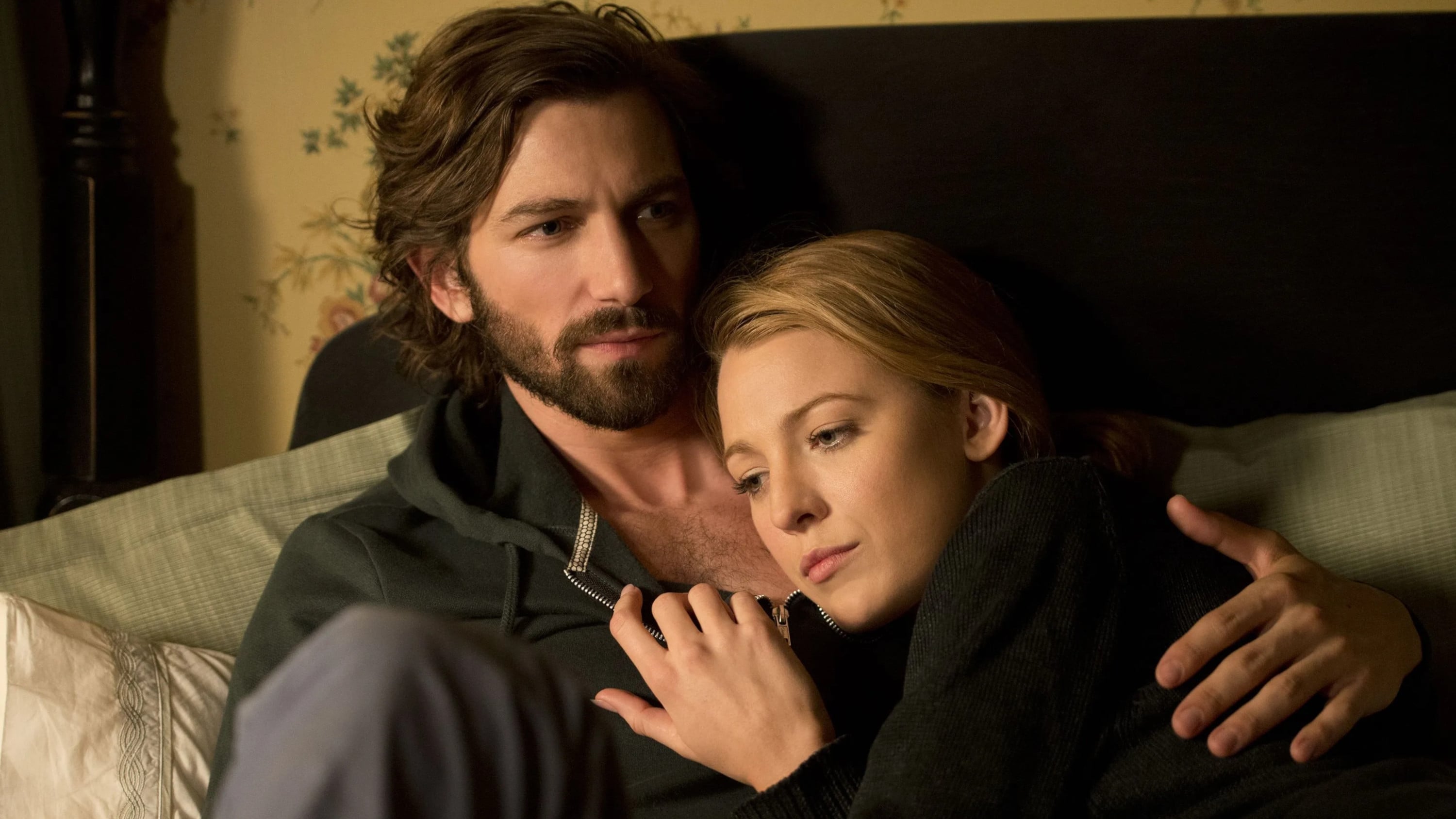
The Age of Adaline is a 2015 romantic fantasy film that follows the life of Adaline Bowman, a woman who stops aging at 29 after a miraculous accident. For eight decades, she lives in solitude, changing identities to protect her secret, until a chance encounter with a charismatic philanthropist forces her to confront her immortality and the possibility of love.
Directed by Lee Toland Krieger and written by J. Mills Goodloe and Salvador Paskowitz, the film has carved out a unique niche in the "magical realism" and romantic drama genres. As we look back from 2026, over a decade since its initial theatrical release, the film remains a staple for audiences seeking a blend of historical aesthetic, emotional depth, and a philosophical meditation on the nature of time.
The Narrative Foundation of Adaline Bowman
The story of Adaline Bowman begins in the early 20th century. Born in 1908, Adaline leads a relatively conventional life until a fateful night in 1937. Following the death of her husband, Adaline is involved in a car accident during a rare snowstorm in coastal California. The film employs a distinct narrative device—a pseudo-scientific voiceover—to explain the "compression of deoxyribonucleic acid" caused by a combination of freezing water and a lightning strike. This event renders Adaline immune to the ravages of time; she simply ceases to age.
The narrative logic of the film treats this immortality not as a superhero-style gift, but as a logistical and emotional burden. As the decades pass, Adaline witnesses her daughter, Flemming, grow older while she remains frozen in her late twenties. The tension of the plot arises from the Cold War era, where Adaline is nearly detained by government agents suspicious of her unchanging appearance. This forces her into a life of nomadic secrecy, moving every ten years and assuming new identities.
The emotional core of the film is triggered when Adaline meets Ellis Jones (Michiel Huisman) in modern-day San Francisco. Unlike the many men she has brushed off over the decades, Ellis’s persistence breaks through her defenses. However, the stakes are raised significantly when she meets Ellis's parents and discovers that his father, William (Harrison Ford), is a man she loved and abruptly left in the 1960s.
Technical Craft: Costume Design and Cinematography
One of the most enduring aspects of The Age of Adaline is its meticulous attention to visual detail. Because the protagonist lives through nearly a century of fashion and architectural shifts, the production design serves as a silent secondary protagonist.
The Role of Costume Design
Angus Strathie, an Academy Award-winning costume designer, was tasked with creating a wardrobe that reflected Adaline’s long history without making her look like she was wearing a "costume." Adaline’s style is characterized by timelessness. She wears pieces that could feasibly belong to several eras—vintage silhouettes, high-quality fabrics, and a palette that leans toward autumnal tones.
Her clothing choices represent her psychological state: she is a woman who stores her memories in the fibers of her garments. For example, the gown she wears to the New Year’s Eve party is both contemporary for 2015 and evocative of the 1940s. This visual continuity helps the audience bridge the gap between her chronological age (107 by the film's climax) and her physical appearance.
Visual Aesthetic and Cinematography
Cinematographer David Lanzenberg used specific color grading to distinguish between the different eras depicted in flashbacks. The 1930s and 40s sequences have a warm, slightly desaturated glow, while the 1960s sequences adopt a more vibrant, technicolor-adjacent palette. By the time the film reaches the "present day," the visuals are crisp and cool, emphasizing the modern isolation of Adaline’s high-tech but lonely existence in San Francisco.
Casting and Character Archetypes
The success of The Age of Adaline rests heavily on the performances of its central cast, particularly Blake Lively and Harrison Ford.
- Blake Lively as Adaline Bowman: Prior to this role, Lively was largely known for her work in Gossip Girl. This film served as a pivotal moment in her career, proving her ability to carry a sophisticated, period-spanning drama. She adopts a specific mid-Atlantic accent and a formal posture that suggests a woman who was raised in a more disciplined era.
- Harrison Ford as William Jones: Many critics argued that this was one of Ford’s most nuanced performances in the 21st century. As the older version of Adaline’s former lover, Ford portrays a man haunted by a "ghost" from his past. The moment his character recognizes Adaline is the emotional fulcrum of the movie, requiring a delicate balance of shock, grief, and longing.
- Ellen Burstyn as Flemming: The casting of Burstyn as Adaline’s daughter creates a poignant visual irony. Having an Oscar-winning actress play the "elder" daughter to a much younger-looking mother adds a layer of gravitas to the film’s exploration of mortality. Flemming acts as Adaline’s confidante and the only person who truly knows her, often urging her mother to stop running and start living.
The Science and Philosophy of Agelessness
While The Age of Adaline is a romance, it flirts with science fiction through its use of a third-person narrator. This narrator explains the mechanics of Adaline’s condition using terminology that sounds grounded in physics and biology, even though the "Von Lehman Principle" mentioned is entirely fictional.
As of 2026, the film is often discussed in the context of "longevity culture." In the decade since the film's release, the real-world scientific community has made strides in understanding senescence (biological aging). While we are nowhere near the accidental immortality depicted in the film, the themes of the movie resonate more deeply today as society grapples with the ethics of life extension.
The Weight of Immortality
The film posits that time is only meaningful because it is finite. Adaline’s immortality is portrayed as a form of stasis. She cannot commit to a home, a career, or a relationship because she cannot age with someone. The tragedy of her character is not that she will die, but that she is stuck while the rest of the world moves on. This is a subversion of the typical "fountain of youth" myth, which usually focuses on the desire to stay young forever. Adaline, conversely, desires the "privilege" of growing old.
Comparative Media: A Genre Analysis
To understand where The Age of Adaline fits in the cinematic landscape, it is helpful to compare it to other films that deal with altered timelines or biological anomalies.
| Film Title | Mechanism of Change | Primary Theme | Emotional Tone |
|---|---|---|---|
| The Age of Adaline | Lightning/Hypothermia | Loneliness & Intimacy | Romantic / Melancholic |
| Benjamin Button | Reverse Aging | The Inevitability of Loss | Epic / Philosophical |
| About Time | Hereditary Time Travel | Appreciation of the Ordinary | Whimsical / Heartfelt |
| The Man from Earth | Unknown Biological Process | The Burden of History | Intellectual / Minimalist |
| Bicentennial Man | Robotic Evolution | The Desire to be Human | Sentimental / Sci-Fi |
Unlike The Curious Case of Benjamin Button, which focuses on the grand sweep of a life lived in reverse, The Age of Adaline is a much more intimate, chamber-drama-style piece. It focuses less on the "how" and more on the "who"—specifically, how one’s identity is tied to their place in a generational timeline.
Impact and Reception in the Mid-2020s
Upon its release in 2015, the film received mixed-to-positive reviews. Critics praised the performances and the production value but were sometimes skeptical of the "pseudo-science" narration. However, in the years following, the film has found a massive audience on streaming platforms.
By 2026, The Age of Adaline is frequently cited as a "comfort movie." Its lush visuals and earnest approach to romance have given it a longevity that many flashier blockbusters of the 2010s lacked. It has also become a frequent point of reference in discussions about "quiet cinema"—films that prioritize atmosphere and character over explosive action or complex plot twists.
The film's box office performance was modest, earning approximately $65 million against a $25 million budget, but its cultural footprint is measured more accurately by its consistent presence in "Best Romantic Drama" lists on digital storefronts and social media curation.
Frequently Asked Questions
How does Adaline stop aging in the movie?
Adaline’s aging process is halted by a combination of extreme hypothermia and a lightning strike after a car accident. The film’s narrator explains that the lightning strike provided a massive electrical discharge that essentially "reset" her cells and compressed her DNA, preventing the natural degradation associated with aging.
Does Adaline ever age again?
Yes, at the end of the film, Adaline is involved in another car accident that involves a defibrillator shock. This second electrical surge, occurring under different physiological conditions, reverses the effect of the first accident. A final scene shows her discovering a grey hair, symbolizing that her biological clock has restarted and she is finally able to age naturally with Ellis.
Who is the narrator in the film?
The film is narrated by Hugh Ross. His voice provides a detached, documentary-style tone that contrasts with the emotional nature of the story. This choice was intentional, meant to give the film the feeling of a "fable" or a scientific anomaly being observed from the outside.
Where was The Age of Adaline filmed?
Although the story is set in San Francisco, the majority of the filming took place in and around Vancouver, British Columbia. The production used various locations in the Pacific Northwest to replicate the foggy, historic atmosphere of the Bay Area across different decades.
Is the "Von Lehman Principle" a real scientific theory?
No, the "Von Lehman Principle" is a fictional concept created for the movie. The narrator claims it will be discovered in 2035. As of 2026, there is no such principle in real-world genetics or physics, although the film’s explanation touches on real concepts like DNA methylation and electron transport.
Guidance for New Viewers
For those discovering The Age of Adaline for the first time in 2026, the best way to experience the film is to focus on its thematic questions rather than its scientific plausibility. It is a film designed to be "felt" rather than "solved."
Key viewing tips:
- Pay attention to the background: The transition of San Francisco through the decades is beautifully rendered; look for historical Easter eggs in the 1940s and 60s scenes.
- Watch for the performance of Harrison Ford: His entrance in the second half of the movie shifts the tone from a standard romance to a high-stakes emotional drama.
- Consider the perspective of Flemming: While Adaline is the protagonist, her daughter Flemming (Ellen Burstyn) offers the most grounded perspective on the tragedy of staying young while the world moves on.
The film serves as a reminder that the beauty of life is often found in its transience. By wanting to grow old, Adaline is ultimately choosing to participate in the human experience fully, including its inevitable end.