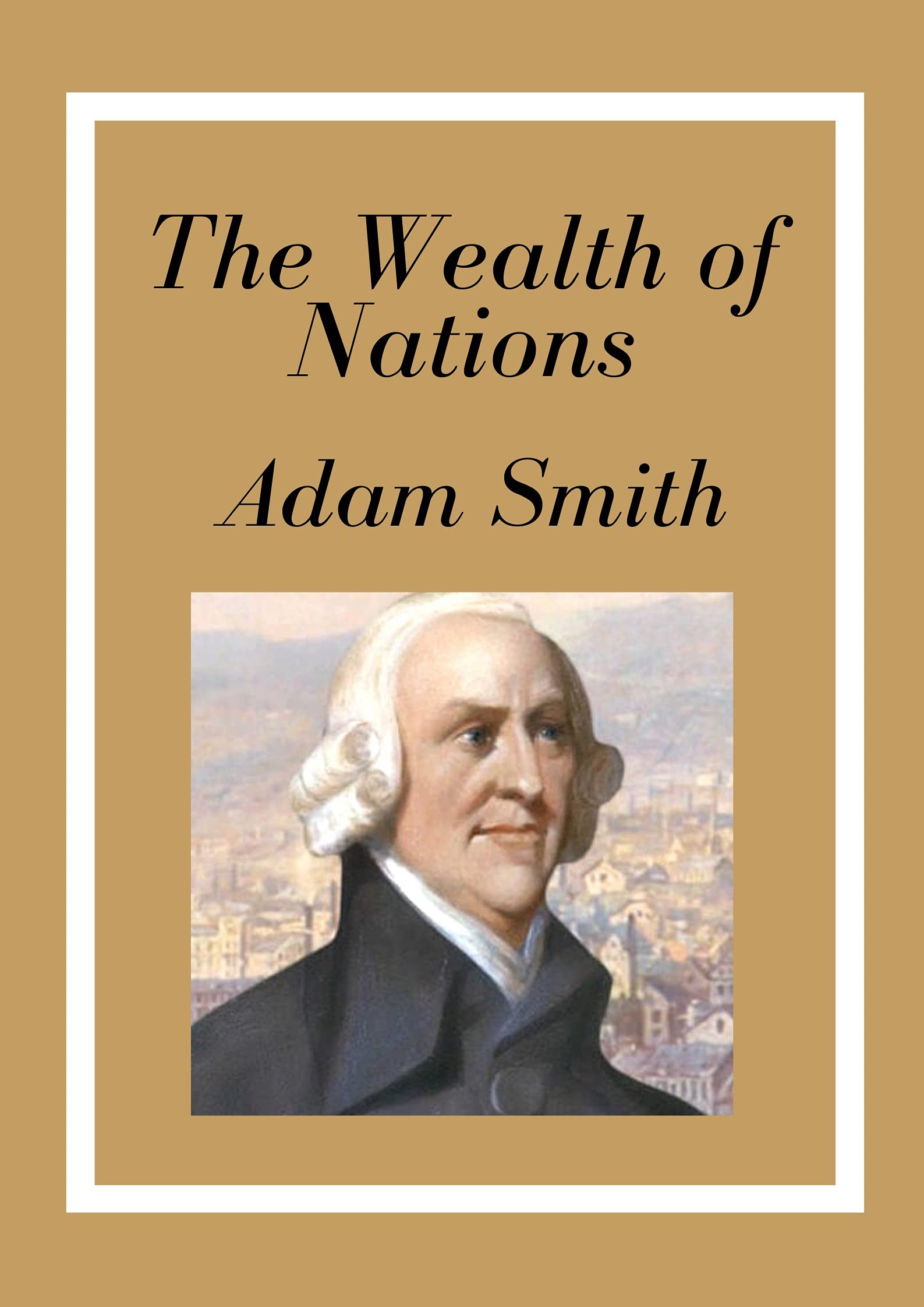
Adam Smith did not possess a modern "net worth" in the billions, but he died a wealthy man by 18th-century standards. His peak annual income of £900—equivalent to roughly £170,000 or $220,000 in 2026 purchasing power—came from his roles as a professor, tutor, and Commissioner of Customs.
Quantifying a 18th-Century Fortune in 2026
To understand the net worth of Adam Smith, one must look beyond simple currency conversion and evaluate his financial standing through the lens of social class and purchasing power. Smith was born into a respectable middle-class family in Kirkcaldy, Scotland, and through academic merit and strategic appointments, he ascended to the upper tiers of the British professional class. Unlike the landed gentry of his time, Smith’s wealth was primarily "earned income" derived from intellectual labor and government service.
In the year 2026, historians and economists use sophisticated inflation models to translate 18th-century Sterling into modern values. While a direct "net worth" figure at the time of his death in 1790 is difficult to pin down—largely because Smith was a lifelong bachelor and a private philanthropist who gave away most of his liquid assets—we can reconstruct his financial health through his documented income streams. By the end of his life, Smith was earning approximately £900 per year. In a period where a laborer might earn £20 a year and a comfortable middle-class existence could be maintained on £100, Smith was undeniably affluent.
His wealth was not stored in vast estates or industrial conglomerates, but rather in a substantial library, a respectable home in Edinburgh’s Panmure House, and a guaranteed life pension. This financial security allowed him the "unproductive" time necessary to craft An Inquiry into the Nature and Causes of the Wealth of Nations, a book that would eventually generate its own form of "intellectual net worth" far exceeding any gold in Smith’s possession.
Academic and Professional Income Streams
Smith’s journey toward financial independence began at the University of Glasgow. In 1751, he was appointed Professor of Logic, and a year later, he took the Chair of Moral Philosophy. During this period, a professor's income was not a flat salary but a combination of a small base pay from the university and "class fees" paid directly by students.
This system, which Smith himself praised in his writings for incentivizing quality teaching, allowed a popular lecturer to earn significantly more than an uninspired one. Estimates suggest Smith earned between £100 and £170 annually during his tenure at Glasgow. While this provided a stable, comfortable life, it did not represent the peak of his earning potential. It did, however, establish his reputation, leading to the publication of The Theory of Moral Sentiments in 1759. This work brought him international fame and attracted the attention of the British political elite, which would soon catalyze a major leap in his personal net worth.
The academic environment of the mid-1700s was the foundation of Smith’s "human capital." By investing his early years in rigorous study and teaching, he created a brand that was eventually "bought" by the aristocracy, illustrating the very principles of market value he would later formalize in his economic treatises.
The Duke of Buccleuch and Financial Independence
The most significant event in Adam Smith’s personal financial history occurred in 1763, when he was invited to become the private tutor to Henry Scott, the young 3rd Duke of Buccleuch. This was not merely a teaching job; it was a high-stakes career pivot. To accept the position, Smith had to resign his prestigious professorship at Glasgow. In exchange, he was offered an annual salary of £300 plus expenses while traveling through Europe, and—most importantly—a £300 annual pension for life.
This pension was a transformative financial asset. In 18th-century Britain, a guaranteed £300 a year was a substantial fortune, providing Smith with total "economic freedom." He no longer needed to work for a living, which allowed him to spend the next ten years in semi-retirement in Kirkcaldy, focusing almost exclusively on writing The Wealth of Nations.
If we view this pension as an annuity in 2026 terms, its present value at the time would have been equivalent to a multi-million dollar trust fund. It served as the venture capital for his intellectual output. Without the financial backing of the Buccleuch family, it is highly probable that Smith would have remained a busy academic, perhaps never finding the decade of solitude required to synthesize his revolutionary economic theories.
The Financial Success of The Wealth of Nations
When The Wealth of Nations was published in 1776, it was an immediate commercial success. The first edition, priced at £1.16s for two volumes, sold out in six months. While the exact royalties Smith received are subject to historical debate, it is known that he maintained a strong relationship with his publishers, William Strahan and Thomas Cadell.
Smith’s literary earnings added a "variable income" component to his fixed pension. Unlike many authors of his day who sold their copyrights for a flat fee, Smith’s ongoing revisions and multiple editions (five during his lifetime) ensured a steady stream of income. By the late 1770s, Smith’s "brand" as an economist was globally recognized, leading to translations in French, German, and Danish.
However, Smith’s wealth was never his primary focus. He famously argued that "the desire of food is limited in every man by the narrow capacity of the human stomach," implying that once a certain level of comfort is reached, the pursuit of further riches yields diminishing returns. His personal spending remained modest, with his largest expenses being his extensive personal library and the upkeep of his mother, to whom he was deeply devoted.
Commissioner of Customs: The Final High-Earning Years
In 1778, Smith’s financial status reached its zenith when he was appointed Commissioner of Customs in Edinburgh. This was a prestigious government post that paid a salary of £600 per year. Crucially, he was allowed to keep his £300 pension from the Duke of Buccleuch alongside this new salary, bringing his total annual income to £900.
This role was somewhat ironic, as Smith had spent much of The Wealth of Nations critiquing the very system of tariffs and trade restrictions he was now tasked with enforcing. Nevertheless, he took the job seriously, working diligently in the Customs House on Edinburgh's Royal Mile.
During these final twelve years of his life, Smith was one of the wealthiest professional men in Scotland. He lived in the stately Panmure House and hosted weekly Sunday dinners for the leading intellectuals of the Scottish Enlightenment, including Joseph Black and James Hutton. His home became a hub of "intellectual capital," where ideas were traded with as much fervor as the commodities he taxed at the docks.
| Period | Primary Role | Estimated Annual Income (£) | 2026 Equivalent (Approx.) |
|---|---|---|---|
| 1751–1763 | Professor (Glasgow) | £100 – £170 | £19,000 – £32,000 |
| 1764–1766 | Tutor to the Duke | £300 + Expenses | £56,000 + Benefits |
| 1767–1777 | Pensioner / Author | £300 | £56,000 |
| 1778–1790 | Commissioner of Customs | £900 (Salary + Pension) | £170,000 |
Philanthropy and the Estate at Death
One of the most revealing aspects of Adam Smith’s net worth was what happened to it. Upon his death in July 1790, his executors—the chemist Joseph Black and the geologist James Hutton—were surprised to find that his liquid estate was much smaller than his high income would have suggested.
It was discovered that Smith had been practicing "secret charity" for decades. He frequently gave large sums to people in need, often with the strict condition that his name never be mentioned. His library, consisting of about 3,000 volumes, was his most significant physical asset, and it was bequeathed to his nephew, David Douglas.
Smith’s approach to his personal wealth reflected his moral philosophy. In The Theory of Moral Sentiments, he argued that the "wise and virtuous man" is always willing to sacrifice his own private interest to the public interest. By dying with a relatively modest estate despite a high lifetime income, Smith demonstrated that he viewed wealth as a tool for social stability and personal benevolence rather than mere accumulation.
The Intellectual Net Worth: Impact on 2026 Economics
If we were to calculate Adam Smith’s "intellectual net worth" in 2026, it would be incalculable. His concepts—the division of labor, the "invisible hand," and the critique of mercantilism—form the bedrock of the global economic system. Every time a trade agreement is signed or a central bank adjusts interest rates, Smith’s legacy is in the room.
His real "wealth" lies in the millions of people who have escaped poverty through the application of free-market principles that he first articulated. He moved the world away from the zero-sum thinking of the 18th century—where one nation could only get rich at the expense of another—toward a vision of mutual prosperity through trade.
In the 21st century, the Adam Smith Institute and the University of Glasgow continue to curate his legacy. His image has appeared on the British £20 note, a symbolic gesture linking his face to the very "medium of exchange" he analyzed so deeply. While he may not have left behind a dynastic fortune, his "legacy net worth" continues to grow as new generations of economists revisit his work to solve modern challenges.
Frequently Asked Questions
What was Adam Smith's primary source of wealth?
Adam Smith's wealth came from three main sources: his academic salary and student fees at the University of Glasgow, a generous life pension of £300 per year from the Duke of Buccleuch, and his final salary of £600 per year as the Commissioner of Customs in Edinburgh.
How much was Adam Smith worth when he died?
Smith did not leave a massive cash estate. While he earned the modern equivalent of roughly £170,000 a year at his peak, he gave much of his money away to charity in secret. His main assets at death were his extensive personal library and his home in Edinburgh.
Did Adam Smith make money from The Wealth of Nations?
Yes, the book was a commercial success during his lifetime, going through five editions. However, it was his guaranteed pension and government salary that provided his primary financial security, allowing him the freedom to write without the pressure of needing book sales to survive.
Was Adam Smith a supporter of the rich?
Contrary to popular belief, Smith was often critical of the "rich and powerful." He advocated for a system that benefitted the "laboring poor" and warned against monopolies and "conspiracies against the public" by businessmen. His wealth was used largely for philanthropy.
Where is Adam Smith buried?
Adam Smith is buried in the Canongate Kirkyard in Edinburgh, Scotland. His grave is a site of pilgrimage for economists and historians, located near Panmure House, where he spent his final, most prosperous years.
How to Explore the Legacy of Adam Smith
For those interested in the intersections of history and economics, understanding Adam Smith requires more than just reading a biography. To truly appreciate his "wealth legacy," consider the following actions:
- Visit Panmure House: Located in Edinburgh, this was Smith's final residence. It has been restored as a center for economic research and debate, offering a tangible connection to his final years of wealth and influence.
- Read "The Theory of Moral Sentiments": While The Wealth of Nations is more famous, his earlier work on ethics explains why he spent his wealth on charity. It provides the moral framework for his economic theories.
- Study the "Smithian" Growth Model: For a technical deep dive, look into how his theories on the division of labor influenced modern manufacturing and the industrial revolution.
- Explore the Scottish Enlightenment: Smith was part of a larger movement. Researching his contemporaries like David Hume provides context on the intellectual environment that valued "the wealth of the mind" as much as the wealth of the pocket.