As of 2026, Adam McKay (frequently searched as Adam McCay) has an estimated net worth of $60 million. This wealth is the result of a multi-decade career spanning Saturday Night Live, a legendary comedy partnership with Will Ferrell, and a successful transition into an Oscar-winning director and high-level television producer for hits like Succession.
Determining the exact "real" worth of a Hollywood heavyweight like Adam McKay requires looking beyond simple salary figures. It involves analyzing production company equity, backend profit participation on blockbuster comedies, and lucrative "first-look" deals with major streaming platforms and premium cable networks. From his early days as a head writer to his current status as a cinematic voice for social and economic critique, McKay’s financial trajectory mirrors his shift from mainstream comedy to prestige filmmaking.
The Foundation of Wealth: The SNL and Gary Sanchez Era
The primary engine for McKay’s early wealth was his partnership with Will Ferrell. After serving as the head writer for Saturday Night Live (SNL) in the late 1990s, McKay co-founded Gary Sanchez Productions with Ferrell in 2006. This entity became one of the most successful comedy production houses in Hollywood history.
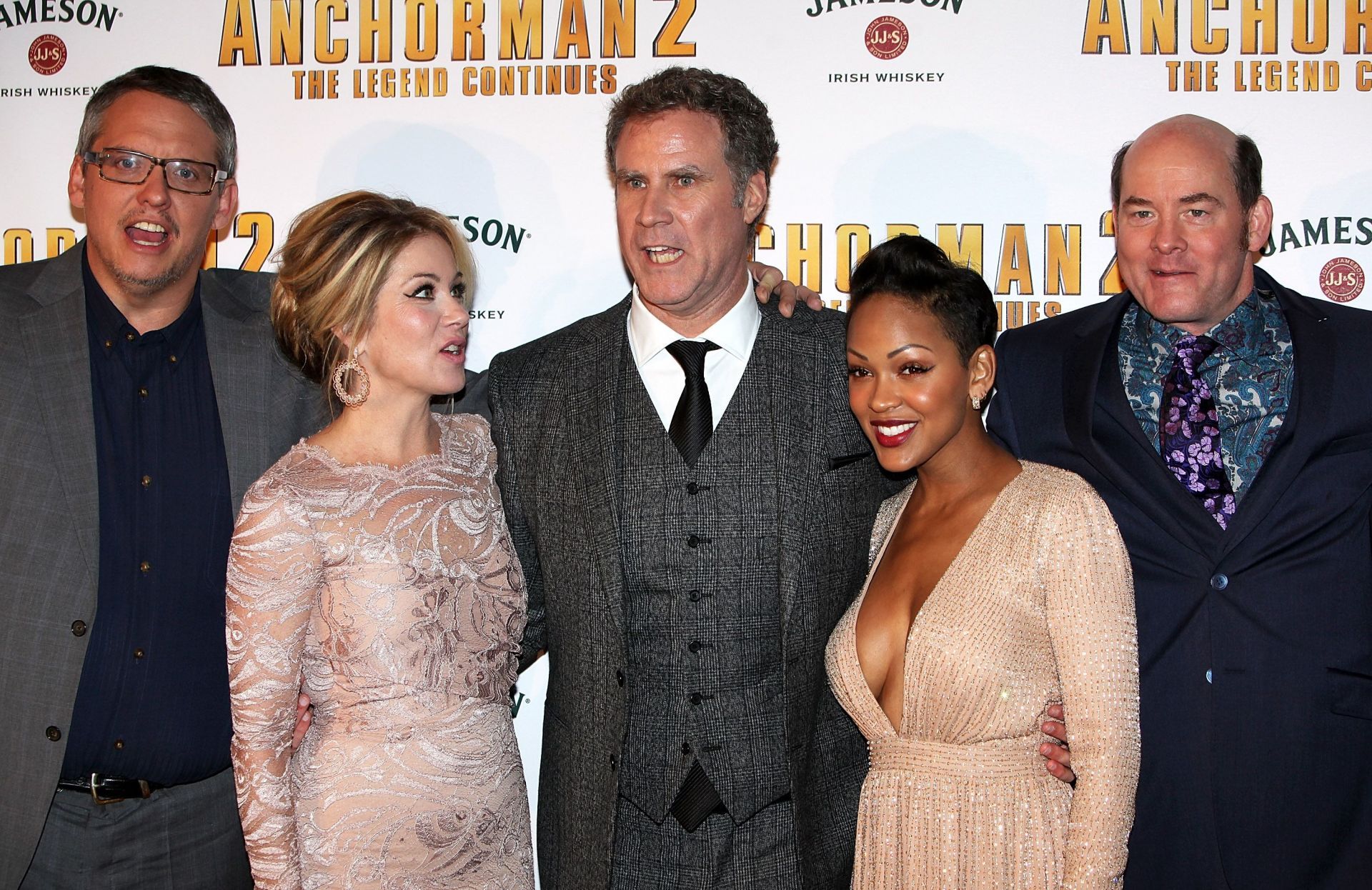
During this era, McKay directed and co-wrote a string of "cult classic" hits that performed exceptionally well at the box office and even better in the home video and syndication markets. Films like Anchorman: The Legend of Ron Burgundy, Talladega Nights: The Ballad of Ricky Bobby, and Step Brothers were not just cultural touchstones; they were financial juggernauts.
For a director-writer of McKay's stature during this period, compensation typically included:
- Upfront Directing Fees: Usually ranging from $2.5 million to $5 million per film.
- Writing Fees: Combined with directing, these added another $1 million to $2 million.
- Backend Points: As a co-owner of the production company and a primary creator, McKay likely negotiated "points" (percentage of the net or gross profits), which yielded tens of millions as these films became staple comedies for cable TV and streaming platforms.
The Strategic Pivot: The Big Short and Prestige Filmmaking
A significant turning point in McKay’s net worth and professional "quote" (the standard fee a studio pays an artist) occurred with the release of The Big Short in 2015. This marked his transition from "comedy guy" to "serious auteur."
The financial implications of this shift were profound. Winning an Academy Award for Best Adapted Screenplay and receiving a Best Director nomination moved McKay into the "A-list" bracket. In Hollywood, an Oscar win typically increases a creator's quote by 20% to 50% for subsequent projects.
Following The Big Short, McKay directed Vice (2018) and Don’t Look Up (2021). The latter, released on Netflix, represented a modern era of filmmaker compensation. Because streaming services do not offer traditional "backend" profits based on box office, they often pay talent a "buyout" fee. For a film as massive as Don’t Look Up, which featured an ensemble cast including Leonardo DiCaprio and Jennifer Lawrence, McKay’s fee as writer, director, and producer likely exceeded $15 million upfront to compensate for the lack of long-term residuals.
Hyperobject Industries and the Business of Production
In 2019, McKay and Will Ferrell officially dissolved Gary Sanchez Productions. While the split was described as amicable, it led to the formation of McKay's solo venture, Hyperobject Industries. This move was a critical step in consolidating his personal wealth and creative control.
Hyperobject Industries immediately secured a multi-year first-look deal with HBO and HBO Max (now Max). First-look deals are essentially "retainers" for production companies; the studio pays a yearly fee (often in the seven-figure range) just for the right to have the first crack at any project the company develops. If the studio passes, the company can take it elsewhere, but the overhead and salaries are often covered by the primary studio partner.
Through Hyperobject Industries, McKay has executive produced a wide array of content, including:
- Winning Time: The Rise of the Lakers Dynasty
- The Menu
- Painting with John
- Various documentaries and podcasts
These production credits provide a steady stream of "Executive Producer" fees, which can range from $30,000 to $100,000 per episode for television, regardless of how much hands-on work is performed during daily production.
The Succession Windfall: Residuals and Executive Producing
Perhaps the most significant contributor to McKay’s sustained wealth in the 2020s has been his role as an Executive Producer on the HBO phenomenon Succession. While Jesse Armstrong was the series creator and showrunner, McKay’s involvement through Gary Sanchez Productions (and later Hyperobject) earned him a significant stake in the show’s success.
Succession was not just a critical darling; it became a cornerstone of the Max streaming library. For executive producers on a hit of this magnitude, the financial rewards include:
- Per-episode fees: Paid during the production of all four seasons.
- Award bonuses: Contracts often include escalators for Emmy nominations and wins.
- Backend Participation: As the show is licensed internationally and continues to drive subscriptions, the "profit pool" for original producers continues to grow.
Even in 2026, the "long tail" of Succession residuals remains a significant part of McKay's annual income, likely contributing millions in passive revenue.
Real Estate and Asset Valuation
Celebrity net worth is often anchored by high-value real estate. McKay has owned several notable properties in the Los Angeles area over the years. In 2019, he listed a Mediterranean-style villa in the Hollywood Hills for approximately $4.75 million.
His current primary residence and any investment properties in California or New York likely account for $15 million to $20 million of his total $60 million valuation. In the 2026 market, these luxury assets have generally held their value or appreciated, providing a solid "floor" to his net worth.
Comparative Financial Overview of Key Projects
The following table outlines the estimated financial impact of McKay's most significant works leading up to 2026.
| Project Title | Role(s) | Estimated Budget | Global Box Office / Platform | Primary Income Type |
|---|---|---|---|---|
| Talladega Nights | Director, Writer | $72 Million | $163 Million | Salary + Backend |
| Step Brothers | Director, Writer | $65 Million | $128 Million | Residuals (Heavy) |
| The Big Short | Director, Writer | $28 Million | $133 Million | Award Escalators |
| Succession | Executive Producer | N/A | Global Hit (Max) | EP Fees + Profit Pool |
| Don't Look Up | Director, Writer, Producer | $75 Million | Netflix Top 10 | Streamer Buyout |
| Winning Time | Executive Producer | High | Max Original | Production Fee |
Philanthropy and Yellow Dot Studios
It is important to note that McKay’s "liquid" net worth is influenced by his heavy investment in climate change activism. In recent years, he launched Yellow Dot Studios, a non-profit media studio focused on raising awareness about the climate crisis through short-form videos and satire.
While many celebrities use their wealth for traditional investments, McKay has funneled a portion of his capital into these "impact projects." While this may technically decrease his personal cash reserves, it enhances his "brand equity" as a socially conscious filmmaker, which often leads to lucrative speaking engagements and consulting roles within the industry.
FAQs About Adam McKay's Wealth
Is Adam McKay a billionaire?
No. Despite his massive success, Adam McKay's net worth is estimated at $60 million in 2026. While he is very wealthy by Hollywood standards, he has not reached the billionaire status of moguls like Steven Spielberg or Tyler Perry, who own large-scale studio facilities or have multi-billion dollar distribution libraries.
Did the split with Will Ferrell affect his net worth?
The dissolution of Gary Sanchez Productions required a legal division of assets. While this may have involved some administrative costs, both McKay and Ferrell retained their respective shares of past residuals. The split allowed McKay to claim 100% of the overhead and fees from his new company, Hyperobject Industries, rather than splitting them.
How much does Adam McKay make per movie?
As of 2026, McKay’s "quote" for directing and writing a major motion picture is estimated between $10 million and $15 million. This figure can vary based on whether the project is for a traditional theatrical studio (which offers lower upfront pay but higher backend) or a streaming service (which offers higher upfront pay).
What is the difference between "Adam McCay" and "Adam McKay"?
"Adam McCay" is a common misspelling of the director's name. There is no prominent public figure in the film industry named Adam McCay. All financial data and career achievements attributed to "Adam McCay" in search queries refer to the Oscar-winning filmmaker Adam McKay.
Does Adam McKay earn money from Saturday Night Live?
McKay likely receives modest residuals from his time as a writer and head writer on SNL when episodes from his era (1995–2001) are rebroadcast or streamed. However, this is a negligible part of his current net worth compared to his film directing and producing income.
Future Outlook: Sustaining Wealth in a Changing Industry
To maintain and grow his $60 million net worth beyond 2026, McKay is likely to focus on high-margin streaming deals and diversifying his production slate. The "prestige TV" boom remains his most consistent source of revenue, as the demand for sophisticated, "Succession-style" drama remains high among competing platforms like Apple TV+, Max, and Netflix.
Investors and industry analysts should watch for McKay’s potential expansion into international co-productions. As the domestic US market reaches saturation, the ability to produce content that travels globally—much like his climate-focused work—will be the key to his next financial chapter. For those looking to follow his career path, the lesson is clear: financial longevity in Hollywood comes from moving beyond "work-for-hire" roles and into the realm of ownership and executive production.