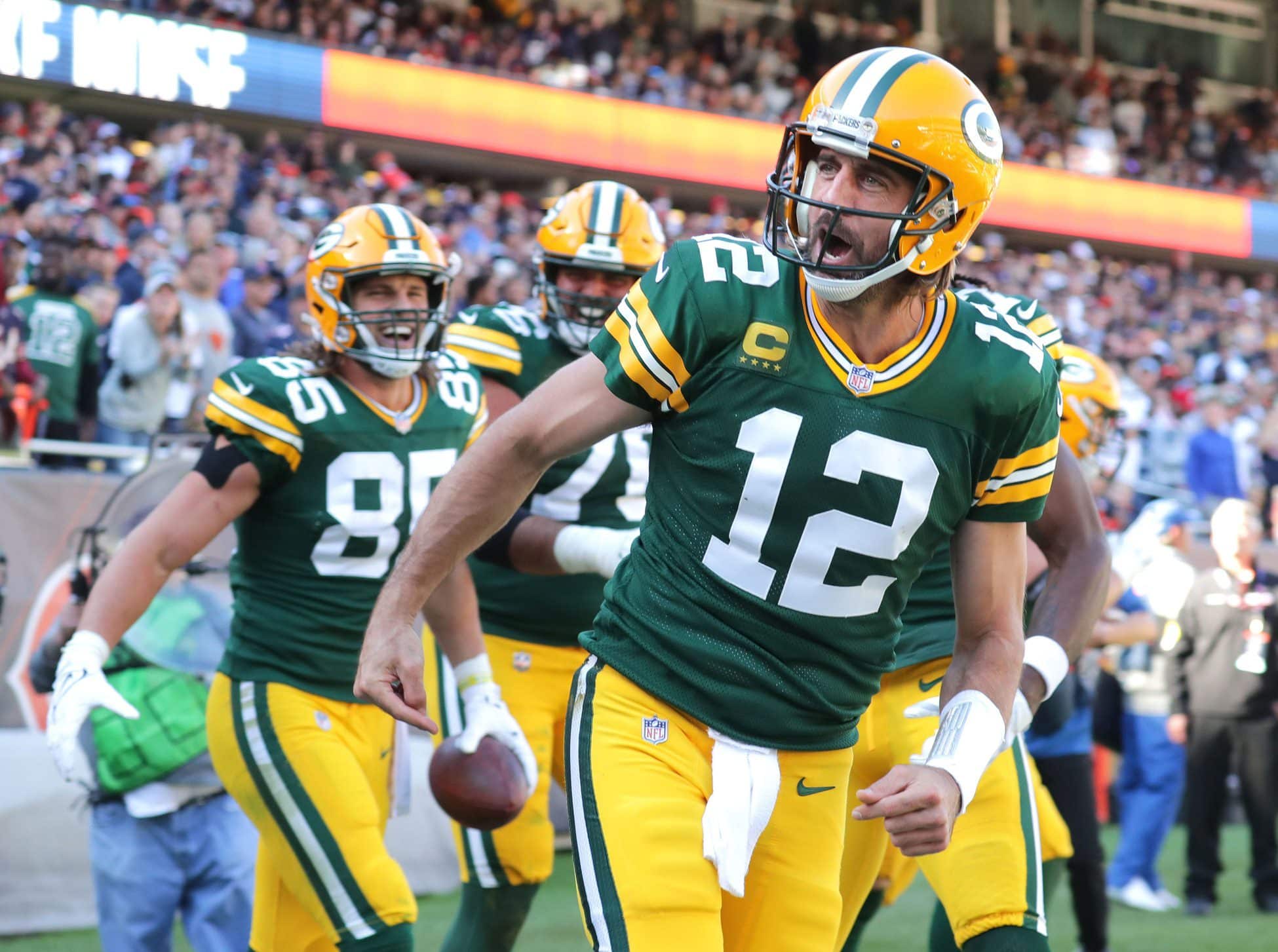
Aaron Rodgers remains one of the most closely analyzed figures in professional football, consistently ranking among the top 10 quarterbacks in NFL history. As ongoing retirement speculation surrounds the four-time Most Valuable Player following his historic Green Bay Packers tenure and subsequent New York Jets era, analysts systematically weigh his elite statistical efficiency against postseason volume and championship counts.
Current Status of Aaron Rodgers' Retirement Speculation
The trajectory of Aaron Rodgers' late career has generated continuous coverage across major sports news networks, NFL insider reports, and analytical media outlets. After spending 18 seasons with the Green Bay Packers—where he established himself as a franchise icon, won four regular-season MVP awards, and captured Super Bowl XLV—Rodgers transitioned to the New York Jets prior to the 2023 season. His initial campaign in New York was curtailed by a high-profile Achilles injury four snaps into his debut, deferring his planned impact on the franchise.
Retirement speculation has hovered around Rodgers for several years, originating during his final seasons in Green Bay. Discussions regarding his eventual departure from the game center on several key variables:
- Physical Durability and Recovery: Managing body maintenance after major orthopedic recovery late in an NFL career requires extensive physical conditioning and load management.
- Contractual Commitments: Multi-year contract structures and salary-cap implications directly influence financial decisions for both player and franchise management.
- Roster Competitiveness: Rodgers has consistently publicly stated that his desire to continue playing depends on a realistic opportunity to compete for a championship.
- Off-Field Ventures: Broadening personal, media, and business interests provide clear pathways for a seamless post-football transition.
Despite periodic retirement rumors, official confirmation of a player's retirement requires a formal filing with the National Football League and the NFL Players Association (NFLPA). Until formal paperwork or an official public announcement occurs, news reporting focuses primarily on team roster decisions, voluntary workouts, contract restructuring, and organized team activities (OTAs).
Aaron Rodgers All-Time Rankings: Where Does He Stand Among the Greats?
Determining where Aaron Rodgers sits in all-time NFL quarterback rankings depends heavily on the evaluation methodology employed by sports journalists, historians, and quantitative analysts. Across consensus lists compiled by major outlets such as ESPN, The Athletic, Pro Football Reference, and NFL Network, Rodgers virtually always ranks between #5 and #9 all-time.
- Tier 1: Multi-Ring Consensus Icons
- Tom Brady (7 SB, 3 MVP)
- Joe Montana (4 SB, 2 MVP)
- Tier 2: Historical & Peak Efficiency Modern Legends
- Peyton Manning (2 SB, 5 MVP)
- Aaron Rodgers (1 SB, 4 MVP)
- Patrick Mahomes (Active Multi-Ring Leader)
- Johnny Unitas (Historical Era Baseline)
- Tier 3: Elite High-Volume / Statistical Leaders
- Dan Marino (1 MVP, All-Time Passing Icon)
- Drew Brees (1 SB, All-Time Volume Leader)
- Brett Favre (1 SB, 3 MVP)
To understand why Rodgers occupies this specific range, analysts generally separate ranking criteria into two main schools of thought: Peak Performance & Efficiency versus Championship Volume & Longevity.
1. The Case for Top-5 Ranking (Peak Efficiency & Individual Dominance)
Proponents of ranking Rodgers in the top 5 highlight his unmatched passing accuracy, decision-making, and individual accolades. Rodgers possesses four NFL MVP awards (2011, 2014, 2020, 2021), a total trailing only Peyton Manning (5) in league history. In analytical models that measure relative efficiency—such as Adjusted Net Yards Per Attempt (ANY/A), Passer Rating, and Interception Rate—Rodgers frequently outperforms almost every quarterback in NFL history over a multi-year prime.
2. The Case for #6 through #10 Ranking (Postseason & Super Bowl Count)
Critics and traditionalist evaluators who place Rodgers lower in the top 10 point to postseason record and Super Bowl victories as primary differentiators. While Tom Brady (7 Super Bowl titles) and Joe Montana (4 Super Bowl titles) lead the historical consensus at positions #1 and #2, quarterbacks like Peyton Manning and Patrick Mahomes possess multiple championship rings alongside MVP honors. Rodgers' single Super Bowl victory (Super Bowl XLV) places him in a tier with single-ring legends like Dan Marino, Drew Brees, and Brett Favre, creating a ceiling for his placement on ring-centric lists.
Statistical Profile: Comparing Rodgers to Historical NFL Quarterbacks
Statistical benchmarks highlight why Aaron Rodgers remains an analytical anomaly in NFL history. He combines extreme passing volume with unprecedented ball security, maintaining a career touchdown-to-interception ratio that significantly outpaces historically comparable Hall of Fame signal-callers.
| Quarterback | Super Bowl Titles | NFL MVP Awards | Career Passer Rating | Career TD:INT Ratio | Single-Season Passer Rating Record |
|---|---|---|---|---|---|
| Aaron Rodgers | 1 (XLV) | 4 | ~103.6 | ~4.52 : 1 | 122.5 (2011) |
| Tom Brady | 7 | 3 | 97.2 | 3.07 : 1 | 117.2 (2007) |
| Peyton Manning | 2 | 5 | 96.5 | 2.15 : 1 | 121.1 (2004) |
| Joe Montana | 4 | 2 | 92.3 | 1.96 : 1 | 112.4 (1989) |
| Patrick Mahomes | 3 | 2 | ~103.0+ | ~3.80 : 1 | 113.8 (2018) |
| Dan Marino | 0 | 1 | 86.4 | 1.67 : 1 | 108.8 (1984) |
Data reflects historical career averages and verified league records according to official NFL statistics records.
Key Takeaways from the Data
- Ball Security: Rodgers is the only quarterback in NFL history with over 450 career touchdown passes to maintain an interception total under 110.
- Peak Passer Rating: Rodgers holds the highest single-season passer rating in NFL history (122.5 set in 2011), during which he threw 45 touchdowns against just 6 interceptions.
- MVP Frequency: Winning back-to-back MVPs twice in a career (2011/2014 and 2020/2021) demonstrates sustained elite performance across different decades and offensive systems.
How Major Outlets and Media Metric Systems Rank Rodgers
Different sports publications emphasize varying metrics when publishing their all-time NFL player rankings. Understanding these frameworks clarifies why Rodgers' position fluctuates across media outlets.
ESPN and NFL Network Consensus Lists
Mainstream broadcast outlets balance regular-season dominance, postseason success, cultural impact, and clutch performance. In these media consensus rankings, Rodgers routinely slots into the #5 to #7 range. Evaluators frequently credit his throw-making ability, arm talent, and pre-snap pre-read mechanics as arguably the most skilled in football history, even when placing him behind Brady, Montana, and Manning due to total championships.
Pro Football Focus (PFF) and Advanced Analytics Models
Metrics-focused platforms analyze individual play execution independent of team-level outcomes like wins or defensive performance. Advanced models assess play-by-play grading, big-time throw percentage (BTT%), and turnover-worthy play rate (TWP%). Because Rodgers excels at minimizing turnover-worthy plays while maintaining deep-ball accuracy, advanced analytical models frequently rank his peak seasons (2011, 2020) as the absolute pinnacle of individual quarterback play.
Pro Football Reference Hall of Fame Monitor
The Pro Football Reference Hall of Fame (HOF) Monitor attempts to quantify a player's induction chances and historical standing using a weighted score of MVPs, Pro Bowls, All-Pro selections, Super Bowl wins, and statistical milestones. On this metric, Rodgers comfortably ranks among the top 10 quarterbacks of all time, scoring far above the average Hall of Fame quarterback threshold.
Post-Retirement Hall of Fame Eligibility and Legacy Impact
When Aaron Rodgers officially submits his retirement paperwork to the NFL, a structured timeline governs his transition from active player to Canton legend.
- Active Status / Official Retirement Announcement
- Mandatory 5-Year Pro Football Hall of Fame Wait Period
- Selection Committee Nomination & Finalist Balloting
- First-Ballot Induction into Canton Pro Football Hall of Fame
The 5-Year Waiting Period
Under Pro Football Hall of Fame bylaws, any player must be fully retired for five consecutive seasons before becoming eligible for nomination. For example, if a player's final active season is 2025, their eligible voting cycle opens in early 2031.
First-Ballot Certainty
There is zero debate among Hall of Fame voters regarding Rodgers' candidacy: he is a guaranteed first-ballot Hall of Famer. Historically, every quarterback with at least two regular-season MVP awards who has reached eligibility has been inducted on their first year of eligibility. With four MVPs, a Super Bowl ring, Super Bowl MVP honors, and four First-Team All-Pro selections, Rodgers' election in his first year of eligibility is assured.
Long-Term Legacy Evolution
A player's ranking relative to peers often shifts post-retirement based on how future generations perform:
- Era-Adjusted Metrics: As passing volume increases across the modern NFL due to rule changes protecting receivers and quarterbacks, future evaluators will contextualize Rodgers' stats against his specific era.
- Comparison to Active Stars: Young quarterbacks such as Patrick Mahomes, Josh Allen, and Joe Burrow continue to build their own post-season résumés. How active players finish their careers directly influences whether Rodgers remains locked in the 5–8 range or moves slightly as new careers conclude.
Guidelines for Evaluating Quarterback Career Rankings
When reviewing updated news, rankings lists, or debates concerning Aaron Rodgers and historical quarterbacks, readers should apply analytical criteria to separate subjective media hot-takes from rigorous historical assessment.
1. Account for Era Disparity
NFL rules governing pass defense, defender contact, and quarterback protection changed dramatically in 2004 (enforcement of illegal contact) and subsequent years. Comparing raw passing stats from Rodgers' era directly against quarterbacks from the 1970s or 1980s (such as Terry Bradshaw or Dan Fouts) without era-adjustment skews the evaluation. Look for metrics like ANY/A+ or Passer Rating+, which index performance relative to the league average in that specific season.
2. Separate Team Achievements from Individual Metrics
Super Bowl victories represent organizational accomplishments dependent on defensive rankings, special teams efficiency, offensive line play, and coaching strategy. While elite quarterbacks strongly influence winning, evaluating a player solely by "ring count" ignores situations where high-level individual performance was offset by defensive collapses in elimination games.
3. Differentiate Between Peak vs. Career Longevity
Determine whether a ranking prioritizes a player's absolute peak (e.g., Rodgers' 2011–2014 run) or total career volume (e.g., Drew Brees' or Brett Favre's long-term passing totals). Rodgers scores exceptionally high in peak-value frameworks due to his high efficiency and MVP concentration.
Frequently Asked Questions
Has Aaron Rodgers officially announced his retirement from the NFL?
Official retirement status requires formal paperwork filed with the NFL and NFLPA. Until an official announcement or organizational filing occurs, reporting regarding Rodgers' retirement remains based on speculative commentary, contract analysis, and media discussions.
Where does Aaron Rodgers rank among the greatest NFL quarterbacks of all time?
In most mainstream sports media consensus rankings (ESPN, NFL Network, The Athletic), Aaron Rodgers consistently ranks between #5 and #9 all-time. He is universally positioned in the top 10 alongside icons like Tom Brady, Joe Montana, Peyton Manning, Patrick Mahomes, and Dan Marino.
How many MVP awards has Aaron Rodgers won during his career?
Aaron Rodgers has won four NFL Most Valuable Player (MVP) awards (2011, 2014, 2020, and 2021). This is the second-most MVP awards won by a single player in NFL history, trailing only Peyton Manning, who won five.
What is Aaron Rodgers' career touchdown-to-interception ratio?
Aaron Rodgers holds the best career touchdown-to-interception ratio in NFL history among qualified passers, maintaining a ratio of approximately 4.5 touchdowns for every 1 interception thrown.
When will Aaron Rodgers be eligible for the Pro Football Hall of Fame?
A player becomes eligible for the Pro Football Hall of Fame five calendar years after their official retirement from professional football. Once eligible, Rodgers is considered a consensus first-ballot selection.
How to Track Official Retirement News and Legacy Updates
To stay accurately informed on Aaron Rodgers' official status and evolving rank in NFL history without falling for unverified media rumors, follow these practical steps:
- Monitor Official League News Outlets: Verify roster moves directly through the official NFL News Portal or press releases from his active club rather than relying on unsourced social media posts.
- Reference Recognized Statistical Databases: Track career statistical standings, era adjustments, and Hall of Fame monitor scores at Pro Football Reference.
- Cross-Reference Major Media Rankings: When review articles publish updated "All-Time QB Rankings," check whether the ranking methodology relies on quantitative analytics (PFF, DVOA) or subjective panel voting to understand the context of his placement.
- Follow Hall of Fame Selection Updates: For post-career tracking, monitor the official Pro Football Hall of Fame announcement schedules for initial preliminary nominee lists released every autumn.