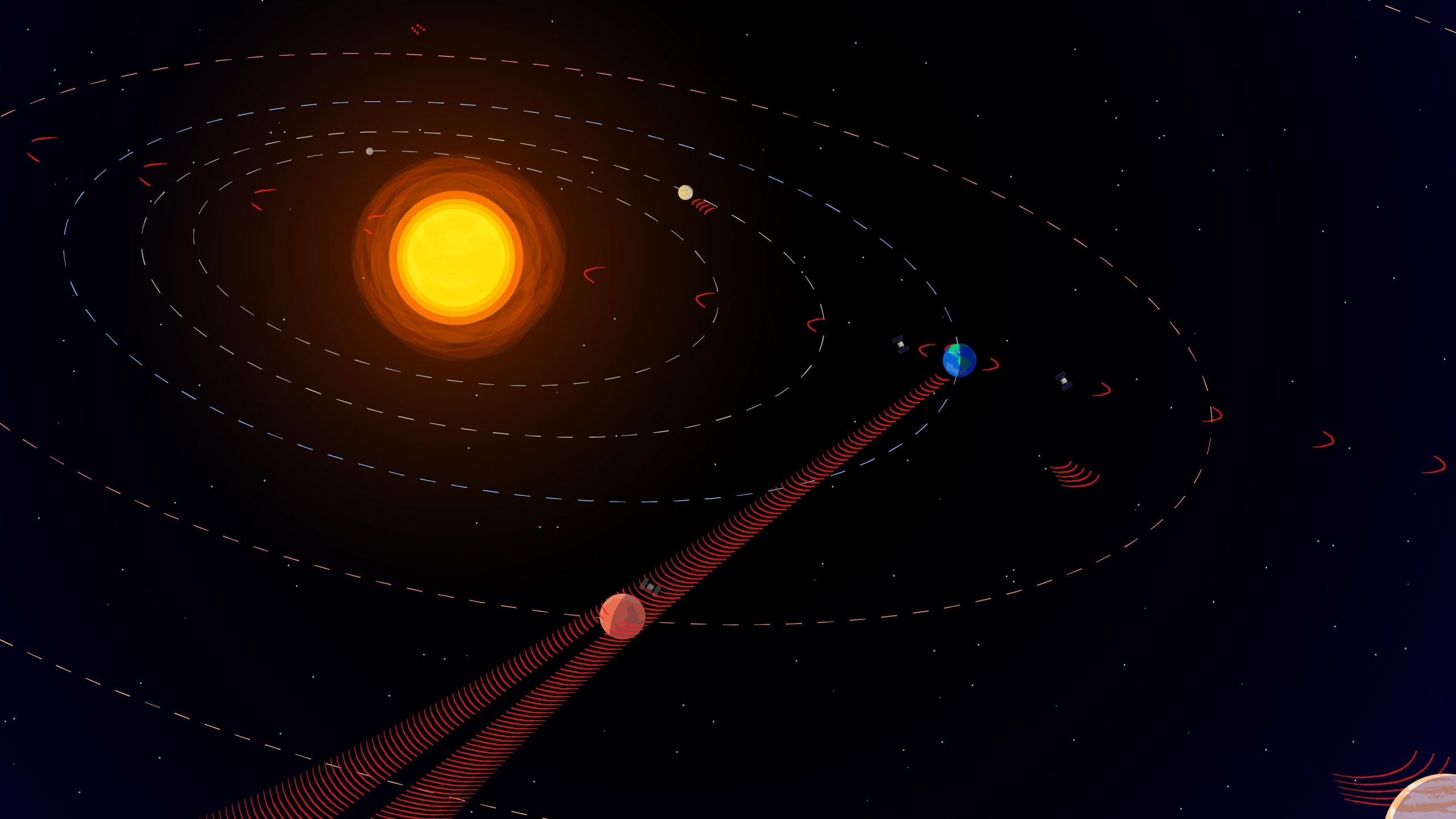
Alien communication involves the theoretical, technological, and linguistic frameworks used to detect, decode, and interpret potential signals from extraterrestrial civilizations. Modern astrobiology and the Search for Extraterrestrial Intelligence (SETI) rely on radio astronomy, optical messaging, and mathematical universal languages to bridge interstellar distances and overcome profound cognitive divides.
Historical Foundations of the Search for Extraterrestrial Signals
The structured pursuit of extraterrestrial messages began in earnest during the mid-20th century, transforming science fiction into an observational scientific discipline. In 1959, physicists Giuseppe Cocconi and Philip Morrison published a seminal paper in Nature suggesting that civilizations on other worlds might use microwave frequencies to broadcast signals across interstellar space. Shortly thereafter, astronomer Frank Drake conducted Ozma, the first modern SETI experiment, using a radio telescope in Green Bank, West Virginia, to listen to the nearby sunlike stars Tau Ceti and Epsilon Eridani.
These early initiatives established radio waves as the primary medium for cosmic exploration. The rationale was straightforward: radio frequencies experience minimal absorption and scattering as they travel through the interstellar medium, making them efficient carriers of information over vast distances. Early search parameters focused heavily on the "water hole"—a quiet spectral band bounded by the emission lines of neutral hydrogen ($1,420\text{ MHz}$) and the hydroxyl radical ($1,662\text{ MHz}$). This region represents a low-noise window in the cosmic radio spectrum, making it a logical meeting place for technologically advanced societies wishing to establish contact.
Over the subsequent decades, observational capabilities expanded dramatically. Large-scale radio facilities, such as the former Arecibo Observatory in Puerto Rico and the current Green Bank Telescope in West Virginia, scanned thousands of candidate star systems. Concurrently, theoretical frameworks evolved to categorize potential senders. The Kardashev scale, introduced by Soviet astronomer Nikolai Kardashev in 1964, classified civilizations based on their energy consumption, offering astrobiologists a baseline for estimating the power output and transmission characteristics of an alien society.
Technological Modalities: Radio, Optical, and Beyond
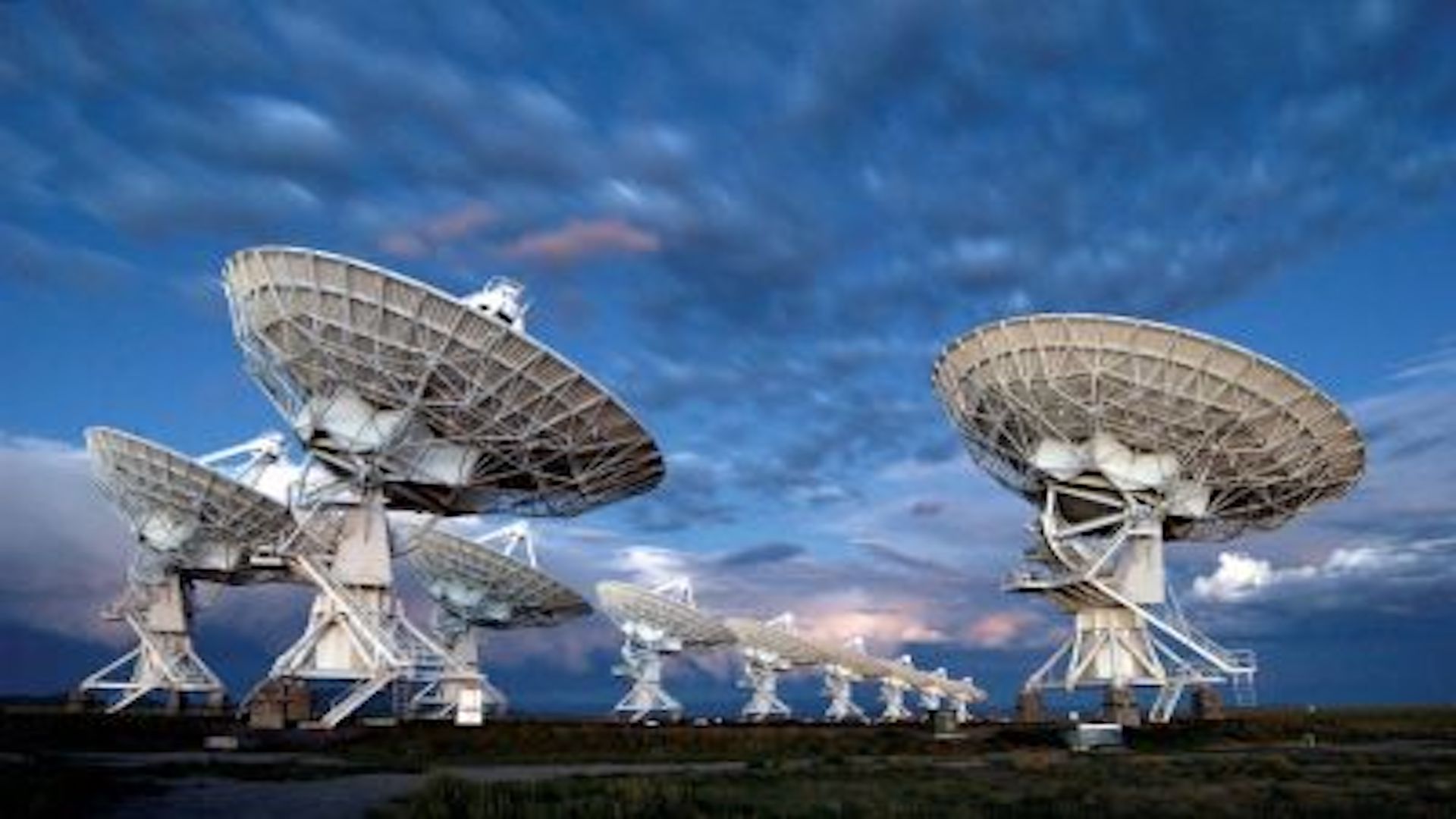
Detecting a signal from an intelligent extraterrestrial source requires distinguishing artificial patterns from naturally occurring cosmic noise. Radio astronomy remains the cornerstone of these efforts, employing single-dish antennas and massive interferometers like the Allen Telescope Array and the MeerKAT array. These instruments collect vast quantities of electromagnetic data, which are then processed through high-performance computing clusters to isolate narrow-band carrier waves that do not occur in nature. Pulsars, rotating neutron stars, and quasars emit powerful, pulsed radio signals, meaning algorithms must rigorously filter out astrophysical phenomena to isolate anomalous transmissions.
In addition to traditional radio frequencies, contemporary astrobiologists increasingly focus on optical and infrared wavelengths. Optical SETI operates on the premise that an advanced civilization might communicate or power interstellar propulsion systems using high-powered lasers. Short, nanosecond-scale laser flashes can transmit vast amounts of data across light-years with high energy efficiency. Dedicated optical observatories utilize fast photomultiplier tubes and specialized telescopes to search for rapid, coherent light pulses that would stand out against the background radiation of parent stars.
| Modality | Primary Frequency Range | Advantages | Limitations |
|---|---|---|---|
| Radio Astronomy | $1\text{ GHz} - 10\text{ GHz}$ (Microwaves) | Low interstellar attenuation; mature receiver technology | High background noise; requires massive antenna dishes |
| Optical SETI | Visible and Near-Infrared Lasers | High data-carrying capacity; focused beam propagation | Atmospheric distortion; requires precise line-of-sight pointing |
| Acoustic / Interstellar Probes | Physical artifacts and plasma waves | Permanent record; independent of real-time transmission | Extremely slow travel times; highly resource-intensive |
Beyond electromagnetic radiation, researchers contemplate the interception of physical artifacts, such as robotic probes or Bracewell probes stationed in stable Lagrange points within our solar system. While detecting macroscopic objects passively drifting through deep space presents immense observational challenges, gravitational microlensing surveys and wide-field astronomical sky surveys continuously monitor the solar system's periphery for anomalous trajectories and reflective surfaces.
Decoding Methodologies and Universal Languages
Should an anomalous signal be verified, the immediate challenge shifts from detection to linguistics and cryptography. Human decoders cannot rely on shared cultural references, historical contexts, or bilingual dictionaries when analyzing an alien transmission. Consequently, researchers in messaging extraterrestrial intelligence (METI) and linguistics focus on constructing universal languages founded on mathematics, physics, and logic.
The underlying premise of cosmic cryptography is that while human languages are arbitrary cultural constructs, the laws of physics and mathematics are universal. A foundational message typically begins with prime numbers, simple arithmetic, or the physical constants of the universe, such as the fine-structure constant or the mass ratios of fundamental particles. By establishing a shared baseline of mathematical truths, a transmitting civilization could progressively build a vocabulary representing physical objects, spatial coordinates, and biological structures.
| Complexity Level | Illustrative Example | Analytical Objective |
|---|---|---|
| Level 1: Mathematical Base | Prime number sequences ($2, 3, 5, 7, 11$) | Confirm artificial origin through non-random ordering |
| Level 2: Physical Constants | Atomic structures of hydrogen and carbon | Establish shared units of measurement and physics |
| Level 3: Pictorial Raster | Binary-encoded grid (e.g., Arecibo message) | Transmit biological form and technological capability |
| Level 4: Syntactical Grammar | Complex symbolic logic and structural syntax | Convey abstract concepts, history, and philosophy |
Binary encoding represents the standard format for such transmissions. For instance, the famous 1974 Arecibo message consisted of $1,679$ binary digits—a product of two prime numbers ($23$ and $73$). When arranged in a rectangular grid of $23$ columns by $73$ rows, the binary digits form a pictorial representation depicting human DNA, atomic numbers of key biological elements, population statistics, and a sketch of a radio telescope. Decoding an unknown signal requires identifying similar mathematical dimensions, factorizing data streams into multi-dimensional arrays, and searching for repeating patterns that indicate grammatical structure and semantic intent.
The Problem of Scale, Distance, and Light-Lag
The physical dimensions of the galaxy impose severe operational constraints on any dialogue between civilizations. The Milky Way spans approximately $100,000$ light-years in diameter, meaning that even if two technological species exist simultaneously, the time required for a round-trip message could range from decades to millennia.
This light-lag fundamentally alters the nature of communication. Unlike real-time telecommunications on Earth, interstellar communication operates as an asynchronous, archival exchange. A message sent to a civilization $500$ light-years away will take five centuries to arrive, and any acknowledgment will take another five centuries to return. Consequently, conversations cannot occur iteratively. Transmissions must be comprehensive, data-dense encyclopedias of knowledge rather than conversational queries. This temporal disconnect also implies that many communicating civilizations may have risen, flourished, and perished long before their signals reach recipient worlds, turning the cosmos into an archaeological archive of extinct intellects.
Planetary Protection, Protocols, and Policy Frameworks
The discovery and verification of an extraterrestrial signal carry profound societal implications, prompting international organizations to establish formal protocols. The International Academy of Astronautics (IAA) SETI Permanent Committee maintains a structured post-detection policy, originally formulated in 1989 and periodically updated.
According to these guidelines, any research group that detects a candidate signal must first verify that it is not of terrestrial origin—such as satellite telemetry, military radar, or terrestrial radio frequency interference. Once verified, the discoverer is obligated to inform the global scientific community and the Secretary-General of the United Nations before transmitting any reply. This moratorium on unilateral replies is designed to prevent a single nation or private entity from speaking on behalf of all humanity without international consensus regarding the content and intent of the response.
Frequently Asked Questions
How do scientists distinguish an alien signal from human radio interference?
Scientists run rigorous verification procedures, including pointing independent telescopes at the same source to see if the signal persists. Radio frequency interference generated by human technology typically drifts in frequency, shows up across multiple channels, or correlates with local satellite orbits. In contrast, an extraterrestrial signal would appear at a precise, narrow frequency and exhibit sidereal motion, remaining fixed relative to background stars as Earth rotates.
What was the Wow! Signal and was it alien communication?
The Wow! Signal was a strong, narrowband radio signal detected by Jerry Ehman in 1977 using Ohio State University's Big Ear radio telescope. Lasting for $72$ seconds, it matched expected characteristics of an interstellar transmission within the hydrogen line frequency band. Despite extensive follow-up observations of the source region in the constellation Sagittarius, the signal was never detected again, leaving its origin—whether terrestrial interference, a rare astrophysical event, or extraterrestrial transmission—unresolved.
Can we reply to an alien signal immediately?
Technically yes, but practically no. While a directional transmitter could be aimed at the source coordinates immediately, the immense interstellar distances mean that any reply would take centuries or millennia to reach the destination. Furthermore, international protocols established by the scientific community advise against unilateral replies until broad global consultation regarding the message content occurs.
What language or format would an alien message likely use?
An alien message would almost certainly employ mathematics and physics as its primary medium. Because human languages and symbols are entirely cultural constructs, a transmitting civilization would utilize universal constants, prime number sequences, and physical atomic properties to build a foundational vocabulary before introducing complex semantic or pictorial data.
Why haven't we detected any alien signals yet?
The absence of verified signals, often discussed in the context of the Fermi Paradox, can be attributed to several factors. These include the sheer spatial and temporal scale of the universe, the possibility that civilizations use communication technologies invisible to our current instruments—such as tight laser beams or encrypted quantum communications—or the hypothesis that technological civilizations have a relatively short lifespan.
Next Actions and Operational Verification
To engage with or study the ongoing search for extraterrestrial intelligence, researchers, students, and amateur astronomers can participate in distributed computing initiatives and open-source data analysis platforms. Projects such as Breakthrough Listen provide raw, unfiltered radio and optical data from major facilities like the Green Bank Telescope and the MeerKAT array. Volunteers and data scientists can analyze public datasets using signal-processing software to help filter out terrestrial noise and identify genuine anomalies. Maintaining rigorous skepticism, adhering to peer-reviewed verification standards, and supporting international transparency frameworks remain essential for preserving scientific integrity in the search for cosmic companions.