Ridley Scott’s 1979 masterpiece Alien fundamentally redefined the science fiction and horror genres by blending industrial realism with cosmic terror. Following the crew of the commercial towing vehicle Nostrosco—more accurately known as the USCSS Nostromo—the film shifts from a gritty, blue-collar space hauling narrative into a relentless survival ordeal against a biomechanical organism. Its enduring legacy stems not merely from its monster, but from a meticulous production design philosophy that treated the future as used, worn, and tactile rather than sterile and utopian.
The Production Design and Visual Aesthetic of the Nostromo
The distinctive look of Alien originates from a deliberate rejection of the gleaming, pristine space futures popularized by earlier cinematic milestones like 2001: A Space Odyssey. Director Ridley Scott, working alongside conceptual designers H.R. Giger, Ron Cobb, and Chris Foss, envisioned a universe where machinery breaks down, coffee cups are stained, and corridor walls sweat condensation. This gritty realism transformed the Nostromo into a character itself, establishing a claustrophobic atmosphere that amplified the audience's sense of isolation.
Ron Cobb contributed the industrial, heavy-duty aesthetic, designing interiors that resembled an underground mine or an oil tanker rather than a high-tech naval vessel. His concepts emphasized exposed piping, analog switches, and utilitarian green-and-yellow color schemes that grounded the science fiction elements in mundane reality. Concurrently, production designer Michael Seymour and set decorator Roger Christian utilized scrap metal, discarded aircraft parts, and massive hydraulic components to build physical sets on Sound Stage 3 at Shepperton Studios. Actors interacted with real toggle switches and heavy doors, enhancing their authentic physical reactions to the environment.
The contrast between the functional human machinery and the nightmarish, biomechanical geometry of the alien spacecraft—the Derelict—created a jarring visual dichotomy. The crashed alien ship, designed by H.R. Giger, featured smooth, skeletal, and vaguely anatomical structures that completely lacked right angles. By refusing to explain every piece of alien technology or the origins of the "Space Jockey" fossilized in the pilot's chair, the production team fostered a sense of incomprehensible cosmic scale. This visual ambiguity ensured the film retained its unsettling mystery decades after its initial theatrical release.
H.R. Giger and the Creation of the Xenomorph
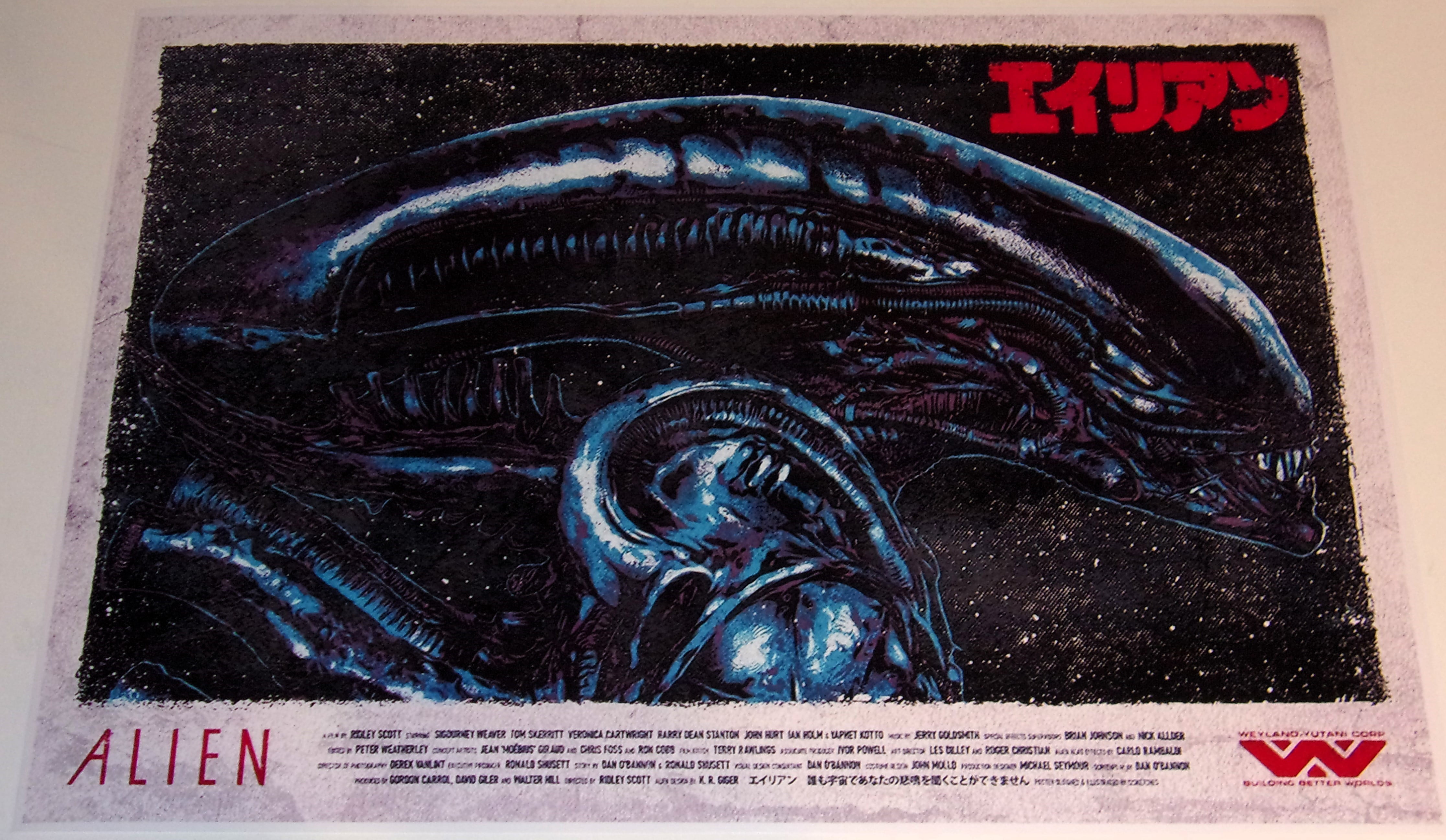
Swiss surrealist artist H.R. Giger provided the definitive blueprint for the creature that would haunt popular culture for generations. Commissioned initially to design the planet and the alien vessel, Giger’s portfolio—specifically his book Necronomicon—impressed Ridley Scott so profoundly that the artist was brought on to design every stage of the life cycle: the egg, the facehugger, the chestburster, and the adult Xenomorph. Giger's art style merged organic flesh with cold industrial machinery, utilizing an airbrush technique that lent a perverse, glossy sheen to skeletal forms.
The adult Xenomorph actor, Bolaji Badejo, stood at six feet ten inches tall and possessed exceptionally long limbs, which contributed to the creature's unearthly, insectoid grace on screen. Giger’s physical suit incorporated actual vertebra bones from animals and industrial piping, coated in lubricating KY Jelly to maintain a wet, glistening appearance under the dim studio lighting. This integration of organic and synthetic textures meant the monster never looked like a man in a rubber suit; it appeared as an evolutionary apex predator engineered purely for survival and predation.
Furthermore, the life cycle designed for the creature introduced a terrifying biological ruthlessness that broke away from conventional movie monsters. The facehugger bypassed traditional violent entry by forcing an embryo down a victim's throat, while the chestburster broke violently through a human host's ribcage during a dinner scene designed to catch both characters and audiences entirely off guard. By anchoring the horror in violation of the human body, Giger and Scott tapped into visceral phobias that elevated the film above standard monster-movie tropes.
Narrative Structure and Blue-Collar Realism
Unlike space adventures where heroes possess military training or scientific expertise, the crew of the Nostromo are everyday space truckers. Captain Dallas, executive officer Kane, warrant officer Ripley, navigator Lambert, science officer Ash, and engineers Parker and Brett are union workers complaining about bonus shares and tired of long hauling shifts. This everyday framing establishes an immediate sense of empathy; they are ordinary people thrust into an extraordinary nightmare simply because corporate directives demand they investigate an unknown distress signal.
| Crew Member | Position | Primary Narrative Role |
|---|---|---|
| Arthur Dallas | Captain | Commands the initial away team; meets an early demise in the ventilation shafts. |
| Ellen Ripley | Warrant Officer | Survives by adhering strictly to quarantine protocols and operational logic. |
| Ash | Science Officer | Secretly programmed by the Weyland-Yutani Corporation to secure the specimen at all costs. |
| Joan Lambert | Navigator | Exhibits escalating panic, highlighting the psychological toll of isolation. |
| Dennis Parker | Chief Engineer | Fights for survival using improvised flamethrowers and mechanical tools. |
The corporate interference by the Weyland-Yutani Corporation adds a layer of dystopian bureaucracy to the narrative. Science officer Ash is revealed to be an android carrying secret orders to prioritize the retrieval of the alien organism, with the crew designated as expendable. This subplot broadens the thematic scope of Alien, framing humanity not only as prey to a biological apex predator but also as commodities exploitable by corporate entities. The horror is thus twofold: the external terror of the monster and the internal betrayal of capitalist indifference.
Pacing and Directorial Technique in Building Suspense
Ridley Scott approaches the pacing of Alien with the patience of a traditional haunted house narrative. The first act unfolds slowly, allowing viewers to absorb the procedural realities of deep-space hauling, the hum of the ship's computers, and the camaraderie of the crew. This deliberate lull lulls the audience into a false sense of security before the terror begins. Once the organism enters the ship, Scott utilizes silence, long tracking shots down shadowed corridors, and obscured camera angles to obscure the monster and maximize psychological dread.
Editing and sound design play critical roles in sustaining this tension. Sound designer Jimmy Shields utilized a combination of dripping water, howling wind, and mechanical groans to make the Nostromo feel alive and decaying. The musical score by Jerry Goldsmith, though partially altered and rearranged by studio executives during post-production, infuses the scenes with an eerie, avant-garde atonality that heightens unease. Instead of relying on jump scares, Scott lets scenes breathe, forcing the viewer to scan every dark corner of the frame for movement that may or may not be there.
Comparative Impact on the Science Fiction Genre
The cultural footprint of Alien is visible across decades of subsequent cinema, television, and video game design. Before 1979, space exploration in films often featured clean aesthetics, laser guns, and clear moral binaries. Alien introduced the concept of "lived-in" science fiction—a gritty, industrial reality later echoed in films like Blade Runner (1982), Outland (1981), and interactive media such as the Alien: Isolation video game and the Dead Space franchise.
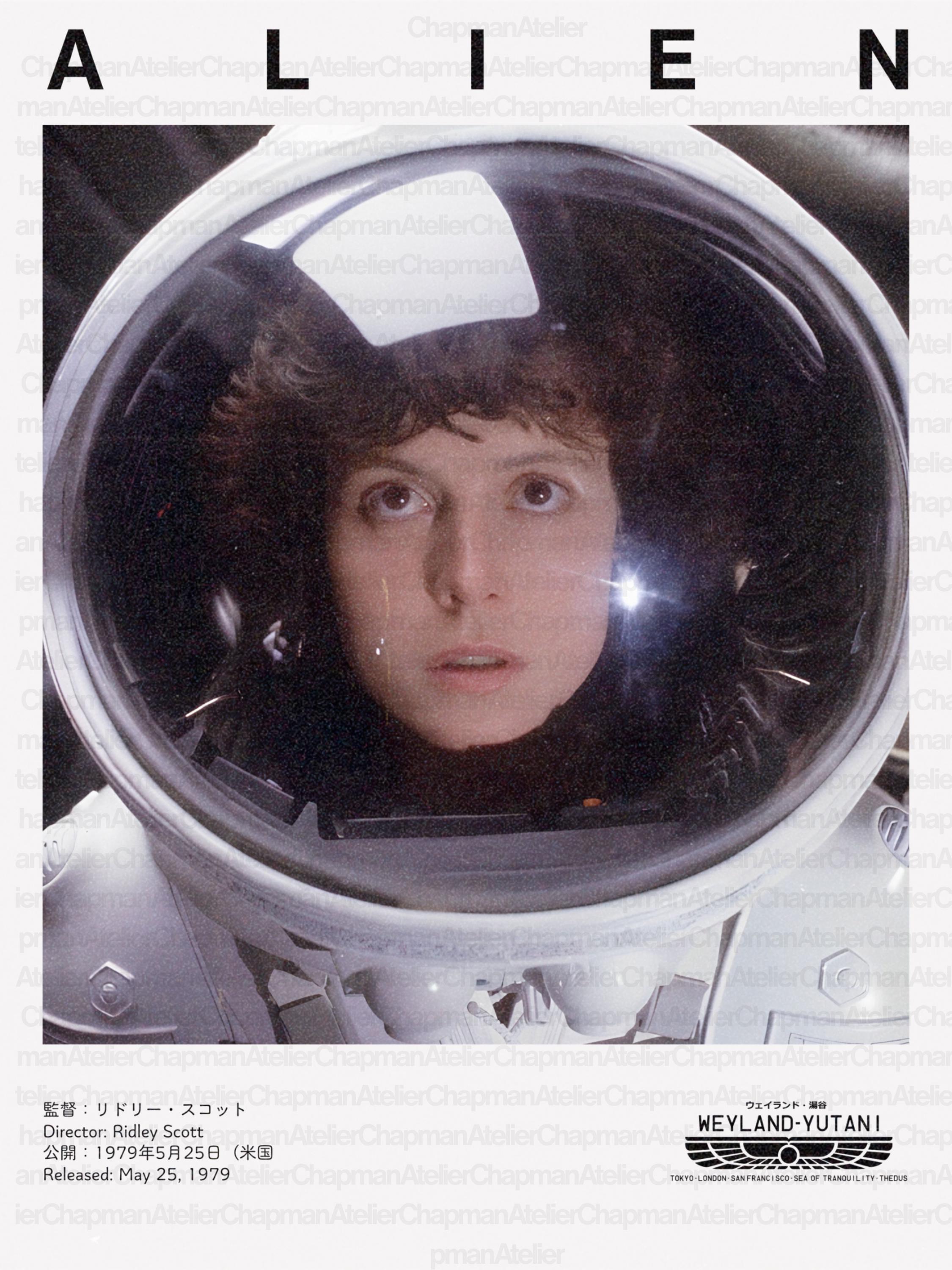
Moreover, the film altered the landscape of action and horror protagonists by introducing Ellen Ripley, played by Sigourney Weaver. Ripley was not written as a damsel in distress or an action stereotype; she was a capable professional who survived through analytical thinking, adherence to safety regulations, and sheer tenacity. Her evolution from a cautious warrant officer to the sole survivor—and eventually to an iconic action hero in James Cameron’s 1986 sequel Aliens—shattered long-standing gender barriers in Hollywood casting for blockbuster franchises.
Frequently Asked Questions
What is the primary plot of Alien (1979)?
The film follows the seven-member crew of the commercial towing spaceship Nostromo who answer a distress signal on a desolate moon. After an alien organism attaches itself to a crew member, they inadvertently bring the creature aboard their ship, leading to a desperate struggle for survival against an unstoppable apex predator.
Who designed the Alien creature and the spacecraft?
Swiss surrealist artist H.R. Giger designed the alien creature across its various life cycles, as well as the derelict alien spacecraft. Concept artists Ron Cobb and Chris Foss contributed to the industrial, worn-out aesthetic of the human spaceship, the Nostromo.
Is Ash human in the film?
No, Ash is revealed to be a synthetic human, or android, planted aboard the Nostromo by the Weyland-Yutani Corporation. His secret directive is to ensure the return of the alien specimen to Earth for bioweapons research, considering the human crew entirely expendable.
How did Alien influence modern cinema?
Alien established the "haunted house in space" subgenre and popularized gritty, industrial science fiction design. It also redefined action and horror protagonists through the breakout performance of Sigourney Weaver as Ellen Ripley, challenging traditional gender roles in genre filmmaking.
Where was Alien filmed?
Principal photography took place primarily at Shepperton Studios and Bray Studios in England, utilizing massive physical sets, miniatures, and intricate mechanical creature effects rather than digital computer-generated imagery.
Practical Preservation and Viewing Recommendations
To fully appreciate the craftsmanship of Alien (1979), viewers should seek out home media releases sourced from 4K restorations supervised from the original camera negatives. Because much of the film’s terror relies on deep shadows, subtle lighting cues by cinematographer Derek Vanlint, and obscured creature reveals, modern high-dynamic-range (HDR) transfers in a controlled dark room setting reveal the intricate textures of Giger's sets and the practical model work that digital effects cannot replicate. Avoid watching the film on mobile devices or in brightly lit environments, as the atmospheric tension depends entirely on the interplay between light, darkness, and industrial sound design.