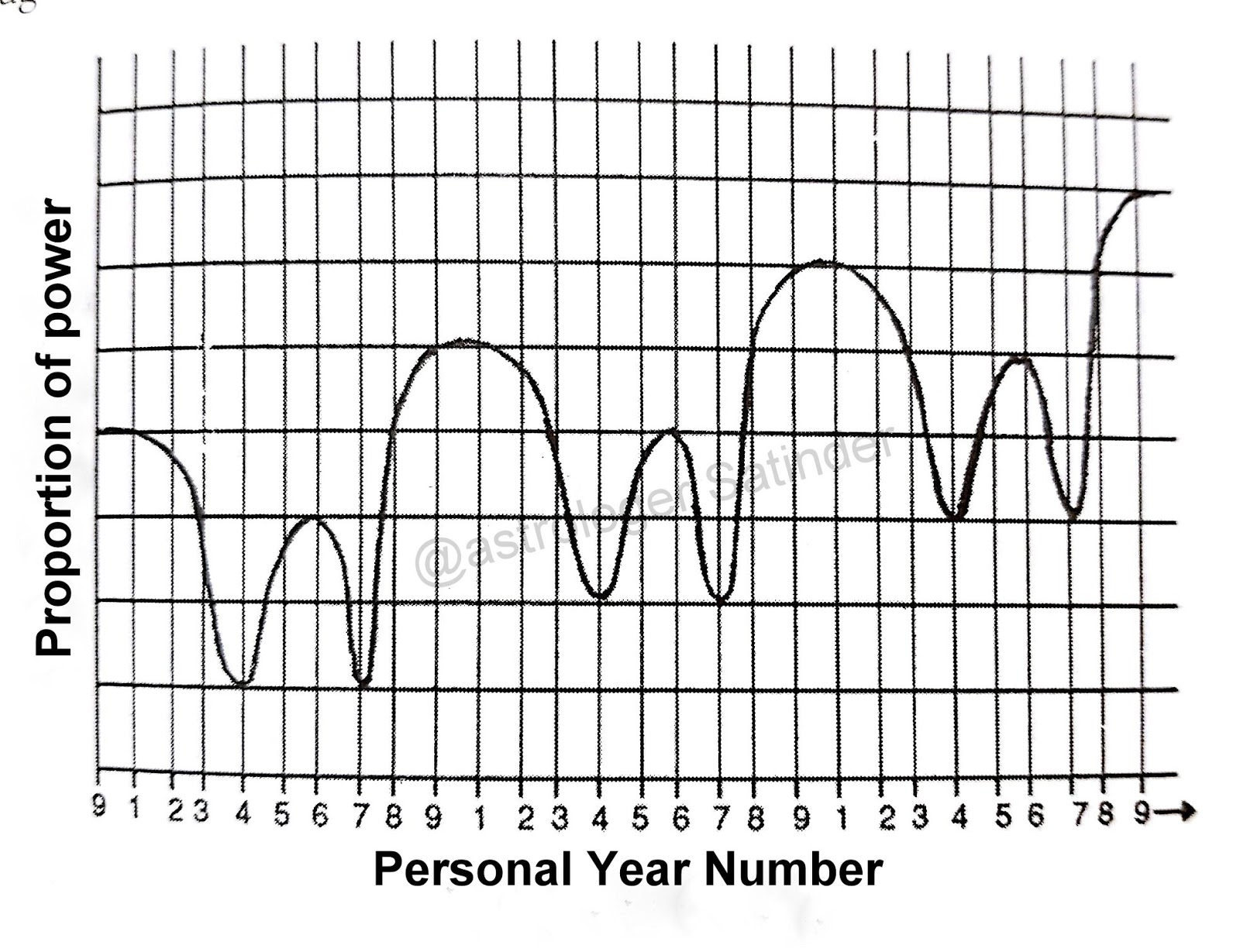
The 9-year cycle is a developmental framework in numerology that organizes personal growth into repeating nine-year thematic periods. Moving progressively from initiation in Year 1 to completion in Year 9, each phase governs distinct life themes—such as foundation building, creative expansion, deep introspection, and material harvest—helping individuals align major life decisions with recurring natural rhythms.
The Mechanics of the 9-Year Cycle: How to Calculate Your Personal Year
The 9-year cycle operates on the premise that human life unfolds in sequential nine-year arcs. While long-term destiny is often associated with static markers like a Life Path Number, the 9-year cycle provides a dynamic, yearly forecasting model known as the Personal Year Number. This number changes annually on a global scale, shifting the energetic focus and core priorities for every twelve-month period.
To calculate your Personal Year within the cycle, you combine the numerical values of your month of birth, your day of birth, and the current calendar year. Numerology relies on single-digit reduction (adding individual digits together until a single digit from 1 to 9 is obtained).
Step-by-Step Personal Year Calculation Formula
- Reduce your birth month to a single digit (e.g., October = 10 = 1 + 0 = 1).
- Reduce your birth day to a single digit (e.g., the 28th = 2 + 8 = 10 = 1 + 0 = 1).
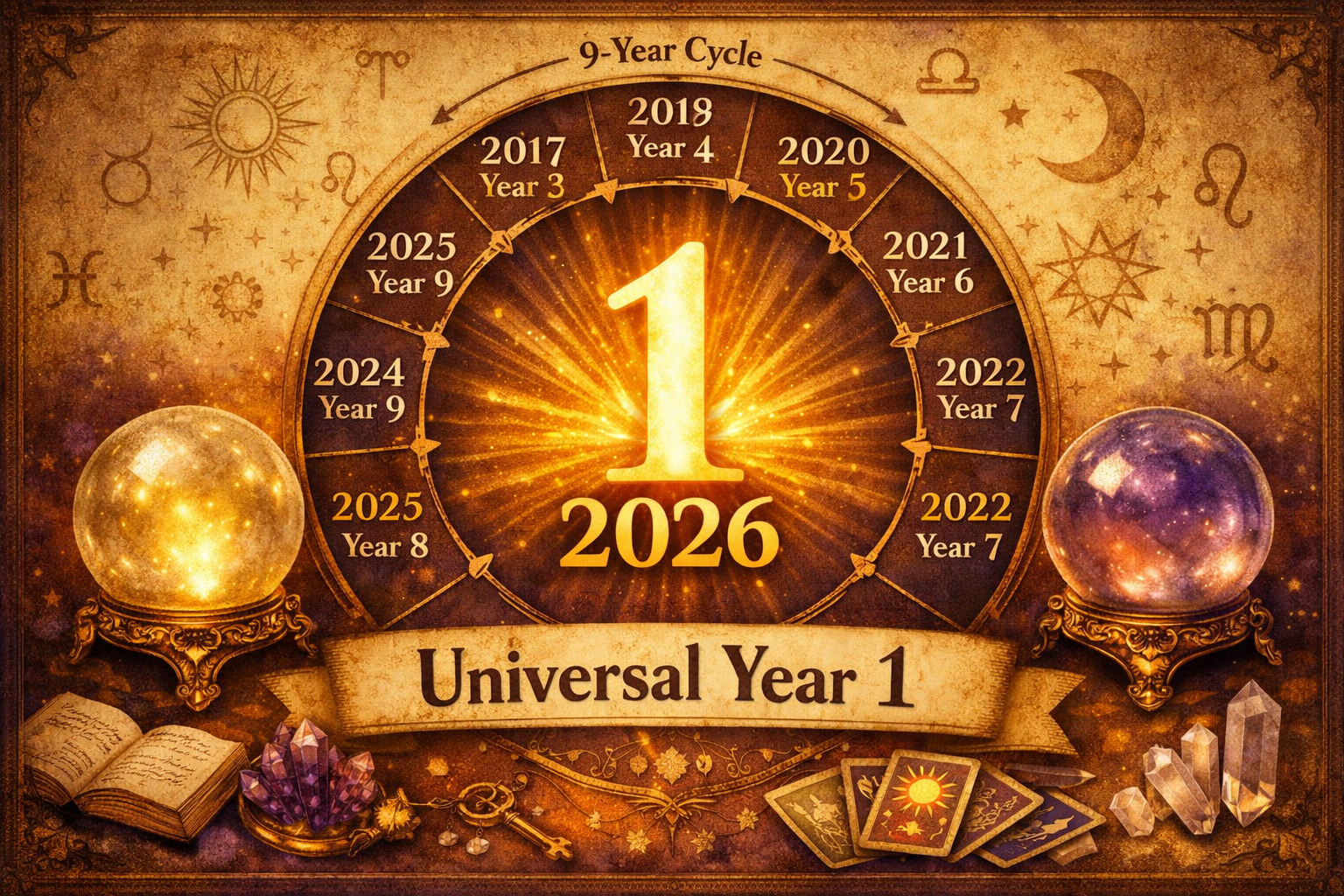
- Reduce the current calendar year to a single digit. For example, the year 2026 reduces to 1 (2 + 0 + 2 + 6 = 10 = 1 + 0 = 1). Note that 2026 represents a universal "1" year worldwide, signaling a global collective cycle of new beginnings.
- Sum the three reduced digits and reduce the total to a final single digit between 1 and 9.
Personal Year = (Reduced Birth Month) + (Reduced Birth Day) + (Reduced Universal Year)
Practical Example
Suppose an individual was born on June 15 and wants to determine their Personal Year position for 2026:
- Birth Month (June): 6
- Birth Day (15th): 1 + 5 = 6
- Universal Year (2026): 2 + 0 + 2 + 6 = 10 = 1 + 0 = 1
- Calculation: 6 + 6 + 1 = 13
- Final Reduction: 1 + 3 = 4
In 2026, this person is in a Personal Year 4, a phase focused on structure, hard work, organization, and building lasting foundations.
The Timing Controversy: Calendar Year vs. Birthday Transition
A common point of discussion among practitioners involves when the Personal Year officially shifts. Two primary methodologies exist:
- Calendar Year Method (Standard): The Personal Year shifts on January 1st of every calendar year, mirroring the Universal Year shift. This is the most widely adopted approach in practical numerology.
- Birthday Transition Method: The Personal Year shifts on the individual's actual birth date, meaning the previous year's energy lingers until the birth anniversary.
Most contemporary practitioners observe a blend: the overarching shift begins quietly around October of the preceding year, solidifies on January 1st, and reaches full personal integration by the individual's birthday.
The Nine Phases: A Comprehensive Year-by-Year Guide
Each stage of the 9-year cycle serves a unique evolutionary function. Attempting to force outcomes unsuited to a specific year often leads to unnecessary friction, whereas working in harmony with the current phase yields optimal productivity and emotional balance.
- 1: Seed
- 2: Root
- 3: Sprout
- 4: Structure
- 5: Pivot
- 6: Nurture
- 7: Introspect
- 8: Harvest
- 9: Release
Year 1: Initiation, Seeds, and New Beginnings
Year 1 represents the start of a brand-new nine-year chapter. It is a period defined by high independence, fresh perspectives, and the courage to break away from stagnant habits. The primary directive of Year 1 is to plant seeds for projects, commitments, and identity shifts that will develop across the upcoming decade.
- Key Focus: Self-reliance, innovation, setting ambitious goals, taking calculated risks.
- Strategic Actions: Starting a business, moving to a new city, launching personal initiatives, adopting new self-care routines.
- Potential Pitfalls: Hesitation, lingering in past comfort zones, or becoming overbearing due to intense individual focus.
Year 2: Patience, Cooperation, and Deepening Roots
After the energetic push of Year 1, Year 2 slows the pace significantly. Seeds planted in the first year require quiet time beneath the surface to take root. Year 2 emphasizes partnerships, diplomacy, emotional sensitivity, and patience.
- Key Focus: Relationship building, teamwork, detail work, emotional intelligence.
- Strategic Actions: Forming strategic alliances, refining business contracts, practicing active listening, cultivating personal relationships.
- Potential Pitfalls: Over-sensitivity, passive-aggressive tendencies, or feeling frustrated by slow tangible progress.
Year 3: Expression, Expansion, and Creative Momentum
Year 3 brings a surge of social energy, optimism, and self-expression. The initial growth from Years 1 and 2 breaks through the surface, demanding visibility. This phase rewards communication, networking, artistic endeavors, and social engagement.
- Key Focus: Creativity, verbal and written expression, social connections, joyful exploration.
- Strategic Actions: Content creation, public speaking, publishing, marketing, expanding social circles, enjoying artistic hobbies.
- Potential Pitfalls: Scattering energy across too many projects, superficiality, overspending on non-essentials.
Year 4: Structure, Discipline, and Foundational Work
Year 4 shifts focus back to pragmatic reality. Often called the "workhorse" year, it demands effort, systematic organization, attention to health, and practical planning. It is a time to consolidate early gains and build physical, financial, and operational frameworks that can withstand future pressure.
- Key Focus: Stability, physical health, systems, hard work, financial planning.
- Strategic Actions: Establishing operational budgets, auditing personal health routines, buying real estate, codifying business processes.
- Potential Pitfalls: Rigidity, burnout, frustration with heavy workloads, resistance to necessary administrative duties.
Year 5: Transformation, Freedom, and Pivotal Shifts
Positioned at the exact midpoint of the 9-year cycle, Year 5 disrupts established routines to prevent stagnation. It brings unexpected opportunities, sudden course corrections, travel, and a strong desire for personal freedom. Flexibility is the critical skill during this phase.
- Key Focus: Adaptability, major life pivots, exploration, personal liberty.
- Strategic Actions: Re-evaluating life trajectories, changing career tracks, traveling, adapting to unexpected market or personal shifts.
- Potential Pitfalls: Impulsiveness, recklessness, abandoning solid projects prematurely out of sheer boredom.
Year 6: Responsibility, Community, and Domestic Harmony
Following the turbulence of Year 5, Year 6 brings focus back to home, family, service, and civic obligations. It is a period centered on duty, healing relationships, creating comfortable living environments, and caring for others.
- Key Focus: Family responsibility, home environment, mentorship, community service, balance.
- Strategic Actions: Renovating or beautifying the home, resolving family disputes, stepping into caregiving or leadership roles, setting personal boundaries.
- Potential Pitfalls: Codependency, martyrdom, over-extending help to those who haven't asked for it.
Year 7: Introspection, Wisdom, and Internal Alignment
Year 7 is a sabbatical phase within the cycle. External expansion slows down to make room for mental analysis, personal research, spiritual development, and deep psychological rest. It encourages asking fundamental questions about purpose and authenticity.
- Key Focus: Self-analysis, higher learning, solitude, spiritual awakening, strategic reflection.
- Strategic Actions: Enrolling in advanced study, spending time in nature, journaling, conducting deep market research, refining core values.
- Potential Pitfalls: Social isolation, cynicism, overthinking, anxiety driven by unexamined internal fears.
Year 8: Manifestation, Authority, and Material Harvest
Year 8 represents the peak of material achievement and personal power within the cycle. The effort invested from Year 1 through Year 7 culminates in tangible returns, executive authority, financial evaluations, and recognition.
- Key Focus: Financial competence, leadership, execution, legal and material balance, karma.
- Strategic Actions: Negotiating compensation, scaling businesses, managing major financial transactions, stepping firmly into executive authority.
- Potential Pitfalls: Greed, abuse of power, poor financial management, prioritizing short-term gain over ethical integrity.
Year 9: Culmination, Release, and Preparing the Ground
The final stage of the cycle is dedicated to resolution, emotional processing, and clearing away what no longer serves your future growth. Year 9 requires letting go of outgrown relationships, stagnant jobs, and outdated mindsets to clear space for the upcoming Year 1.
- Key Focus: Completion, forgiveness, decluttering, humanitarian reflection, graceful closure.
- Strategic Actions: Finishing ongoing projects, ending unfulfilling commitments, conducting personal audits, forgiving old grievances.
- Potential Pitfalls: Clinging to the past out of fear, starting major long-term ventures prematurely, avoiding necessary farewells.
Comparison Matrix: The 9-Year Life Cycle at a Glance
| Cycle Year | Primary Theme | Core Action Strategy | Major Risk / Pitfall | Mindset Focus |
|---|---|---|---|---|
| Year 1 | Initiation | Plant new seeds & take bold action | Hesitation & past dependence | "I initiate my future." |
| Year 2 | Cooperation | Cultivate patience & build alliances | Over-sensitivity & passivity | "I nurture growth." |
| Year 3 | Expression | Network, communicate & create | Scattered focus & surface thinking | "I express my voice." |
| Year 4 | Foundation | Organize, build systems & work hard | Rigidity & emotional burnout | "I construct my base." |
| Year 5 | Pivot | Embrace change & pursue freedom | Impulsiveness & recklessness | "I adapt and explore." |
| Year 6 | Responsibility | Care for home, family & community | Codependency & self-neglect | "I honor my duties." |
| Year 7 | Introspection | Rest, research & seek inner clarity | Isolation & over-analysis | "I seek deep truth." |
| Year 8 | Harvest | Execute plans, lead & manage wealth | Materialism & power struggles | "I claim my authority." |
| Year 9 | Completion | Release old patterns & close chapters | Resisting necessary endings | "I let go to renew." |
Transitioning Between Cycles: The Shift from Year 9 to Year 1
The transition from Year 9 to Year 1 is often the most intense phase of the entire nine-year arc. Psychological tension frequently arises because the energy of Year 9 demands surrender and letting go, while the human inclination is often to hold tightly to familiar routines.
- YEAR 9: Culmination & Audit
- Clear out old debt
- Release dead weight
- Complete open loops
- TRANSITION (Shedding)
- YEAR 1: Initiation & Planting
- Launch new ventures
- Define fresh identity
- Take bold risks
Key Principles for Navigating the Cycle Boundary
- Avoid Premature Launches in Year 9: Launching a massive long-term venture (such as founding a company or entering a long-term contract) during the late stages of a Year 9 can feel like uphill work. It is usually more effective to spend Year 9 finalizing market research and clearing debt, reserving formal launches for Year 1.
- Expect Natural Pruning: Friendships, professional partnerships, and living situations that have served their purpose often draw to a natural conclusion in Year 9. Rather than viewing these transitions as losses, frame them as essential pruning required for fresh growth.
- Allow a Refueling Interval: The space between late Year 9 and early Year 1 requires mental downtime. Treat this boundary period as a time to reset your baseline energy before jumping into the high-octane demands of a new Year 1.
Strategic Real-World Application: Aligning Goals with Your Phase
Using the 9-year cycle effectively does not require believing in fatalism or predetermination. Instead, it offers a pragmatic model for pacing work and avoiding seasonal mismatches—much like planting crops in spring rather than mid-winter.
- YEAR 4: Build Systems
- YEAR 8: Material Harvest
- YEAR 9: Release
Strategic Pacing Across Life Domains
- Career & Business Development: Use Years 1, 3, and 8 for aggressive growth, marketing pushes, product launches, and revenue generation. Use Years 2, 4, and 7 for internal development, legal back-end work, systems integration, and strategic analysis.
- Financial Management: Year 4 is ideal for debt consolidation and budgeting; Year 8 serves well for major investments or scaling assets; Year 9 is tailored for clearing liabilities and settling outstanding balances.
- Personal Growth & Well-being: Align intensive study and therapy with Year 7; commit to physical fitness overhauls and health structural audits during Year 4; dedicate Year 6 to household stabilization and family commitments.
Frequently Asked Questions
When does a Personal Year officially begin and end?
In standard practice, the Personal Year aligns with the calendar year, beginning on January 1st and concluding on December 31st. However, many individuals begin noticing subtle energetic shifts as early as October or November during the annual transition period, with the full energetic dynamic taking firm root by their birthday.
Can two people share the same Personal Year but experience it differently?
Yes. The Personal Year defines the overarching thematic framework, but individual experiences depend heavily on external circumstances, personal choices, and underlying foundational metrics like the Life Path Number. For instance, two people in a Personal Year 5 will both encounter unexpected shifts, but one may experience this through global travel while the other navigates a career pivot.
How does the global Universal Year influence an individual Personal Year?
The Universal Year (e.g., 2026 being a Universal 1 Year) represents the broad global environment, while your Personal Year reflects your localized private experience. When your Personal Year matches the Universal Year (for example, being in a Personal Year 1 during a Universal 1 Year), the themes of that number are doubly emphasized, magnifying both opportunities and potential challenges.
What is the primary difference between a Personal Year and a Life Path Number?
Your Life Path Number is calculated from your full birth date (month, day, and year of birth) and remains static throughout your entire lifetime, representing your core personality structure and overarching life mission. The Personal Year changes every twelve months, detailing the specific short-term themes and developmental stages you encounter along that broader path.
What should I do if I need to make a major life change during a Year 9?
While Year 9 prioritizes release and completion, real life does not always wait for ideal timing. If a major move or career transition becomes necessary during a Year 9, frame the action around closing an old chapter rather than starting from scratch. Focus on resolving existing issues, settling outstanding terms, and clearing old obligations as part of the move.
Practical Next Steps: Auditing Your Current Timeline
To apply the 9-year cycle framework to your current life strategy:
- Calculate Your Current Year: Run the formula using your birth month, birth day, and the current calendar year (2026).
- Review the Previous Three Years: Look back at your decisions, accomplishments, and challenges over the last 36 months. Assess whether your lived experience matches the structural trajectory of the cycle.
- Set Phase-Appropriate Objectives: Align your primary goals for the next 12 months with your current year's theme. If you are in a Year 4, prioritize operational systems and health; if in a Year 8, focus on execution and financial returns.
- Prepare for the Next Shift: Take note of the upcoming year in your cycle, mapping out long-term projects so that major initiatives land naturally in initiation-focused years (Years 1 and 3) rather than rest-focused ones (Years 7 and 9).