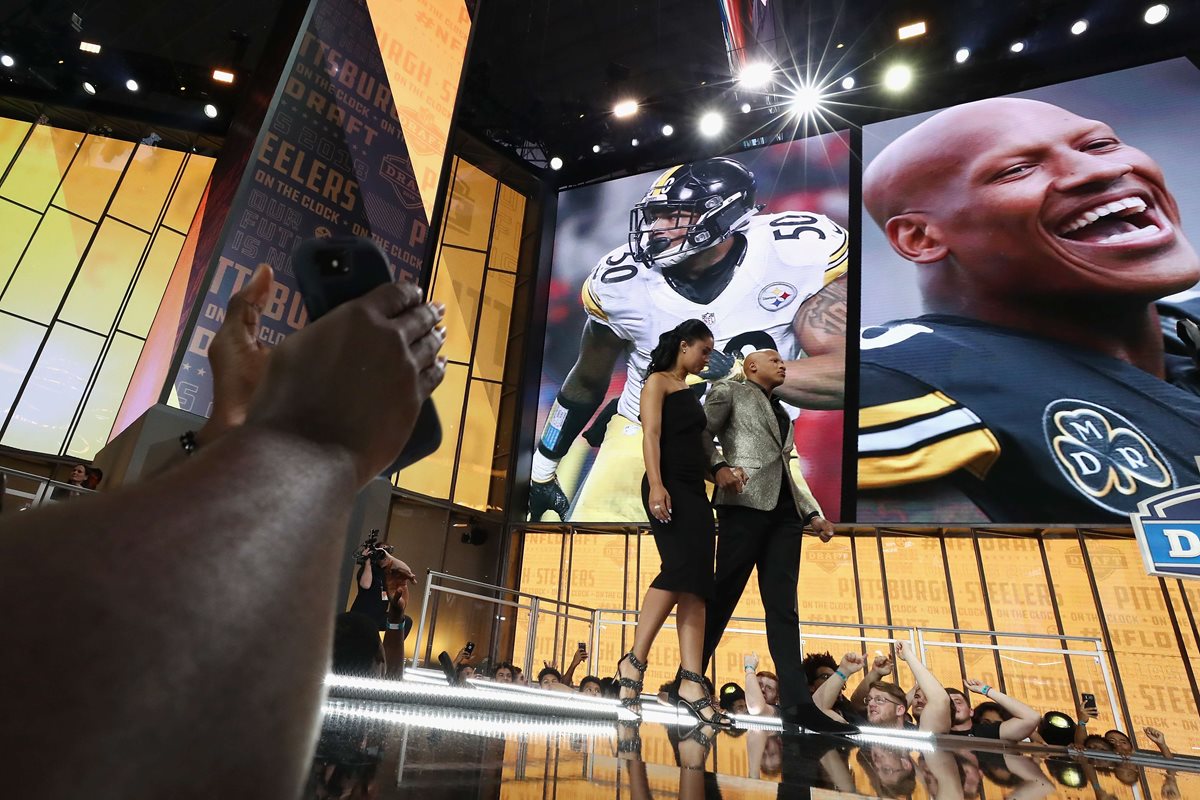
Ryan Shazier was the 15th overall pick in the 2014 NFL Draft, ascending to Pro Bowl status with the Pittsburgh Steelers before a career-ending spinal injury in 2017. His journey encompasses a rapid rise to stardom, a miraculous physical recovery, and significant financial restructuring that protected his long-term earnings and fueled his current post-career ventures.
The 2014 NFL Draft: A Defensive Transformation in Pittsburgh
When the Pittsburgh Steelers selected Ryan Shazier with the 15th overall pick in the 2014 NFL Draft, they were looking for a player to revolutionize a defense that had historically relied on traditional, "downhill" linebackers. Shazier, a standout at Ohio State University, represented the new era of the NFL: an "off-ball" linebacker with the speed of a safety and the hitting power of a defensive end.
Standing 6'1" and weighing approximately 230 pounds, Shazier's pre-draft metrics were staggering. His 4.38-second 40-yard dash time made him one of the fastest linebackers to ever enter the league, allowing him to cover tight ends and wide receivers across the middle of the field while still being a factor in the run game. This versatility was the primary reason the Steelers bypassed other high-profile prospects to secure him.
His rookie contract was a reflection of his high-draft status. Shazier signed a four-year deal worth roughly $9.5 million, fully guaranteed, including a $5.23 million signing bonus. This initial financial foundation was crucial, providing the security typical of a first-round selection, but the true "financial impact" of his career would not be understood until years later, following his life-altering injury.
The Ascent: Pro Bowl Dominance and Defensive Leadership
Between 2014 and 2017, Shazier became the heartbeat of the Steelers' defense. His ability to diagnose plays instantly and close gaps with elite closing speed made him a nightmare for offensive coordinators. By 2016, Shazier had earned his first Pro Bowl nod, recording 87 tackles, 3.5 sacks, and three interceptions in just 13 games.
The 2017 season was trending toward a Defensive Player of the Year conversation. Shazier was the undisputed leader of the unit, serving as the "green dot" player—the one responsible for communicating defensive calls from the coaching staff to the rest of the team. Before his injury, he had already amassed 89 tackles and three interceptions in 12 games. His value to the team was immeasurable, and he was widely expected to sign one of the largest contracts for a linebacker in NFL history upon the expiration of his rookie deal.
His playing style was aggressive and high-impact. However, this same aggression often placed him in high-velocity collisions. Analysts and scouts often noted his tendency to lead with his head or lower his crown during tackles—a technique that was common in the era but would eventually lead to a catastrophic outcome.
December 4, 2017: The Injury That Changed Everything
The trajectory of Ryan Shazier’s life and the Steelers' franchise changed on a Monday night in Cincinnati. During a routine tackle attempt on Bengals receiver Josh Malone, Shazier lowered his head, making contact with his crown. He immediately fell to the turf, clutching his back, with his legs remaining motionless.
The medical diagnosis was a spinal contusion, a severe bruising of the spinal cord that led to temporary paralysis. He underwent spinal stabilization surgery two days later at the University of Pittsburgh Medical Center (UPMC). The severity of the injury sent shockwaves through the sports world, shifting the conversation from "When will he return to the field?" to "Will he ever walk again?"
This moment triggered an immediate shift in the Steelers' organizational approach. Unlike many franchises that might distance themselves from an injured player to preserve salary cap space, the Steelers committed to Shazier’s recovery both emotionally and financially. This period highlighted the intersection of NFL disability protections, insurance, and team loyalty.
Financial Impact and Contractual Maneuvering
The financial impact of Shazier’s injury is a complex study of NFL labor laws and team ethics. In early 2018, the Steelers faced a difficult decision regarding Shazier’s fifth-year option, which was worth $8.718 million. Despite knowing he would likely never play another snap, the Steelers exercised the option and subsequently converted $8.26 million of that salary into a signing bonus.
This move was significant for two reasons:
- Immediate Liquidity: It gave Shazier the bulk of his yearly earnings upfront to cover intensive rehabilitation costs.
- Cap Management: It allowed the Steelers to spread the "cap hit" while still fulfilling their financial obligation to a player who had given his all for the city.
Ryan Shazier Career and Financial Overview
| Category | Detail |
|---|---|
| Draft Position | 1st Round, 15th Overall (2014) |
| Total NFL Earnings | Approx. $18.7 Million (Pre-tax) |
| Primary Injury | Spinal Contusion (C5-C6 stabilization) |
| Pro Bowl Selections | 2 (2016, 2017) |
| Post-Career Focus | Spinal Rehab Advocacy, Business, Author |
| Contract Milestone | 2018 Salary Conversion ($8.26M Bonus) |
Beyond his direct NFL salary, Shazier's financial situation was bolstered by the league's collective bargaining agreement (CBA) provisions for permanent disability. Players with "Total and Permanent" (T&P) disability status are eligible for significant monthly benefits. Shazier also benefited from various insurance policies—both league-mandated and private—that elite athletes often carry to protect against career-ending trauma.
The Long Road to Recovery and Retirement
Shazier’s recovery became a source of international inspiration. From being unable to move his legs in late 2017 to standing for his wedding and eventually walking across the stage at the NFL Draft, his progress defied initial medical projections. In 2020, after years of attempting a comeback, Shazier officially announced his retirement from the NFL.
"When you’re 23 years old and you’re a Pro Bowl linebacker, you think you’re invincible," Shazier noted in his memoir, Walking Miracle. "The injury didn't just break my body; it forced me to find a new identity."
His retirement was not a financial end but a transition. He remained on the Steelers' payroll in various capacities during his recovery, including scouting and coaching assistance, which allowed him to continue earning a living while transitioning into his "life's work" outside of active play.
Entrepreneurship and the Shazier Fund
As of 2026, Ryan Shazier has successfully transitioned into a multifaceted businessman and philanthropist. The financial impact of his career provided the seed capital for several successful ventures. Most notably, the Ryan Shazier Fund for Spinal Rehabilitation provides resources, support, and financial assistance to individuals who have suffered spinal cord injuries (SCIs) but lack the elite medical access that Shazier had.
His business interests include:
- Media and Content: Regular appearances as an analyst and the success of his autobiography.
- Speaking Engagements: Shazier is one of the most sought-after motivational speakers in North America, commandingly high fees for corporate keynotes on resilience and leadership.
- Investments: Shazier has diversified his NFL earnings into real estate and tech startups, ensuring that the "financial impact" of his shortened career remains a positive one for his family.
His story has also influenced how current NFL players approach financial planning. Shazier often speaks to rookies about the importance of "disability insurance" and "non-guaranteed money," using his own career as a case study for why an athlete's financial house must be in order from day one.
Frequently Asked Questions
What was Ryan Shazier’s official diagnosis after the hit?
Ryan Shazier suffered a spinal contusion, which is a severe bruising of the spinal cord. This resulted in immediate loss of sensation and motor function in his lower extremities. Unlike a complete spinal cord transection (severing), a contusion allows for the possibility of some recovery, depending on the severity of the swelling and the success of the stabilization surgery.
Did the Pittsburgh Steelers pay Shazier after his injury?
Yes, the Steelers were praised for their financial loyalty. They honored his fifth-year option for the 2018 season, paying him over $8.7 million. They also kept him on the roster on the "Physically Unable to Perform" (PUP) list for the 2019 season, which allowed him to continue earning a salary and maintaining his health insurance and pension credits.
How did Shazier’s injury change NFL rules?
Shazier's injury was a major catalyst for the NFL's "Use of the Helmet" rule, introduced in 2018. This rule prohibits players from lowering their heads to initiate contact with their helmets against an opponent. The league used Shazier's injury as a primary example in player safety presentations to demonstrate the catastrophic risks of improper tackling technique.
Is Ryan Shazier currently able to walk?
Yes, through years of intensive physical therapy and multiple surgeries, Ryan Shazier regained the ability to walk. While he may still experience some lingering neurological effects and does not possess the explosive athleticism required for professional sports, his recovery is considered a medical success story.
What is the Ryan Shazier Fund for Spinal Rehabilitation?
The fund is a non-profit organization dedicated to helping "under-resourced" individuals with spinal cord injuries. It provides grants for physical therapy, home modifications, and specialized equipment that insurance often fails to cover. Shazier founded it to ensure that his "walking miracle" could be replicated by others who don't have an NFL salary to fund their recovery.
Recommendations for Athletes and Professionals
Ryan Shazier's story serves as a critical blueprint for both physical and financial risk management. For athletes and high-risk professionals, the following actions are essential:
- Prioritize Disability Insurance: High earners should never rely solely on employer-provided insurance. Private "loss of value" or "career-ending" policies are vital for protecting future earnings.
- Master Technical Fundamentals: Shazier’s injury was exacerbated by tackling technique. In any high-risk field, adhering to safety protocols is not just about regulation; it is about career longevity.
- Diversify Your Identity: Shazier’s successful transition in 2026 is due to his willingness to learn scouting, business, and public speaking while still in rehabilitation. Developing a "Plan B" while "Plan A" is still active is the most effective way to mitigate the financial impact of a sudden career change.