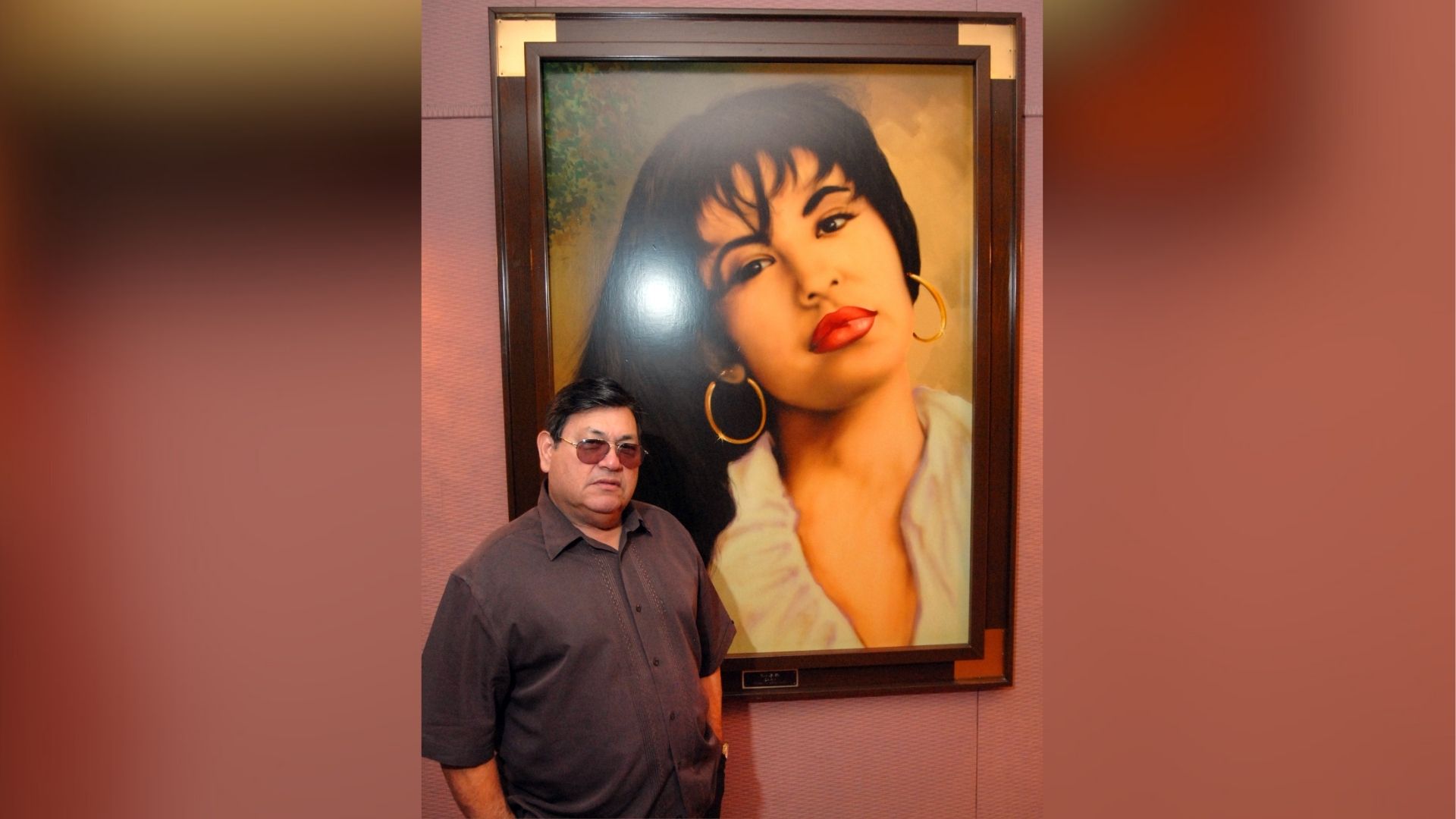
Published in 2021, A Father's Dream: My Family's Journey in Music is the official autobiography of Abraham Quintanilla Jr., written alongside co-author Nancy de los Santos. The memoir documents Quintanilla’s early musical career with the original Los Dinos, his family's overcoming of systemic discrimination, the rise of Selena y Los Dinos, and his decades-long dedication to preserving his daughter's artistic legacy.
The Origins of a Musical Vision: Abraham Quintanilla Jr. and the Original Los Dinos
Long before Selena Quintanilla-Pérez became known globally as the "Queen of Tejano Music," her father, Abraham Quintanilla Jr., was forging his own path through the Texas music landscape. Born in Corpus Christi, Texas, in 1939, Abraham developed an early passion for vocal harmony and American pop music. In the late 1950s, he joined a group of young Mexican American musicians to form the original iteration of Los Dinos.
The original Los Dinos performed a blend of English-language rock and roll, doo-wop, and rhythm and blues. However, operating in Texas during the 1950s and 1960s meant navigating widespread racial segregation and institutional prejudice. The band frequently faced rejection from Anglo venues due to their ethnicity, while simultaneously encountering skepticism from traditional Spanish-language radio stations and Mexican American audiences who expected traditional ranchera or conjunto music rather than English doo-wop.
To survive commercially, Los Dinos adapted by transitioning their repertoire toward Spanish-language pop and Tejano music. Despite releasing several regional records, including early hits like "Give Me One More Chance," the financial instability of life on the road made sustaining a full-time music career untenable. By 1969, facing the realities of supporting a growing family with his wife, Marcella Samora, Abraham stepped away from active touring and took a steady job at the Dow Chemical facility in Freeport, Texas. Nevertheless, his deep understanding of arrangements, vocal harmonies, and the mechanics of the music industry laid the groundwork for his second chapter in American music.
Building Selena y Los Dinos: Overcoming Economic Hardship and Industry Barriers
In the late 1970s, Abraham recognized extraordinary musical potential in his three children: A.B. (Abraham III) on bass, Suzette on drums, and Selena as lead vocalist. Driven by a desire to provide his children with artistic expression and family unity, he formed a new generation of the family band, naming them Selena y Los Dinos.
The early 1980s presented severe economic challenges for the Quintanilla family. In 1980, Abraham opened a Tex-Mex restaurant in Lake Jackson, Texas, called Papa Gayo's, which featured a small stage where his children performed. When the Texas oil crisis of 1981–1982 devastated the local economy, the restaurant was forced to close, leading to bankruptcy and the loss of the family home. Forced to move back to Corpus Christi to live with relatives, Abraham pivoted entirely to managing the band full-time as their primary economic lifeline.
Quintanilla Family Journey Timeline: 1957–1969: Original Los Dinos era (English doo-wop & Spanish pop) 1980–1982: Papa Gayo's restaurant venture & severe economic downturn 1981–1989: Rebuilding Selena y Los Dinos; grassroots touring in "Big Bertha" 1989: Major record signing with EMI Latin; breakthrough in Tejano market 1995: Tragic loss of Selena; establishment of Q-Productions legacy management 2021: Publication of "A Father's Dream: My Family's Journey in Music"
Managing Selena y Los Dinos required operating under extreme logistical constraints. Traveling across Texas and the Southwest in a refurbished vintage bus named "Big Bertha," the band played small dance halls, weddings, and local festivals. Abraham served multiple roles simultaneously: band manager, executive producer, booking agent, driver, and vocal coach.
The group faced substantial resistance within the Tejano music market, which was historically male-dominated. Programmers and venue owners openly questioned whether a young female-fronted group could headline major venues. Abraham countered this resistance by enforcing strict musical standards, insisting on relentless rehearsal schedules, and guiding A.B. Quintanilla in developing a distinct modern sound that incorporated pop, cumbia, and traditional Tejano elements. This disciplined approach bore fruit when Selena won Female Vocalist of the Year at the 1987 Tejano Music Awards, paving the way for their landmark contract signing with EMI Latin in 1989.
The Tragedy of 1995 and the Defense of a Family's Cultural Legacy
The meteoric rise of Selena y Los Dinos culminated in historical achievements, including a Grammy Award for Best Mexican/American Album in 1994 and a record-breaking concert at the Houston Astrodome in February 1995. However, this period of unparalleled success was shattered on March 31, 1995, when Selena was murdered by Yolanda Saldívar, the former president of her fan club and manager of her boutiques.
In A Father's Dream, Abraham Quintanilla candidly addresses the profound grief that devastated his family in the aftermath of Selena's death. Beyond the personal tragedy, Abraham faced the immediate challenge of managing the unprecedented media storm and protecting his daughter’s memory from sensationalism.
To maintain control over Selena's catalog, image, and historical record, Abraham established Q-Productions in Corpus Christi. Through this entity, he oversaw posthumous album releases—such as the crossover success Dreaming of You—as well as the development of the 1997 biographical film Selena, starring Jennifer Lopez. Throughout his memoir, Abraham emphasizes that his legal and administrative vigilance was never driven by commercial greed, but rather by a solemn duty as a father to guard his daughter's hard-earned legacy against exploitation, unauthorized commercialization, and inaccurate public narratives.
Structural Breakdown and Core Themes in A Father's Dream
The memoir is organized chronologically, detailing the evolution of the Quintanilla family across three distinct historical eras. Understanding these core phases provides crucial context for readers and music historians examining Tejano music evolution.
| Historical Era | Key Focus & Achievements | Operational Challenges Faced | Core Themes In A Father's Dream |
|---|---|---|---|
| Original Los Dinos Era (1950s–1960s) | Formed vocal group in Corpus Christi; recorded early Spanish and English singles. | Segregation in Texas venues; radio rejection of Mexican American pop artists. | Racial barriers, resilience, early identity formation in Chicano music. |
| Selena y Los Dinos Era (1980s–1995) | National and international stardom; crossover success; Grammy Award victory. | Family bankruptcy; gender bias in Tejano music; rigorous tour scheduling. | Work ethic, family cohesion, artistic innovation, cross-cultural appeal. |
| Post-1995 Legacy Era (1995–Present) | Establishment of Q-Productions; release of Dreaming of You; official film & series. | Legal battles over trademarks; managing media intrusion; grief processing. | Legacy protection, paternal obligation, spiritual faith, institutional memory. |
Literary Context: Countering External Narratives and Media Sensationalism
A primary motivation for Abraham Quintanilla Jr. to publish A Father's Dream in May 2021 was to present an authoritative, first-person account of his family's history. Over the decades following Selena’s death, numerous unauthorized biographies, television specials, and true-crime retellings sought to capitalize on the tragedy, often relying on speculative sources or distorted representations of the family dynamic.
In particular, the memoir offers a direct counterbalance to narratives that framed Abraham as an overly controlling stage father. Co-author Nancy de los Santos, who previously worked as a co-producer on the 1997 Selena movie, assisted Abraham in detailing the practical decisions behind the family business. The book frames his management style not as authoritarian control, but as an essential protective barrier required to shield a young artist in a competitive, frequently predatory industry.
Additionally, A Father's Dream heavily integrates Abraham’s personal faith and religious beliefs as a Jehovah's Witness. He attributes the family's endurance through economic collapse, racial hostility, and severe grief to their spiritual conviction. This explicit spiritual focus provides insight into how the family navigated immense public scrutiny while maintaining their internal unity.
How to Read, Access, and Evaluate A Father's Dream
For fans, students of American music, and cultural historians, A Father's Dream: My Family's Journey in Music serves as a key primary source document regarding the Chicano music movement in the United States.
Publication Details and Formats
- English Title: A Father's Dream: My Family's Journey in Music
- Spanish Edition: El sueño de un padre: La historia de mi familia y la música
- Co-Author: Nancy de los Santos
- Primary Formats: Hardcover, Paperback, Kindle eBook, and Audiobook editions
- Primary Focus: Autobiography, Tejano music history, family memoir, and legal legacy defense
When reading the text alongside other primary historical accounts, researchers should note that Abraham writes explicitly from the viewpoint of a patriarch and manager. The book pairs effectively with secondary sources detailing the broader socio-economic history of Mexican Americans in South Texas during the mid-to-late 20th century.
Frequently Asked Questions
When was A Father's Dream published, and who wrote it?
A Father's Dream: My Family's Journey in Music was published in May 2021. It was authored by Abraham Quintanilla Jr. in collaboration with writer, director, and producer Nancy de los Santos, who was a co-producer on the official 1997 film Selena.
What drove Abraham Quintanilla Jr. to write his memoir after so many years?
Abraham Quintanilla wrote the book to establish an accurate, official first-person record of his family's history. He sought to correct persistent media rumors, address unauthorized biographies, detail his early career with the original Los Dinos, and document his lifelong commitment to protecting Selena's cultural legacy.
How does A Father's Dream cover the original Los Dinos band from the 1950s and 1960s?
The book devotes significant coverage to Abraham’s early youth in Corpus Christi and his time performing English doo-wop and Spanish pop with the original Los Dinos. It details the severe racial discrimination and commercial rejection the band faced in Texas venues, explaining how those early experiences shaped his management approach with Selena y Los Dinos.
Is A Father's Dream available in Spanish and audio formats?
Yes. The book was published simultaneously in both English (A Father's Dream) and Spanish (El sueño de un padre). Both versions are available across multiple physical formats, digital e-readers, and narrated audiobooks.
How does this book differ from other biographies about Selena?
Unlike third-party journalistic accounts or true-crime books focused primarily on Selena's murder, A Father's Dream is an insider family memoir. It provides detailed historical context regarding the Quintanilla family's ancestry, economic struggles, business decisions, spiritual beliefs, and post-1995 efforts to maintain the Selena museum and Q-Productions.
Exploring the Primary Record of Tejano Music History
To gain a complete and grounded understanding of the history captured in A Father's Dream, readers should engage directly with the primary artistic catalog and documented interviews produced by the Quintanilla family.
First, review the early recordings of Los Dinos from the late 1950s and 1960s alongside the remastered discography of Selena y Los Dinos produced at Q-Productions. Comparing these musical eras illustrates the structural evolution from early Chicano rock and doo-wop to modern, studio-produced Tejano pop.
Second, scholars and enthusiasts should utilize A Father's Dream as a complementary primary reference alongside official archival material, such as the exhibits maintained at the Selena Museum in Corpus Christi, Texas. Approaching the text as a historical document illuminates not only the personal journey of Abraham Quintanilla Jr., but also the broader cultural resilience of Mexican American musicians navigating the 20th-century American entertainment industry.