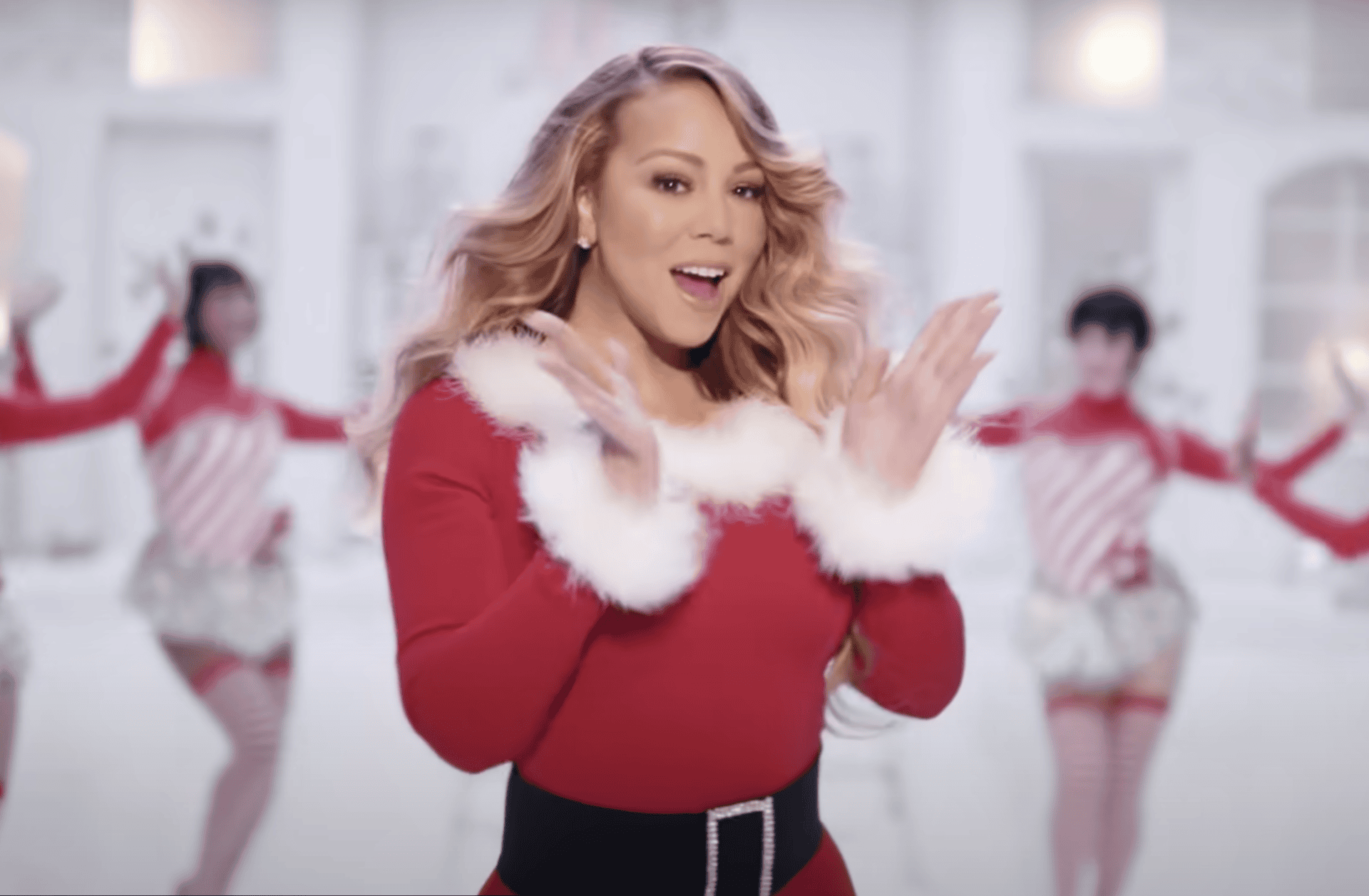
Since its release in 1994, Mariah Carey’s "All I Want for Christmas Is You" has evolved from a contemporary hit into the definitive holiday standard of the modern era. The ultimate cover collection showcases the song's versatility, featuring high-profile reinterpretations ranging from the high-octane punk of My Chemical Romance to the sophisticated orchestral jazz of Michael Bublé.
The Cultural Phenomenon of a Modern Standard
As we navigate the holiday season of 2026, Mariah Carey’s "All I Want for Christmas Is You" remains an immovable force in global music culture. Originally co-written by Carey and Walter Afanasieff for the album Merry Christmas, the track was designed to sound like a long-lost classic from the Motown or Phil Spector "Wall of Sound" era. Its success was not instantaneous in terms of chart-topping dominance—that would come later with the advent of the streaming era—but its impact on other artists was immediate.
The reason "All I Want for Christmas Is You" is the subject of an "ultimate cover collection" is its structural perfection. It is one of the few holiday songs written in the last thirty years that successfully utilizes the "Christmas chord" (a minor subdominant with a major sixth), which evokes a sense of nostalgic yearning. For performers, the song represents a double-edged sword: it offers a guaranteed audience draw, but it requires a vocal range and rhythmic precision that few can master. Consequently, the covers that survive the test of time are those that either replicate Carey’s virtuosity or completely deconstruct the arrangement.
Pop Icons and the Power of Tribute
The most frequent covers of this track come from the pop world, where singers attempt to match the "Queen of Christmas" in her own domain. These versions often serve as a rite of passage for rising stars.
Ariana Grande’s Early Homage
Long before she was a global superstar in her own right, Ariana Grande performed the track during various "Christmas in Rockefeller Center" events and holiday specials around 2012. Her version is often cited as the gold standard for pop covers because her whistle register and melismatic control closely mirror Carey’s original technical prowess. While she stayed faithful to the arrangement, her interpretation solidified her position as a vocal powerhouse capable of handling the most demanding repertoire in the Great American Songbook.
Fifth Harmony’s Harmonized Approach
In 2014, the girl group Fifth Harmony released a version that transformed the solo tour de force into a collaborative effort. By distributing the verses among five different vocalists, the group highlighted the song’s melodic flexibility. Their version added a contemporary R&B sheen to the production, making it a staple for younger audiences who preferred a more modernized percussion track over the 6/8 "jingle bell" swing of the original.
Rock and Alternative Reimagining
One of the most surprising aspects of the "ultimate cover collection" is how well the song translates to distorted guitars and aggressive drumming. Because the original has such a fast tempo (approximately 150 BPM), it naturally lends itself to the energy of pop-punk and alternative rock.
My Chemical Romance and the Punk Turn
Perhaps the most famous alternative cover is by My Chemical Romance, recorded for the Kevin & Bean's Christmastime in the 909 charity album in 2004. Gerard Way’s raw, emotive vocals replaced Carey’s polished trills, and the sleigh bells were swapped for crashing cymbals. This version stripped away the "glitter" of the holiday and replaced it with a frantic, desperate energy that resonated with a different demographic entirely. It proved that the song’s core message—longing for a loved one—is universal regardless of the genre's aesthetic.
Bowling for Soup and the Pop-Punk Tradition
Following in the footsteps of the genre, Bowling for Soup released a version that leaned into the "fun" aspect of the track. Their cover is characterized by "whoa-oh" backing vocals and a driving bassline. In the context of 2026, these rock versions are often curated into "Alternative Christmas" playlists, providing a necessary counter-programming to the more traditional department store soundtracks.
The Crooners: Jazz and Adult Contemporary
If the pop covers aim for energy and the rock covers aim for edge, the "crooner" covers aim for timeless sophistication. These versions often slow down the tempo to emphasize the lyrics.
Michael Bublé’s Orchestral Shift
In 2011, Michael Bublé reimagined the track for his massive Christmas album. Unlike the upbeat original, Bublé’s version begins as a slow, dramatic ballad with a full orchestral backing. By the middle of the song, it transitions into a mid-tempo swing. This version is significant because it removed the "diva" elements of the song, making it accessible for lounge singers and big bands worldwide. It transformed a song about high-energy celebration into one about romantic intimacy.
Lady A and Country-Pop Sensitivity
The country group Lady A (formerly Lady Antebellum) provided a version that emphasized the "wall of sound" through a Nashville lens. Their cover features prominent acoustic guitars and the signature three-part harmony that defines their sound. This version helped the song bridge the gap between Top 40 radio and Country formats, ensuring the song’s dominance across every major musical demographic.
Comparing the Definitive Versions
To understand the breadth of the "ultimate cover collection," it is helpful to look at how different artists have modified the technical aspects of the song.
| Artist | Year | Primary Genre | Notable Change |
|---|---|---|---|
| Mariah Carey | 1994 | Pop / Soul | Original - High-energy "Wall of Sound" |
| My Chemical Romance | 2004 | Punk Rock | Faster tempo, distorted guitars, gritty vocals |
| Michael Bublé | 2011 | Jazz / Big Band | Slow-burn intro, orchestral arrangement |
| Ariana Grande | 2012 | Pop | Faithful to original, showcases whistle notes |
| Fifth Harmony | 2014 | R&B / Pop | Multi-part harmonies, modernized drums |
| Miley Cyrus | 2020 | Rock / Live | Raspy, blues-influenced vocal delivery |
| Dolly Parton | 2022 | Country | Bluegrass elements, features Jimmy Fallon |
The Technical Difficulty of Covering Mariah
Covering "All I Want for Christmas Is You" is notoriously difficult for three main reasons: the vocal range, the rhythmic "swing," and the emotional pacing.
- The Vocal Range: The song spans several octaves. An artist must be able to handle the low, sultry notes of the intro ("I don't care about the presents...") while also hitting the climactic high notes at the bridge's end. Many covers fail because the singer cannot maintain the power in their upper register.
- The "Swing" Factor: The song is written in a way that feels like it’s constantly leaning forward. This is achieved through a syncopated bassline and the heavy use of triplets in the piano part. Artists who attempt to "straighten" the rhythm often find that the song loses its magic.
- The Emotional Pacing: The song starts as a ballad but explodes into a celebration after the first 30 seconds. Managing that transition without making it feel jarring is a hallmark of a successful cover.
Impact on the Digital and Streaming Era
As of 2026, the "ultimate cover collection" is primarily consumed via algorithmic playlists on platforms like Spotify and Apple Music. These platforms have fundamentally changed how covers are valued. Every time a new artist covers the song, it generates "mechanical royalties" for the original writers (Carey and Afanasieff) while providing the new artist with a guaranteed spike in seasonal listeners.
Furthermore, the song has become a staple for social media challenges. In recent years, short-form video platforms have popularized "genre-swapped" covers—such as lo-fi hip hop versions or "synthwave" reinterpretations. While these might not appear on a traditional CD compilation, they are an essential part of the modern cover landscape, keeping the song relevant for a generation that was born decades after the original's release.
Why We Keep Coming Back
The enduring appeal of "All I Want for Christmas Is You" covers lies in the song’s inherent joy. Unlike many traditional carols that are somber or religious, this track is a secular explosion of romantic optimism. It allows artists to project their own musical identity onto a canvas that everyone already knows by heart.
Whether it is a heavy metal band playing the melody on a double-kick drum or a folk singer with a lone banjo, the song’s structure remains indestructible. As we look toward the future of holiday music, it is clear that the "ultimate cover collection" will only continue to grow, as each new generation of artists tries their hand at the most successful Christmas song of the last century.
Frequently Asked Questions
Who has the most successful cover of "All I Want for Christmas Is You"?
While Mariah Carey’s original is the most successful version overall, Michael Bublé’s 2011 version is widely considered the most commercially successful cover. His version frequently enters the Billboard Hot 100 during the holiday season and has accumulated hundreds of millions of streams, becoming a standard in its own right for listeners who prefer a jazzier, traditional vocal pop sound.
Did Mariah Carey ever record the song with another artist?
Yes, for her 2011 album Merry Christmas II You, Mariah Carey recorded a "SuperFestive!" duet version with Justin Bieber. This version updated the production with more contemporary electronic elements and a slightly different vocal arrangement to accommodate Bieber's range. It remains one of the most popular versions for younger audiences.
Why do rock bands cover this song so often?
Rock and punk bands are drawn to the song because of its high BPM (beats per minute) and its major-key, anthemic chorus. The structure of the song—buildup, explosion of sound, and a catchy "hook"—aligns perfectly with the dynamics of pop-punk. Bands like My Chemical Romance and Zebrahead have used the song to show their lighter, more festive side while maintaining their signature sound.
Is the song's "Christmas chord" present in all covers?
Most professional covers retain the minor subdominant chord because it is essential to the song's "bittersweet" holiday feel. However, some simplified acoustic or amateur covers might omit it, which often results in the song sounding "flatter" or less emotionally resonant than the original.
How many versions of the song exist in total?
While it is impossible to count every amateur performance, there are over 1,000 professional recordings of "All I Want for Christmas Is You" registered with music licensing bodies. This includes versions in multiple languages, instrumental arrangements, and across almost every conceivable musical genre.
Building Your Own Cover Playlist
If you are looking to curate your own "Ultimate Cover Collection," the best approach is to select one standout track from each major genre to ensure variety. Start with the Michael Bublé version for a sophisticated atmosphere, transition into the Ariana Grande version for pure vocal talent, add the My Chemical Romance version for a burst of energy, and round it out with an acoustic rendition, such as the one by Ingrid Michaelson, for a cozy, intimate finale. By diversifying the styles, you can enjoy the genius of Carey’s composition without the repetitive nature of hearing the same arrangement back-to-back.