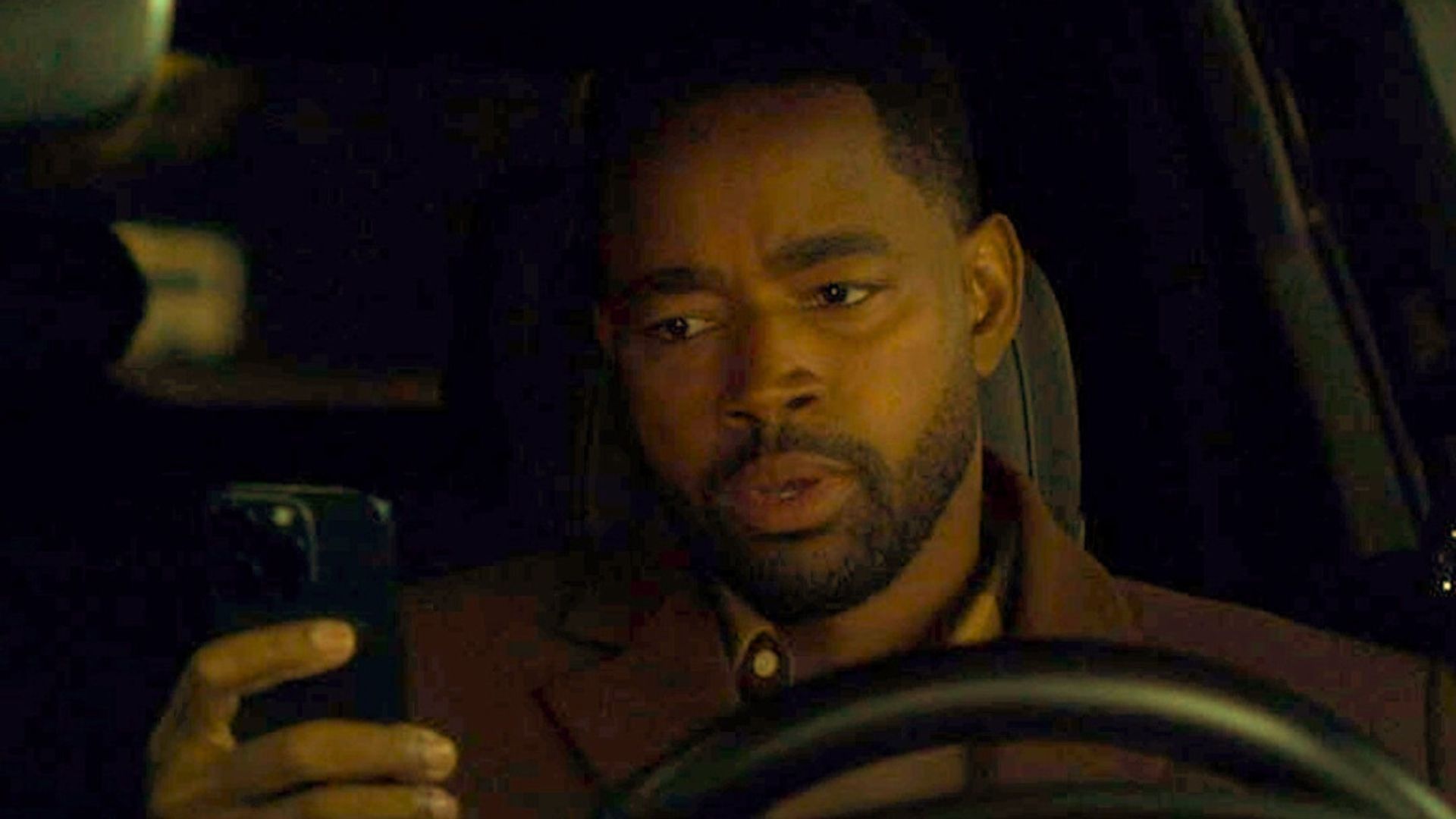
In the narrative of All Her Fault, Peter moves from a position of cold, detached judgment toward his wife, Marissa, to a harrowing realization of his own complicity in their family's crisis. By confronting the deep-seated secrets of his past and acknowledging his emotional absence, Peter eventually transitions from blame to accountability, allowing for a fragile but necessary path toward reconciliation and healing.
The story of All Her Fault, originally penned as a gripping psychological thriller by Andrea Mara and later adapted into a high-profile television series by 2026, centers on a parent’s worst nightmare: a child disappearing during a routine playdate. While the title suggests a singular point of failure—Marissa’s decision to drop her son Milo off at the wrong house—the emotional core of the story rests heavily on Peter. His journey is not just about finding his son; it is about "understanding the situation" in its entirety, which involves unmasking the layers of deception that defined his marriage long before the kidnapping occurred.
The Catalyst: The Disappearance of Milo and the Initial Blame
The "situation" begins with a simple, devastating error. Marissa drops their young son, Milo, at what she believes is the home of a new friend, Jenny. When she returns to pick him up, the woman who answers the door is the real Jenny, and she has never seen Milo. The immediate fallout places Marissa at the center of a media and social firestorm. The phrase "all her fault" becomes a haunting refrain, not just in the tabloids, but within the walls of her own home.
Initially, Peter embodies the judgmental observer. As a husband who is frequently away for work, he occupies a space of perceived competence. Because he wasn't there to make the mistake, he feels entitled to harbor resentment. This phase of the story highlights a common psychological phenomenon in grieving or traumatized parents: the "blame-shift." By focusing entirely on Marissa’s lapse in judgment, Peter avoids facing the terrifying reality that their lives were vulnerable to such an intrusion.
Understanding the situation at this stage is, for Peter, purely surface-level. He sees a lost child and a negligent mother. He does not yet see the cracks in the foundation of their lives that he helped create. His movement "forward" is initially stalled by this wall of anger, which serves as a protective mechanism against his own fear.
Peter’s Perspective: A Husband Caught Between Grief and Suspicion
To understand how Peter moves forward, one must examine his role as the "absentee provider." In both the novel and the 2026 screen adaptation, Peter is portrayed as a man who prioritized professional stability—or perhaps the escape that professional life provided—over the daily emotional labor of parenting. This distance created a vacuum in his relationship with Marissa, one filled with unspoken tensions and secrets.
As the investigation into Milo’s disappearance deepens, Peter is forced to step out of his role as the judge and into the role of a participant. The police inquiries begin to touch on his own history, his past relationships, and his professional dealings. It is here that the "situation" becomes complex. Peter has to reconcile the man he portrays to the world with the man whose past might have invited this tragedy into their home.
The suspicion that begins to cloud Peter is a turning point. In many psychological thrillers, the husband is a primary suspect. While Peter’s innocence regarding the physical act of kidnapping is established, his emotional "guilt" becomes a central theme. He begins to understand that his distance made Marissa’s isolation—and her subsequent vulnerability to the "Jenny" deception—possible.
Unveiling the Truth: How Peter Understands the Complex Reality
The true "understanding" for Peter occurs when the connection between the kidnapper and the family’s past is revealed. Without venturing into spoilers for those still discovering the 2026 series, the resolution of All Her Fault hinges on the fact that the kidnapping was not a random act of predatory opportunism. It was a targeted, calculated strike born out of long-buried grievances.
For Peter, understanding the situation involves three distinct realizations:
- The Connectivity of Secrets: He realizes that his own past actions had ripples he never accounted for.
- The Fallibility of Memory: He must confront versions of events from years prior that he had sanitized in his own mind.
- The Shared Burden of Protection: He recognizes that "protecting" a family involves more than financial provision; it requires presence and honesty.
This realization is agonizing. It shifts the narrative from a "whodunnit" to a "why-us." When Peter finally grasps that the kidnapper wasn't just a stranger but a ghost from a shared or hidden history, the title All Her Fault loses its sting. He begins to see that the fault is a distributed weight, one that he carries a significant portion of.
Comparing the Arc: Peter’s Evolution
The following table illustrates the shift in Peter’s character and his understanding of the situation from the beginning of the crisis to the resolution.
| Feature | Initial State (The Crisis) | Final State (The Resolution) |
|---|---|---|
| View of Marissa | Judgmental; views her as negligent and responsible. | Empathetic; recognizes her trauma and his role in her isolation. |
| Emotional Presence | Detached; uses work as a shield against the tragedy. | Active; physically and emotionally present for the recovery process. |
| Handling of Secrets | Evasive; believes the past can stay buried. | Transparent; understands that secrets provided the kidnapper’s leverage. |
| Definition of Fault | Singular; focused on the "wrong house" incident. | Systemic; acknowledges the breakdown of the marital partnership. |
| Primary Goal | Finding Milo to "fix" the mistake. | Rebuilding the family to ensure long-term safety and healing. |
Moving Forward: The Aftermath and Psychological Recovery
Moving forward for Peter is not a linear process. In the aftermath of Milo’s recovery—which is the ultimate goal of the "situation"—the family is left with the debris of their broken trust. By 2026, discussions around the "All Her Fault" finale often focus on the realism of the recovery process. Unlike traditional thrillers that end with a hug and a fade-to-black, Peter’s path forward involves intensive therapeutic work.
The first step in moving forward is the abandonment of the "All Her Fault" narrative. For Peter, this means publicly and privately defending Marissa against the lingering stigma of the incident. He must become her strongest ally, a role he failed to play in the years leading up to the kidnapping.
Furthermore, Peter’s movement forward involves a radical restructuring of his life. In the narrative's conclusion, we see a man who has shifted his priorities. The "situation" served as a brutal awakening to the fragility of his domestic life. Moving forward means:
- Relocation or Re-securing the Home: Creating a physical environment that doesn't trigger the trauma of the disappearance.
- Legal Accountability: Dealing with any fallout from the secrets revealed during the investigation.
- Parental Re-engagement: Building a new, direct relationship with Milo that isn't mediated solely through Marissa.
The Role of Community and Perception
Peter also has to navigate the "situation" of public perception. In the age of social media (a theme heavily modernized in the 2026 adaptation), the father is often scrutinized just as harshly as the mother. Peter’s movement forward requires him to manage the external noise while focusing on the internal family unit.
He learns that "understanding the situation" also means understanding how the world views his family. The "all her fault" mantra is something the public is slow to let go of. Peter’s growth is evidenced by his refusal to let public opinion dictate his private treatment of his wife. This protective stance is a key indicator of his maturity and his successful navigation of the crisis.
Frequently Asked Questions
Did Peter have an affair in "All Her Fault"?
While the story explores themes of marital distance and secrets, Peter’s primary "sin" in the context of the kidnapping is emotional neglect and his connection to the past events that motivated the kidnapper. His history with other characters is a major plot point, but it is often more about unresolved past associations than a standard contemporary affair.
How does Peter react when he finds out who the kidnapper is?
Peter’s reaction is one of profound shock and immediate self-reflection. Unlike his initial anger toward Marissa, his reaction to the truth is characterized by a "re-watching" of his own life. He is forced to see how his previous choices directly linked the kidnapper to his current family.
Does the marriage survive at the end of the story?
The ending is "hopeful but haunted." In the 2026 television conclusion, Peter and Marissa remain together, but the relationship is fundamentally changed. They are moving forward, but they are doing so with the knowledge that their previous version of "normal" was an illusion.
What is the significance of the title "All Her Fault" in relation to Peter?
The title is ironic. While it represents Peter’s (and the public's) initial reaction to Marissa’s mistake, the story proves that no tragedy of this scale has a single point of failure. By the end, Peter realizes the title is a lie he told himself to avoid his own responsibility.
Is Peter considered a villain or a hero?
Peter is a complex "gray" character. He is neither the villain (the kidnapper holds that role) nor a traditional hero. He is a flawed man who undergoes a painful transformation. His "heroism" lies not in a physical rescue, but in his willingness to face the truth and change his behavior to save his marriage.
Recommendation for Readers and Viewers
To truly grasp the depth of Peter’s arc, it is recommended to engage with both the original novel by Andrea Mara and the 2026 adaptation. The book provides the internal monologue necessary to understand his guilt, while the screen version visually emphasizes the isolation he felt—and caused—within the family home.
For those looking to understand the nuances of parental grief and the psychology of blame, "All Her Fault" serves as a cautionary tale. The most important "next action" for any reader is to look past the surface-level "whodunnit" and examine the interpersonal dynamics. Peter’s story teaches that moving forward is only possible once you stop looking for someone to blame and start looking for ways to support.