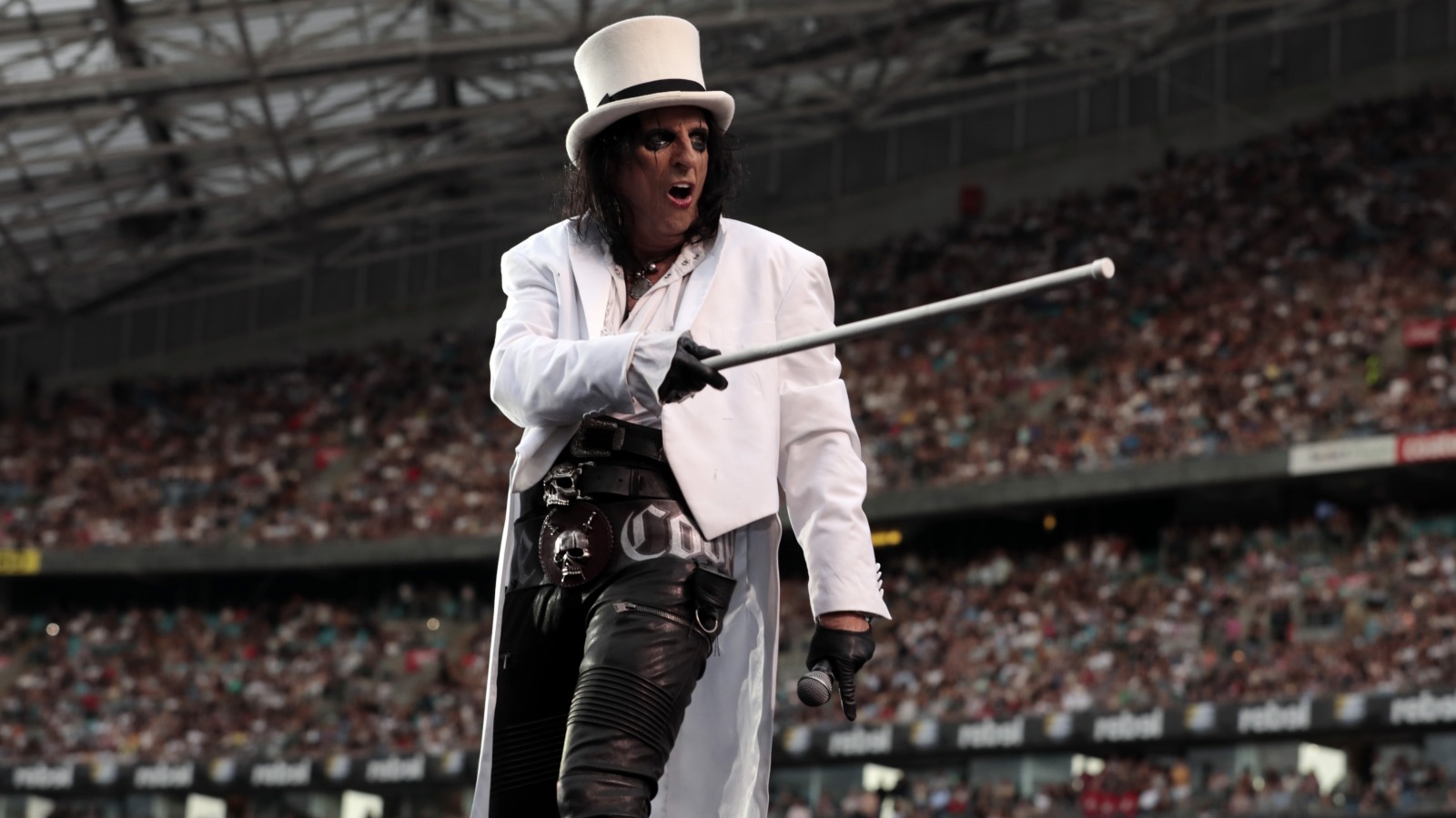
On September 13, 1969, at the Toronto Rock 'n' Roll Revival festival, Alice Cooper threw a live chicken off the stage into the audience, believing the bird would fly away. Instead, the bird fell into the crowd and died, giving rise to the persistent myth that Cooper bit its head off and drank its blood.
The Toronto Rock 'n' Roll Revival of 1969: Setting the Stage
To understand how a single moment transformed an avant-garde Detroit rock group into international headlines, one must look at the atmosphere of the Toronto Rock 'n' Roll Revival festival in September 1969. Held at Varsity Stadium at the University of Toronto, the one-day event featured a lineup bridging early rock pioneers like Chuck Berry, Little Richard, and Gene Vincent with contemporary acts including the Doors and John Lennon’s Plastic Ono Band.
At the time, the Alice Cooper group—fronted by Vincent Furnier, who later adopted the stage name Alice Cooper permanently—was signed to Frank Zappa’s Straight Records label. The band was notorious for its chaotic live shows, incorporating theatrical props, feathers, visual noise, and distortion. They were distinct from the prevailing hippie aesthetic of the late 1960s; where peace and flower power dominated, Alice Cooper offered bizarre, unsettling theatricality.
The audience in Toronto numbered over 20,000 people. As Alice Cooper took the stage during the afternoon set, the atmosphere was chaotic. The band was pushing boundaries of performance art, blending hard rock with theatrical absurdity. However, nothing in their rehearsed setlist prepared the band—or the audience—for what would happen when a live animal inexplicably appeared on stage.
What Actually Happened Onstage: The Flightless Bird
During the climax of Alice Cooper’s set, while the band was amidst a wall of feedback and bursting pillows filled with feathers, a live chicken somehow wandered or was tossed onto the stage. Accounts differ slightly on how the bird arrived: some band members recall fans bringing livestock to festival grounds, while others suggested it was part of a bizarre backstage mix-up involving local festival attendees.
Vincent Furnier, raised in Detroit and Phoenix, had no background in farming or animal husbandry. Seeing a feathered creature on stage surrounded by ambient noise and smoke, Furnier made a logical but mistaken assumption: because the animal had wings, it could fly.
Hoping to create a dramatic theatrical moment where the bird soared majestically over the crowd, Cooper grabbed the chicken and threw it out over the audience.
Because domestic farm chickens possess limited flight capability—especially when startled inside a noisy stadium—the bird did not fly. It plummeted directly into the front rows of the audience. The crowd, comprised of intense festivalgoers in a densely packed pit, rushed the area where the bird landed. In the ensuing commotion, the bird was killed and torn apart by members of the crowd.
Cooper and his bandmates finished their set, unaware that this brief, bizarre sequence would define their public image for decades to come.
Frank Zappa’s PR Masterclass: How a Myth Was Born
By the morning of September 14, 1969, national and international press outlets began reporting on the Toronto festival. However, sensationalism quickly overshadowed reality. Gossip columns and local newspapers carried sensational headlines claiming that a demonic rock singer had bitten the head off a live chicken onstage, drunk its blood, and thrown the carcass into the crowd.
Recognizing the immense publicity value of the rumor, Frank Zappa called Vincent Furnier directly the next day to investigate.
"Alice, did you bite the head off a chicken onstage in Toronto?" Zappa asked."No, Frank, I didn't," Cooper responded.Zappa replied without hesitation: "Well, don't tell anybody! Everybody loves it!"
Zappa, a master of media manipulation and satirical commentary on pop culture, understood that moral outrage was the most powerful marketing tool in rock music. Denying the rumor would reduce Alice Cooper back to an obscure garage rock act. Embracing the ambiguity—allowing the public and press to believe the sensationalized story—instantly established Alice Cooper as the primary antagonist of mainstream polite society.
The narrative gained traction across tabloids, religious organizations, and parent groups. The moral panic surrounding the band fueled record sales, filled concert venues, and solidified Alice Cooper as the founding father of "shock rock."
Comparing Myth vs. Fact: The 1969 Toronto Incident
To clarify historical reality from decades of rock folklore, the following table breaks down the core elements of the incident based on band interviews, eye-witness documentation, and historical records.
| Event Aspect | The Legendary Myth | Verified Historical Fact |
|---|---|---|
| Primary Action | Alice Cooper bit the head off a live chicken onstage. | Alice Cooper threw the live chicken into the stadium crowd. |
| Blood Consumption | Cooper allegedly drank the bird's blood in a ritualistic manner. | No blood was consumed; Cooper did not harm the bird directly. |
| Origin of the Bird | Brought onstage by the band as a pre-planned sacrifice. | Unplanned; the bird appeared on stage via an audience member or crew. |
| Reason for Throwing | Intended as a malicious act of graphic shock theater. | Cooper assumed the chicken had wings and would fly away safely. |
| Fate of the Bird | Decapitated on stage by the lead singer. | Killed in the crowd pit after falling into the front rows. |
| Management Response | Public relations team attempted to suppress the story. | Frank Zappa advised Cooper never to deny the rumor to build publicity. |
Impact on Shock Rock and Alice Cooper's Career
The chicken head incident altered the trajectory of heavy metal and theatrical rock music. Before September 1969, rock performances relied primarily on musical virtuosity, light shows, or straightforward pop charisma. Alice Cooper demonstrated that grotesque drama, taboo imagery, and villainous persona-driven performances could capture cultural attention in ways traditional acts could not.
Following the publicity surge:
- Brand Identity Shift: The band leaned into darker, grand guignol theatricality, incorporating fake guillotines, electric chairs, boa constrictors, and macabre stage makeup.
- Commercial Breakout: The notoriety helped propel albums like Love It to Death (1971) and Billion Dollar Babies (1973) to massive commercial success, making Alice Cooper an arena-filling headline act.
- Blueprint for Future Acts: The shock rock framework established by Cooper paved the way for subsequent generations of theatrical performers, including KISS, W.A.S.P., Rob Zombie, Marilyn Manson, and Slipknot.
Over the decades, Cooper has repeatedly set the record straight in memoirs, broadcast interviews, and documentaries. Far from being a bloodthirsty monster, Furnier has often expressed genuine regret for the fate of the bird, emphasizing that the event stemmed entirely from urban ignorance regarding farm animals rather than cruelty.
The Psychology of Rock Urban Legends
The endurance of the chicken head myth illustrates how rock music culture generates urban legends. During the 1960s and 1970s, long before digital media or instant video verification, rock news traveled via word of mouth, underground press, and sensationalist tabloids.
Several factors sustained the myth:
- Lack of Video Record: Although parts of the Toronto Rock 'n' Roll Revival were filmed (notably by D.A. Pennebaker for the documentary Keep on Rockin'), the specific moment the bird was thrown was not clearly captured from an angle that disproved the tabloid reports immediately to the public.
- Willingness to Believe: Parents and conservative critics in 1969 were already predisposed to view rock music as corrupting and violent. A story about stage decapitation fitted existing cultural anxieties.
- The Band's Compliance: By remaining quiet or responding with coy humor in interviews, the band allowed the public's imagination to do the marketing work for them.
The myth joined other legendary rock tales of the era—such as Ozzy Osbourne biting the head off a bat in 1982 (an event that actually did occur onstage in Des Moines, Iowa, though Osbourne claimed he thought it was a rubber toy) and various rumors involving Led Zeppelin or the Rolling Stones.
Frequently Asked Questions
Did Alice Cooper ever face legal charges over the chicken incident?
No. Local authorities and event organizers did not press legal charges against Alice Cooper. Historical reports confirmed that the band did not intentionally harm or kill the animal on stage, and the incident was understood as an unintended crowd accident amplified by media exaggeration.
Was the Toronto chicken incident staged by Alice Cooper’s band?
No. The band had not rehearsed or planned any stunt involving live animals for the Toronto festival. Feathers from torn pillows were part of their planned act, but the live chicken was thrown onto the stage unexpectedly by an unknown audience member or attendee.
Why did Alice Cooper think the chicken could fly?
Vincent Furnier (Alice Cooper) grew up in urban environments (Detroit and Phoenix) and had no practical experience with livestock. He assumed that because chickens possess wings, they could sustain flight in the same manner as wild birds.
What was Frank Zappa's actual role in the myth?
Frank Zappa was the owner of Straight Records, the label to which Alice Cooper was signed. When Zappa learned the true facts of the incident, he instructed Cooper not to correct the false media reports, recognizing that the notoriety would generate massive publicity.
Did Ozzy Osbourne's bat incident have anything to do with Alice Cooper?
While both are famous animal-related rock myths, they occurred separately. Alice Cooper's chicken incident happened in 1969 and was debunked as a myth (he threw the bird; he did not bite it). Ozzy Osbourne's incident happened in 1982, when he bit the head off a real (realized post-fact) bat thrown onto the stage by a fan, believing it to be a plastic prop.
Deciphering Rock History from Sensational Myth
When evaluating historical accounts of 20th-century rock performance art, researchers and fans should rely on primary historical sources rather than contemporary tabloid reporting. The Alice Cooper chicken incident remains an extraordinary case study in public relations, showing how a misunderstanding combined with moral panic can transform a brief stage accident into half a century of pop culture folklore.
To verify similar historical music events:
- Consult First-Hand Interviews: Review direct statements from the primary performers, stage managers, and documented attendees rather than secondary press summaries.
- Cross-Reference Contemporary Footage: Look for archived concert recordings, photojournalism, and festival logs from established archival repositories.
- Analyze the Media Context: Consider how the cultural landscape of the era shaped the narrative—particularly during periods of intense generational or moral conflict.
Alice Cooper continues to perform globally, celebrating over five decades as a pioneer of theatrical hard rock, while the 1969 Toronto incident remains rock history's most famous exaggeration.