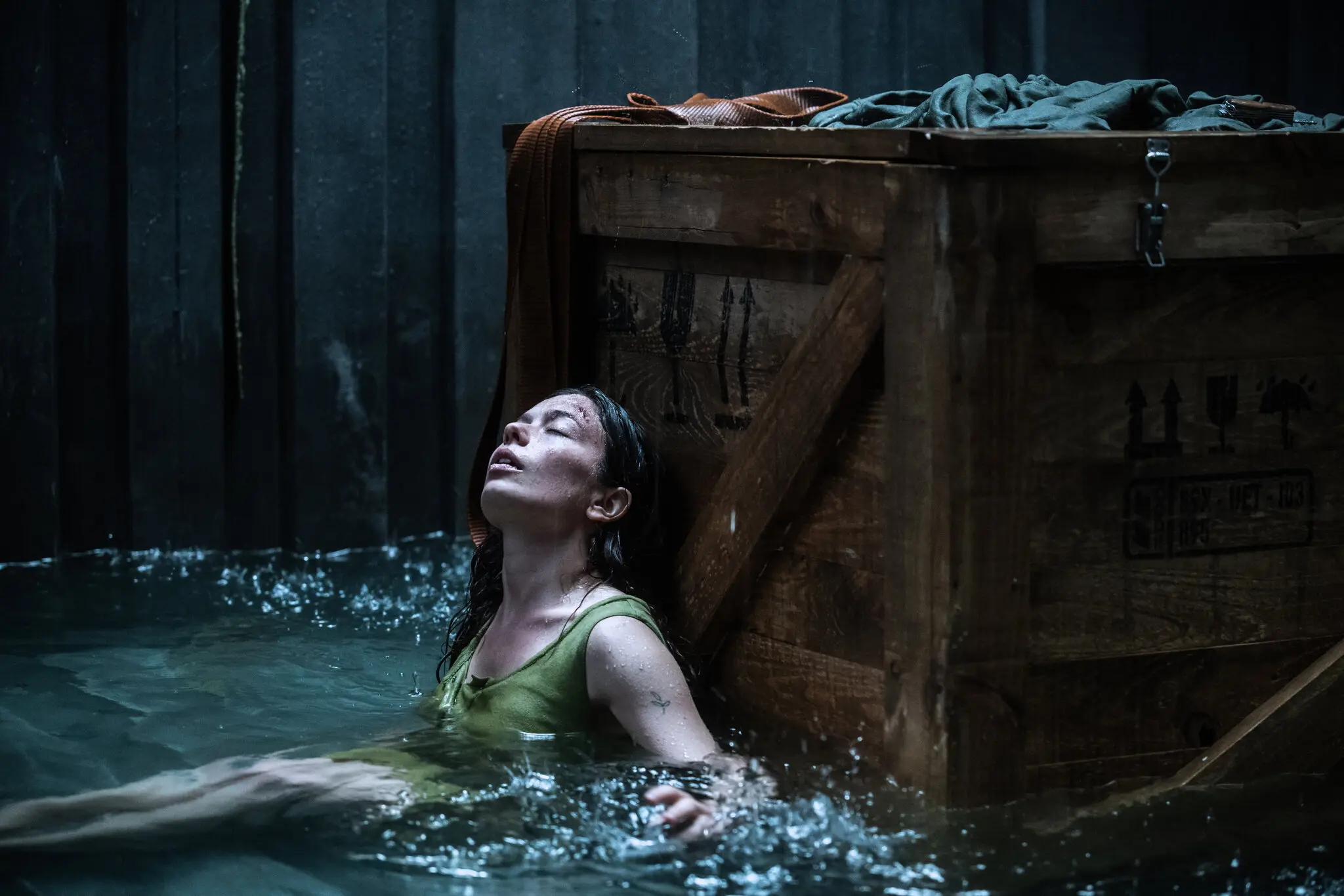
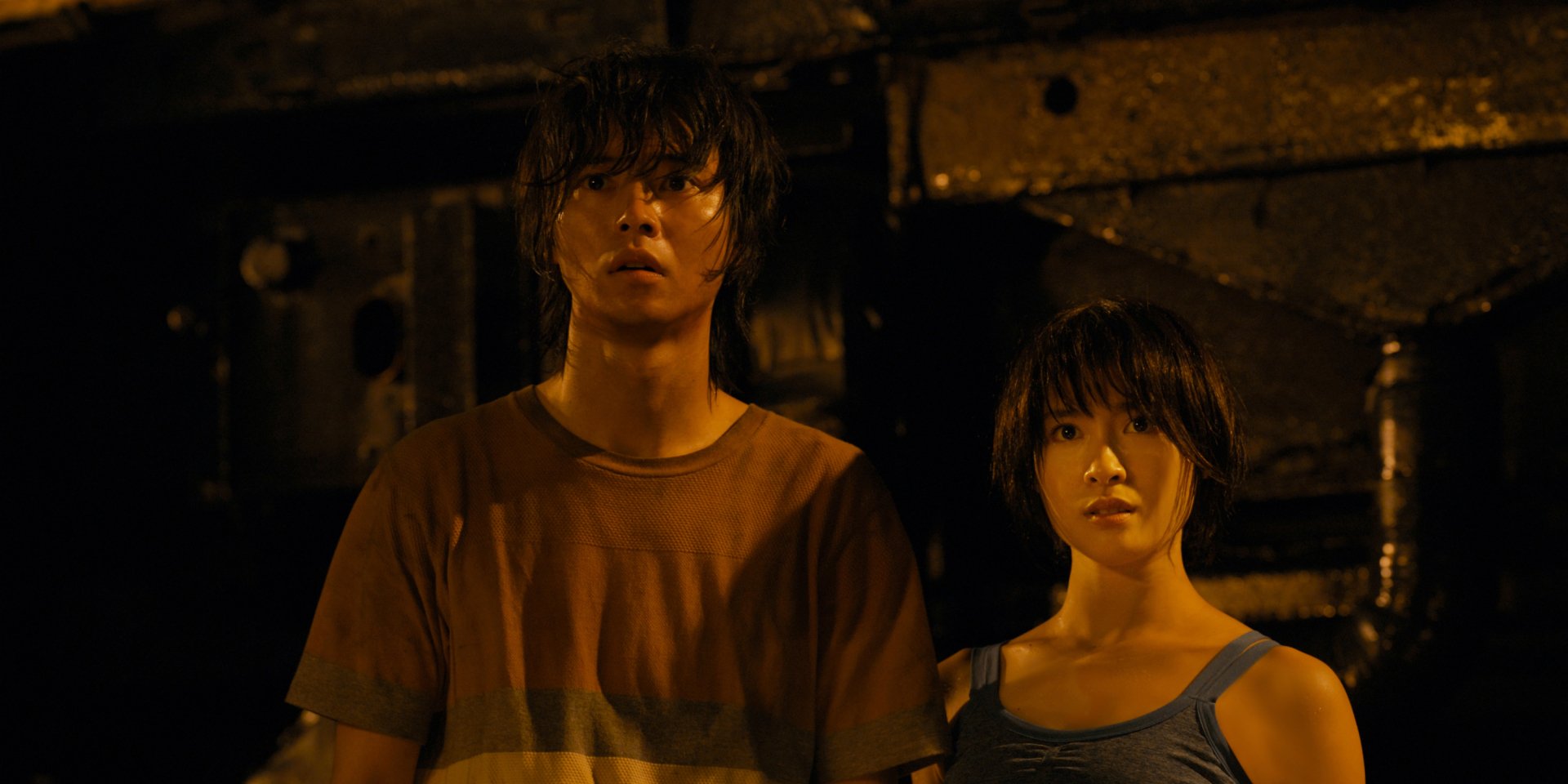
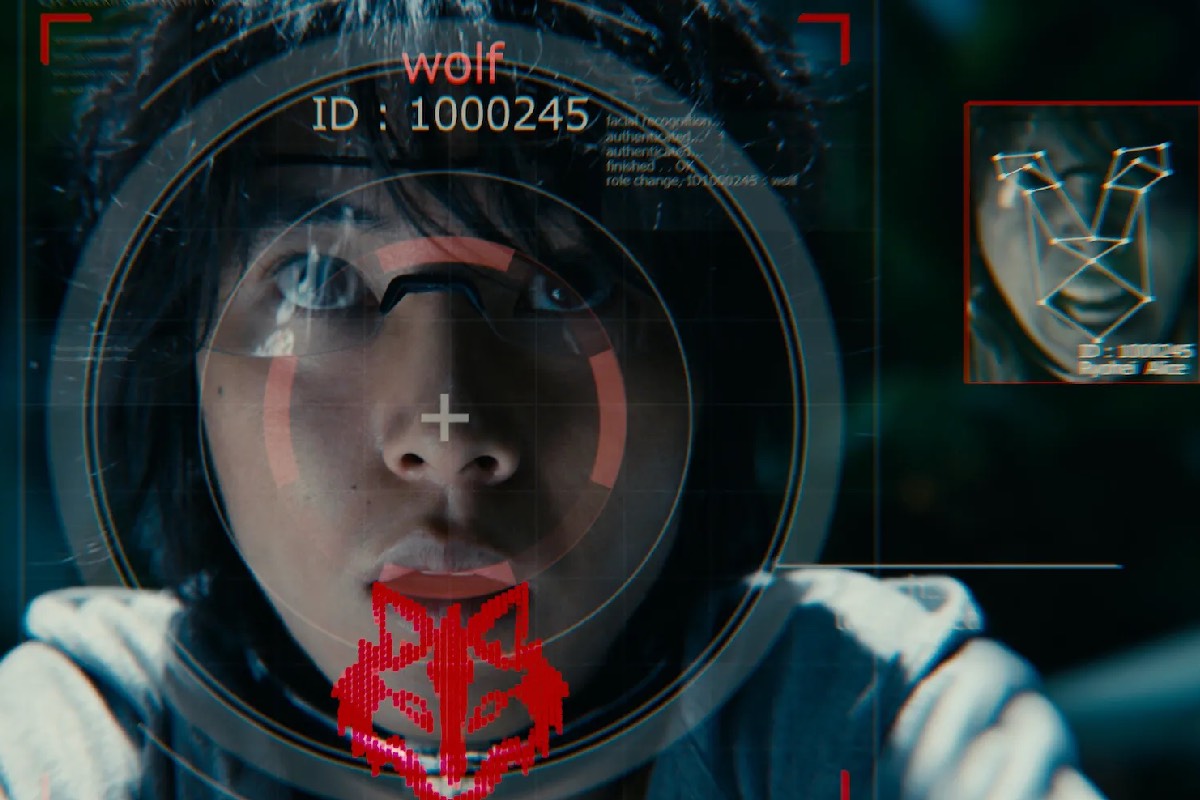
Alice in Borderland is a Japanese high-concept survival thriller based on Haro Aso’s manga series, following disillusioned gamer Ryohei Arisu and his companions as they are thrust into a deserted Tokyo where surviving deadly games is the only way to extend their life-granting "visas." Beneath its visceral action lies a complex psychological puzzle exploring grief, human instinct, and the will to live.
The Premise and Purgatorial Architecture of the Borderland
The narrative of Alice in Borderland begins with a sudden, eerie transformation. Ryohei Arisu, a disengaged young man obsessed with video games, hides in a public restroom in Shibuya with his best friends, Karube and Chota. When they step back outside, the teeming metropolis of Tokyo is entirely empty. Power is cut, digital infrastructure is disabled, and millions of residents have vanished without a trace.
This ghost-town iteration of Tokyo serves as the stage for "the Borderland." To survive in this abandoned landscape, inhabitants must register as players in lethal trials staged at night across various landmarks. Upon surviving a game, players receive a physical playing card representing the duration of their visa extension—correlating directly to the numerical value of the card won. If a player’s visa expires, a high-altitude laser instantly pierces their skull from the sky.
- Player Arrives in Empty Tokyo
- Enters Game Arena at Night
- Defeat / Death
- Victory / Visa Granted
- Visa Duration = Card Value
- Play Again Before Expiration
What initially presents itself as an alien invasion, a government experiment, or a simulation eventually reveals its true structural identity: the Borderland is a collective purgatorial realm. It is a psychological threshold between life and death where victims of a catastrophic disaster fight for their physical survival in the real world.
Decoding the Card Suits: Game Mechanics and Symbolic Hierarchy
The games in the Borderland are not arbitrary tests of violence; they are rigorously structured around the standard 52-card playing deck. The suit of the card determines the nature of the challenge, while the number indicates the difficulty level. The higher the number, the more complex, dangerous, and physically taxing the game becomes.
- ♠ SPADES (Physical)
- Strength
- Physical Endurance
- Combat & Agility
- ♣ CLUBS (Teamwork)
- Group Coordination
- Shared Strategy
- Balanced Skillsets
- ♦ DIAMONDS (Intellect)
- Mathematical Logic
- Tactical Strategy
- Problem Solving
- ♥ HEARTS (Psychological)
- Emotional Manipulation
- Betrayal & Sacrifice
- Despair & Guilt
The Four Suits Explained
- Spades (♠) — Physicality and Endurance: Spades test raw athletic ability, stamina, hand-to-hand combat, and martial skill. These games take place in expansive environments like high-rise apartments or stadiums where players must outrun physical threats, such as armed hunters or collapsing structures.
- Clubs (♣) — Teamwork and Cooperation: Clubs demand collective problem-solving, strategic division of labor, and mutual trust. While individuals can survive, victory almost always requires group coordination, balancing the diverse skill sets of different players.
- Diamonds (♦) — Intellect and Strategy: Diamonds test logic, mathematical deduction, game theory, and rapid analytical thinking. Physical strength offers little advantage in Diamonds games; survival depends entirely on outsmarting opponents or solving complex riddles under strict time constraints.
- Hearts (♥) — Psychological Warfare and Betrayal: Hearts are the most cruel and insidious games in the Borderland. Designed to play upon human trust, affection, and self-preservation, Hearts games force participants to manipulate, betray, or kill one another. They generate immense psychological trauma, often ensuring that even the survivors suffer severe emotional ruin.
The Face Cards and Citizens
The hierarchy expands significantly in the second phase of the Borderland. Once all numbered cards (Ace through 10) are collected, players unlock the "Second Stage," where they must face the Face Cards (Jacks, Queens, Kings).
Unlike numbered games, which are automated, Face Card games are hosted by permanent inhabitants known as "Citizens." These Citizens are former players who survived a previous iteration of the Borderland and chose to renounce their real-world existence to become permanent game masters.
| Card Suit | Game Specialty | Core Player Attribute | Representative Game Example | Primary Threat Factor |
|---|---|---|---|---|
| Spades (♠) | Physicality & Combat | Agility, Endurance, Strength | King of Spades (Survival) | Direct physical force, heavy firearms |
| Clubs (♣) | Teamwork & Balance | Coordination, Shared Strategy | King of Clubs (Osmosis) | Points-based asset management & tactical positioning |
| Diamonds (♦) | Intellect & Logic | Mathematical reasoning, Game Theory | King of Diamonds (Balance Scale) | Probability modeling, quick mathematical calculation |
| Hearts (♥) | Psychology & Trust | Emotional resilience, Deception | Queen of Hearts (Croquet) | Mind games, psychological paralysis, despair |
The Central Mystery: Explaining the Borderland's Reality
Throughout both the manga and the live-action adaptation directed by Shinsuke Sato, viewers are presented with competing theories regarding the reality of the Borderland:
The Technological Simulation Theory: Early clues hint at a matrix-like virtual world controlled by advanced artificial intelligence or future humans observing human behavior under stress.
The Secret Organization Theory: Characters like Chishiya initially suspect a shadowy subterranean elite running an underground bloodsport for entertainment.
The Existential / Purgatorial Truth: The definitive resolution reveals that a meteorite exploded directly over Tokyo's Shibuya district.
Shibuya Meteorite Explosion
Victims Suffer Sudden Cardiac Arrest / Trauma
THE BORDERLAND (Shared Limbo)
- Player Dies in Game
- Real-World Cardiac Death
- Player Wins & Refuses
- Regains Real-World Pulse
- Player Dies in Game
Every person transported to the Borderland was a victim of this single extraterrestrial impact event. The entire timeline of the games—spanning months of physical exertion, suffering, and game phases within the Borderland—occurs in the physical world during the few minutes that victims lie clinically dead or unconscious in cardiac arrest.
The games represent the physiological and psychological battle for survival taking place within the subconscious of the victims. Dying in the Borderland corresponds to a player succumbing to their injuries or cardiac arrest in the emergency room. Surviving the games grants the player a choice: remain in the Borderland as a Citizen, or refuse citizenship and return to the real world with their pulse restored.
Psychological Themes and Character Arcs
The core strength of Alice in Borderland relies on its character writing and philosophical inquiries. Rather than relying solely on gore, the series uses death games as a backdrop to examine existential angst.
- ARISU
- Guilt over loss
- Direct empathy
- Will to protect others
- USAGI
- Grief over father
- Physical survival
- Reconnecting with humanity
- CHISHIYA
- Nihilistic logic
- Emotional detach
- Rediscovering human empathy
- Outcome:
- Existential Resolution
Ryohei Arisu: From Apathy to Purpose
Arisu begins his journey as an unmotivated outcast who feels alien to society's expectations. His reliance on video game logic initially keeps him alive, but his inability to save his closest friends, Karube and Chota, in the infamous Seven of Hearts game induces profound survivor's guilt. Arisu’s arc shifts from seeking an easy escape to actively fighting for the survival of others, concluding that life’s value is not pre-assigned but forged through connection and choice.
Yuzuha Usagi: The Isolation of Grief
Usagi, a skilled mountain climber, enters the Borderland suffering from deep emotional isolation following her father's public dishonor and suicide. Her survival instincts are unmatched in physical Spades games, but she initially rejects human connection. Her relationship with Arisu anchors her back to reality, demonstrating that self-preservation without emotional vulnerability is an empty victory.
Shuntaro Chishiya: Cold Rationalism vs. Empathy
Chishiya serves as the narrative’s pragmatic genius. As a former pediatric surgeon who grew cynical after witnessing medical corruption, he views the Borderland as a fascinating exercise in game theory. He manipulates allies without remorse to secure cards.
However, his confrontation with the King of Diamonds (Kuzuryu) forces him to confront his own nihilism. When faced with an opponent who values human equality over self-preservation, Chishiya chooses to act selflessly, rediscovering his lost empathy.
Manga vs. Live-Action Adaptation: Key Structural Differences
While the Netflix live-action series stays faithful to Haro Aso's source material, key structural and visual changes were implemented to adapt the story for television.
Pacing and Streamlined Narratives
The original manga contains extensive side-stories (Borderland Side Stories) featuring secondary characters who never interact with Arisu directly. The live-action adaptation streamlines these narratives, consolidating side games or reassigning them to central cast members like Usagi, Kuina, and Chishiya to maintain cinematic momentum.
Game Adaptations and Visual Modifications
Certain games were redesigned to translate better visually:
Four of Clubs (Distance): In the live-action series, this game takes place inside a highway tunnel with a runaway bus, emphasizing high-octane physical hazard and visual tension.
Seven of Hearts (Hide and Seek): Kept almost frame-for-frame identical to the manga due to its pivotal narrative importance as the emotional turning point of Arisu's journey.
Jack of Hearts (Solitary Confinement): Focuses heavily on Chishiya in the show, highlighting his observation skills and deep psychological manipulation tactics.
MANGA ORIGINALS
- Extensive side-character chapters & spinoffs
- Text-heavy mathematical explanations in Diamonds
LIVE-ACTION ADAPTATION
- Streamlined, high-pacing
- Centralized focus on main cast (Arisu/Chishiya/Usagi)
- Visually dynamic games
Comparative Analysis: Alice in Borderland vs. Squid Game
Because both properties achieved international prominence on streaming platforms, Alice in Borderland is frequently compared to South Korea's Squid Game. While both share the survival thriller tag, their thematic frameworks differ fundamentally.
SURVIVAL THRILLER GENRE
- SQUID GAME
- Socioeconomic critique
- Debt and capitalism
- Human-controlled competition
- Static, simple rules
- ALICE IN BORDERLAND
- Existential / Metaphysical
- Will to live vs. Death
- Purgatorial game design
- Complex game theory mechanics
- SQUID GAME
Socioeconomic Critique vs. Existential Reality: Squid Game operates as a direct critique of modern capitalism, household debt, and socioeconomic inequality. The characters participate voluntarily out of financial desperation. Alice in Borderland, by contrast, explores existentialism, subconscious survival instincts, and trauma response. Its participants are pulled into the arena without consent by a force of nature.
Game Design Philosophy: Squid Game utilizes simple childhood playground games where the terror stems from the lethal consequence applied to basic rules. Alice in Borderland uses complex game theory, spatial puzzles, logic puzzles, and psychological traps that require high-level strategy and adaptation.
Frequently Asked Questions
What caused the creation of the Borderland?
The Borderland was created by the collective subconscious of the victims who suffered cardiac arrest during a meteorite strike in Shibuya, Tokyo. It acts as a limbo realm where their physical bodies fight between life and death.
Do players retain their memories after returning to the real world?
No. Upon returning to the real world after refusing citizenship, survivors lose their explicit memories of the games and the Borderland. However, they retain implicit emotional bonds and subconscious trauma, drawing survivors like Arisu and Usagi back together naturally in the physical world.
What happens when a player chooses to become a Citizen?
If a player accepts citizenship after defeating the Face Cards, they remain in the Borderland permanently. They become the hosts and game masters for the next wave of disaster victims who enter the purgatorial realm.
What is the significance of the Joker card at the end of the series?
In standard card games, the Joker can represent a wildcard, the dealer, or the entity overseeing the deck. Philosophically, the Joker represents life itself—an unpredictable, unquantifiable game that players must continue navigating without clear rules or guaranteed outcomes.
Viewing and Reading Strategy for Genre Fans
To fully appreciate the narrative architecture of Alice in Borderland, fans of the survival thriller genre should approach the material through a structured viewing and reading path:
- Watch Live-Action Season 1 (Episodes 1–8): Establishes the rules of the world, the loss of Arisu's friends, and the collapse of the Beach sanctuary.
- Watch Live-Action Season 2 (Episodes 1–8): Focuses on the Face Card phase, Chishiya's intellect games, the King of Spades' guerrilla warfare, and the Shibuya meteorite revelation.
- Read Haro Aso’s Original Manga (Imawa no Kuni no Arisu): Delves deeper into mathematical logic puzzles, expanded backstories for side characters, and alternative side-story games omitted from the live-action series.
- Explore the Spinoff Manga (Alice in Borderroad & Alice in Borderland: Retry): Retry follows an older Arisu who is pulled back into the Borderland following a separate real-world accident, offering further insight into how the purgatorial realm operates for recurring visitors.