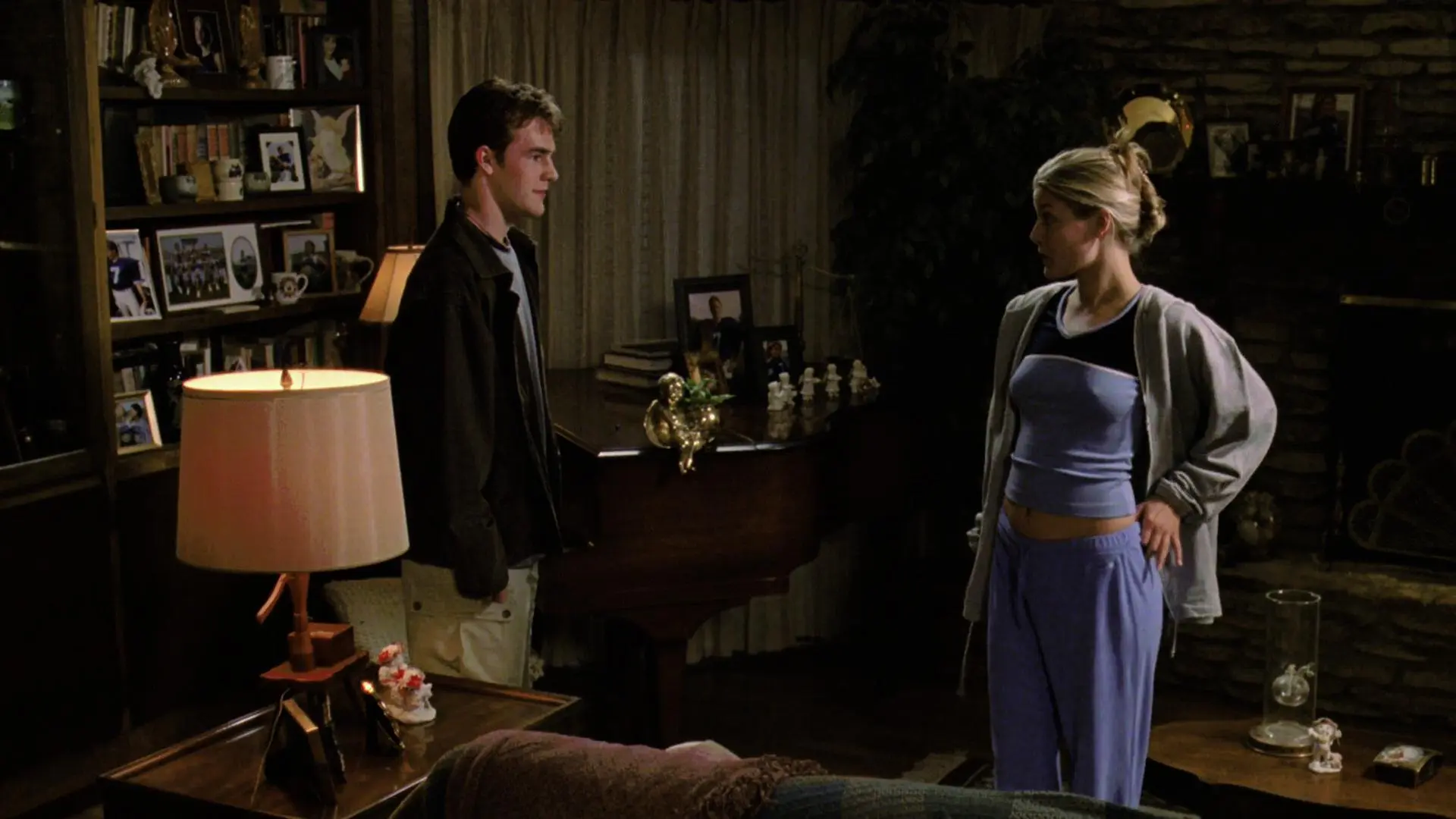
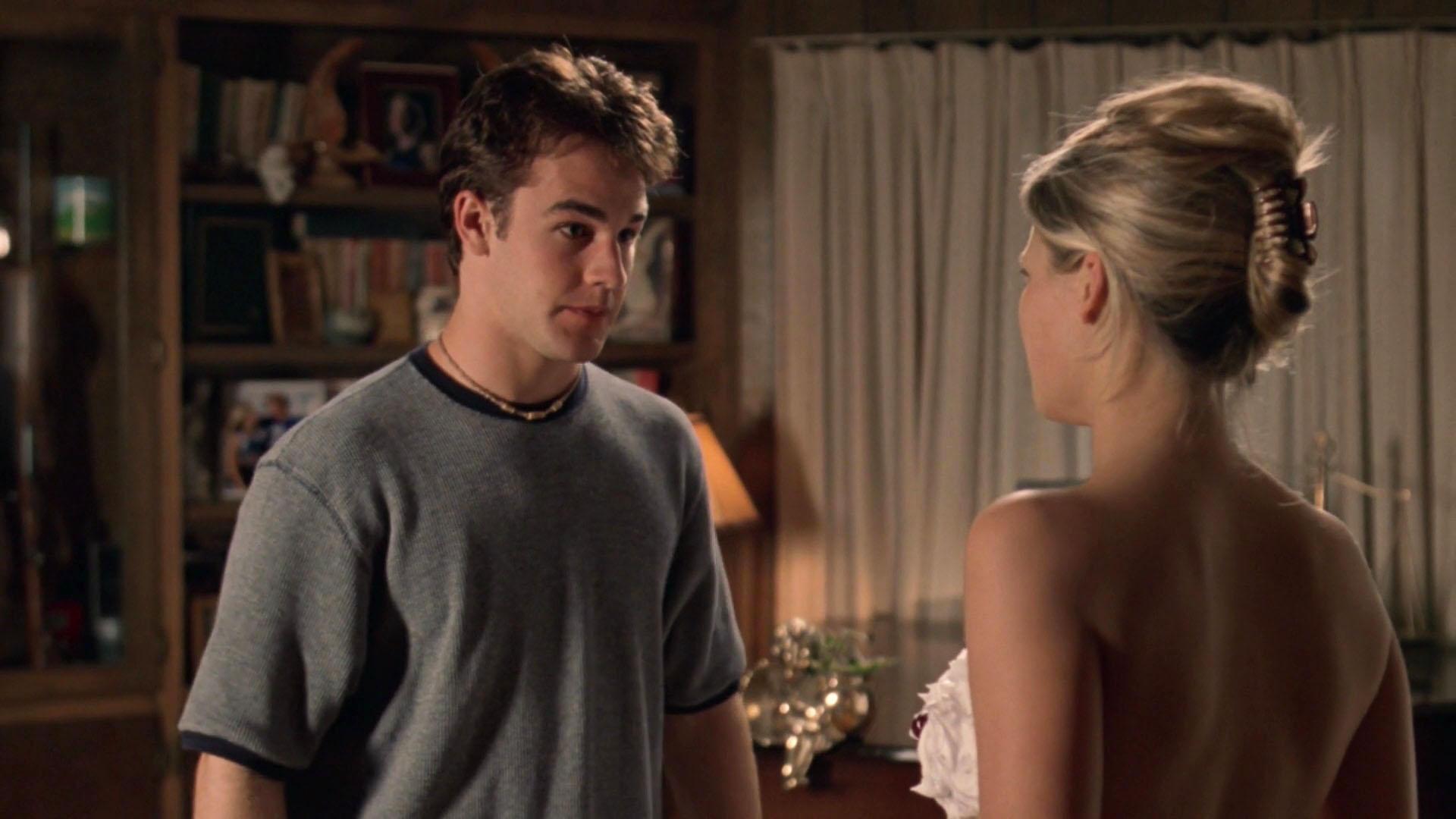
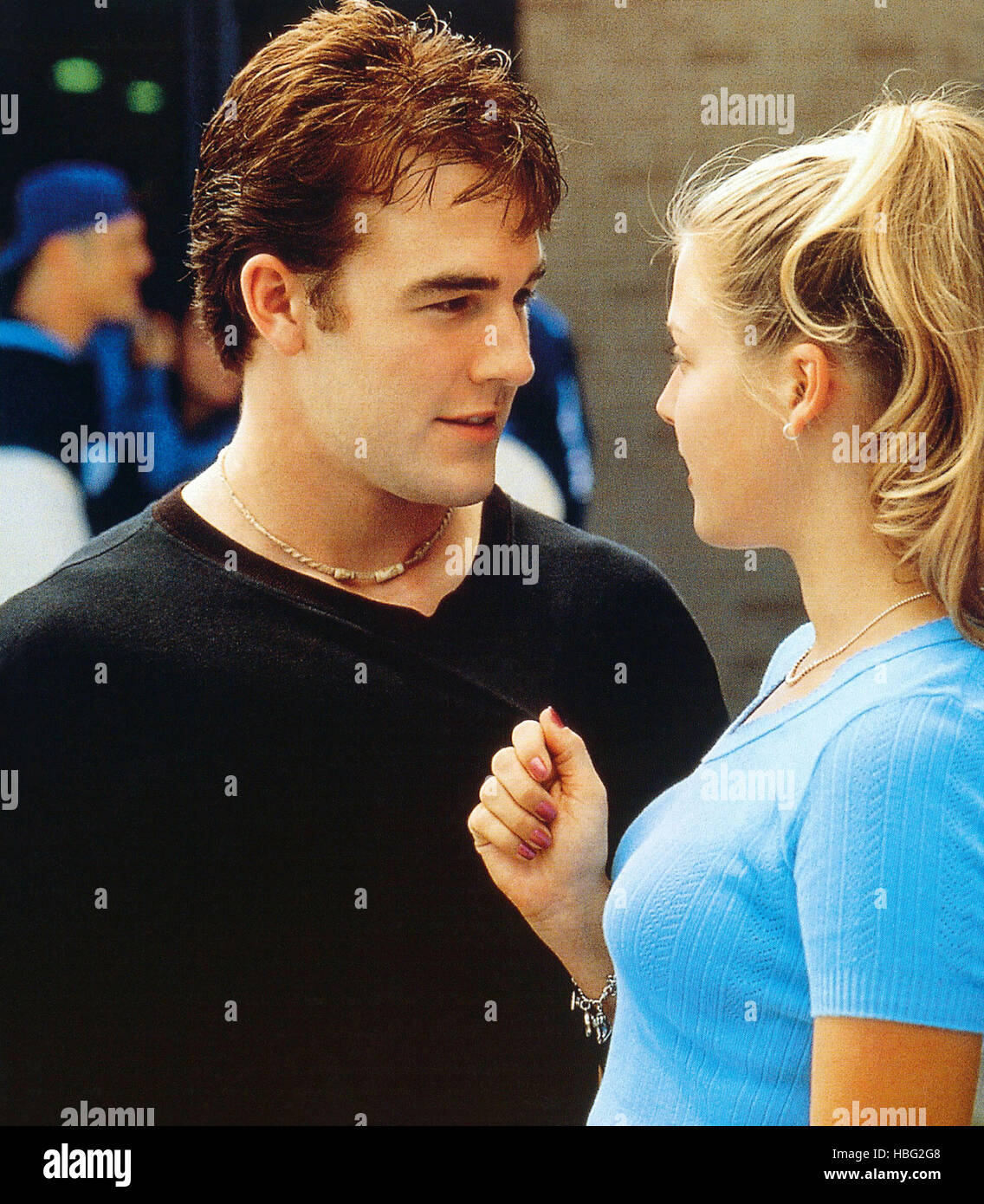
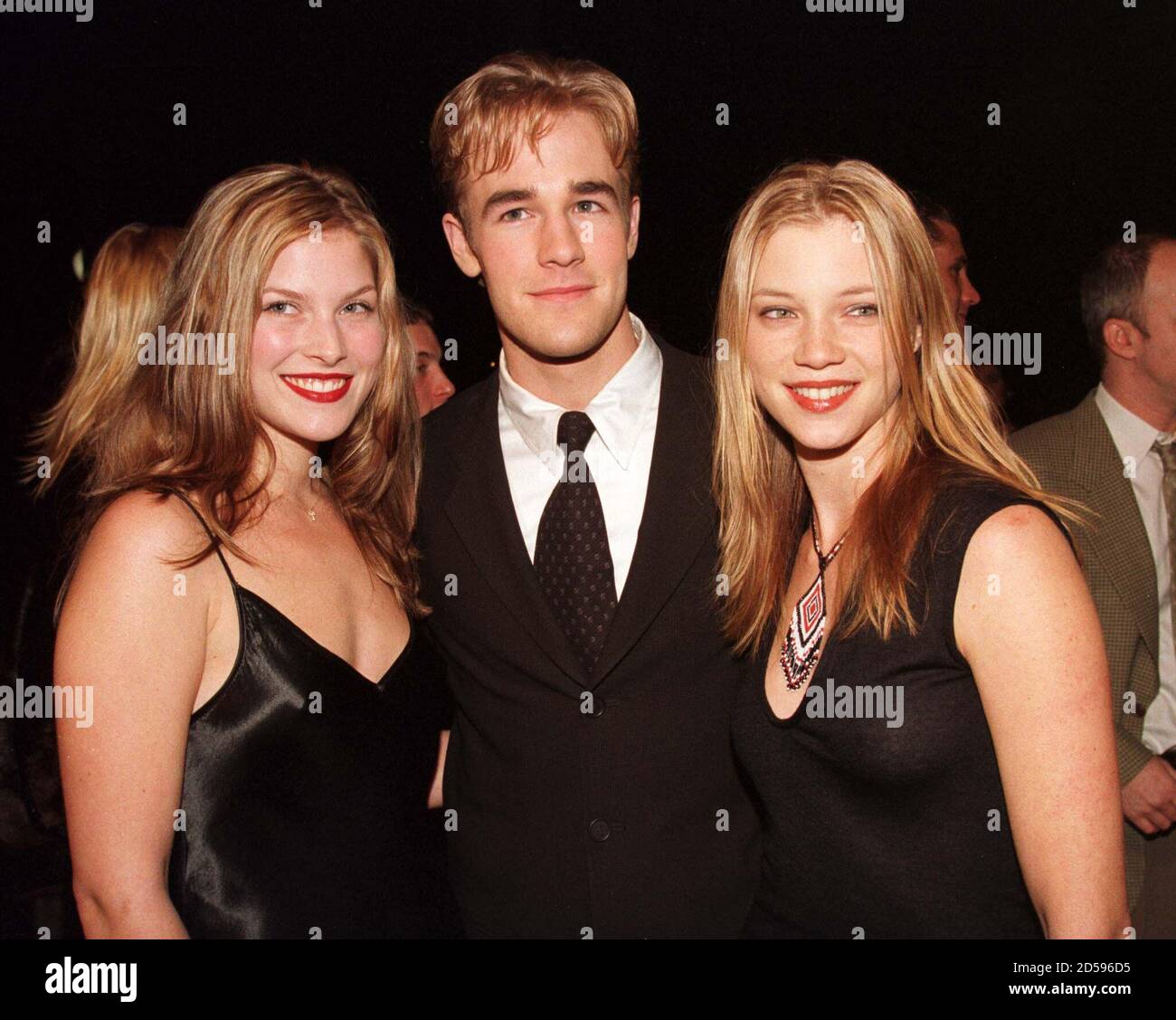
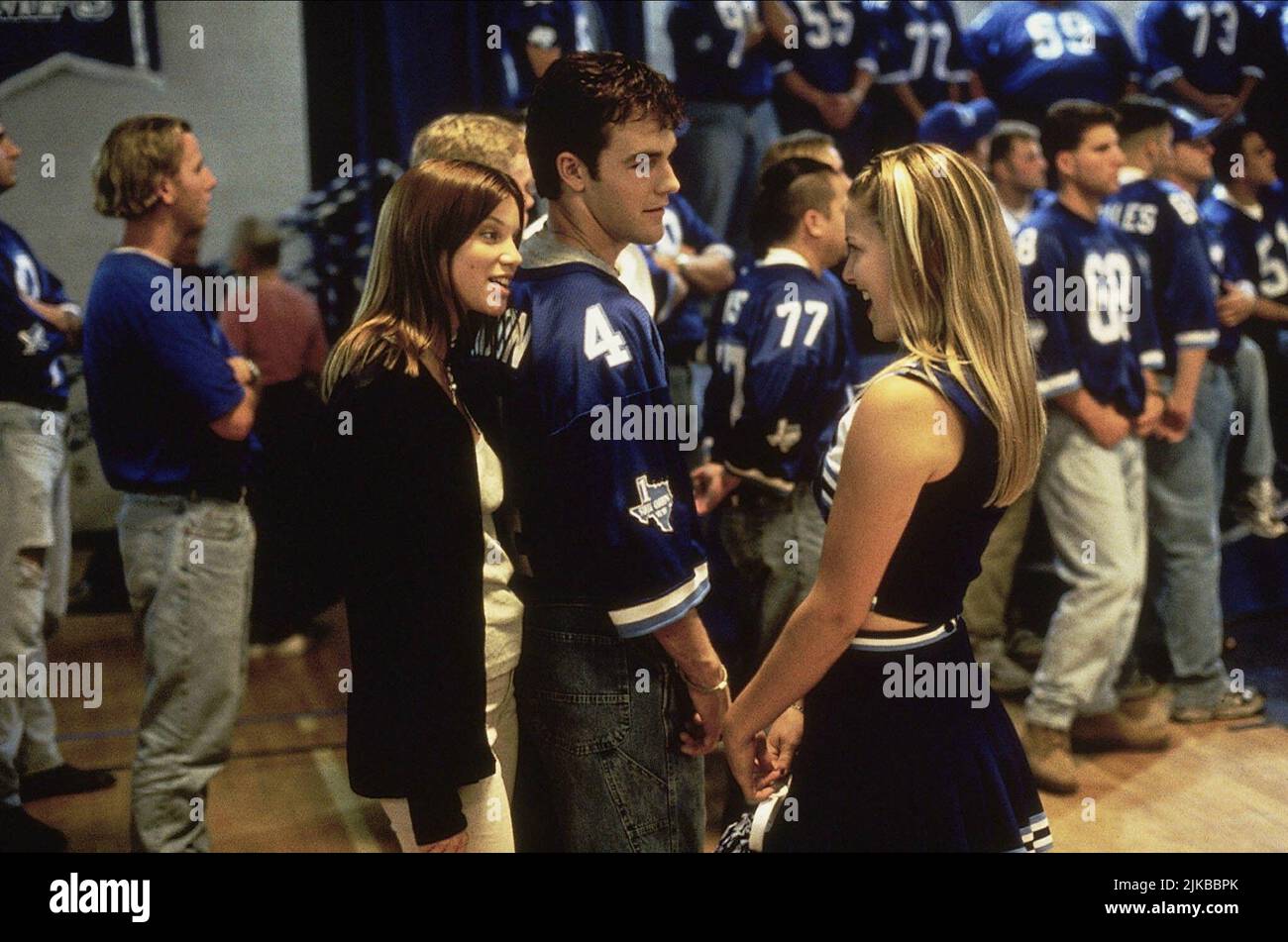
The whipped cream bikini scene featuring Ali Larter in the 1999 teen sports drama Varsity Blues remains one of the most famous and widely discussed pop culture moments of late-1990s cinema. In her feature film debut, Larter played cheerleader Darcy Sears, who attempts to seduce backup quarterback Jonathan "Mox" Moxon (James Van Der Beek) using a strategically placed whipped cream bikini complete with a maraschino cherry.
Narrative Context: Why Darcy Sears Created the Whipped Cream Bikini
To understand the mechanics and intent of the famous whipped cream scene, one must look at the high-stakes culture of West Canaan, Texas—the fictional high school football town where Varsity Blues is set. Directed by Brian Robbins and written by W. Peter Iliff, the 1999 film presents high school football not merely as an extracurricular activity, but as a totalizing social ecosystem dictated by the tyrannical Coach Bud Kilmer (played by Jon Voight).
Ali Larter’s character, Darcy Sears, is the captain of the cheerleading squad and the long-time girlfriend of starting star quarterback Lance Harbor (Paul Walker). In West Canaan, Darcy’s social identity, future aspirations, and immediate prestige are directly tied to the success and status of the starting quarterback. When Lance suffers a catastrophic, career-ending knee injury during a game, the town’s romanticized hierarchy instantly collapses around her.
Jonathan "Mox" Moxon, the cynical backup quarterback who prefers reading Kurt Vonnegut on the bench to playing under Kilmer's brutal regime, is suddenly thrust into the spotlight as the team's new leader. Recognizing that Lance's football career is over, Darcy shifts her romantic focus to Mox in an effort to preserve her status as the "first lady" of West Canaan football.
The whipped cream scene takes place when Darcy sneaks into Mox’s bedroom unannounced. Desperate to secure her place at the top of the high school hierarchy, she unveils the whipped cream outfit as an explicit, undeniable bid for his affection. However, Mox rejects her advances—not out of a lack of attraction, but because of his loyalty to Lance, his growing feelings for Lance's sister Jules (Amy Smart), and his refusal to play into the toxic traditions of his hometown.
Behind the Scenes: How the Props and Production Team Executed the Shot
While the scene appears brief on screen, executing the whipped cream bikini presented significant practical challenges for the production crew, directors, and Ali Larter herself during filming in Texas.
Practical FX and Chemical Formulations
Standard consumer whipped cream from an aerosol can relies on nitrous oxide and dairy fat, which rapidly liquefies under high-wattage studio lights and body heat. During initial camera tests, real whipped cream slid off the skin within seconds, creating an unstable prop that disrupted continuity between takes.
To resolve this issue, the makeup and prop departments experimented with alternative substances. While real whipped cream was used for specific close-up shots to maintain a believable texture and glisten, large portions of the outfit utilized stabilized shaving cream mixed with food-grade thickening agents. This allowed the foam to hold its structural shape for extended multi-camera setups while ensuring safety for prolonged skin contact.
| Properties & Challenges | Details |
|---|---|
| Material Used: | Mixture of heavy cream, shaving foam, and commercial food stabilizers |
| Main Obstacle: | Studio lighting heat causing melting/dripping |
| Solution: | Frequent re-application, cool stage temps, and rapid filming schedules |
On-Set Environment and Performance Requirements
Ali Larter, who was 22 years old during the 1998 production and making her major motion picture debut after transitioning from modeling, faced an intense filming environment. The scene required precise blocking to ensure the footage complied with MPAA rating guidelines for a theatrical R-rated film while preserving the scene's comedic yet scandalous tone.
Larter has recalled in retrospective interviews that the process was both physically uncomfortable and surreal. The combination of cold foam, long hours on set, and constant touch-ups by prop stylists meant that the iconic moment required painstaking discipline to pull off seamlessly. Despite the absurdity of the premise, Larter approached the character's motivation with full commitment, grounding Darcy's desperation in genuine emotional vulnerability rather than playing it purely for visual spectacle.
Analyzing the Scene: Seduction, Character Motives, and Subverted Tropes
The enduring interest in the Varsity Blues whipped cream scene stems from how it operates on multiple cinematic levels: as a sex-comedy trope, a character study, and a plot device that subverts typical teen drama expectations.
Subverting the Teen Movie Seduction Narrative
In standard 1990s teen sex comedies, a scene featuring an attractive cheerleader attempting to seduce the male protagonist usually results in a straightforward victory for the protagonist. Varsity Blues subverts this convention by turning the seduction attempt into a moment of moral definition for Mox.
When Mox walks into his bedroom and finds Darcy wearing nothing but whipped cream and a cherry, his reaction is mixed with confusion and discomfort rather than simple gratification. By refusing Darcy's proposal, Mox establishes his moral independence from the toxic norms of West Canaan high school culture. He makes it clear that he will not treat Darcy as a trophy, nor will he betray Lance or his own integrity for easy validation.
Darcy Sears: Vulnerability Behind the Glamour
From Darcy’s perspective, the whipped cream gesture is not an act of frivolous vanity; it is an act of panic. In a town where women are given very little agency outside their association with football players, Darcy views her beauty and sexuality as her only leverage to secure a path out of her small town.
Larter’s performance elevates what could have been a disposable, objectified gag into a revealing look at Darcy's deep-seated anxieties. When Mox turns her down, Darcy is forced to confront her reliance on male approval—a realization that sets up her subsequent character growth later in the film when she eventually resolves to find her own identity outside of football.
Cultural Footprint: Parodies and Legacy in 1990s Cinema
The whipped cream bikini instantly entered the pop culture lexicon following the release of Varsity Blues in January 1999. The film opened at #1 at the North American box office and went on to gross over $50 million domestically, supported heavily by MTV Films' marketing push.
- Varsity Blues (Jan 1999) – Original Scene
- Pop Culture Media References & Parody – MTV Movie Awards
- Not Another Teen Movie (Dec 2001) – Direct Spoof Scene
The Parody in Not Another Teen Movie (2001)
The clearest indicator of the scene's cultural saturation arrived in the 2001 Columbia Pictures satire Not Another Teen Movie. The comedy directly spoofed the Varsity Blues scene, reversing the roles by having Chris Evans's character, Jake Wyler, attempt to surprise a girl while wearing a whipped cream outfit equipped with a strategic sundae arrangement.
The parody highlighted how recognizable Larter's original scene had become within just two years of its release. It demonstrated that the imagery had transcended Varsity Blues itself, becoming a defining symbol of late-90s youth culture and cinema tropes.
Impact on Ali Larter's Career Trajectory
For Ali Larter, Varsity Blues served as a major career catalyst. Although she had previously appeared in television episodes of Dawson's Creek and Chicago Hope, her turn as Darcy Sears established her as a rising Hollywood talent.
Immediately following Varsity Blues, Larter secured lead roles in several high-profile projects, including:
- House on Haunted Hill (1999) – A hit horror remake that showcased her versatility beyond teen dramas.
- Final Destination (2000) – The blockbuster supernatural horror film where she played Clear Rivers, cementing her status as a reliable genre lead.
- Legally Blonde (2001) – Playing Brooke Taylor Windham, the fitness instructor accused of murder, opposite Reese Witherspoon.
- Heroes (2006–2010) – Her long-running television role as Niki/Jessica Sanders, which earned her widespread critical recognition.
- Resident Evil Franchise (2007–2016) – Portraying video game icon Claire Redfield in multiple theatrical installments.
Larter has consistently spoken fondly of her experience on Varsity Blues, acknowledging that while the whipped cream scene brought immense public attention, it opened the doors that enabled her multi-decade career in film and television.
Historical Summary Table: Scene Overview and Production Details
| Category | Technical & Narrative Details |
|---|---|
| Film Title | Varsity Blues |
| Release Date | January 15, 1999 (Paramount Pictures / MTV Films) |
| Director | Brian Robbins |
| Screenwriter | W. Peter Iliff |
| Actors Involved | Ali Larter (Darcy Sears), James Van Der Beek (Jonathan "Mox" Moxon) |
| Key Prop Materials | Formulated shaving foam, aerosol whipped topping, maraschino cherry |
| MPAA Film Rating | R (Language, sexuality/nudity, teen drinking, sports violence) |
| Narrative Outcome | Mox rejects Darcy's advances; establishes Mox's integrity and Darcy's insecurity |
| Notable Parodies | Not Another Teen Movie (2001), featuring Chris Evans |
Frequently Asked Questions
Was real whipped cream used in the Varsity Blues scene?
A combination of real whipped cream and artificial prop materials was used during filming. Because genuine dairy-based aerosol cream melts rapidly under studio lights, the production crew utilized stabilized shaving cream and synthetic foams for wider setups, using real whipped cream primarily for close-up shots and consistency checks.
Why did Darcy Sears wear the whipped cream outfit in the movie?
Darcy Sears wore the whipped cream outfit in an effort to seduce backup quarterback Jonathan "Mox" Moxon. After her boyfriend, star quarterback Lance Harbor, suffered a career-ending injury, Darcy feared losing her social standing as the prominent quarterback's girlfriend in a town obsessed with football. She attempted to secure Mox's affection to preserve her identity within West Canaan's social structure.
How old was Ali Larter when she filmed Varsity Blues?
Ali Larter was 22 years old during the filming of Varsity Blues in 1998. The film was released in theaters in January 1999, marking her debut in a feature film.
Did Mox accept Darcy's proposition in the scene?
No, Jonathan "Mox" Moxon turned down Darcy's proposition. Mox respected his injured friend Lance, was interested in Lance's sister Jules (Amy Smart), and rejected the shallow expectations of West Canaan's football culture.
What movie famously parodied the whipped cream scene?
The 2001 teen comedy satire Not Another Teen Movie famously parodied the scene. In the parody, Chris Evans plays a high school athlete who attempts to wear a similar whipped cream outfit to seduce a classmate, reversing the genders of the original scene.
What happened to Ali Larter's character after this scene in the film?
After being turned down by Mox, Darcy begins to re-evaluate her choices and self-worth. By the end of Varsity Blues, she realizes that her identity does not need to depend on high school football players, leading her to plan for a future outside the narrow confines of West Canaan.
Key Takeaways and Contextual Viewing
The whipped cream scene in Varsity Blues remains a benchmark of late-1990s teen cinema, serving as both an iconic visual moment and a critical plot beat in the film's exploration of small-town pressure.
For viewers revisiting Varsity Blues or studying late-90s film history, the scene demonstrates how directors of that era integrated comedy, provocative imagery, and character-driven drama. To gain a deeper appreciation of the film's impact and historical context, consider the following steps:
- Watch the Complete Character Arc: View the scene within the broader narrative of Varsity Blues to appreciate how Darcy Sears's storyline progresses from anxiety over social status to personal independence.
- Compare 1990s Tropes: Compare Varsity Blues with contemporaneous titles like Outside Providence (1999), Can't Hardly Wait (1998), and American Pie (1999) to examine how sexual comedy and athletic drama were styled during the late MTV Films era.
- Analyze the Satirical Legacy: Watch Not Another Teen Movie (2001) alongside Varsity Blues to observe how rapidly late-90s cinematic tropes evolved into satire at the turn of the millennium.