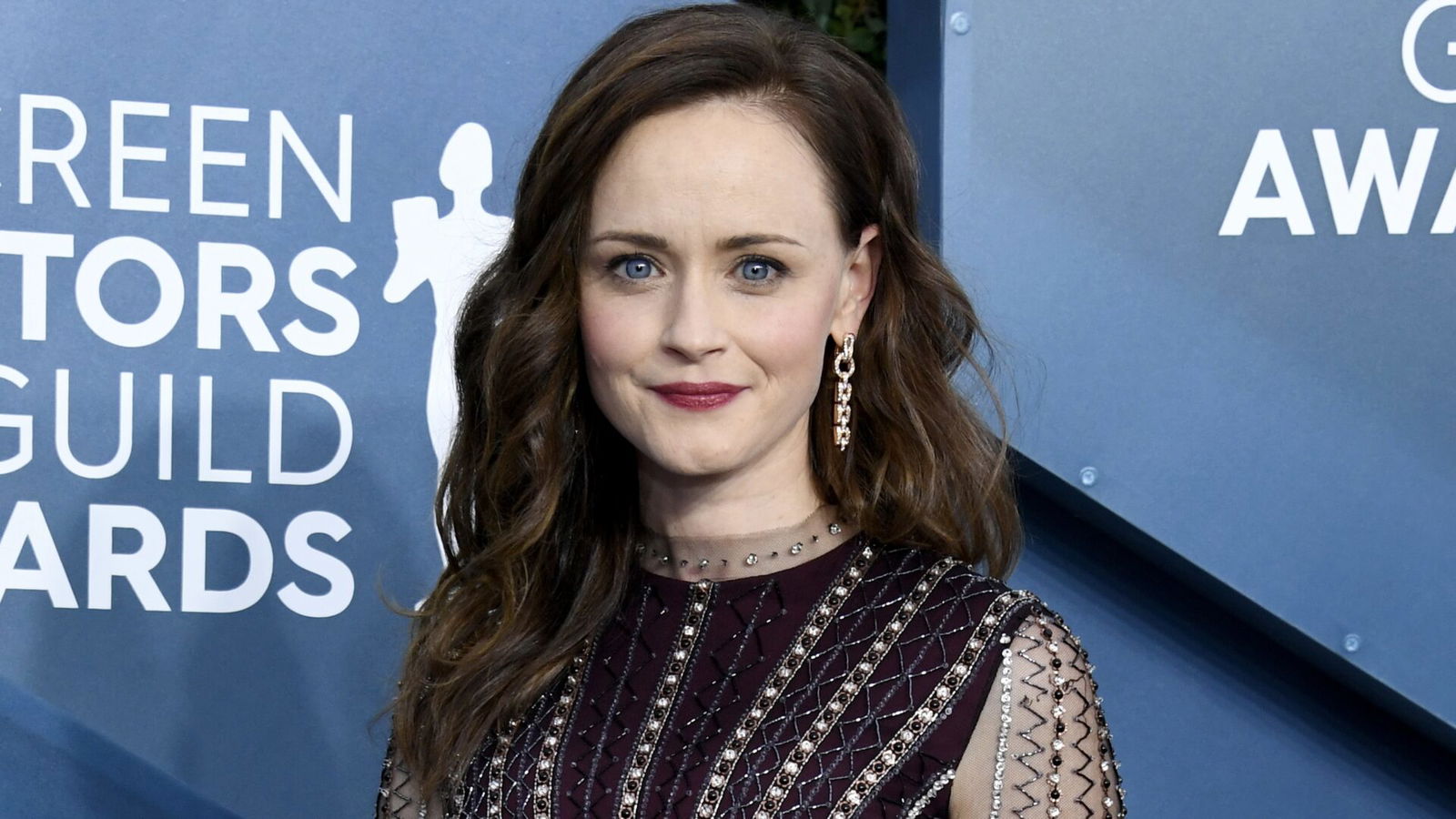
Alexis Bledel’s portrayal of Winnie Foster in the 2002 film adaptation of Natalie Babbitt’s classic children’s novel Tuck Everlasting marked a pivotal transition in her career, bridging her breakout television success on Gilmore Girls with the demands of feature film acting. The film's enduring legacy lies in its delicate exploration of mortality, youth, and emotional resonance, anchored by Bledel’s nuanced, grounded performance amidst an ensemble of seasoned Hollywood veterans.
The Cultural Landscape of 2002 and the Casting of Alexis Bledel
At the turn of the millennium, adolescent and young adult literature adaptations occupied a distinct cinematic niche, often seeking out fresh faces capable of capturing literary innocence without leaning into caricature. Alexis Bledel stepped into the role of Winnie Foster in Tuck Everlasting while simultaneously starring as Rory Gilmore in the critically acclaimed television series Gilmore Girls, which had premiered in 2000. This timing placed Bledel at the intersection of television stardom and cinematic aspiration.
Directed by Jay Russell and based on Natalie Babbitt’s 1975 philosophical novel, Tuck Everlasting required a lead actress who could convey a profound internal awakening. Winnie Foster is a sheltered 15-year-old girl living in the strict, structured Edwardian era of 1914 Treegap, New Hampshire (or a generalized New England setting in the film). When she wanders into the forest and encounters Jesse Tuck—a boy who has accidentally attained immortality by drinking from a spring—her worldview shatters. Bledel’s casting was strategic; her large, expressive eyes and soft-spoken delivery mirrored the quiet rebellion and curiosity inherent in Babbitt’s written protagonist.
Transitioning from a fast-paced weekly television schedule to a feature film set presented both operational and artistic challenges. On television, Bledel was mastering rapid-fire, pop-culture-heavy dialogue. In contrast, Tuck Everlasting relied heavily on visual storytelling, silent realizations, and atmospheric pacing. Bledel's performance avoided the melodrama often associated with teen cinema of the early 2000s, grounding Winnie’s impossible choice between mortal life and eternal youth in genuine emotional realism.
Dissecting the Role of Winnie Foster in Narrative and Theme
Winnie Foster serves as the audience surrogate, an entry point into the heavier philosophical questions of mortality and time. The narrative momentum of Tuck Everlasting hinges on Winnie’s abduction by the Tuck family—consisting of Angus (William Hurt), Mae (Sissy Spacek), Miles (Jonathan Jackson), and Jesse (Jonathan Jackson)—and her subsequent realization that living forever is not a gift, but a prison of stagnation.
The Mechanics of Winnie's Transformation
- Strict Edwardian Upbringing
- Forest Exploration & Discovery of the Spring
- Abduction & Integration into the Tuck Family
- The Moral Dilemma: Choose Immortality or Mortality
- The Ultimate Choice: Returning to a Finite Life
Bledel charted this psychological evolution through subtle physical and vocal shifts. Initially, Winnie moves with stiff posture, constrained by heavy corsets and the suffocating expectations of her mother (Amy Irving). As she spends time with the Tucks, shedding conventional clothing and experiencing the unfiltered natural world, her demeanor softens. Bledel communicated this liberation through understated body language rather than expositional dialogue.
The emotional core of the film rests on the dynamic between Winnie and Jesse Tuck. Jonathan Jackson’s portrayal of Jesse combined reckless youthful exuberance with the weary weight of decades lived without aging. Bledel matched this dual nature, portraying a teenager experiencing first love while grappling with a decision that would permanently alter her timeline. The romance felt poignant precisely because it was framed by transience; choosing to age meant choosing eventually to lose one another.
Critical Reception and Industry Impact
Upon its release by Walt Disney Pictures in October 2002, Tuck Everlasting received generally favorable reviews from film critics, though it achieved modest box office returns. Critics frequently singled out the atmospheric cinematography by Kees van Oostrum and William Ross’s sweeping orchestral score, while praising the central performances.
For Alexis Bledel specifically, the film served as a critical test of her viability outside the Warner Bros./The WB television ecosystem. While many television actors of that era struggled to transition to the silver screen, Bledel’s performance proved that she could anchor a period-piece drama. Industry analysts noted that while Tuck Everlasting was not a blockbuster hit, it cemented Bledel’s reputation as a dramatic actress capable of handling complex thematic material.
| Feature / Metric | Gilmore Girls (Television Context) | Tuck Everlasting (Film Context) |
|---|---|---|
| Primary Medium | Episodic Television (The WB/CW) | Feature Film (Walt Disney Pictures) |
| Pacing & Dialogue | Rapid, witty, dense Aaron Sorkin-esque rhythm | Deliberate, atmospheric, understated silence |
| Character Archetype | Bookish, ambitious, protected suburban teen | Sheltered Edwardian girl facing existential choice |
| Career Impact | Established household name and television star | Validated dramatic range and feature film capability |
The film also demonstrated Disney's willingness to back quieter, philosophical literary adaptations during a period when family cinema was increasingly dominated by high-concept CGI animations and broad comedies. By casting rising television stars alongside cinematic legends like William Hurt and Sissy Spacek, the production bridged generational demographics, a strategy that would become standard practice for mid-budget literary adaptations in the subsequent decade.
The Enduring Legacy of Tuck Everlasting in Modern Cinema
Over two decades after its initial release, Tuck Everlasting has achieved a cult-classic status, particularly among millennials who discovered the film during its VHS and DVD home video era. Its legacy is twofold: it remains one of the more faithful and respectful adaptations of Natalie Babbitt’s source material, and it stands as a time capsule for early-2000s coming-of-age cinema.
The film's exploration of death and life-cycle continuity feels increasingly rare in contemporary franchise-driven family entertainment. Where many modern properties focus on endless sequels and narrative immortality, Tuck Everlasting insists that the beauty of life exists precisely because it ends. Bledel’s performance as Winnie Foster anchors this thesis. Her final narration in the film—depicting an older Winnie who lived a full, finite life, leaving behind a legacy of love and natural progression—provides a lasting emotional anchor.
Furthermore, the film's visual aesthetic established a template for pastoral cinematic romance. The golden-hue filtering of the Treegap woods, the rustic simplicity of the Tuck home, and the timeless wardrobe choices created an idealized, fairy-tale version of early 20th-century America that filmmakers continue to reference in contemporary period dramas.
Assessing Alexis Bledel’s Career Trajectory Post-Tuck Everlasting
The professional momentum gained from Tuck Everlasting directly influenced Alexis Bledel’s subsequent career choices. Rather than pursuing stereotypical teen-pop roles, she gravitated toward ensemble projects and darker dramatic material.
- Sin City (2005): Bledel stepped entirely outside her wholesome image to play Becky, a deadly, leather-clad professional killer in Robert Rodriguez and Frank Miller’s stylized noir adaptation. This role dismantled any lingering typecasting associated with Rory Gilmore or Winnie Foster.
- The Sisterhood of the Traveling Pants (2005): Released just three years after Tuck Everlasting, this adaptation of Ann Brashares’ novel paired Bledel with an ensemble cast, further solidifying her presence in youth-oriented dramatic cinema while emphasizing international travel and artistic self-discovery.
- The Handmaid's Tale (2017–2021): Bledel’s career reached a critical zenith with her portrayal of Ofglen / Emily Malek in Hulu’s dystopian series, for which she won a Primetime Emmy Award. The quiet resilience and suppressed trauma required for this role traced a direct lineage back to the internalized emotional depth she first displayed as Winnie Foster in 2002.
Frequently Asked Questions
How old was Alexis Bledel when she filmed Tuck Everlasting?
Alexis Bledel was born on September 21, 1981, making her approximately 20 years old during the primary filming of Tuck Everlasting in 2001. Despite playing a 15-year-old character, her young adult maturity allowed her to navigate the complex emotional requirements of the script with precision.
Is the 2002 film a faithful adaptation of Natalie Babbitt’s novel?
The 2002 film makes several notable narrative expansions from Natalie Babbitt's 1975 novel, most prominent being the romantic subplot between Winnie Foster and Jesse Tuck. In the book, Winnie is younger (ten years old), and the romance is implied as a future possibility rather than an active plot element. However, the thematic core regarding the wheel of life and mortality remains strictly aligned with Babbitt's text.
Where was Tuck Everlasting filmed?
Principal photography for Tuck Everlasting took place primarily on location in and around the state of Oregon, utilizing its dense temperate rainforests and historic small-town architecture to authentically replicate the bucolic, turn-of-the-century New England setting required by the narrative.
How did Tuck Everlasting influence Alexis Bledel’s career?
The film proved that Bledel could successfully transition from serialized weekly television (Gilmore Girls) to feature-length dramatic cinema. It demonstrated her ability to hold the screen alongside Academy Award-winning actors like William Hurt and Sissy Spacek, establishing a foundation for her later award-winning dramatic work.
What is the central philosophical message of Tuck Everlasting?
The core message centers on the idea that mortality is not a curse, but an essential part of the natural order. Through the metaphor of the endless wheel of life, the story argues that eternity without change or growth leads to stagnation, and that life derives its true value from its finite nature.
Strategic Next Steps for Film Enthusiasts
For viewers looking to deepen their appreciation of this era of cinema and literature, begin by reading Natalie Babbitt’s original 1975 novel to compare the narrative pacing with Jay Russell's cinematic adaptation. Follow this by examining the broader filmography of director Jay Russell and exploring early-2000s independent and mid-budget studio dramas that prioritized character-driven storytelling over high-concept spectacle.