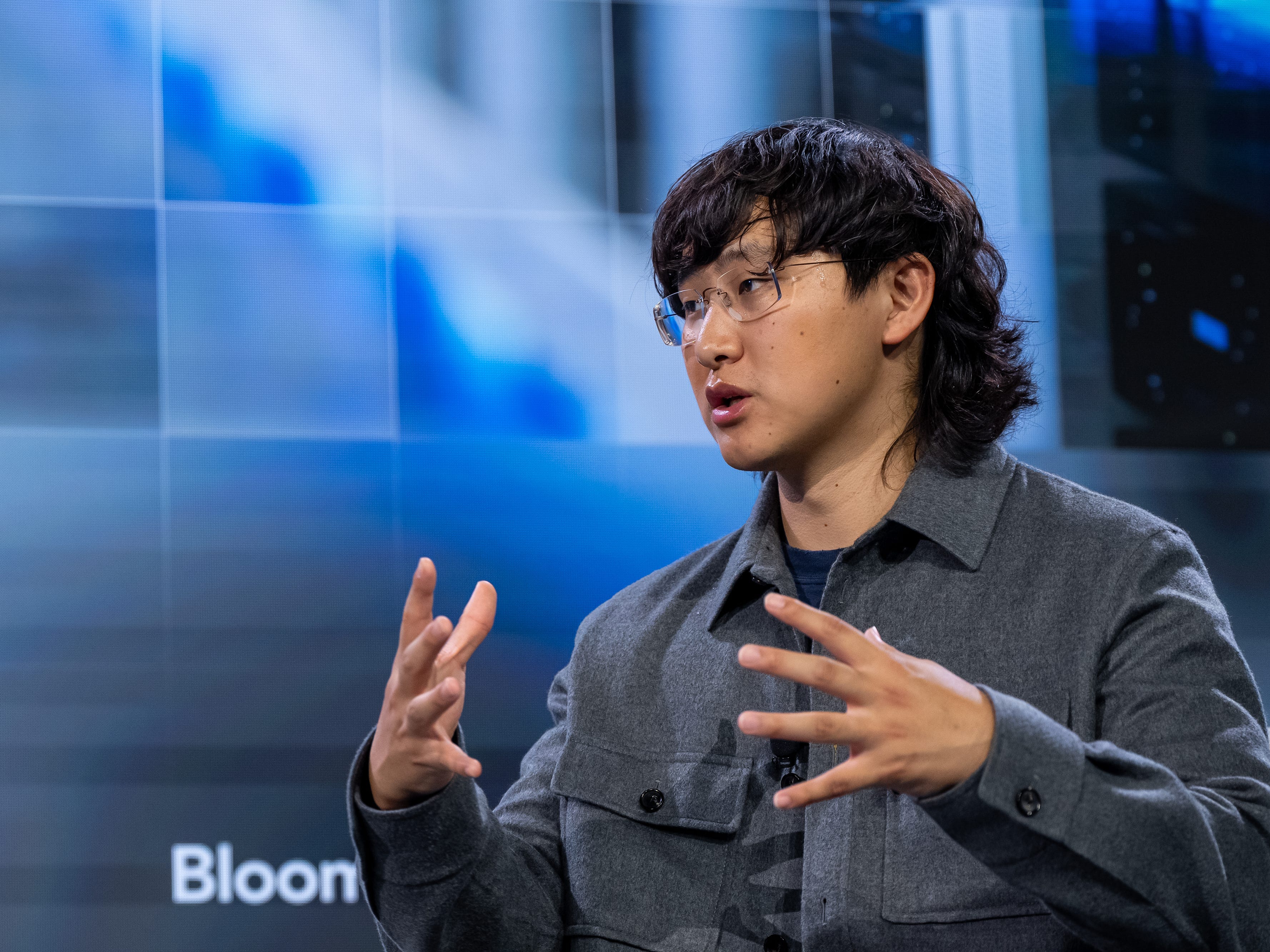
Alexandr Wang is an American technology entrepreneur best known as the co-founder and Chief Executive Officer of Scale AI. Founded in 2016, Scale AI provides essential data infrastructure, annotation, and model evaluation services for generative artificial intelligence enterprises and government agencies, establishing Wang as a key figure in modern AI deployment.
Early Life, Education, and Mathematical Background
Alexandr Wang grew up in Los Alamos, New Mexico, an environment heavily influenced by scientific research. His parents worked as physicists at the Los Alamos National Laboratory, exposing him at an early age to high-level mathematics, physics, and computer science. This background fostered a disciplined approach to quantitative problem-solving and competitive programming.
During his high school years, Wang distinguished himself in national academic competitions. He participated actively in the United States of America Mathematical Olympiad (USAMO) and the USA Computing Olympiad (USACO), demonstrating exceptional talent in algorithm design and discrete mathematics. His performance in these competitions led to early software engineering opportunities, including roles at tech firms such as Addepar and Quora while he was still a teenager.
Wang enrolled at the Massachusetts Institute of Technology (MIT) in 2014 to study computer science and mathematics. During his time at MIT, he focused on advanced machine learning algorithms and software systems. However, after completing his freshman year, he recognized a critical gap in the technology industry: while researchers were developing complex machine learning architectures, companies lacked the high-quality, structured training data required to train these models effectively.
In 2016, at the age of 19, Wang made the strategic decision to leave MIT after being accepted into the Y Combinator startup accelerator program. Alongside co-founder Lucy Guo, he established Scale AI (originally launched as Scale API) in San Francisco to address the foundational challenges of machine learning data management.
Founding and Evolution of Scale AI
Scale AI was created to solve what Wang identified as the primary bottleneck in artificial intelligence development: data processing. While public datasets were sufficient for academic research, commercial applications—such as autonomous vehicles, computer vision systems, and language processing—required millions of accurately labeled data points.
Scale AI Core Evolution
- 2016-2018: API-Driven Data Annotation (Autonomous Vehicles)
- 2019-2021: Enterprise Vision & Natural Language Pipelines
- 2022-2024: RLHF, Generative AI Evaluation & Red Teaming
- 2025-2026: Defense Operations (Scale Donovan) & AI Infrastructure
Initially, Scale AI focused on delivering data annotation infrastructure via simple application programming interfaces (APIs). The platform allowed computer vision engineers to upload raw sensor data—such as camera footage, LiDAR point clouds, and radar signals—and receive precisely labeled datasets curated by human annotators working alongside automated quality assurance algorithms. Early adopters included leading autonomous vehicle companies such as Cruise, Waymo, and Zoox.
As enterprise interest shifted from computer vision toward large language models (LLMs) and generative systems, Wang pivoted Scale AI’s capabilities to match industry demand. The company expanded its platform to provide Reinforcement Learning from Human Feedback (RLHF), red-teaming, safety testing, and specialized data curation for foundation model developers.
Under Wang’s leadership, Scale AI transformed from a specialized annotation utility into an enterprise data platform serving major technology corporations, including OpenAI, Meta, Microsoft, and Alphabet, as well as public-sector clients such as the United States Department of Defense.
Key Milestones and Business Valuation
Scale AI’s commercial trajectory reflects the rapid expansion of the broader artificial intelligence economy. The company raised consecutive rounds of venture capital funding from prominent Silicon Valley investment firms, accelerating its infrastructure capabilities and strategic acquisitions.
By 2021, a Series E funding round valued Scale AI at $7.3 billion, making Wang one of the world's youngest self-made billionaires at age 24. The company continued to expand its footprint in enterprise software and government contracting, cementing its role as a key infrastructure provider for commercial and defense applications.
In mid-2024, Scale AI completed a $1 billion Series F funding round led by Accel, with participation from strategic investors including Amazon, Meta, Nvidia, and Intel Capital. This investment round elevated Scale AI’s valuation to $13.8 billion, reinforcing its central position in the generative AI software stack.
| Funding Round / Milestone | Year | Total Capital Raised / Valuation | Primary Focus & Strategic Impact |
|---|---|---|---|
| Y Combinator Incubator | 2016 | Seed Funding | Launch of initial API for manual and semi-automated data annotation. |
| Series A & B Rounds | 2017–2018 | ~$18 Million Raised | Expansion into autonomous vehicle data pipelines (LiDAR, radar, video). |
| Series C & D Rounds | 2019–2020 | Valued at $3.5 Billion | Diversification into enterprise NLP, document processing, and vision systems. |
| Series E Round | 2021 | Valued at $7.3 Billion | Scaling workforce management engines and enterprise integration tools. |
| Generative AI Expansion | 2022–2023 | Strategic Expansion | Launch of RLHF offerings, LLM evaluation, and defense platform (Scale Donovan). |
| Series F Round | 2024 | Valued at $13.8 Billion | Expansion of frontier model evaluation, enterprise AI deployment, and chipmaker partnerships. |
Core Platforms and Technical Infrastructure
Scale AI’s product ecosystem is built around managing the complete lifecycle of AI training data, model evaluation, and application deployment. Rather than building consumer-facing foundation models directly, Scale provides the software tools and human-in-the-loop workflows required to refine raw data into enterprise-grade intelligence.
Scale Data Engine
The Scale Data Engine serves as the company's core platform for data curation, labeling, and quality control. It combines automated pre-labeling algorithms with human domain experts to process unstructured data at scale. Key technical capabilities include:
- Multi-Modal Annotation: Processing 3D point clouds, high-resolution imagery, audio, and video stream data simultaneously.
- Reinforcement Learning from Human Feedback (RLHF): Employing subject-matter experts—including programmers, mathematicians, lawyers, and medical professionals—to rate, refine, and generate responses for fine-tuning LLMs.
- Model Red-Teaming: Systematic stress-testing of generative models to identify security vulnerabilities, biases, prompt injection vectors, and factual hallucinations before public release.
Scale Donovan
Scale Donovan is an AI-powered command-and-control platform engineered specifically for defense, intelligence, and national security applications. Designed to operate in high-security environments, Donovan aggregates unstructured data from battlefield sensors, satellite imagery, operational reports, and signals intelligence into a unified interface.
Through Donovan, defense operators can query complex operational environments using natural language, summarize tactical reports, and analyze strategic scenarios in real time. The platform complies with stringent government security protocols, enabling deployment across classified networks within the U.S. Department of Defense and allied military organizations.
Scale Enterprise GenAI Platform
To assist legacy enterprises in customizing open-source or commercial foundation models, Scale provides end-to-end model customization services. The platform enables organizations to securely connect internal data repositories—such as customer management tools, financial records, and proprietary documentation—to base models while maintaining strict data governance, privacy controls, and audit trails.
Strategic Role in National Security and Public Policy
Beyond commercial operations, Alexandr Wang has emerged as a prominent voice in national security strategy, digital sovereignty, and global AI competitiveness. Wang regularly advocates for public-private collaboration to ensure that democratic nations maintain technological parity in critical software and hardware capabilities.
Public Policy & Defense Focus Areas
- National Security Integration
- Deployment of secure AI systems via Scale Donovan.
- Supply Chain & Compute Sovereignty
- Advocacy for domestic semiconductor & data infrastructure.
- Standardized Model Evaluation
- Independent benchmarking of safety, accuracy, and bias.
Wang has testified before various committees of the United States Congress, offering expert assessment on topics such as artificial intelligence safety, international technological competition, and military modernization. His testimony emphasizes several core principles:
- Data Advantage: Recognizing that superior training data—not just algorithm architecture or compute availability—is the decisive factor in military and economic AI capabilities.
- Infrastructure Investment: Advocating for public investment in compute access, open data repositories, and standardized evaluation benchmarks for national research initiatives.
- Secure Supply Chains: Emphasizing the strategic necessity of securing semiconductor supply chains, data center infrastructure, and domestic technical talent.
Scale AI’s strategic alignment with national security priorities is reflected in its contracts with U.S. defense agencies, including work with the Chief Digital and Artificial Intelligence Office (CDAO), the U.S. Army, and the Defense Advanced Research Projects Agency (DARPA).
Leadership Approach and Business Philosophy
Wang’s management framework emphasizes rapid execution, strict data discipline, and continuous adaptation to changing technological paradigms. Rather than viewing data labeling as a temporary operational necessity, Wang views continuous human feedback as a permanent requirement for advancing artificial general intelligence (AGI).
Key elements of Wang's business operational strategy include:
- Human-in-the-Loop Integration: Maintaining that human judgment is essential for training, evaluating, and aligning advanced machine learning systems, particularly as tasks become more complex.
- Domain-Specific Expertise: Transitioning from broad crowdsourced labor to highly specialized networks of expert annotators capable of writing code, verifying mathematical proofs, and analyzing legal documents.
- Infrastructure Neutrality: Position Scale AI as a flexible software layer compatible with any underlying model architecture, cloud provider, or hardware framework, allowing the company to serve competing technology developers simultaneously.
Frequently Asked Questions
Who is Alexandr Wang?
Alexandr Wang is an American technology entrepreneur and software engineer who co-founded Scale AI in 2016. He serves as the Chief Executive Officer of the company, which provides data infrastructure, fine-tuning, and model evaluation services for AI developers and enterprise organizations.
What is Scale AI's primary business function?
Scale AI provides software platforms and human-in-the-loop workflows designed to curate, annotate, and evaluate data for machine learning models. Its capabilities include computer vision annotation, RLHF for large language models, model red-teaming, and national security software through its Scale Donovan platform.
Did Alexandr Wang graduate from MIT?
No. Alexandr Wang attended the Massachusetts Institute of Technology (MIT) for his freshman year (2014–2015), where he studied computer science and mathematics. He chose to leave MIT in 2016 to participate in the Y Combinator accelerator program and launch Scale AI.
How is Scale AI used in government and national defense applications?
Scale AI provides specialized platforms like Scale Donovan to defense and national security agencies. These tools allow military personnel and intelligence analysts to summarize tactical data, process real-time sensor streams, and conduct planning using secure, domain-adapted language models.
Why is data infrastructure critical to artificial intelligence development?
While algorithm architectures are widely accessible, AI models depend entirely on high-quality training data to function accurately. Effective data infrastructure ensures that datasets are clean, accurately labeled, and free of fatal errors, enabling models to generalize correctly in real-world situations.
Practical Action Plan for Tech Executives and AI Developers
Organizations seeking to implement scalable data infrastructure strategies based on Scale AI’s methodology should follow a structured deployment model:
- Audit Current Data Quality: Audit existing corporate data repositories to separate unstructured data assets from curated, high-integrity datasets suitable for model fine-tuning.
- Establish Standardized Benchmarks: Implement independent evaluation frameworks and automated testing pipelines to measure model accuracy, latency, safety, and hallucination rates before production deployment.
- Incorporate Expert Human Feedback: Integrate domain-specific human review steps (RLHF) into application workflows where decision confidence falls below required operational thresholds.
- Implement Strict Security Governance: Ensure that enterprise data pipelines comply with strict access controls, data sovereignty policies, and audit logging to protect proprietary information when using third-party foundation models.