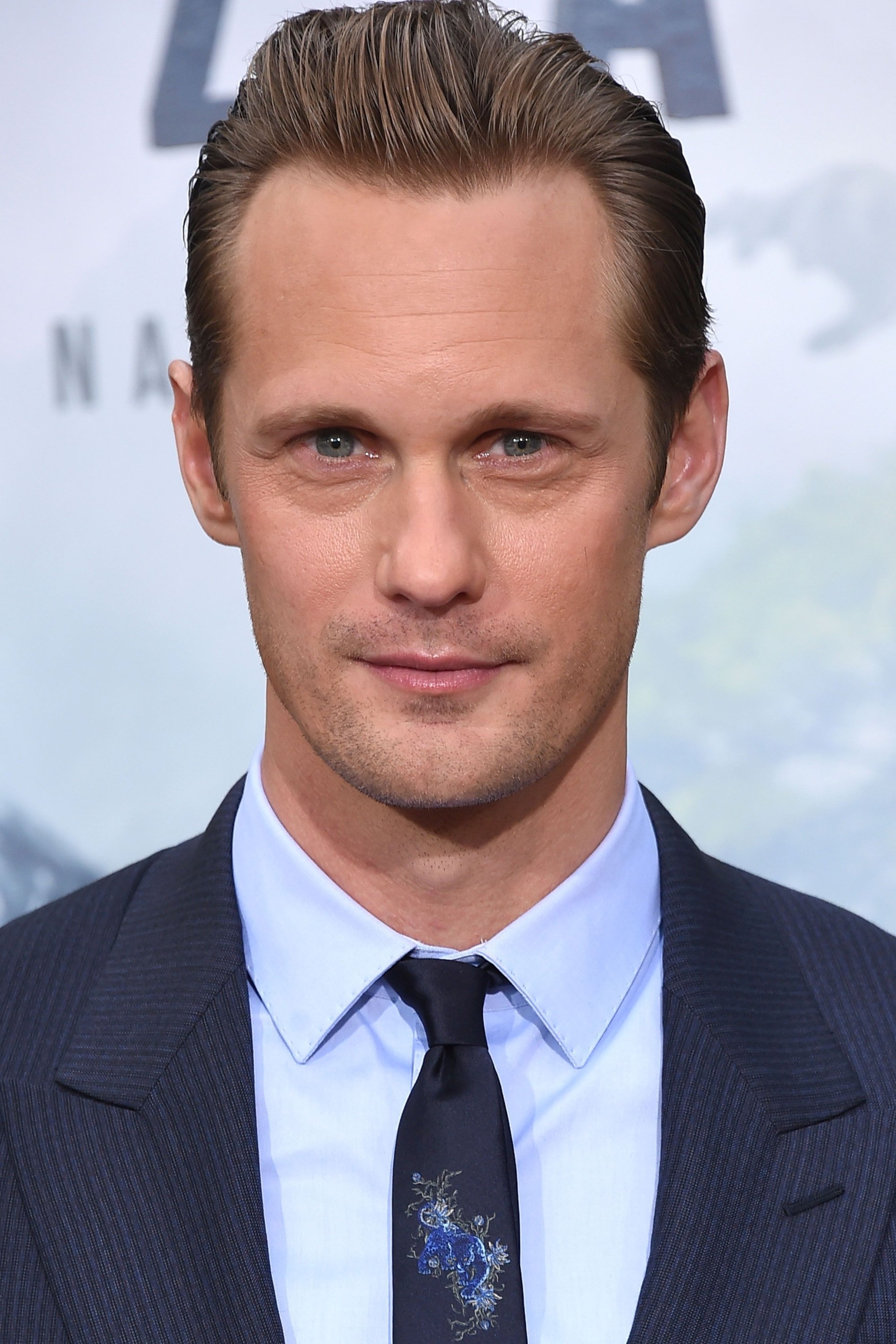
Swedish actor Alexander Skarsgård has built one of the most versatile filmographies in modern cinema, effortlessly shifting between high-budget Hollywood blockbusters, intense psychological thrillers, and acclaimed arthouse dramas. Known for his commanding screen presence, physical dedication, and willingness to tackle morally ambiguous characters, Skarsgård's work in movies like The Northman, The Legend of Tarzan, Melancholia, and Infinity Pool showcases an actor who consistently shuns predictable leading-man roles in favor of challenging storytelling.
The Evolution of Alexander Skarsgård's Cinematic Career
While global audiences initially recognized Alexander Skarsgård through his breakout television roles—most notably as the centuries-old vampire Eric Northman in HBO's True Blood—his feature film career spans decades of calculated, high-risk artistic choices. Born into the famous Swedish acting dynasty headed by his father, Stellan Skarsgård, Alexander began acting at a young age in Sweden before taking a hiatus and eventually returning to the screen with a renewed focus.
His early introduction to American film audiences came in the form of a brief, memorable comedic appearance as the dim-witted male model Meekus in Ben Stiller's Zoolander (2001). However, rather than anchoring his career in mainstream studio comedies, Skarsgård utilized his early Hollywood visibility to pursue complex, auteur-driven projects. Throughout the 2010s, he successfully bridged the gap between European art cinema and American independent filmmaking, building a reputation as a dependable collaborator for visionary directors.
As his profile expanded, Skarsgård proved capable of anchoring massive studio tentpoles without sacrificing the psychological depth that defined his smaller independent projects. By carefully balancing mainstream commercial appeals with experimental genre cinema, he has established himself as an actor capable of drawing audiences into uncomfortably intense, emotionally layered narratives.
Peak Physicality and Historical Epics: The Northman and The Legend of Tarzan
Two defining pillars of Alexander Skarsgård’s movie career showcase his extreme physical commitment and ability to carry large-scale action narratives: The Legend of Tarzan (2016) and The Northman (2022). Both films required radical bodily transformations, but they approach their legendary protagonists through radically different cinematic lenses.
| The Legend of Tarzan (2016) | The Northman (2022) |
|---|---|
| Lean, sculpted aesthetic | Broad, hulking physique |
| Classical heroic composure | Feral, berserker movement |
| Studio blockbuster framing | Visceral historical realism |
In David Yates’s The Legend of Tarzan, Skarsgård undertook an arduous nutritional and training regime to embody John Clayton III, Lord Greystoke. Rather than playing Tarzan as a simple jungle savage, Skarsgård played the character as a refined Victorian nobleman forced to re-awaken his primal instincts. His performance balanced aristocratic reserve with terrifying physical power, providing a grounded anchor for an effect-heavy studio adventure.
Six years later, director Robert Eggers pushed Skarsgård's physical and emotional limits even further in the Viking revenge epic The Northman. Playing Amleth, a deposed Norse prince driven by a blood oath to avenge his father, Skarsgård transformed his frame into a hulking, hunched berserker. Beyond the physical strain of long-take battle choreography in harsh outdoor environments, Skarsgård infused the character with a feral, tragic intensity. The Northman stands as a high-water mark in his career, proving his capacity to lead a brutal, uncompromised historical drama that demands both kinetic physicality and deep psychological devastation.
Navigating Arthouse, Thrillers, and Avant-Garde Cinema
Beyond historical epics, Alexander Skarsgård has routinely selected projects that challenge traditional narrative structures and push the boundaries of genre cinema. His willingness to take on unsympathetic, bizarre, or morally complex characters has made him a favorite among independent filmmakers.
Lars von Trier's Melancholia (2011)
In Lars von Trier’s apocalyptic drama Melancholia, Skarsgård plays Michael, the well-meaning but ultimately helpless groom to Kirsten Dunst’s clinically depressed protagonist. Amid an ensemble cast that includes Kirsten Dunst, Charlotte Gainsbourg, and his real-life father Stellan Skarsgård, Alexander delivers a subtle, grounded performance. His portrayal of naive optimism collapsing under the weight of existential dread highlights his skill with understated, human-scale drama.
Brandon Cronenberg's Infinity Pool (2023)
In Brandon Cronenberg’s sci-fi horror film Infinity Pool, Skarsgård delivers one of the most unhinged and daring performances of his career. Playing James Foster, a struggling novelist visiting an elite island resort, he becomes ensnared in a decadent, violent subculture where wealthy tourists clone themselves to escape punishment for heinous crimes. Skarsgård fearlessly explores themes of identity, privilege, and psychological degradation, capturing a man disintegrating under the influence of moral rot and surreal decadence.
Rebecca Hall's Passing (2021)
Demonstrating his range in period drama, Skarsgård took on the unvarnished antagonist role of John Bellew in Rebecca Hall's adaptation of Nella Larsen's Passing. Playing a deeply racist white man unaware that his wife is a Black woman passing as white, Skarsgård avoids cartoonish villainy, instead delivering a frighteningly plausible portrayal of casual bigotry and societal prejudice that heightened the film's claustrophobic tension.
Mainstream Blockbusters and Ensemble Dramas
While genre experiments define much of his critical acclaim, Skarsgård has consistently returned to commercial blockbusters and character-driven ensemble pieces, demonstrating broad audience appeal.
- ** Godzilla vs. Kong (2021):** Skarsgård stepped into the MonsterVerse as Dr. Nathan Lind, a hollow-earth geologist leading the expedition alongside the giant ape. His grounded, approachable performance gave human stakes to a film dominated by visual-effects spectacle.
- ** What Maisie Knew (2012):** In this contemporary adaptation of Henry James's novel, Skarsgård plays Lincoln, a warm and gentle stepfather who forms a deep bond with a young girl caught in a bitter custody battle. The role highlighted his capacity for gentleness and quiet empathy, offering a stark contrast to his darker genre work.
- ** Long Shot (2019):** Showing off his comedic timing, Skarsgård appeared as James Steward, the suave, unnervingly perfect Prime Minister of Canada. His caricature of political polished perfection provided sharp satirical humor opposite Charlize Theron and Seth Rogen.
- ** The Hummingbird Project (2018):** Skarsgård underwent a total visual shift—receding hairline, slouching posture, and socially awkward mannerisms—to play Anton Zaleski, a brilliant high-frequency trading computer engineer trying to build a fiber-optic cable network.
Major Alexander Skarsgård Movies Comparison
The table below outlines key feature films across Alexander Skarsgård's career, highlighting his diverse range across genres, directors, and narrative roles.
| Movie Title | Release Year | Genre | Director | Character Role | Key Performance Highlight |
|---|---|---|---|---|---|
| Zoolander | 2001 | Comedy | Ben Stiller | Meekus | Early comedic Hollywood debut as an eccentric male model |
| Melancholia | 2011 | Sci-Fi / Drama | Lars von Trier | Michael | Subtle portrayal of doomed optimism in an apocalyptic setting |
| What Maisie Knew | 2012 | Drama | Scott McGehee, David Siegel | Lincoln | Gentle, empathetic performance as a caring stepfather |
| The East | 2013 | Thriller | Zal Batmanglij | Benji | Charismatic performance as the leader of an eco-anarchist group |
| The Legend of Tarzan | 2016 | Action / Adventure | David Yates | John Clayton / Tarzan | High-budget physical transformation balancing nobility and instinct |
| Hold the Dark | 2018 | Psychological Thriller | Jeremy Saulnier | Vernon Slone | Chilling, taciturn performance as a traumatized returning soldier |
| The Hummingbird Project | 2018 | Tech Thriller / Drama | Kim Nguyen | Anton Zaleski | Complete physical and behavioral transformation into a tech genius |
| Godzilla vs. Kong | 2021 | Sci-Fi / Action | Adam Wingard | Dr. Nathan Lind | Grounded leading role guiding the human narrative in a giant-monster epic |
| Passing | 2021 | Historical Drama | Rebecca Hall | John Bellew | Tense, unsettling portrayal of prejudice in 1920s America |
| The Northman | 2022 | Historical Epic / Action | Robert Eggers | Amleth | Visceral, brutal physical performance as a vengeful Viking warrior |
| Infinity Pool | 2023 | Sci-Fi / Body Horror | Brandon Cronenberg | James Foster | Daring exploration of moral decay, identity loss, and psychological horror |
Key Elements of Skarsgård’s Acting Style
Alexander Skarsgård’s longevity in the film industry stems from distinct craft choices that separate him from standard Hollywood leading men.
Mastery of Physical Storytelling
Skarsgård relies heavily on body language, posture, and non-verbal cues to convey character background. In The Northman, his posture is low and predatory, mimicking a wolf or bear; in The Hummingbird Project, his shoulders curve inward to project introversion and obsession. He utilizes his imposing 6'4" frame not merely for intimidation, but as a dynamic tool to alter how his characters inhabit their environments.
Willingness to Embrace Vulnerability and Rot
Unlike stars who protect their screen image by playing heroically flawed figures, Skarsgård routinely accepts roles that reveal weakness, moral failure, or pathetic desperation. In Infinity Pool, his character is frequently humiliated, terrified, and corrupted. This lack of vanity allows him to collaborate with auteur directors who require complete actor vulnerability to execute challenging artistic visions.
Subverting Traditional Masculinity
Throughout his filmography, Skarsgård actively deconstructs classic masculine archetypes. Whether subverting the muscular heroism of Tarzan with emotional isolation, turning a Viking warrior's quest into an intoxicating cycle of endless violence, or playing quiet, nurturing stepfathers, he continually redefines what a contemporary male lead can look like on screen.
Frequently Asked Questions
What is Alexander Skarsgård's most critically acclaimed movie?
While ratings vary across platforms, The Northman (2022), Melancholia (2011), and Passing (2021) rank among his most critically praised feature films. Critics regularly cite his collaborative work with visionary directors like Robert Eggers and Lars von Trier as high points of his cinematic career.
Is Alexander Skarsgård primarily a movie or television actor?
Skarsgård has achieved massive success in both mediums. While television roles in True Blood, Big Little Lies, and Succession brought him widespread awards recognition (including an Emmy and Golden Globe for Big Little Lies), he has simultaneously maintained a robust feature film career leading major studio blockbusters and independent cinema.
What horror movies has Alexander Skarsgård starred in?
Skarsgård has starred in several notable horror and psychological thrillers, including Brandon Cronenberg's body-horror film Infinity Pool (2023), Jeremy Saulnier's dark Alaskan thriller Hold the Dark (2018), and the post-apocalyptic thriller Hidden (2015).
Did Alexander Skarsgård perform his own stunts in The Northman?
Yes, Skarsgård performed the vast majority of his physical fight scenes and action choreography in The Northman. Under the direction of Robert Eggers, the film utilized long, unbroken camera shots for battle sequences, requiring Skarsgård to execute complex fight routines repeatedly without stunt-double substitutions.
How is Alexander Skarsgård related to Stellan and Bill Skarsgård?
Alexander Skarsgård is the eldest son of acclaimed Swedish actor Stellan Skarsgård (Good Will Hunting, Dune). He is the older brother of actors Bill Skarsgård (IT, John Wick: Chapter 4), Gustaf Skarsgård (Vikings), and Valter Skarsgård.
Viewer Roadmap: Where to Start with His Filmography
To explore Alexander Skarsgård's feature films effectively, viewers should choose an entry point based on their preferred cinematic style:
- For Fans of Epic Action and History: Start with The Northman (2022). It represents his most complete feature performance, combining extreme physical preparation with raw dramatic power in an uncompromising historical setting.
- For Arthouse and Horror Enthusiasts: Begin with Infinity Pool (2023) followed by Melancholia (2011). These films highlight his courage in selecting surreal, psychological material that challenges traditional narrative boundaries.
- For Character-Driven Dramas: Watch What Maisie Knew (2012) and Passing (2021) to observe his dramatic range across vastly different human roles, moving from compassionate warmth to chilling ideological prejudice.
- For Mainstream Blockbuster Entertainment: Opt for Godzilla vs. Kong (2021) or The Legend of Tarzan (2016) to see how he manages high-budget spectacle while retaining central character stakes.