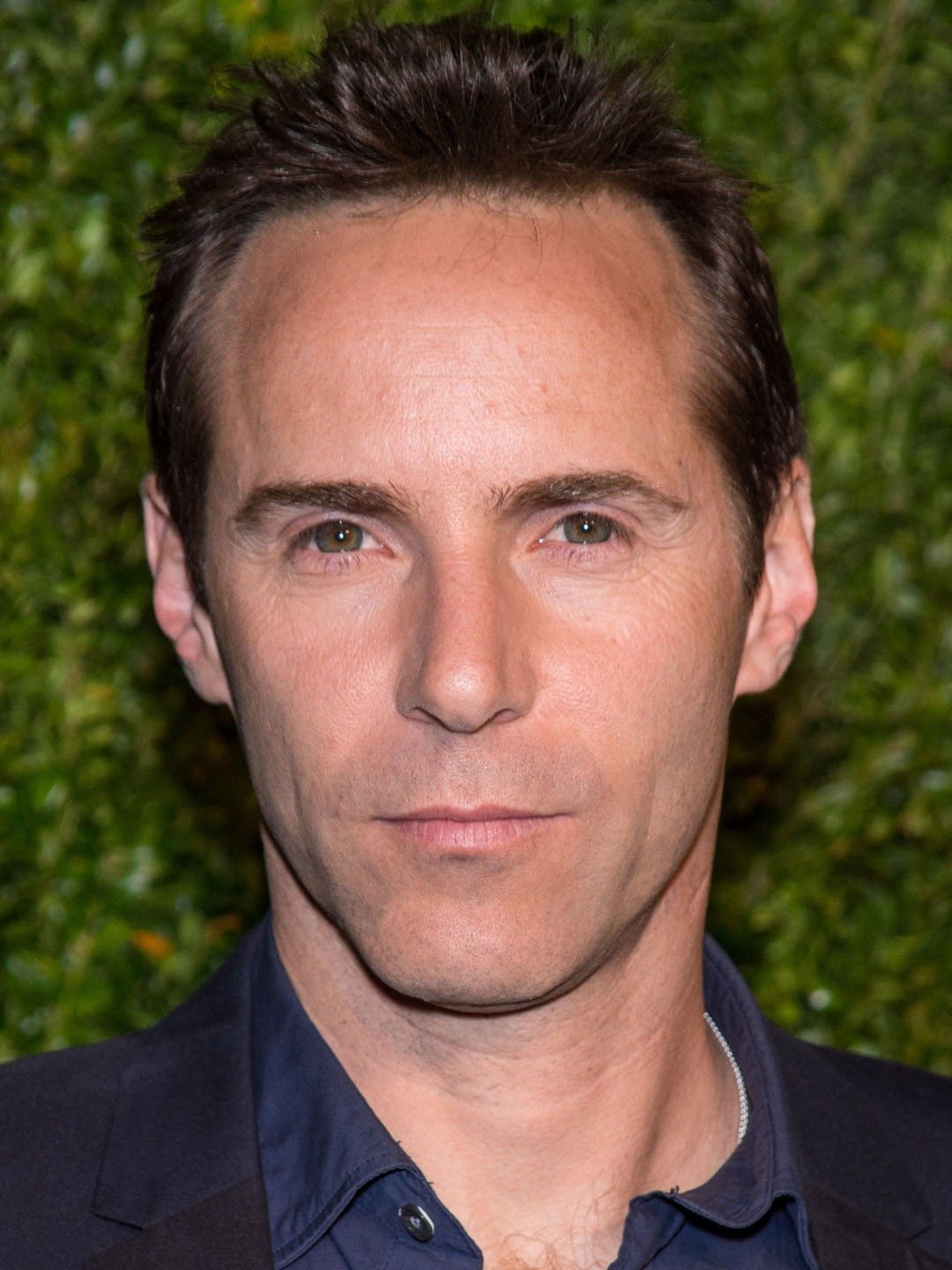
Alessandro Nivola’s rise to stardom began with high-profile stage performances and his 1997 breakout role as Pollux Troy in the action classic Face/Off. Combining classical training from Yale University with a chameleonic ability to disappear into diverse character roles, Nivola established himself as a versatile actor capable of seamlessly transitioning between massive blockbusters and intimate independent dramas.
Early Life and Academic Foundations: The Yale Years
To understand the trajectory of Alessandro Nivola, one must look toward his deeply intellectual and artistic roots. Born on April 10, 1972, in Boston, Massachusetts, Nivola was raised in an environment that prioritized the arts and academic rigor. He is the grandson of the renowned Italian sculptor Costantino Nivola and Ruth Guggenheim, a connection that provided him with a legacy of creative discipline. This background fostered an early appreciation for the craftsmanship required to build a character from the ground up, much like a sculptor approaches a block of marble.
Nivola attended Yale University, where he earned a degree in English. His time at Yale was not merely a detour into academia; it was a foundational period where he honed his ability to analyze texts and understand the psychological underpinnings of narrative. For many actors, a liberal arts education provides the "intellectual toolkit" necessary to navigate complex scripts. During his university years, Nivola was active in the theater scene, performing in various productions that caught the attention of scouts and directors. Unlike many actors who move straight to Los Angeles to pursue commercial work, Nivola remained committed to the stage, a decision that would define the "prestige" quality of his early professional career.
The transition from student to professional was rapid. Shortly after graduating, Nivola moved to New York City, the epicenter of American theater. His academic background gave him a distinct advantage in auditions, as he possessed a sophisticated understanding of dramatic structure and character motivation. This intellectual approach to acting—often described as "cerebral yet visceral"—became a hallmark of his early performances.
The Broadway Debut and the Transition to Screen
In 1995, Nivola landed a role that most seasoned actors wait decades for: a starring part on Broadway. He played Beliaev in the production of Ivan Turgenev’s A Month in the Country, starring alongside the legendary Helen Mirren. For a young Alessandro Nivola, this was a trial by fire. Performing night after night with an actress of Mirren’s caliber forced him to elevate his craft instantly. His performance earned him a Drama Desk Award nomination, signaling to the industry that a major new talent had arrived.
The success of A Month in the Country served as the primary catalyst for his move into film. Hollywood casting directors are often drawn to young Broadway stars because of their proven stamina and technical precision. However, Nivola was selective. He avoided the "teen heartthrob" trap that many actors of his generation fell into, instead seeking out roles that offered complexity rather than just screen time.
His first major film appearance came in 1997’s Inventing the Abbotts, where he played the charismatic but troubled Peter Vanlaningham. While the film received mixed reviews, Nivola’s screen presence was undeniable. He possessed a classic "Old Hollywood" look—sharp features and an intense gaze—but his acting style was decidedly modern and nuanced. This duality allowed him to fit into period pieces and contemporary thrillers with equal ease.
Face/Off and the Breakthrough into Global Consciousness
The year 1997 proved to be the definitive turning point in Nivola’s career. Director John Woo cast him as Pollux Troy, the sociopathic younger brother of Nicolas Cage’s Castor Troy, in the high-octane action film Face/Off. This was a significant departure from the refined world of Turgenev and Yale. To play Pollux, Nivola had to tap into a twitchy, paranoid, and intellectual brand of villainy that stood out even alongside the operatic performances of Cage and John Travolta.
Pollux Troy was not a generic henchman. Nivola portrayed him as a brilliant but socially dysfunctional genius, a performance that required significant physical and vocal transformation. The success of Face/Off was monumental, both critically and commercially, grossing over $245 million worldwide. Suddenly, Alessandro Nivola was a household name among action fans, but he had managed to achieve this without sacrificing his reputation as a "serious" actor.
Following Face/Off, Nivola faced the classic dilemma of a rising star: whether to chase the massive paychecks of action sequels or return to his roots in character-driven storytelling. True to his intellectual leanings, he chose a path of variety. He moved from the big-budget spectacle of John Woo to the literary adaptation of Jane Austen’s Mansfield Park (1999), playing Henry Crawford. This transition from a high-tech terrorist to a Regency-era rake demonstrated a range that few of his peers could match.
Navigating the Early 2000s: Blockbusters vs. Indie Credibility
By the turn of the millennium, Alessandro Nivola had become a staple of both independent cinema and studio productions. In 2001, he took on the role of Billy Brennan in Jurassic Park III. Working alongside William H. Macy and Sam Neill, Nivola provided the youthful energy the franchise needed. While Jurassic Park III was a global blockbuster, Nivola’s performance was noted for its groundedness; he played Billy not as a superhero, but as an ambitious and occasionally reckless scientist.
Despite the visibility of the Jurassic Park franchise, Nivola seemed most at home in the burgeoning independent film scene of the early 2000s. Two films during this period stand out as essential to his development:
- Love’s Labour’s Lost (2000): Directed by Kenneth Branagh, this musical adaptation of Shakespeare allowed Nivola to showcase his singing and dancing abilities, further proving his versatility.
- Laurel Canyon (2002): Starring opposite Frances McDormand and Christian Bale, Nivola played Ian McKnight, a role that required a deep dive into the hedonistic world of the Los Angeles music industry.
His performance in Laurel Canyon was particularly lauded. He captured the essence of a rock star without falling into clichés, bringing a sense of vulnerability and longing to the character. It was during this period that Nivola established a reputation for being an "actor’s actor"—someone who was more interested in the integrity of the project than the size of the billing.
A Comparison of Early Breakthrough Roles
The following table illustrates the diversity of Alessandro Nivola’s early career choices, highlighting how he strategically avoided typecasting by oscillating between genres and character archetypes.
| Year | Title | Role | Genre | Significance |
|---|---|---|---|---|
| 1995 | A Month in the Country | Beliaev | Stage Drama | Broadway debut; Drama Desk nomination. |
| 1997 | Face/Off | Pollux Troy | Action/Thriller | Global commercial breakthrough. |
| 1999 | Mansfield Park | Henry Crawford | Period Drama | Established his range in classical adaptations. |
| 2001 | Jurassic Park III | Billy Brennan | Sci-Fi/Action | High-visibility franchise role. |
| 2002 | Laurel Canyon | Ian McKnight | Indie Drama | Solidified "indie cred" and dramatic weight. |
| 2005 | Junebug | George Johnsten | Comedy/Drama | Showcased subtle, ensemble-based acting. |
The Art of Versatility: Why Nivola Avoided Typecasting
The primary reason Alessandro Nivola’s "young" years resulted in such a sustained career is his refusal to be pinned down. In an industry that often rewards actors for playing the same "type" repeatedly, Nivola consistently subverted expectations. If the industry expected a leading man, he took a character role. If they expected a villain, he played a romantic lead.
This versatility was supported by a rigorous physical and vocal preparation process. For his role in the Goal! trilogy (starting in 2005), he underwent intense football training to convincingly play a professional athlete. For The Many Saints of Newark (the 2021 Sopranos prequel), he famously spent months perfecting the specific cadence and physical mannerisms of a 1960s mobster. This dedication to "getting it right" started early in his career and became the foundation of his professional identity.
Furthermore, Nivola’s personal life played a role in his steady rise. His marriage to actress Emily Mortimer in 2003 created a formidable creative partnership. Together, they navigated the highs and lows of the industry, often collaborating on projects and maintaining a level of groundedness that is rare in Hollywood. By prioritizing a stable personal life and a residence in New York rather than the Hollywood bubble, Nivola was able to maintain the perspective necessary to choose roles based on artistic merit.
Legacy and Continued Growth: Reflections from 2026
As we look back from 2026, Alessandro Nivola’s early career serves as a blueprint for longevity in the entertainment industry. His rise was not a meteoric flash in the pan but a deliberate, step-by-step construction of a formidable body of work. He successfully bridged the gap between the 20th-century tradition of classically trained stage actors and the 21st-century demand for multi-media versatility.
In recent years, his role as Dickie Moltisanti in The Many Saints of Newark has been retroactively recognized as a masterclass in lead performance, proving that the skills he developed as a young actor in Face/Off and Mansfield Park had matured into something truly profound. Nivola’s "rise" didn't stop once he became famous; it transitioned into a period of sustained excellence where he is now considered one of the most reliable and compelling actors of his generation.
His journey reminds aspiring actors that an "English degree from Yale" or a "Broadway debut" are not just resume builders—they are the tools that allow an artist to survive the volatile nature of fame. By focusing on the craft rather than the celebrity, Alessandro Nivola ensured that his "young" years were merely the opening act of a long and distinguished career.
Who is Alessandro Nivola’s most famous early character?
Pollux Troy in the 1997 film Face/Off is widely considered his most famous early breakout role. His portrayal of the eccentric, genius-level criminal brother of Nicolas Cage's character earned him international recognition and demonstrated his ability to hold his own against industry giants.
Where did Alessandro Nivola receive his acting training?
Nivola is a graduate of Yale University, where he studied English. His formal acting training was heavily rooted in the New York theater scene, particularly through his early work on Broadway in productions like A Month in the Country alongside Helen Mirren.
Is Alessandro Nivola related to any other famous artists?
Yes, Alessandro Nivola is the grandson of the famous Italian sculptor Costantino Nivola. This artistic lineage is often cited as a significant influence on his disciplined and craft-oriented approach to his acting roles.
What was Alessandro Nivola's first major film?
His first significant feature film roles were in Inventing the Abbotts and Face/Off, both released in 1997. While Inventing the Abbotts provided him with a dramatic platform, Face/Off provided the commercial "boost" that launched his Hollywood career.
How did Alessandro Nivola prepare for his role in Jurassic Park III?
For his role as Billy Brennan, Nivola focused on the physical requirements of an adventurer/scientist, though he has noted in interviews that the experience was quite different from his theater roots, requiring him to adapt to the technical demands of a large-scale, CGI-heavy production.
Explore the Nivola Filmography for Career Inspiration
For those looking to understand the mechanics of a successful acting career, studying Alessandro Nivola’s early work is highly recommended. Begin by watching Face/Off to see his high-energy character work, followed by Mansfield Park to observe his classical range. Finally, view Laurel Canyon or Junebug to see how he manages subtlety in an ensemble cast. This progression provides a comprehensive look at how a young actor can build a diverse and resilient professional portfolio without succumbing to the pressures of Hollywood typecasting.