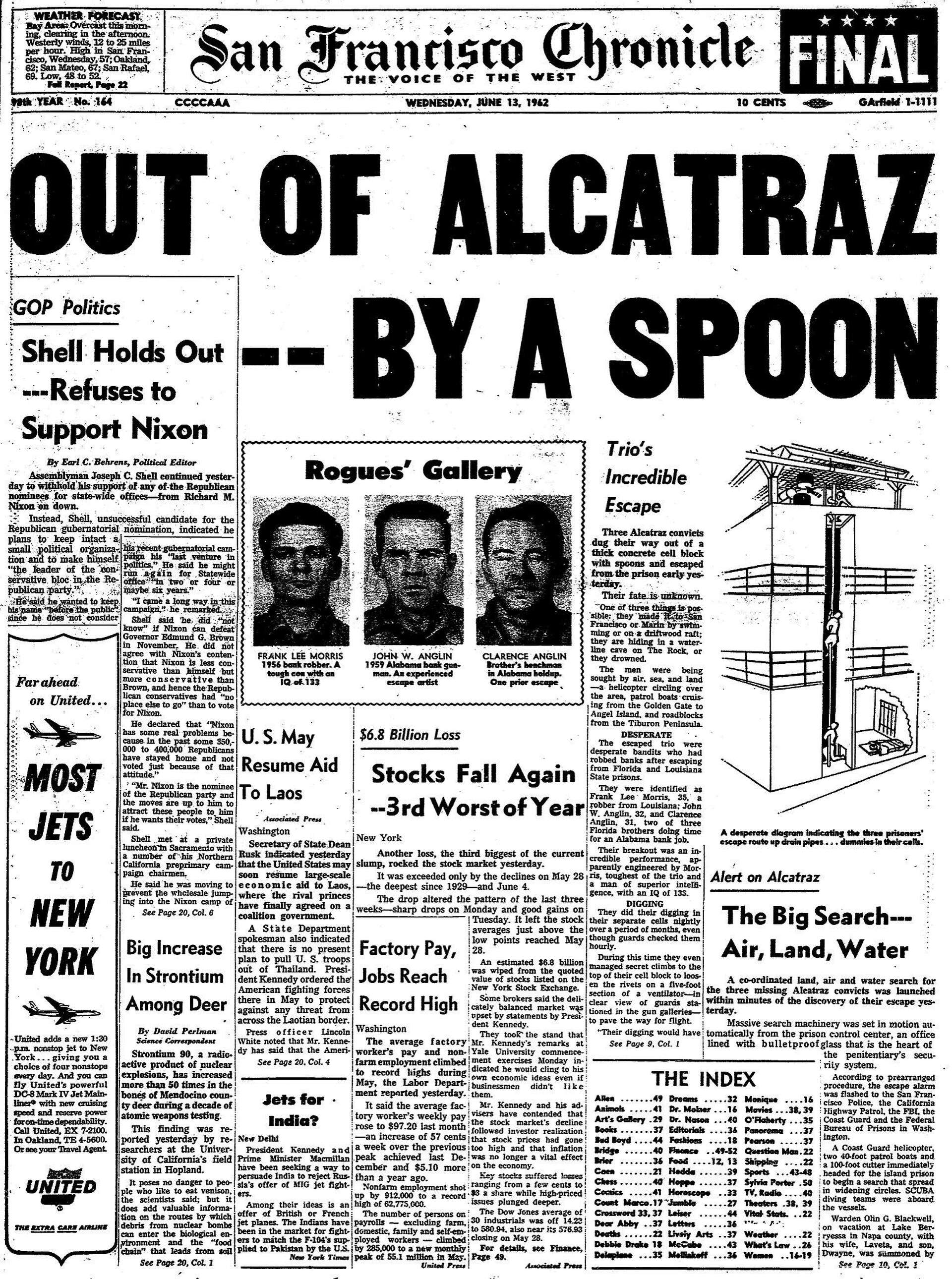
On the night of June 11, 1962, Frank Morris and brothers John and Clarence Anglin executed one of the most ingenious and meticulously planned escapes in American penal history, fleeing the maximum-security federal penitentiary on Alcatraz Island. Utilizing handcrafted papier-mâché heads, an improvised raft, and a network of cleverly concealed utility corridors, the trio vanished into the freezing, turbulent waters of San Francisco Bay, leaving behind a mystery that continues to captivate criminologists, historians, and the public.
Historical Context and the Myth of Inescapability
Alcatraz Island, situated 1.25 miles off the coast of San Francisco, was designed to house the most incorrigible, violent, and escape-prone criminals in the United States federal prison system. Surrounded by the deep, freezing, and notoriously swift currents of San Francisco Bay, the facility was widely promoted as entirely inescapable. Opened as a military fortress in the 1850s and converted into a maximum-security federal civilian prison in 1934, Alcatraz boasted a rigid routine, high guard-to-inmate ratios, and innovative architectural safeguards, including gun galleries, metal detectors, and controlled movement zones.
Despite these formidable deterrents, dozens of inmates attempted to break out over the prison's 29-year operational history as a federal penitentiary. Official records show that 36 men made 14 separate escape attempts. The vast majority of these individuals were captured quickly, shot during the act, or drowned in the frigid waters of the bay. The June 1962 operation led by Frank Morris and the Anglin brothers, however, stood apart due to its sophisticated engineering, psychological preparation, and the complete absence of physical evidence confirming their survival or death.
The Architects of the Breakout: Morris and the Anglins
The success of the June 1962 operation hinged on the specialized skills and coordinated efforts of its primary participants. Frank Morris, a convict with an exceptionally high intelligence quotient, served as the intellectual leader of the cell. Alongside him were brothers John and Clarence Anglin, career bank robbers hailing from Florida who possessed extensive practical experience in manual labor and evasion. Later, a fourth inmate, Allen West, joined the conspiracy, though logistical complications prevented him from participating in the final launch.
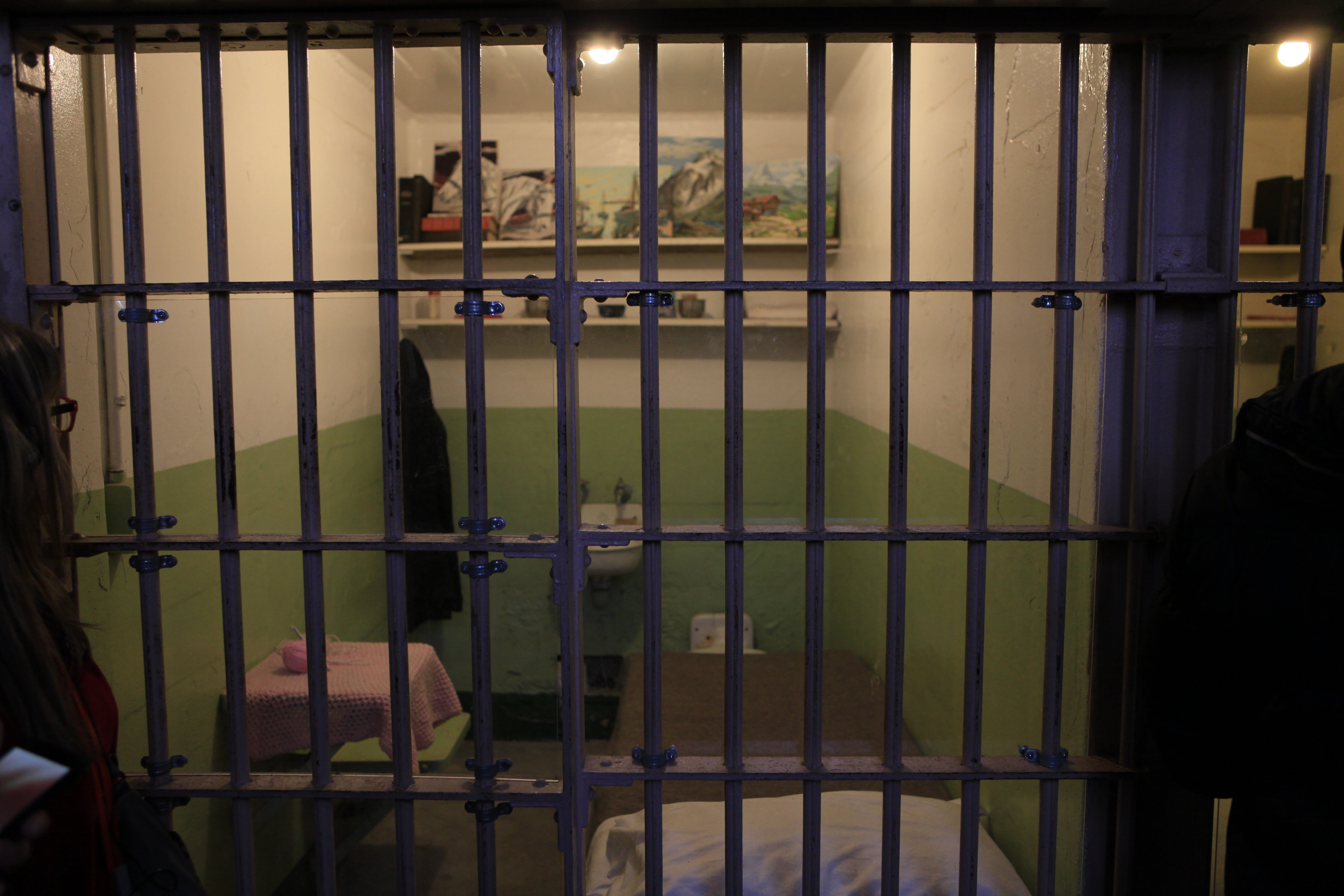
The men spent months laying the groundwork for their departure. Assigned to adjacent cells in Alcatraz’s B Block, the conspirators capitalized on the prison’s aging infrastructure. The cell walls were constructed of poor-quality concrete that had begun to degrade due to the moisture-laden marine environment. Using discarded saw blades, a stolen spoon welded into a makeshift trowel, and the motor from a broken vacuum cleaner repurposed as an improvised drill, the inmates systematically chipped away at the concrete surrounding the ventilation grates at the back of their cells.
Meticulous Preparation and Engineering Feats
The execution of the escape required overcoming multiple layers of institutional security without drawing the attention of patrolling guards. The concrete removal process was masked by the ambient noise of a designated music hour, during which inmates were permitted to play instruments or listen to the radio. To prevent guards from noticing the widening holes during routine checks, the men constructed elaborate faux grates out of painted cardboard and soap, fitting them seamlessly over the openings when work halted.
| Phase of Operation | Materials Used | Purpose and Function |
|---|---|---|
| Wall Penetration | Spoon, saw blades, vacuum motor | Chipped away degraded concrete around ventilation ducts. |
| Decoy Construction | Soap, toilet paper, paint, human hair | Molded realistic fake heads to fool nighttime bed checks. |
| Raft & Pontoons | Raincoats, contact cement, wooden slats | Fabricated a 6-foot-by-14-foot inflatable raft and life preservers. |
| Corridor Access | Utility pipes, ventilation shafts | Traveled from cell blocks to the prison roof and shoreline. |
The most iconic element of the preparation involved the creation of dummy heads designed to deceive guards during the overnight bed checks. Using a mixture of soap, toilet paper, powdered concrete, and real human hair collected from the prison barbershop, the inmates molded remarkably lifelike effigies complete with facial features and painted skin tones. Placed in their bunks on the night of June 11, these figures successfully fooled correctional officers peering through the cell bars well into the early morning hours.
The Night of the Escape
On the evening of June 11, 1962, the plan entered its final phase. Allen West encountered a delay when the cement he had used to mask his ventilation opening dried and narrowed the gap, preventing him from exiting his cell in time. While Morris and the Anglin brothers urged him to hurry, West was ultimately left behind, later providing federal investigators with a comprehensive account of the plot's mechanics.
Morris and the Anglins forced their way through the widened ventilation shafts into the unmonitored utility corridor behind the cell block. Climbing upward through the plumbing shafts, they reached the roof of the cell house, where they bypassed a locked door and scrambled down a ventilation pipe to the ground near the prison's shore. Using a makeshift pneumatic pump crafted from an accordion, they inflated their custom-built raft—constructed from over 50 stolen raincoats bonded together with heat and contact cement—along with several matching life vests.
Investigation and the Federal Bureau of Investigation Inquiry
The breakout was discovered the following morning during the 7:00 AM prisoner count, when a guard struck one of the dummy heads with a broom handle, causing it to roll onto the floor and revealing the empty bed. A massive manhunt was immediately initiated, involving the Federal Bureau of Investigation, the United States Coast Guard, local police departments, and military personnel. Search parties scoured the waters of San Francisco Bay, the surrounding shoreline, and nearby islands, finding various artifacts over the subsequent weeks.
Investigators recovered a paddle floating in the bay near Angel Island, fragments of a raincoat, and a watertight packet containing personal photographs and letters belonging to the Anglin brothers. However, no bodies were recovered during the initial searches, a fact that fueled intense speculation regarding the inmates' ultimate fate. The Federal Bureau of Investigation officially closed its active investigation in 1979, turning the file over to the United States Marshals Service, which maintains an active cold-case warrant for the surviving participants.
Theories of Survival Versus Drowning
Decades after the event, the central debate surrounding the Alcatraz breakout remains divided between those who believe the men perished in the bay and those convinced they successfully reached freedom.
Proponents of the drowning theory emphasize the extreme environmental hazards of San Francisco Bay. On the night of the escape, water temperatures hovered around 50 to 55 degrees Fahrenheit, and strong outgoing tides posed severe swimming challenges. Critics of the survival narrative argue that an unguided, makeshift rubber raft would have been swamped or capsized by the heavy swells and choppy waters, and that hypothermia would have incapacitated the swimmers within minutes.
Conversely, supporters of the survival hypothesis point to circumstantial evidence and subsequent investigative leads. In the decades following the breakout, family members of the Anglin brothers reported receiving anonymous greeting cards signed with the names John and Clarence. In 2013, the United States Marshals Service evaluated a purported letter allegedly written by John Anglin, in which the writer claimed Morris died in 2008 and Clarence in 2011, though handwriting analysis proved inconclusive. Furthermore, forensic television experiments using replica rafts and modern tidal simulations have demonstrated that a launch timed precisely with the changing tide could theoretically carry individuals safely to the Marin County headlands.
Frequently Asked Questions
Did anyone else escape from Alcatraz successfully?
Over the 29 years the federal penitentiary operated, 36 inmates attempted escapes. Of those, 23 were captured, six were shot and killed during their attempts, and two drowned. Five inmates, including Frank Morris and the Anglin brothers, were officially listed as "missing and presumed drowned," leaving their ultimate fates officially unresolved by federal authorities.
What happened to Allen West after he was left behind?
Allen West was unable to remove his ventilation grille in time because the cement around it had hardened. He remained in his cell and cooperated fully with investigators the following morning, providing the Federal Bureau of Investigation with the technical details of how the breakout was planned and executed. Because of his cooperation, West was not prosecuted for his role in the escape conspiracy.
How did the inmates make the dummy heads look so realistic?
The inmates manufactured the decoy heads over several months using a compound of soap, toilet paper, and papier-mâché. They harvested human hair from the prison barbershop floor, pressing it strand by strand into the wet mixture to mimic real hair, and used skin-toned paints pilfered from the prison’s art and maintenance supplies to complete the illusion.
Why is the Alcatraz escape considered so unique?
The operation is renowned for its combination of psychological deception, low-tech engineering, and the complete lack of physical remains. Unlike standard prison breaks that rely on brute force, the 1962 breakout utilized makeshift tools, smuggled materials, and precise timing against one of the most heavily fortified security facilities in the world.
Is the Alcatraz escape case still open today?
Yes. The United States Marshals Service maintains active fugitive warrants for Frank Morris, John Anglin, and Clarence Anglin. Because there is no conclusive physical evidence or death certificate confirming their drowning, the case remains officially open, and investigators continue to evaluate credible tips and forensic evidence.
Recommended Next Actions
For those interested in exploring the historical record firsthand, official documentation and archival materials are accessible through the National Archives and Records Administration, which maintains digitized Federal Bureau of Investigation case files related to the 1962 investigation. Visitors to San Francisco can also tour the Alcatraz Island facility, managed by the National Park Service, where interpretive exhibits allow the public to view the actual cell blocks, ventilation corridors, and dummy heads utilized during the historic operation.