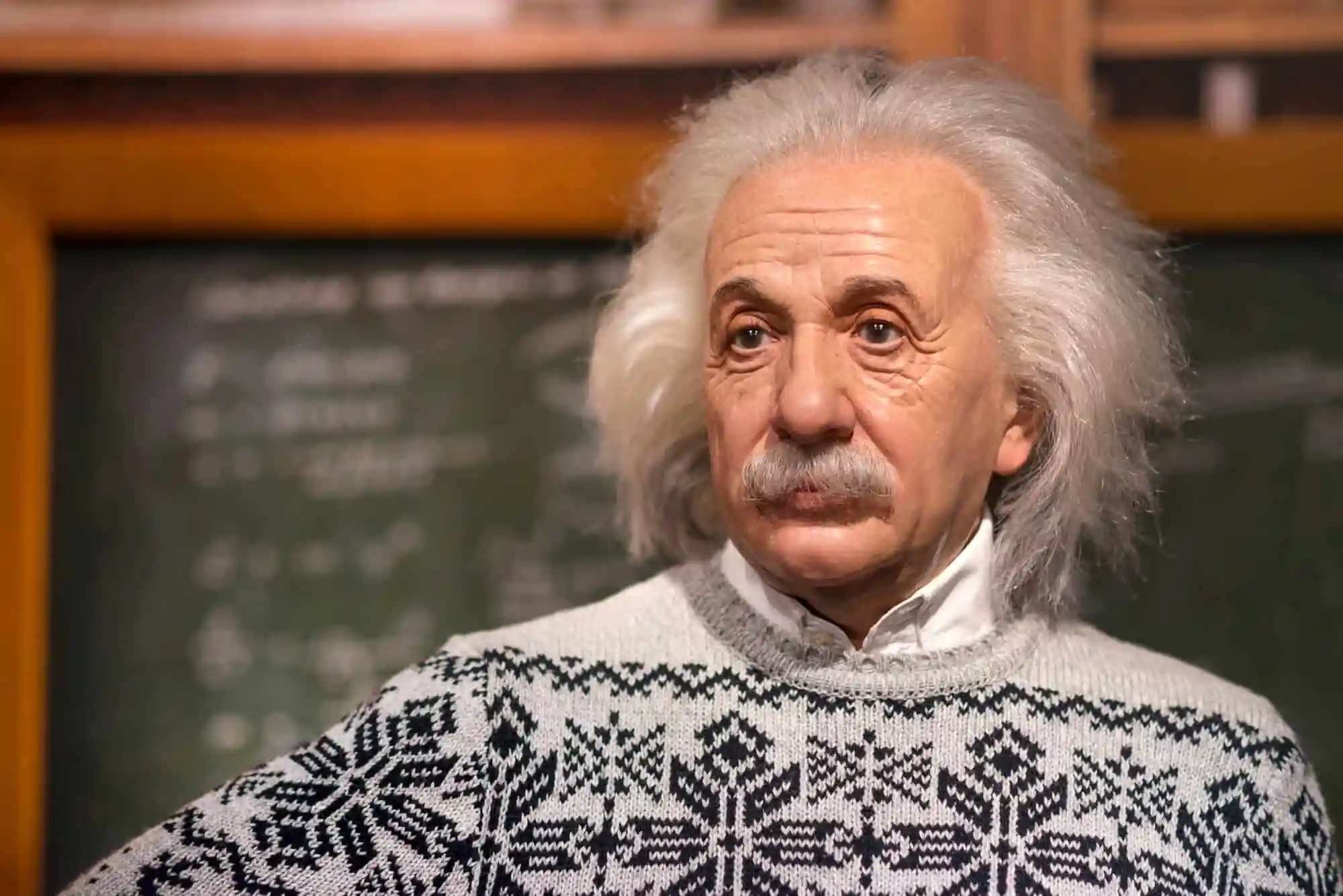
At the time of his death on April 18, 1955, theoretical physicist Albert Einstein possessed a personal estate valued at approximately $65,000 to $75,000. In present-day purchasing power, this sum equals roughly $750,000 to $870,000. Although Einstein earned high academic salaries later in life and received substantial prizes, he lived modestly, donated heavily to humanitarian causes, and transferred his eventual multibillion-dollar intellectual property rights to academic institutions.
Early Career and Academic Earnings
Albert Einstein did not begin his adult life with significant personal wealth or institutional backing. After graduating from the Federal Polytechnic School in Zurich in 1900, he struggled to find an academic post. In 1902, he secured employment as a Third Class Technical Assistant at the Swiss Patent Office in Bern.
His initial salary at the patent office was 3,500 Swiss francs per year, which provided a steady middle-class living. By 1906, following his "Annus Mirabilis" (Miracle Year) of 1905 in which he published four groundbreaking papers—including his paper on the photoelectric effect and special relativity—he was promoted to Second Class Technical Assistant with a salary increase to 4,500 Swiss francs per year.
- Swiss Patent Office (1902–1909): 3,500–4,500 CHF/year
- University of Zurich & Prague (1909–1913): Early Academic Rank & Base Pay
- Prussian Academy of Sciences (1914–1933): ~12,000 Marks/year (Exempt from teaching)
- Institute for Advanced Study, Princeton (1933–1955): $15,000/year base salary
Einstein’s transition to full-time academia brought gradual salary increases:
- University of Zurich (1909): Appointed associate professor of theoretical physics, matching his patent office earnings.
- Charles University in Prague (1911): Promoted to full professor with an increased salary of approximately 8,800 Austro-Hungarian krone, plus a housing allowance.
- Prussian Academy of Sciences, Berlin (1914): Recruited with a salary of around 12,000 German marks annually. Crucially, this appointment carried no standard teaching obligations, allowing him to concentrate entirely on expanding his general theory of relativity.
Einstein stayed in Berlin for nearly two decades. However, the hyperinflation in Weimar Germany during the early 1920s drastically eroded the purchasing power of his fixed salary, forcing him to rely more heavily on international lecture fees and foreign scientific awards.
The 1921 Nobel Prize and the Divorce Trust
When Albert Einstein was awarded the 1921 Nobel Prize in Physics (awarded in 1922) for his services to theoretical physics and his discovery of the law of the photoelectric effect, the accompanying cash prize was 121,572 Swedish kronor. At the contemporary exchange rate, this equaled approximately $32,000—a substantial sum equivalent to over $550,000 today.
- Nobel Prize Monetary Award (121,572 SEK)
- 1919 Divorce Settlement Structure
- Swiss Bank Trust Account (Interest to Mileva Marić)
- Capital Reserves (Real Estate Purchases in Zurich)
- 1919 Divorce Settlement Structure
Einstein did not retain this windfall for himself. Under the terms of his 1919 divorce agreement from his first wife, Mileva Marić, Einstein had legally pledged the monetary award of any future Nobel Prize to her.
The terms of the settlement specified that:
- The principal amount of the prize money was to be deposited into a restricted Swiss bank account.
- Mileva Marić could draw the interest generated by the capital to support herself and their two surviving sons, Hans Albert and Eduard.
- The principal itself was to be held in trust for the children.
In practice, Marić eventually used a portion of the principal with Einstein's consent to buy three residential apartment buildings in Zurich to generate rental income and secure long-term lodging. High medical expenses for their younger son, Eduard, who suffered from severe mental health issues, ultimately depleted most of these real estate assets over the following decades.
The Princeton Years: Institute for Advanced Study
In 1933, as Adolf Hitler and the National Socialist German Workers' Party rose to power in Germany, Einstein—who was Jewish and an outspoken pacifist—renounced his German citizenship and emigrated permanently to the United States.
He accepted a lifelong faculty appointment at the newly formed Institute for Advanced Study (IAS) in Princeton, New Jersey. The negotiation over his salary is a famous chapter in academic history:
- When asked by IAS founding director Abraham Flexner what salary he required, Einstein initially requested an modest annual sum of $3,000 (roughly $70,000 today).
- Flexner recognized that paying such a low sum to the world’s most famous scientist would undermine academic pay structures and insisted on paying Einstein $15,000 per year.
A $15,000 annual salary in 1933 was extraordinary during the depth of the Great Depression, matching the pay of corporate executives and top federal judges. It provided Einstein with complete financial security, allowing him to buy his modest home at 112 Mercer Street in Princeton and live without financial anxiety for the rest of his life.
Albert Einstein's Wealth at a Glance
The following table summarizes Einstein's primary revenue sources, key financial events, estate components, and their modern purchasing power equivalents.
| Financial Milestone / Asset Class | Nominal Historical Value | Estimated Equivalent (2026 USD) | Notes & Financial Context |
|---|---|---|---|
| Swiss Patent Office Salary (1906) | 4,500 CHF/year | ~$35,000/year | Stable middle-class civil service salary in Bern. |
| Prussian Academy Salary (1914) | 12,000 Marks/year | ~$75,000/year | High prestige; severely devalued by 1920s hyperinflation. |
| Nobel Prize Cash Award (1921/1922) | 121,572 SEK (~$32,000) | ~$580,000 | Placed directly into trust for Mileva Marić and their sons. |
| IAS Princeton Salary (1933–1955) | $15,000/year | ~$360,000/year | Exceptional depression-era compensation arranged by Abraham Flexner. |
| Princeton Real Estate (112 Mercer St) | ~$10,000 (1935 purchase) | ~$220,000 (1935 basis) | Left to stepdaughter Margot Einstein; home remains a private residence. |
| Probated Estate at Death (1955) | $65,000 – $75,000 | $750,000 – $870,000 | Consisted of bank savings, cash, and personal securities. |
| Posthumous IP Earnings (Annual) | $0 at death | $10,000,000+ / year | License income managed for the Hebrew University of Jerusalem. |
Financial Habits, Personal Investments, and Philanthropy
Einstein maintained a simple personal budget. He did not invest heavily in speculative stocks, nor did he collect expensive art, luxury automobiles, or vast real estate holdings. His primary personal expenditures were dedicated to basic living costs, his passion for playing the violin, sailing simple wooden boats, and offering financial support to friends, family, and refugees.
Throughout the 1930s and 1940s, Einstein directed a large portion of his cash income toward humanitarian aid. He personally funded visa applications, affidavits of support, and travel logistics for hundreds of Jewish scholars, scientists, and families fleeing Nazi-occupied Europe.
"Money only appeals to selfishness and always irresistibly tempts its owners to abuse it. Can anyone imagine Moses, Jesus, or Gandhi armed with the moneybags of Carnegie?"— Albert Einstein, Ideas and Opinions
His refusal to monetize his fame was legendary. He routinely turned down lucrative commercial endorsements, high-paying public speaking circuits, and corporate advisory roles, preferring to dedicate his time to his unified field theory research and civil liberties activism.
Posthumous Net Worth: The Value of Einstein's Name and Image
While Albert Einstein’s estate at his death was modest by modern celebrity standards, his posthumous net worth has grown into one of the most lucrative intellectual property estates in modern history.
In his final will and testament, drafted in 1950, Einstein appointed his long-time secretary, Helen Dukas, and economist Otto Nathan as trustees of his estate. He instructed that upon their deaths, all of his personal papers, scientific manuscripts, literary rights, and intellectual property be transferred permanently to the Hebrew University of Jerusalem, an institution he helped found in 1918 alongside Chaim Weizmann.
- 1950 Last Will & Testament
- Co-Executors (Helen Dukas & Otto Nathan)
- Hebrew University of Jerusalem (Beneficiary)
- Albert Einstein Archives (80,000+ Historical Documents)
- Publicity & Likeness Licensing ($10M–$15M Annual Royalties)
- Hebrew University of Jerusalem (Beneficiary)
- Co-Executors (Helen Dukas & Otto Nathan)
The Hebrew University established the Albert Einstein Archives, which holds more than 80,000 documents, personal letters, and scientific papers. Furthermore, the university aggressively protected and commercialized Einstein's right of publicity and likeness.
- Licensing Revenue: Commercial brands, tech companies, media productions, and toy manufacturers pay licensing fees to use Einstein’s image, name, or equations (such as $E=mc^2$) in advertising and products.
- Annual Royalty Earnings: According to historical tracking by financial outlets such as Forbes, Einstein’s estate consistently generates between $10 million and $15 million annually in licensing fees.
- Legal Precedents: The estate has established major legal precedents regarding publicity rights. Although legal challenges (such as Hebrew University of Jerusalem v. General Motors LLC in 2012) tested the duration of post-mortem publicity rights, the University continues to control his official trademarking and commercial endorsements globally.
Consequently, while Einstein was never a multimillionaire during his lifetime, his posthumous intellectual portfolio has generated hundreds of millions of dollars for scientific research and institutional funding over the past seven decades.
Frequently Asked Questions
Did Albert Einstein die rich?
No, Albert Einstein did not die rich by modern high-net-worth standards. At the time of his death in April 1955, his probated estate was valued between $65,000 and $75,000 (roughly $750,000 to $870,000 today). Most of his wealth was held in cash, basic bank deposits, personal effects, and his Princeton home.
How much money did Einstein get for winning the Nobel Prize?
Einstein received 121,572 Swedish kronor for the 1921 Nobel Prize in Physics, which was worth about $32,000 at the time (over $550,000 in present-day terms). Per his 1919 divorce agreement, he placed the full prize amount into a Swiss bank trust for his ex-wife, Mileva Marić, and their two sons.
Who inherited Albert Einstein's money and rights after he died?
His physical real estate (the house on Mercer Street in Princeton) was left to his stepdaughter, Margot Einstein. His personal papers, literary rights, and intellectual property were placed in a trust managed by executors Helen Dukas and Otto Nathan, which later passed entirely to the Hebrew University of Jerusalem.
How much did Einstein make per year at Princeton?
Starting in 1933, the Institute for Advanced Study in Princeton paid Einstein an annual salary of $15,000. Adjusted for inflation, this salary equals approximately $360,000 per year today, providing him with a comfortable income during the Great Depression and World War II.
How much money does Albert Einstein's estate make today?
Einstein's estate generates an estimated $10 million to $15 million per year in licensing, merchandise, and publicity royalties. These proceeds go directly to support scientific research and academic initiatives at the Hebrew University of Jerusalem.
Key Takeaway: Evaluating Einstein's Financial Legacy
Albert Einstein’s financial history illustrates a clear division between personal wealth accumulation and intellectual asset value. During his life, he prioritized scientific discovery, political freedom, and philanthropic assistance over personal capital accumulation, leaving behind an estate that mirrored a comfortable, upper-middle-class academic profile rather than that of a commercial tycoon.
For financial historians and biographers, the enduring lesson of Einstein’s estate lies in the legacy of his intellectual property. By bequeathing his manuscripts, name rights, and personal papers directly to a research institution, Einstein ensured that the monetary value generated by his global icon status long after his death would permanently fund scientific discovery and academic inquiry.