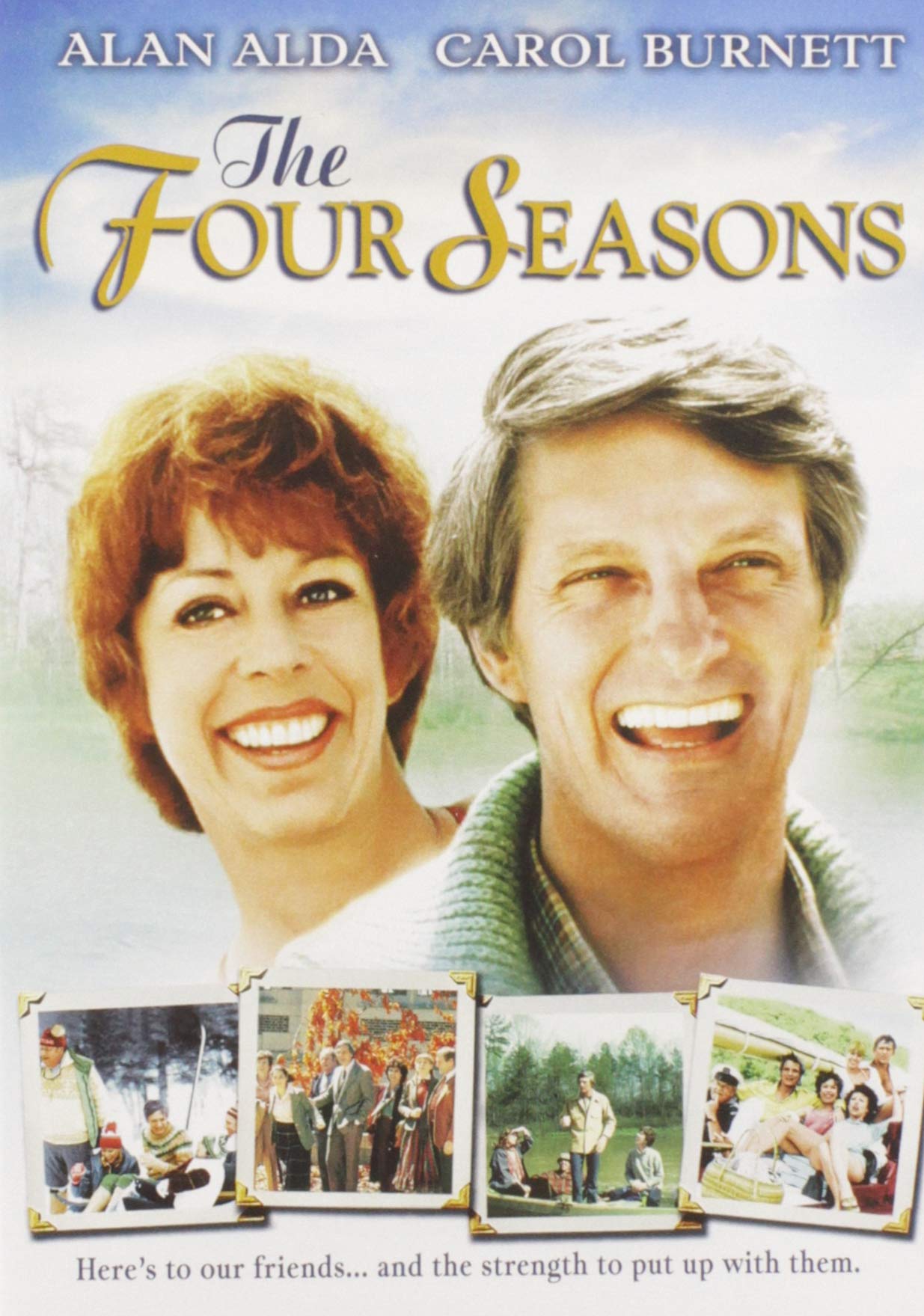
The hilarious classic movie starring Alan Alda and Carol Burnett is the 1981 romantic comedy-drama The Four Seasons. Written and directed by Alda, the film showcases the duo as Jack and Kate Burroughs, a long-married couple navigating the complexities of friendship, aging, and changing group dynamics across four seasonal vacations with their closest friends.
The collaboration between Alan Alda and Carol Burnett in The Four Seasons represents a landmark moment in 1980s cinema. By the time the film was released in May 1981, both actors were titans of the small screen—Alda for his era-defining role as Hawkeye Pierce on MASH* and Burnett for her legendary sketch comedy work on The Carol Burnett Show. Bringing them together as a married couple was a masterstroke of casting that capitalized on their shared background in sophisticated, character-driven comedy.
As we look back from the vantage point of 2026, the film’s exploration of middle-aged friendship remains as relevant as ever. It eschews the slapstick tropes often found in ensemble comedies, opting instead for a witty, observant, and occasionally stinging look at how people who have known each other for decades interact when the status quo is disrupted.
The Premise and Structure of The Four Seasons
The film is elegantly structured around four distinct trips taken by three upper-middle-class couples from Connecticut. These excursions correspond to the four seasons, providing a natural progression for both the calendar year and the emotional arcs of the characters.
The core group consists of:
- Jack and Kate Burroughs (Alan Alda and Carol Burnett)
- Danny and Claudia Zimmer (Jack Weston and Rita Moreno)
- Nick and Anne Callan (Len Cariou and Sandy Dennis)
The narrative engine kicks into gear during the first segment (Spring), where the group enjoys a peaceful trip to a country house. However, the equilibrium is shattered when Nick (Len Cariou) announces he is leaving his wife, Anne (Sandy Dennis), for a much younger woman, Ginny (Bessie Love). The subsequent seasons—Summer, Autumn, and Winter—deal with the fallout of this separation and the group’s struggle to integrate Nick’s new, younger partner into their established traditions.
The Significance of the Seasonal Format
Alda’s choice to use the four seasons is not merely aesthetic. It serves as a metaphor for the cycles of life and the "weathering" of long-term relationships. Each setting provides a different backdrop for conflict:
- Spring: Renewal and the shocking announcement of divorce.
- Summer: A sailing trip where the physical confined space of a boat forces the characters to confront their discomfort with Nick’s new girlfriend.
- Autumn: A trip to a university campus (to drop off a daughter) that highlights the characters' fears of aging and irrelevance.
- Winter: A skiing trip where physical limitations and long-simmering resentments finally boil over in a series of confrontations.
The Chemistry of Alan Alda and Carol Burnett
The primary draw for many viewers remains the "hilarious classic duo" of Alda and Burnett. While they are supported by a formidable ensemble, their relationship serves as the emotional anchor of the film.
Intellectual and Comedic Parity
What makes the Alda-Burnett pairing so effective is the sense of intellectual equality. Jack Burroughs (Alda) is portrayed as a somewhat neurotic, highly articulate lawyer who feels a constant need to "fix" or analyze his friends. Kate Burroughs (Burnett) is his perfect foil—equally sharp-witted but often more grounded and weary of Jack’s incessant moralizing.
Their comedy doesn't come from "bits," but from the lived-in familiarity of a couple that has been together for twenty years. They finish each other's sentences, know exactly which buttons to push, and exhibit a shorthand that only comes with decades of shared history. Burnett, in particular, delivers a nuanced performance that balances her innate comedic timing with a poignant sense of loyalty to her discarded friend, Anne.
Breaking the Sitcom Mold
In 1981, audiences might have expected a broader comedic style given the leads' backgrounds. However, Alda’s script leans into "dramedy" before the term was widely used. The humor is often derived from discomfort—such as the awkwardness of trying to be polite to a new person (Ginny) while mourning the absence of a long-time friend. This tonal balance is a testament to the versatility of both Alda and Burnett, who prove they can handle heavy emotional lifting just as easily as a well-timed quip.
Cast and Character Breakdown
To understand why The Four Seasons works as a "classic duo" vehicle, one must look at how the central couple interacts with the broader ensemble. The chemistry of the entire cast was so strong that it earned multiple Golden Globe nominations, including Best Motion Picture – Comedy or Musical.
| Character | Actor | Role/Personality | Key Conflict |
|---|---|---|---|
| Jack Burroughs | Alan Alda | Successful Lawyer; Group "Leader" | Over-analyzing friendships; Fear of change. |
| Kate Burroughs | Carol Burnett | Editor; Grounded & Sarcastic | Balancing loyalty to Anne with Nick's presence. |
| Danny Zimmer | Jack Weston | Dentist; Hypochondriac | Obsession with health and aging; Fear of death. |
| Claudia Zimmer | Rita Moreno | Intense Painter/Artist | Frustration with Danny's neuroses. |
| Nick Callan | Len Cariou | Insurance Executive | Mid-life crisis; Leaving the group's "norm." |
| Anne Callan | Sandy Dennis | Photographer (Obsessed with birds) | Being the "odd one out" after the divorce. |
| Ginny Newley | Bess Armstrong | Nick's young new wife | Trying to fit into a group with 20 years of history. |
Production and Directorial Style
The Four Seasons marked Alan Alda’s second outing as a film director (following 1979’s The Seduction of Joe Tynan), and it solidified his reputation as a filmmaker interested in the "middle-class condition."
Use of Vivaldi’s Score
The film is famously scored with Antonio Vivaldi’s violin concerti, also titled The Four Seasons. This choice was deliberate, providing a sophisticated, rhythmic backdrop that elevated the mundane domestic disputes into something more universal. The music acts as a bridge between the seasons, smoothing the transitions and reinforcing the theme of the inevitable passage of time.
Filming Locations
The production utilized various East Coast locations to authentically capture the seasonal shifts. From the lush greenery of the Connecticut countryside to the harsh winter snow of Vermont, the environments play a character-like role in the story. The summer segment, filmed in the Virgin Islands, provides a stark contrast to the domestic settings, highlighting the characters' "out of water" status as they navigate both a literal boat and the metaphorical waves caused by Nick's new marriage.
Why the Film is Considered a "Classic" in 2026
Forty-five years after its debut, The Four Seasons is frequently cited in retrospectives of ensemble filmmaking. It served as a precursor to modern "friendship" movies and series like The Big Chill (1983) or even contemporary streaming dramas that focus on the intricacies of adult life.
Relatability of the "New Person" Syndrome
One of the film’s most enduring elements is its depiction of how a tight-knit social circle reacts to a "replacement." When Nick brings Ginny into the fold, the group's reaction is a mix of forced politeness, jealousy (on behalf of Anne), and the realization that their group dynamic has permanently shifted. This is a situation many viewers have faced, and Alda writes the ensuing awkwardness with painful accuracy.
Addressing Male Vulnerability
While Burnett provides the heart of the film, Alda uses his character and Jack Weston’s Danny to explore male anxiety. In the 1980s, it was relatively rare for mainstream comedies to feature men discussing their fear of death, their health obsessions, or their feelings of inadequacy in such a direct (if humorous) way. The "hilarious" nature of the duo often stems from Jack and Kate’s attempts to manage these male egos.
Critical and Commercial Success
Upon its release, The Four Seasons was a major success for Universal Pictures. It grossed over $42 million in the United States—a significant sum for a character-driven comedy in 1981. Critics praised the screenplay's wit and the performances of the lead duo.
- Golden Globe Nominations: The film received four nominations, including Best Motion Picture – Comedy or Musical, Best Screenplay, Best Actor (Alda), and Best Actress (Burnett).
- Cultural Impact: The film’s success was so pronounced that it inspired a short-lived television series of the same name in 1984, though the original film cast did not return for the series.
- Longevity: It remains a staple on classic movie channels and streaming platforms dedicated to 20th-century cinema.
Viewing The Four Seasons Today
As of 2026, The Four Seasons is widely available for audiences looking to revisit this classic pairing. For those researching the film, it is essential to distinguish it from the 1984 TV series or other films with similar titles.
- Streaming: The film is frequently available on platforms such as Amazon Prime Video, Apple TV, and the Criterion Channel (periodically).
- Physical Media: A high-definition Blu-ray release by Kino Lorber has preserved the film’s cinematography, making it the preferred method for cinephiles to experience the vibrant seasonal transitions.
- Target Audience: It is highly recommended for fans of MASH*, The Carol Burnett Show, or anyone who enjoys "walk and talk" style comedies that prioritize dialogue over spectacle.
How to Find This Movie
When searching for this film, ensure you use the full title: The Four Seasons (1981). This helps avoid confusion with the Vivaldi concertos or various documentaries. If you are specifically looking for the Alda/Burnett chemistry, this is the only feature-length film where they star together as the primary romantic leads.
Is there a sequel or remake?
While there was a 1984 TV series, there has never been a formal sequel or a modern remake. The original film is considered a self-contained story that captures a specific cultural moment in the early 1980s.
What other movies did Alan Alda and Carol Burnett do together?
Surprisingly, The Four Seasons is their only major film collaboration as a duo. However, their careers overlapped significantly in television. Carol Burnett appeared as a guest star in the MASH* episode "The Joker is Wild," and Alan Alda made several appearances on variety specials alongside Burnett. Their professional respect for one another is well-documented in their respective memoirs.
Is the movie suitable for all ages?
The film is rated PG. While it deals with adult themes such as divorce, infidelity, and mid-life crises, it does so through dialogue rather than graphic content. It is most appreciated by adult audiences who can relate to the complexities of long-term friendship.
Why is the movie called a "hilarious classic"?
The "hilarious" label comes from the sharp, rhythmic banter that Alan Alda wrote specifically for himself and Burnett. The "classic" status stems from the film’s influence on the ensemble comedy genre and its enduring popularity among fans of 80s cinema.
Final Recommendation for Fans of the Duo
If you are looking for the definitive "Alan Alda and Carol Burnett movie," The Four Seasons is your destination. It is a rare example of a film that allows two comedic legends to play sophisticated, flawed, and deeply human characters without relying on the tropes of their famous television personas.
For the best experience, watch the film chronologically as intended—it is a journey through a year of friendship that will leave you reflecting on your own social circles. Whether it’s the scene of the group trying to cook an elaborate meal in a cramped kitchen or the climactic argument on a snowy Vermont slope, the film captures the "hilarious" and sometimes messy reality of being part of a "classic duo" and a lifelong group of friends.