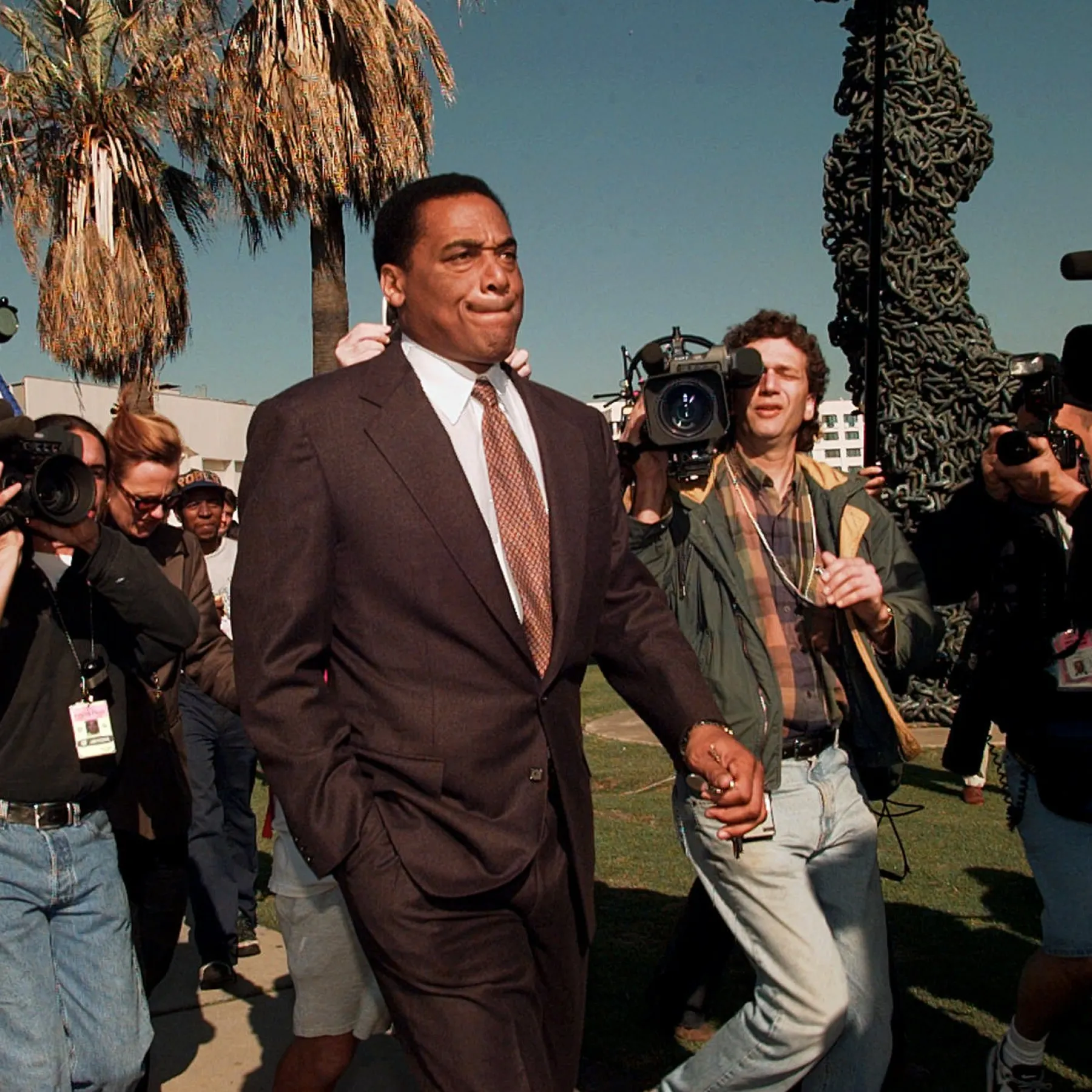
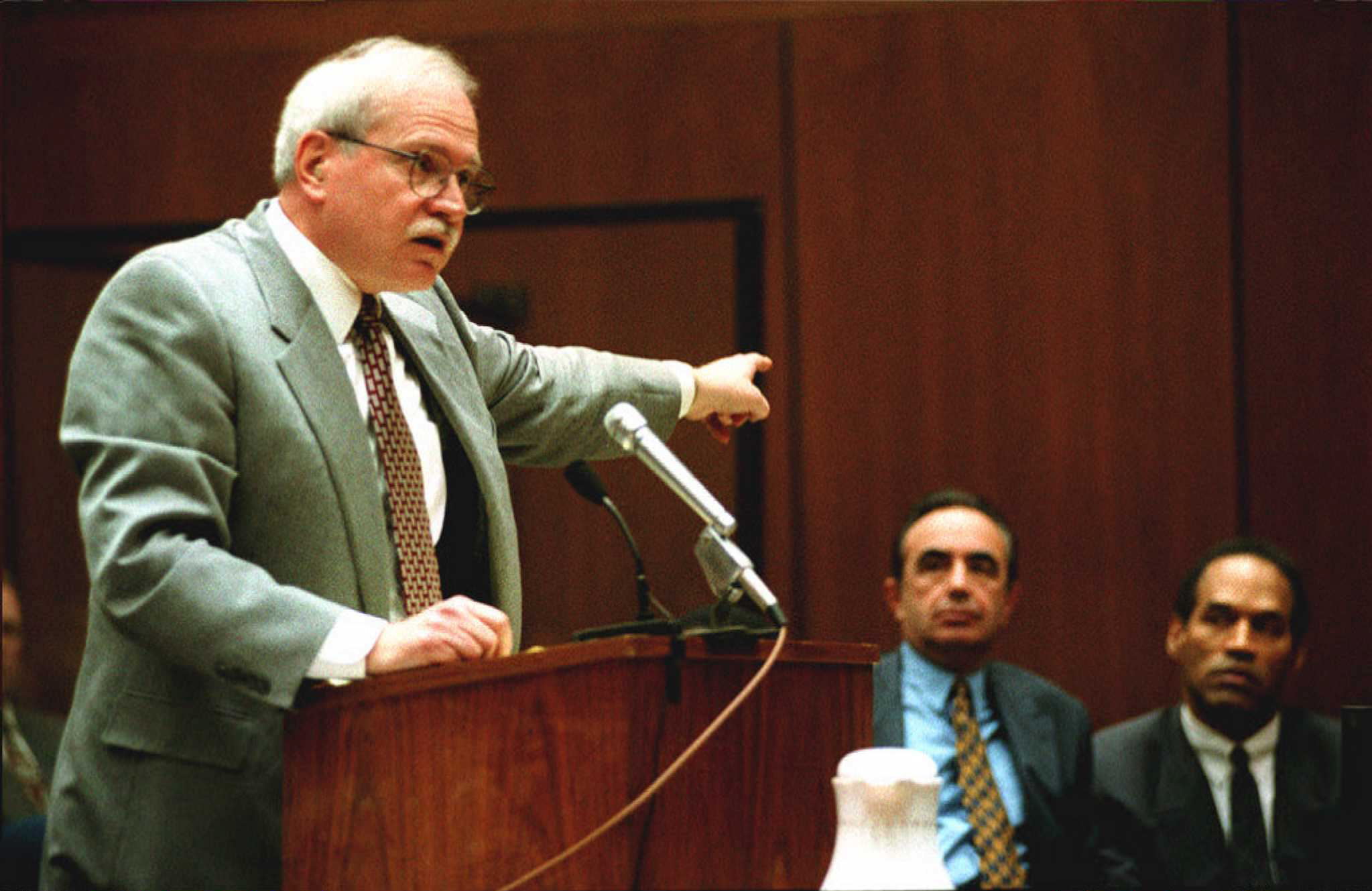
Al Cowlings is a former professional American football player who spent ten seasons in the NFL, though he is most widely recognized for his role as the driver of the white Ford Bronco during the televised low-speed police chase of O.J. Simpson in 1994. A lifelong friend and teammate of Simpson, Cowlings became an overnight household name during one of the most significant media events in American history.
The Early Life and Athletic Foundation of Al Cowlings
Born Allen Lafayette Cowlings on June 16, 1947, in San Francisco, California, Cowlings grew up in the same Potrero Hill neighborhood as O.J. Simpson. Their friendship began at the age of ten, forming a bond that would persist through high school, college, and professional sports. This relationship was foundational to Cowlings’ life, as the two were nearly inseparable for decades.
At Galileo High School, Cowlings and Simpson emerged as standout athletes. While Simpson was the explosive offensive star, Cowlings was the physically imposing force on the defensive line. Their synergy on the field led them both to City College of San Francisco and eventually to the University of Southern California (USC), where Cowlings became a central figure in one of the most celebrated defensive units in college football history.
At USC, Cowlings was a cornerstone of the 1969 "Wild Bunch" defensive line. Named after the popular Western film of the time, the Wild Bunch consisted of Cowlings, Jimmy Gunn, Charles Weaver, Tody Smith, and Willard Scott. This unit was known for its aggression and dominance, helping USC to an undefeated season and a Rose Bowl victory. Cowlings' performance at USC solidified his status as a top-tier professional prospect, leading to his selection as the fifth overall pick in the 1970 NFL Draft.
A Decade in the National Football League
While often overshadowed by his association with the 1994 car chase, Al Cowlings had a substantial and productive career in the National Football League (NFL). Spanning from 1970 to 1979, his career was characterized by his versatility as a defensive end and linebacker, as well as his reputation as a "locker room glue" guy who could help manage the egos of star players—most notably Simpson.
Cowlings began his professional journey with the Buffalo Bills, the same team that had drafted Simpson a year earlier. His arrival in Buffalo was seen by many as a strategic move to provide Simpson with a familiar support system. Cowlings played three seasons for the Bills before embarking on a journey that saw him move through several franchises:
| Year(s) | Team | Role/Context |
|---|---|---|
| 1970–1972 | Buffalo Bills | Drafted 5th overall; primary defensive starter. |
| 1973–1974 | Houston Oilers | Traded to Houston; maintained consistent defensive presence. |
| 1975 | Los Angeles Rams | Moved back to California; part of a veteran defensive rotation. |
| 1976 | Seattle Seahawks | Played during the franchise's inaugural season. |
| 1977 | Los Angeles Rams | Returned to the Rams for a second stint. |
| 1979 | San Francisco 49ers | Finished his career in his hometown alongside Simpson. |
Throughout his 129-game career, Cowlings was respected for his toughness and reliability. While he never achieved the individual accolades or Hall of Fame status of his close friend, he was a respected veteran who understood the intricacies of defensive schemes in an era defined by physical, ground-and-pound football. His retirement in 1979 marked the end of an era for the "duo" on the field, but their personal connection remained as strong as ever.
June 17, 1994: The Slow-Speed Chase That Defined an Era
The event that permanently altered Al Cowlings' public identity occurred on June 17, 1994. Following the murders of Nicole Brown Simpson and Ron Goldman, O.J. Simpson was ordered to surrender to the Los Angeles Police Department (LAPD). When he failed to do so, he was declared a fugitive.
Cowlings was the individual who drove Simpson in a white 1993 Ford Bronco through the freeways of Southern California. The 60-mile, low-speed pursuit lasted approximately two hours and was broadcast live to an estimated 95 million viewers. Cowlings’ role in this event was not merely as a driver but as a mediator and protector. During the chase, Cowlings famously called 911 from a cellular phone, telling the dispatcher, "My name is A.C. You know who I am, goddammit! Help me... O.J.'s got a gun to his head."
The tension of the chase was amplified by the fact that Cowlings refused to stop the vehicle until they reached Simpson’s Brentwood estate. He successfully navigated the gauntlet of police cruisers and media helicopters, ultimately facilitating a peaceful surrender. While the world saw a fugitive fleeing justice, Cowlings maintained that he was simply trying to save his best friend from committing suicide in the back seat of the vehicle.
Legal Consequences and the Decision Not to Prosecute
In the immediate aftermath of the Bronco chase, Al Cowlings was arrested and charged with a felony: aiding a fugitive. He was released on $250,000 bail. However, the legal trajectory for Cowlings differed significantly from that of Simpson.
In early 1995, District Attorney Gil Garcetti announced that his office would not pursue charges against Cowlings. Several factors influenced this decision:
- Lack of Intent: Prosecutors found it difficult to prove that Cowlings intended to help Simpson escape permanently. His actions—driving toward Simpson's home rather than a border or an airport—supported the defense that he was acting under duress and trying to prevent a suicide.
- Public Sentiment: At the time, Cowlings was viewed by many as a loyal friend caught in an impossible situation.
- Prioritization of Resources: The Los Angeles District Attorney's office was already overwhelmed by the "Trial of the Century." Pursuing a separate case against Cowlings was seen as a secondary priority that could potentially complicate the main murder trial.
Despite avoiding criminal prosecution, Cowlings was not entirely free from the legal fallout. He was called to testify in the 1996 civil trial brought by the families of Nicole Brown Simpson and Ron Goldman. During his deposition, Cowlings remained largely protective of Simpson, though he did admit to certain details regarding Simpson’s volatile relationship with Nicole.
Life After the Limelight: Privacy and the Post-Trial Years
Following the conclusion of the criminal and civil trials, Al Cowlings made a deliberate and successful effort to retreat from the public eye. Unlike many other figures associated with the trial—who wrote books, appeared on reality television, or pursued media careers—Cowlings remained steadfastly private.
Over the last three decades, Cowlings has reportedly worked in various capacities, including roles in sales, public relations, and as a representative for several brands. He has consistently declined high-paying offers for interviews and tell-all books, a rarity for someone involved in such a high-profile historical event. This silence has earned him a peculiar type of respect among observers who view his loyalty to Simpson—and his subsequent refusal to profit from the tragedy—as a mark of character, regardless of one's opinion on the trial itself.
As of 2026, Cowlings remains a reclusive figure. Friends and former teammates have occasionally noted that he resides in the Southern California area and remains in contact with a small circle of associates from his USC and NFL days. His choice to stay out of the media spotlight has allowed him to lead a relatively normal life, though his name remains inextricably linked to the white Ford Bronco.
Comparison of Professional and Public Perspectives
To understand Al Cowlings, one must differentiate between his athletic achievements and his role in the 1994 events.
| Category | Athletic Profile | Public/Media Profile |
|---|---|---|
| Primary Identity | Defensive Lineman / "Wild Bunch" Member | Driver of the White Ford Bronco |
| Peak Achievement | 5th Overall NFL Draft Pick (1970) | Facilitating Simpson's 1994 Surrender |
| Reputation | Loyal, tough, "The Protector" | Loyal, enigmatic, private |
| Media Engagement | Standard athlete interviews | Total media silence post-1995 |
| Legacy | Respected 10-year NFL veteran | Central figure in true crime history |
Why Al Cowlings Never "Cashed In"
One of the most frequent questions regarding Al Cowlings is why he never pursued a media career following the trial. In an era where "fifteen minutes of fame" is often leveraged into lifelong branding, Cowlings’ refusal to engage is notable. Analysts suggest three primary reasons for this:
- Genuine Trauma: The events of June 1994 were genuinely traumatic for Cowlings. He was a man watching his closest friend descend into a legal and personal abyss.
- Loyalty: Cowlings’ loyalty to O.J. Simpson was not a media stunt; it was a lifelong bond. Speaking out or "selling his story" would have been a betrayal of that friendship.
- Avoidance of Scrutiny: By remaining silent, Cowlings avoided the intense scrutiny and potential legal traps that come with public statements.
What was Al Cowlings' "Wild Bunch" at USC?
The "Wild Bunch" was the nickname for the 1969 USC Trojans' starting defensive line. It consisted of Al Cowlings, Jimmy Gunn, Charles Weaver, Tody Smith, and Willard Scott. They were renowned for their aggressive style of play and are considered one of the greatest defensive units in the history of college football.
Did Al Cowlings ever play in a Super Bowl?
No, Al Cowlings never played in a Super Bowl. While he had a productive ten-year career and played for successful teams like the Los Angeles Rams, his tenure did not coincide with a Super Bowl appearance for his respective franchises.
Was the white Ford Bronco actually owned by Al Cowlings?
Yes, the white 1993 Ford Bronco involved in the 1994 chase was owned by Al Cowlings. It was nearly identical to a Bronco owned by O.J. Simpson, which led to initial confusion during the police investigation. Cowlings' vehicle became a historical artifact and was later sold to collectors.
Is Al Cowlings still alive in 2026?
As of 2026, Al Cowlings is alive and living a private life in Southern California. He has maintained his distance from the media and continues to avoid public appearances related to the O.J. Simpson case.
Why wasn't Al Cowlings charged with a crime?
Prosecutors dropped charges against Cowlings because they believed it would be difficult to prove he had "criminal intent" to help a fugitive escape. Cowlings argued he was under duress and was attempting to prevent Simpson from harming himself, a narrative that was difficult for the prosecution to disprove given the circumstances.
Understanding the Enigma of Al Cowlings
To fully grasp the significance of Al Cowlings, one must look past the grainy footage of the 405 freeway and recognize the man as a complex figure defined by a singular, unwavering loyalty. His life is a study in the intersection of sports, celebrity, and tragedy. While he began his journey as an elite athlete with a promising future in the NFL, history chose a different path for him—one that placed him behind the wheel of a car during a moment that stood still for millions of people.
For those researching the 1994 trial or the history of USC football, Cowlings remains a figure of intense interest precisely because he has refused to explain himself. In a world of constant over-sharing, his silence is his final statement. His legacy is not just the chase, but the quiet decades that followed, proving that it is possible to live through a whirlwind of history and still maintain one's privacy.