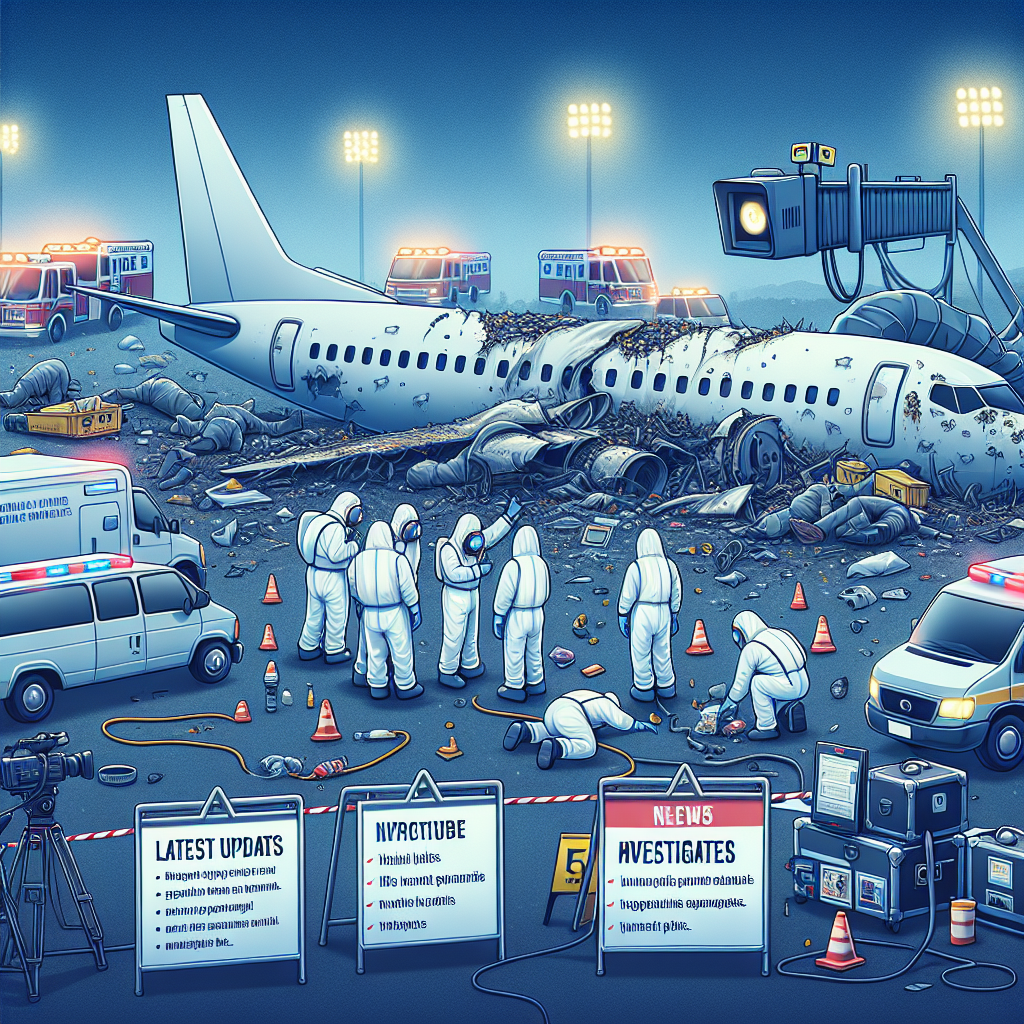
When aviation incidents occur near metropolitan centers like Columbia, South Carolina, federal and local safety authorities launch multi-layered inquiries to determine the sequence of mechanical, environmental, or human factors that contributed to the event. These comprehensive investigations involve examining wreckage distribution, analyzing air traffic control communications, reviewing maintenance logs, and interviewing witnesses to establish a definitive timeline and causal chain.
Understanding Aviation Incident Investigations in South Carolina
Aviation accidents occurring within South Carolina, including those in and around the Columbia metropolitan area, fall under the jurisdiction of federal oversight bodies. The primary agency responsible for investigating civil aviation accidents in the United States is the National Transportation Safety Board (NTSB). When a crash is reported, NTSB investigators deploy to the scene to document the wreckage, gather perishable evidence, and oversee the initial recovery phase.
Concurrently, the Federal Aviation Administration (FAA) participates as a party to the investigation, providing technical expertise regarding air traffic control radar data, pilot certifications, aircraft registration records, and communications logs. Local law enforcement agencies, such as the Richland County Sheriff's Department or the Columbia Police Department, secure the crash perimeter to preserve evidence and coordinate initial emergency response measures. Understanding this jurisdictional framework is essential for tracking official developments, as information is systematically released through standardized channels rather than speculative reports.
The Role of Federal Agencies in Columbia SC Air Crash Inquiries
The investigative process executed by the NTSB and FAA follows a standardized, highly methodical protocol designed to eliminate speculation and rely entirely on empirical evidence. This process is generally divided into three distinct phases: the initial on-scene investigation, the factual reporting phase, and the final analytical determination of probable cause.
During the initial on-scene phase, investigators map the wreckage field, recover electronic components such as avionics and engine monitoring units, and examine flight control surfaces. If the aircraft is equipped with a flight data recorder or cockpit voice recorder—more commonly found on commercial airliners and complex turbine aircraft rather than smaller general aviation planes—these units are transported to specialized federal laboratories for data extraction.
| Investigation Phase | Primary Responsible Agency | Key Activities and Objectives |
|---|---|---|
| On-Scene Response | NTSB & Local Law Enforcement | Wreckage documentation, site security, perishable evidence collection, and witness interviews. |
| Factual Gathering | NTSB, FAA, & Technical Advisors | Radar data analysis, maintenance record review, weather evaluation, and pilot background checks. |
| Probable Cause Determination | NTSB Board Members | Synthesis of all technical reports, safety recommendations issuance, and final public report publication. |
Following the field phase, specialists compile factual reports covering weather conditions at the time of the incident, the maintenance history of the airframe and powerplant, and the operational history of the pilot in command. These independent reports are added to the public docket as the investigation progresses toward its conclusion.
Environmental and Operational Factors Examined by Investigators
Determining why an aircraft went down requires analyzing multiple variables simultaneously. Investigators rarely attribute an aviation incident to a single isolated failure; instead, they look at how a chain of events or interacting factors led to the outcome. Key areas of technical evaluation include:
- Meteorological Conditions: Specialists analyze local weather reporting stations, radar imagery, and pilot weather briefings to determine if wind shear, low visibility, icing, or severe turbulence played a role.
- Mechanical and Powerplant Integrity: Engine teardowns, fuel sample testing, and structural inspections help determine whether a component failure, fuel starvation, or electrical fault occurred prior to impact.
- Human Performance: Investigators examine the pilot's training records, medical history, flight hours, and potential fatigue or spatial disorientation factors that could have influenced cockpit decision-making.
- Air Traffic Management: Communications transcripts and radar tracks are evaluated to verify whether instructions from air traffic controllers or separation standards contributed to the flight path.
Tracking Official Updates and Public Information Releases
For individuals seeking verified information regarding an airplane crash in Columbia, SC, navigating the volume of media reporting requires identifying authoritative sources. Early media reports often contain unverified witness accounts or speculative theories regarding the cause of the accident.
Official updates are published directly through the NTSB media relations portal and the FAA incident reporting database. Preliminary reports are typically issued within a few weeks of the incident, providing a basic factual summary of what is known at that stage. However, a comprehensive final report containing the definitive probable cause and any safety recommendations can take anywhere from 12 to 24 months to complete, given the rigorous scientific analysis required for complex aviation accidents.
Frequently Asked Questions Regarding Columbia SC Aviation Investigations
Who leads the investigation into airplane crashes in Columbia, South Carolina?
The National Transportation Safety Board (NTSB) leads civil aviation accident investigations in Columbia, SC, supported by the Federal Aviation Administration (FAA) and local emergency response agencies.
Where can I find official updates on a specific aviation incident?
Official updates, preliminary reports, and public dockets are published directly on the NTSB website under their aviation investigation database, as well as through official FAA press releases.
How long does it take for an aviation crash investigation to be completed?
While a preliminary report is usually released within 15 to 30 days of the incident, a comprehensive final investigation report detailing the exact probable cause typically takes between one and two years to finalize.
What is the difference between the NTSB and the FAA in an accident investigation?
The NTSB is an independent federal agency tasked specifically with determining the cause of transportation accidents and issuing safety recommendations, whereas the FAA is the regulatory body responsible for civil aviation safety standards, air traffic control, and enforcement.
Are flight data recorders recovered in all general aviation crashes?
No. Flight data recorders and cockpit voice recorders are generally mandated only for large commercial airliners and certain multi-engine turbine aircraft, meaning smaller general aviation planes rely on physical wreckage analysis and independent avionics logs.
Can local authorities release cause-of-accident findings?
No. Local police and sheriff departments are restricted to securing the scene and reporting initial life-safety data; determinations regarding the technical cause of an aviation accident are strictly the purview of federal aviation investigators.
Navigating Official Resources and Next Actions
For those directly impacted by an aviation incident or researchers tracking safety data, relying on substantiated documentation remains paramount. Stakeholders should monitor official federal releases rather than unverified social media channels or speculative news commentary. Reviewing historical NTSB safety recommendations can also provide deeper context into how localized investigations contribute to broader national aviation safety improvements.