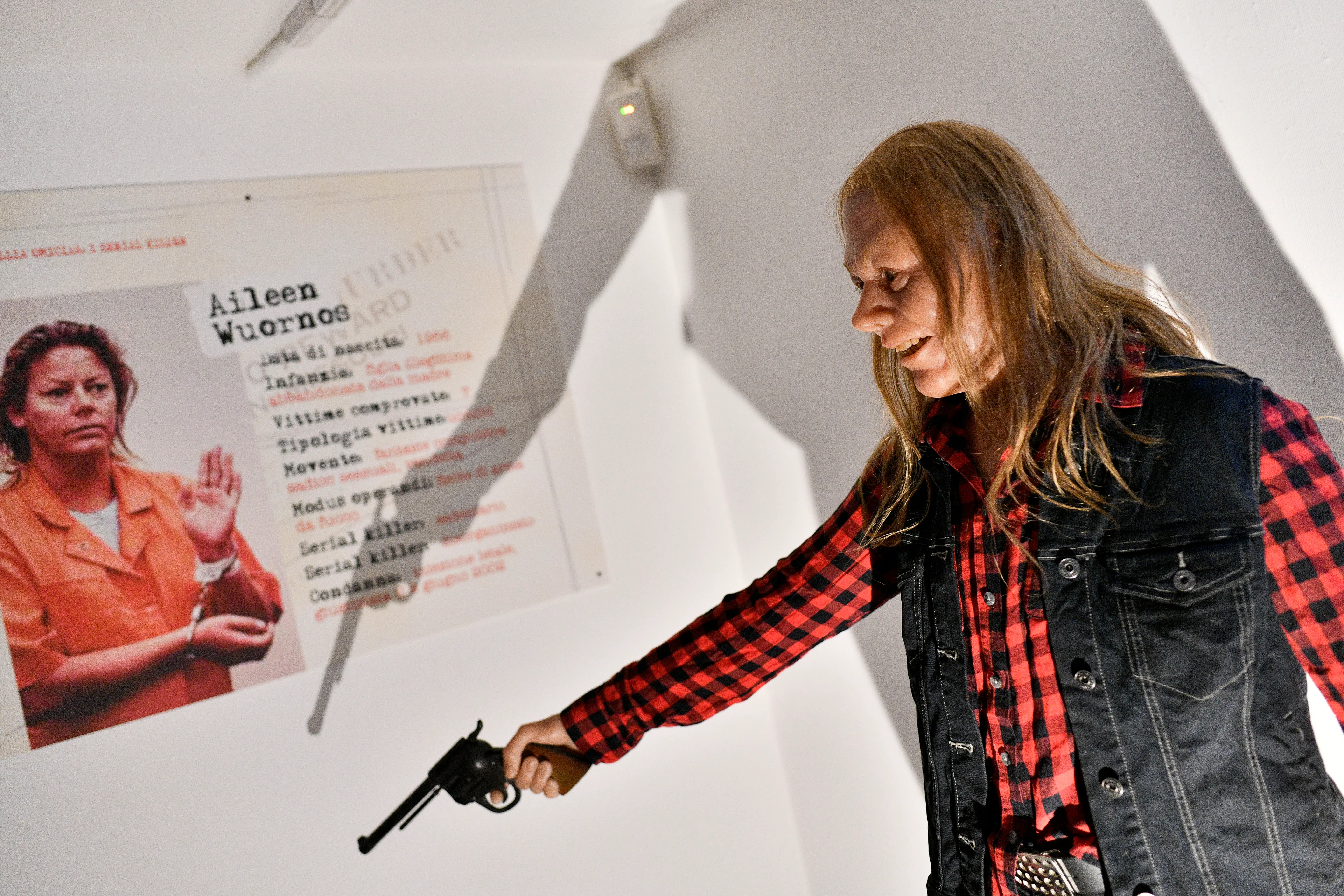
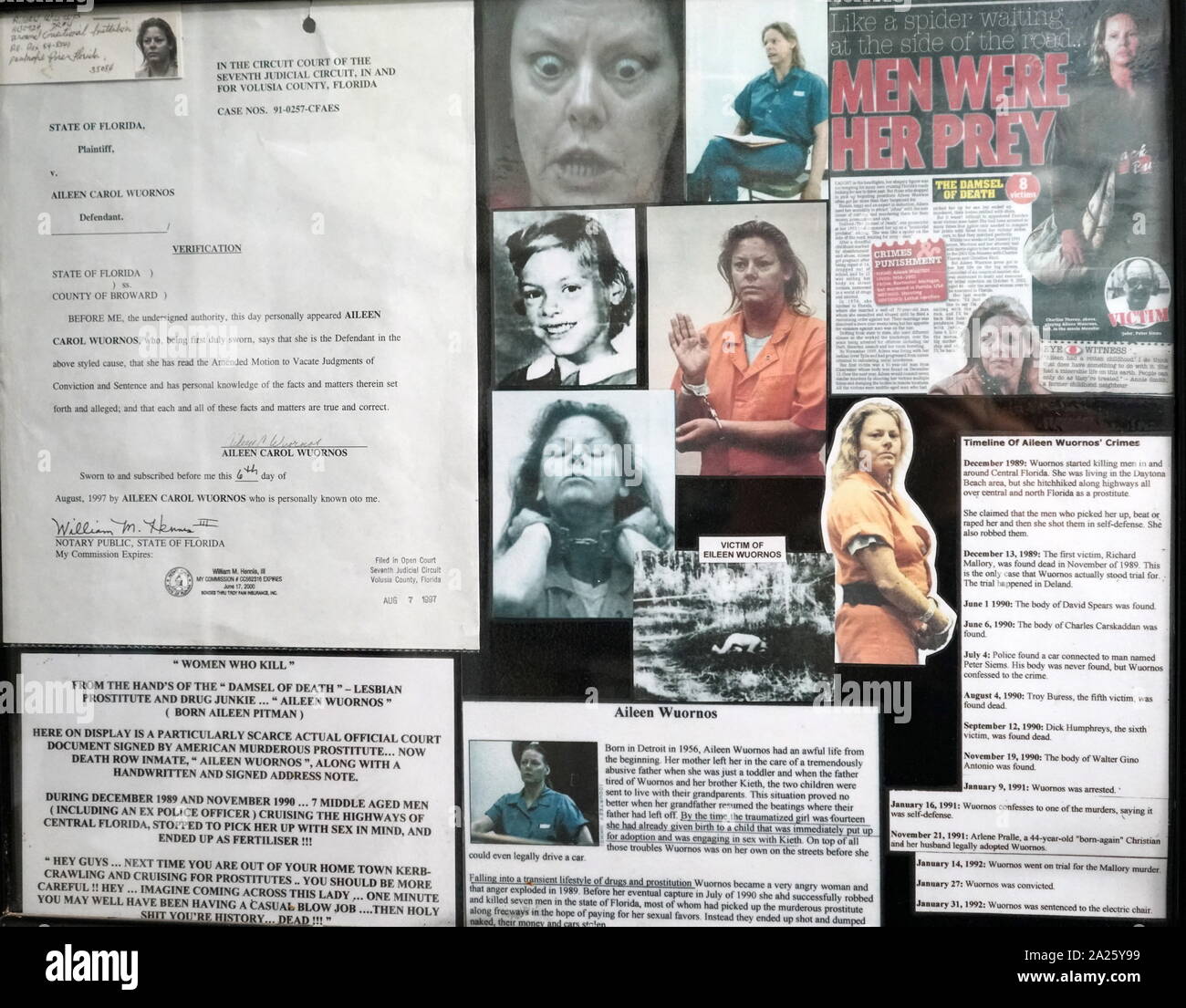
The relationship between Aileen Wuornos and Tyria Moore stands as a pivotal element in the investigation and subsequent conviction of Wuornos for the murders of seven men in Florida between 1989 and 1990. Moore, who served as Wuornos's romantic partner, became a critical witness for the prosecution, providing testimony that dismantled Wuornos's claims of self-defense. Their relationship is characterized by intense emotional dependency, documented domestic instability, and a series of events that ultimately led to Wuornos’s arrest.
The Origin and Nature of the Relationship
Aileen Wuornos and Tyria Moore first met in 1986 at a bar in Daytona Beach, Florida. At the time, Wuornos was living a transient lifestyle, frequently moving between motels and living out of her vehicle. Moore, a soft-spoken woman who worked at a local motel, became a focal point of stability for Wuornos, who had a history of abandonment and trauma.
Historical accounts and court transcripts suggest that the relationship was marked by volatility. Wuornos often exhibited possessive and volatile behavior, while Moore struggled with a lack of financial independence. Despite these tensions, the two formed a co-dependent bond. For Wuornos, Moore represented the only consistent emotional connection in her life at that time. For Moore, the relationship provided a sense of companionship, though it was later revealed during legal proceedings that Moore was increasingly alarmed by Wuornos’s erratic behavior as the murders progressed.
Chronology of Events and Escalation
The relationship existed concurrently with the string of homicides. As the police investigation into the murders of middle-aged men along Florida’s highways intensified, the pressure on the couple mounted. Law enforcement agencies were initially searching for a potential male serial killer, as the victims were found in various locations, often with their vehicles abandoned.
As the body count rose, investigators began to notice a pattern in the way the victims were approached. When police eventually circulated composite sketches and information regarding a female suspect, they received tips that pointed directly toward the pair. By the time authorities focused their attention on Wuornos, Moore had become a key target for interrogation. Moore was eventually apprehended by police, not as a suspect in the murders themselves, but as an associate who possessed vital information.
Tyria Moore’s Role as a Prosecution Witness
The transition of Tyria Moore from a partner to a prosecution witness was the turning point in the state’s case against Aileen Wuornos. Under intense questioning by the Volusia County Sheriff’s Office and the Florida Department of Law Enforcement, Moore agreed to cooperate with authorities.
The most significant aspect of this cooperation was the recorded phone conversations between Moore and Wuornos. In these calls, which were orchestrated by police, Moore successfully elicited confessions from Wuornos regarding the nature of the crimes. These tapes served as the cornerstone of the prosecution's argument, contradicting Wuornos's persistent claims that she had killed the men in self-defense after being assaulted. Moore testified that she was unaware of the murders until after they had occurred, maintaining that she was a reluctant participant in the aftermath rather than an accomplice in the acts themselves.
Distinguishing Fact from Media Portrayals
Because of the high-profile nature of the case, the relationship between Wuornos and Moore has been heavily dramatized in films, documentaries, and literature. It is essential to distinguish between these artistic interpretations and the verified legal record.
Key Differences Between Reality and Dramatization
- The Nature of Culpability: While media often emphasizes a "Bonnie and Clyde" dynamic, court documents confirm that Moore was never charged as an accomplice to murder. She was granted immunity in exchange for her testimony.
- The Circumstances of Separation: Dramatizations often depict a dramatic final confrontation. In verified reality, the relationship effectively ended when Moore moved back to her home state of Pennsylvania to distance herself from the criminal investigation.
- The Trigger for Confession: The confessions obtained by the state were a direct result of tactical police operations involving recorded phone lines, rather than an organic, unprompted revelation by Wuornos.
Comparative Overview of Relationship Dynamics
The following table outlines the contrast between the public perception of the pair and the evidence presented during the legal proceedings.
| Feature | Public/Media Portrayal | Verified Legal Record |
|---|---|---|
| Moore's Involvement | Frequently portrayed as an active accomplice. | Never charged with murder; acted as a witness. |
| The "Self-Defense" Claim | Often romanticized as a struggle for survival. | Rejected by the jury based on forensic and testimonial evidence. |
| End of Relationship | Often depicted as a tragic, final farewell. | Ended primarily due to police intervention and cooperation. |
| Motivation | Often speculative or psychoanalytic. | Driven by financial need and emotional instability. |
Legal Implications and Verdict
The testimony provided by Tyria Moore effectively nullified the defense's strategy. By testifying about the specific details of the victims' property and the sequence of events following the crimes, Moore corroborated the physical evidence found by law enforcement. This undermined the "prostitute-turned-victim" narrative that Wuornos attempted to project to the jury.
In 1992, Aileen Wuornos was convicted of first-degree murder in the death of Richard Mallory. She subsequently pleaded no contest to five other murders. Throughout the sentencing phase, the relationship with Moore was referenced not as an extenuating circumstance, but as context for the isolation and desperation that defined Wuornos’s life at the time of the crimes.
Frequently Asked Questions
Did Tyria Moore ever face criminal charges?
No, Tyria Moore was never charged with any of the seven murders. She was granted immunity by the state of Florida in exchange for her testimony against Aileen Wuornos. This decision was made by prosecutors who determined that her cooperation was essential to securing a conviction.
How did the police use Tyria Moore to capture Aileen Wuornos?
Police utilized Moore to record a series of telephone conversations with Wuornos. During these calls, Moore asked specific questions about the victims and the crimes, which led Wuornos to provide incriminating statements that were later used as evidence in court.
Was the relationship between the two women genuine?
Historical documentation and witness statements from the time suggest that the relationship was a significant, albeit dysfunctional, emotional bond for both women. However, during the investigation, Moore prioritized her own immunity and separation from the crimes, which led to the total cessation of their association.
Where is Tyria Moore today?
Since the conclusion of the trials in the early 1990s, Tyria Moore has lived a private life. She moved away from Florida and has consistently declined media interviews or public participation in projects related to the case. Her current whereabouts are not a matter of public record.
Why was Moore’s testimony so important to the prosecution?
Moore’s testimony was critical because it provided the "insider" perspective the prosecution needed to dismantle Wuornos’s self-defense claims. By testifying that she was not present during the killings and that she disapproved of the actions, she framed Wuornos as a solitary perpetrator acting with premeditation.
Guidance for Further Research
For those seeking to understand the legal intricacies of this case beyond the relationship narrative, the primary documents are the most reliable source of information. Researchers should consult the official transcripts from the Volusia County and Marion County court proceedings. The Florida Department of Law Enforcement (FDLE) archives and contemporary news reports from the Orlando Sentinel provide accurate accounts of the investigation as it unfolded between 1989 and 1992. When evaluating documentaries or secondary literature, verify that the claims are substantiated by these primary court records rather than anecdotal storytelling.