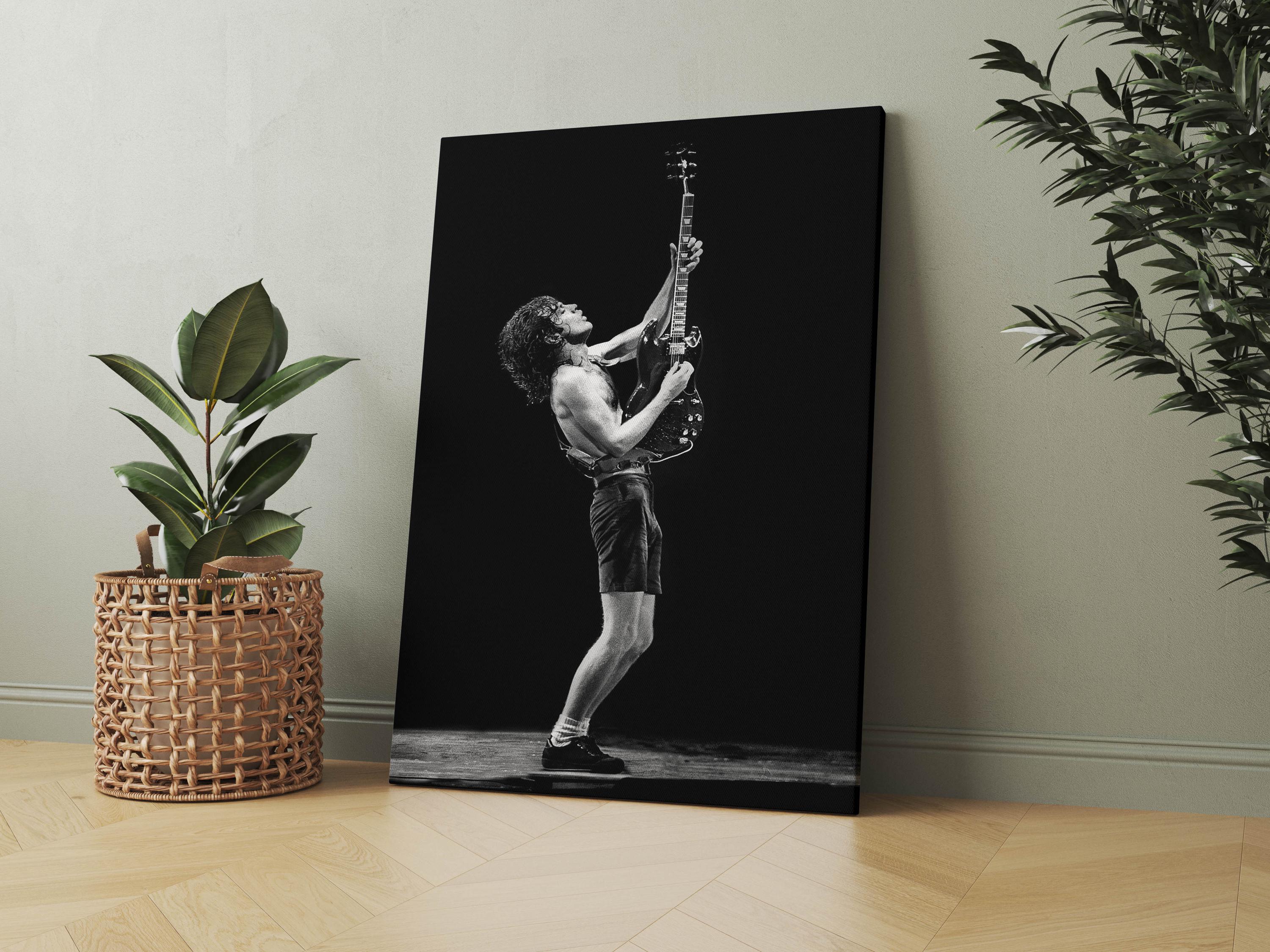
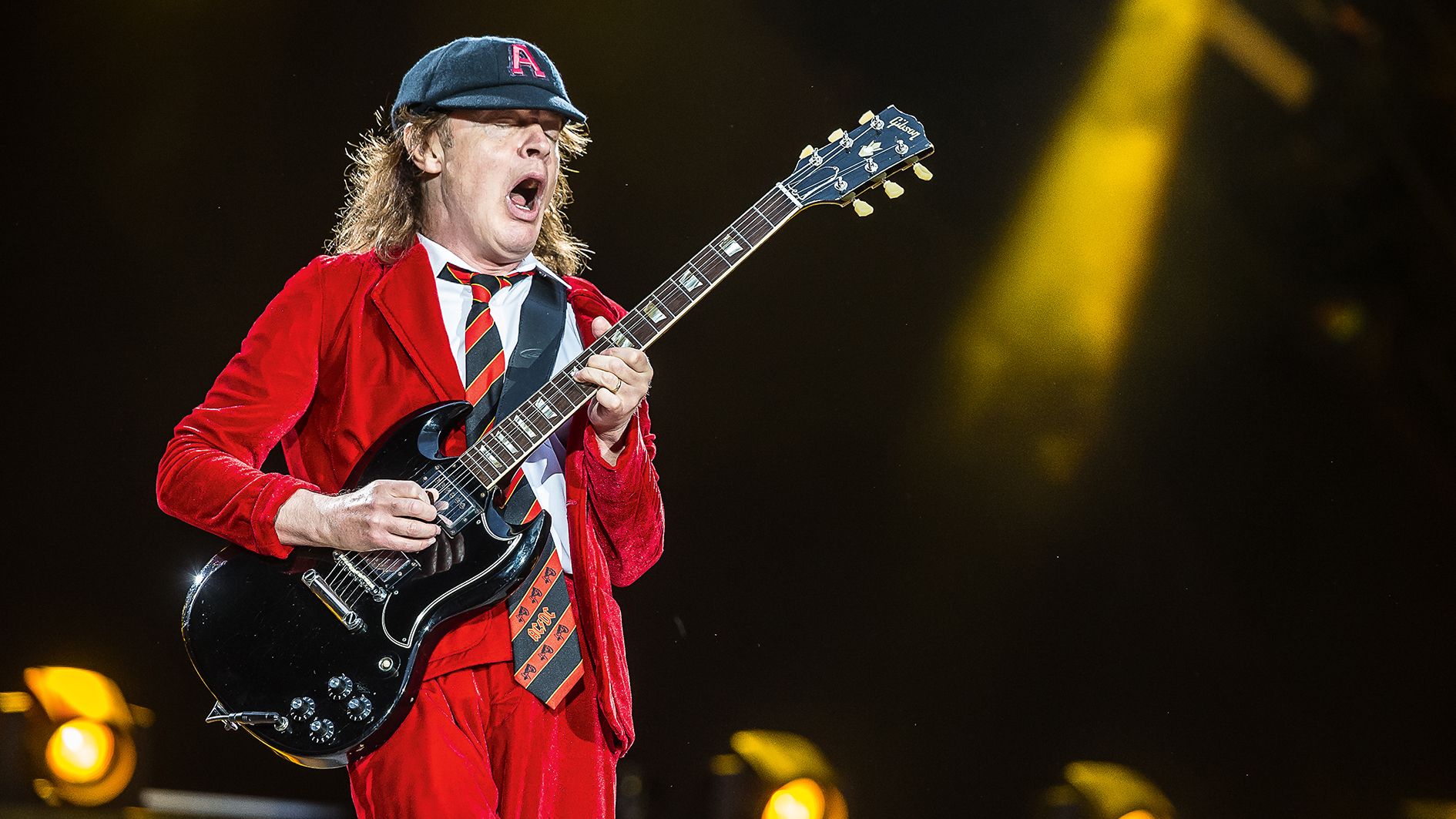
Angus Young stands as the electrifying heartbeat of AC/DC, defining hard rock through his hyperactive schoolboy uniform, relentless stage presence, and blues-infused guitar mastery. His enduring legacy rests on a foundational style that bridges gritty rhythm and blistering lead work, built on vintage Gibson SGs and cranked Marshall stacks.
The enduring fascination with the age of Angus Young highlights a fascinating paradox in rock and roll history: while his birth year of 1955 places him firmly among rock's senior statesmen, his physical energy and unmistakable performance persona remain virtually unchanged since the 1970s. Rather than fading into nostalgia, his career serves as a masterclass in staying true to a singular, high-octane artistic vision. Understanding his journey requires examining how his signature uniform, relentless work ethic, and timeless approach to the guitar shaped the landscape of modern music.
The Genesis of an Icon: Early Influences and the Birth of AC/DC
Born in Glasgow, Scotland, in 1955 before emigrating to Sydney, Australia, with his family, Angus Young grew up surrounded by musical siblings. His older brother Malcolm Young became his rhythm-playing counterpart and co-founder of AC/DC in Sydney during 1973. From the outset, the band rejected the progressive wandering of 1970s rock in favor of a stripped-down, high-energy rhythm and blues format.
Angus experimented with various stage costumes—including Superman, Zorro, and a gorilla suit—before his sister Margaret suggested he wear his school uniform. This visual anchor instantly set him apart in a crowded hard rock landscape. More importantly, it created a striking contrast with his hyperactive, duck-walking physical performance. While his physical age advanced through the decades, the uniform preserved a sense of rebellious, eternal youth, anchoring AC/DC's timeless visual identity.
Uncompromising Tone: The Gear and Mechanics of Angus Young's Sound
The sonic architecture of AC/DC relies less on complex effects pedals and more on the dynamic interaction between a Gibson SG and a heavily driven Marshall amplifier. Angus Young discovered early in his career that midrange clarity and natural tube saturation were far more effective for hard rock than muddy distortion or excessive compression.
The Gibson SG Standard
The primary instrument associated with Angus Young is the Gibson SG, prized for its lightweight mahogany body, dual humbucking pickups, and effortless upper-fret access. His preferred models typically feature 1960s-style neck profiles and custom pickups designed to replicate vintage PAF tones. The physical design of the SG allows Angus to leap, run, and thrash across the stage without enduring the heavy weight of a traditional Les Paul.
Amplification and Signal Chain
Rather than utilizing modern multi-channel switching systems, Angus plugs straight into vintage or vintage-spec Marshall amplifiers, pushing the power tubes to their natural breaking point. This straightforward signal chain ensures that every nuance of his pick attack and finger vibrato translates directly to the speaker cabinet.
| Equipment Category | Primary Choice | Secondary Option / Specification | Role in Tone |
|---|---|---|---|
| Electric Guitar | Gibson SG Standard | Custom Shop Angus Young Signature | Provides bright midrange bite and lightweight stage mobility. |
| Pickups | Vintage PAF Humbuckers | Alnico II or V Magnets | Delivers harmonic richness without excessive output muddying the signal. |
| Amplification | Marshall JTM45 / Super Lead | 100-watt Non-Master Volume Heads | Generates natural power-tube distortion when cranked to maximum volume. |
| Cabinet | Marshall 4x12 Slant Cabs | Celestion G12M Greenback Speakers | Projects high-end cut and tight low-end punch across large arenas. |
Guitar Wisdom: The Pentatonic Masterclass
Angus Young's guitar solos are rarely studied for neoclassical complexity or sweeping arpeggios; instead, they are revered for their ferocious execution, phrasing, and deep roots in the blues pentatonic scale. He approaches the fretboard with a singer's mentality, building tension through sustained notes, aggressive double-stops, and rapid-fire hammer-ons and pull-offs.
A central pillar of his guitar wisdom is the understanding that space and rhythm are just as important as speed. Even during his most frenetic solos, such as the iconic breaks in "Back in Black" or "Highway to Hell," every note sits firmly inside the pocket of Malcolm Young’s ironclad rhythm guitar. Angus utilizes the minor pentatonic scale infused with blues-note flatted fifths, proving that melodic directness and attitude consistently outperform technical exhibitionism in rock and roll.
Maintaining Ageless Energy on the Global Stage
Sustaining a multi-decade career characterized by relentless physical exertion requires exceptional discipline and stamina. While many rock musicians transition to seated performances or scaled-down stage setups as they age, Angus Young has maintained a punishing physical routine during live performances well into his later years.
This longevity stems from a combination of natural adrenaline, rigorous touring conditioning, and an absolute dedication to his craft. He treats every performance as though it were his last, channeling the raw aggression of his teenage years into stadiums worldwide. His ability to command arenas alongside newer generations of musicians proves that rock and roll power is defined by intensity rather than chronology.
How Angus Young Infuses Blues Into Arena Rock
The secret weapon behind AC/DC's mass appeal is their foundational reliance on American blues traditions, filtered through British invasion rock and accelerated to heavy metal tempos. While many hard rock bands of the late 1970s and 1980s drifted toward synthesizer-heavy pop or self-indulgent shredding, Angus kept his playing firmly anchored to the style of blues originators like Chuck Berry, B.B. King, and Muddy Waters.
By taking the syncopated rhythm and call-and-response phrasing of the blues and running it through high-gain amplification, Angus created a universally understood sonic language. This stylistic consistency is why tracks recorded decades ago sound just as vital on modern rock radio. It demonstrates that mastering the fundamentals of rhythm and blues provides an artist with an unshakeable career foundation.
Common Misconceptions About AC/DC's Musical Evolution
Casual observers often claim that AC/DC has "played the same song for fifty years." However, musicologists and dedicated fans recognize this consistency as a deliberate artistic choice rather than a limitation. The band refined a specific formula—combining driving eighth-note basslines, locked-in rhythm guitars, and soaring blues-based lead breaks—and perfected it across multiple eras, surviving the tragic loss of original frontman Bon Scott and the retirement of Malcolm Young.
Angus Young's role in this endurance cannot be overstated. As the sole remaining founding member active on stage, he acts as the custodian of the band's musical heritage, ensuring that new studio recordings and live performances adhere strictly to the high-voltage rock and roll blueprint established in the 1970s.
Applying Angus Young's Philosophy to Modern Guitar Playing
Musicians looking to incorporate the wisdom of Angus Young into their own playing should focus on core fundamentals rather than gear acquisition.
- Master the Groove: Practice playing scales and riffs alongside a metronome or backing track, focusing entirely on timing and pocket rather than maximum speed.
- Embrace Dynamic Picking: Learn to control distortion levels using your guitar's volume knob and your right-hand pick attack, moving smoothly from a clean blues chime to overdriven roar.
- Prioritize Melody Over Speed: Construct guitar solos that tell a story, utilizing vocal-like bends and rhythmic pauses to create emotional peaks and valleys.
- Keep Equipment Simple: Avoid over-relying on digital modelers or complex pedalboards; focus instead on dialing in a great guitar-into-amplifier tone.
Frequently Asked Questions About Angus Young
What guitar does Angus Young play?
Angus Young primarily plays the Gibson SG Standard. Throughout his career, he has favored various vintage models from the 1960s alongside his signature Gibson Custom Shop models, which feature lightweight mahogany construction and custom-voiced humbucking pickups designed to match his classic tone.
How does Angus Young achieve his signature guitar tone?
His tone is achieved by plugging a Gibson SG directly into a non-master volume Marshall amplifier—such as a JTM45, Super Lead, or JMP—and turning the amplifier volume up to maximize power-tube distortion. This straightforward signal chain relies on natural tube saturation rather than overdrive pedals.
Is Angus Young the only original member left in AC/DC?
Angus Young is the sole remaining founding member of AC/DC following the death of his brother Malcolm Young in 2017 and the departure or passing of other early lineup members. However, long-time singer Brian Johnson and other key contributors have frequently rejoined the touring lineup.
What is the origin of Angus Young's schoolboy uniform?
His sister Margaret suggested the schoolboy outfit early in the band's career as a memorable visual gimmick. It quickly became his permanent trademark, creating a striking contrast with his high-energy stage antics and helping to anchor AC/DC's iconic visual branding.
What musical scale does Angus Young use most often in his solos?
Angus relies heavily on the minor pentatonic scale combined with blues notes (such as the flatted fifth). His style draws direct inspiration from early blues and rock and roll pioneers like Chuck Berry, prioritizing rhythmic phrasing, string bends, and attitude over complex modal theory.
Next Steps for Aspiring Rock Guitarists
To fully internalize the approach of rock's most enduring schoolboy, pick up an electric guitar, plug directly into a cranked tube amplifier or amp simulator, and strip away unnecessary effects. Focus heavily on timing, right-hand picking strength, and phrasing. By studying the blues foundations that shaped Angus Young, guitarists can build a timeless, aggressive style that transcends passing musical trends and stands the test of time.