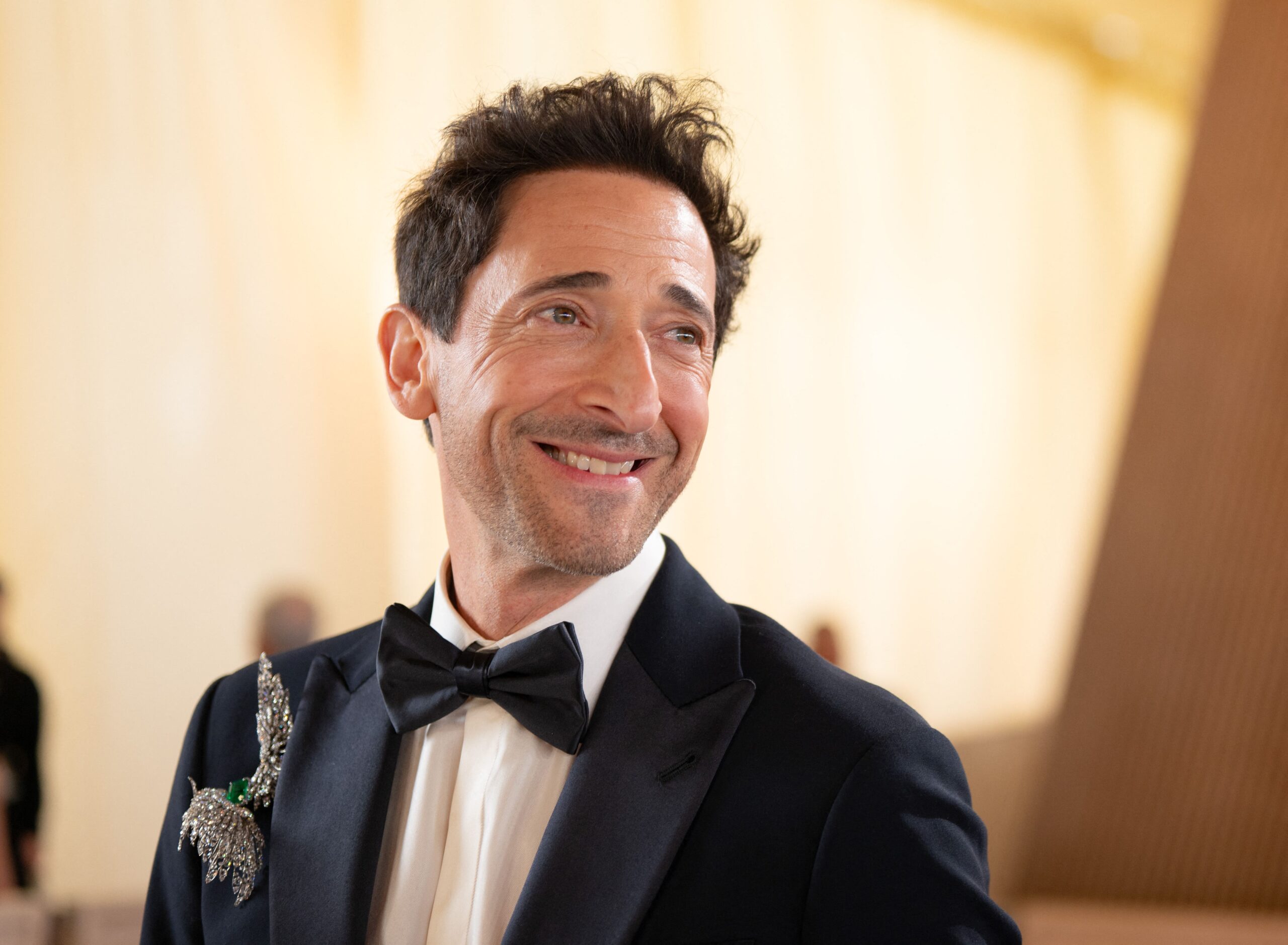
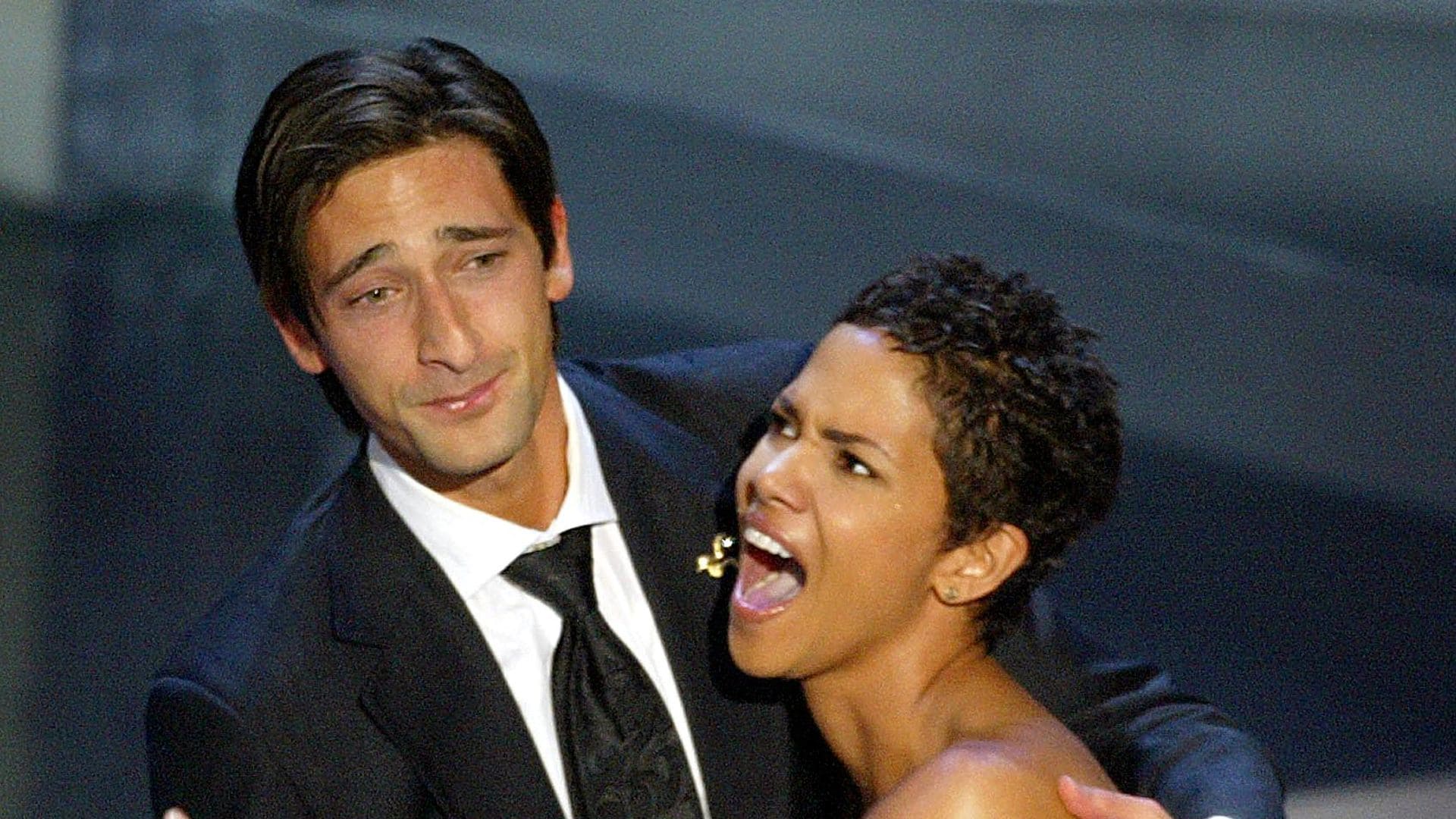
At the 75th Academy Awards in 2003, Adrien Brody created one of the most indelible images in television history when he celebrated his Best Actor win by passionately kissing presenter Halle Berry. This unscripted moment, occurring just as the Iraq War had begun, remains a polarizing benchmark for awards show spontaneity, sparking decades of debate regarding consent, celebrity culture, and the "anything can happen" nature of live broadcasts.
The Context of the 75th Academy Awards
To understand why Adrien Brody’s kiss with Halle Berry resonated so deeply, one must look at the atmosphere of the 2003 Oscars. The ceremony took place on March 23, 2003, at the Kodak Theatre (now the Dolby Theatre) in Hollywood. This was a somber time; the United States had invaded Iraq only four days prior. The red carpet—usually a place of high-fashion frivolity—was significantly scaled back out of respect for the conflict, and many attendees wore pins or used their speeches to address the geopolitical situation.
Adrien Brody entered the night as a respected but underdog nominee for his role as Władysław Szpilman in Roman Polanski’s The Pianist. At just 29 years old, he was the youngest nominee in a category stacked with industry titans:
- Daniel Day-Lewis for Gangs of New York (the heavy favorite)
- Jack Nicholson for About Schmidt
- Nicolas Cage for Adaptation
- Michael Caine for The Quiet American
When Halle Berry, who had won the Best Actress Oscar the previous year for Monster's Ball, opened the envelope and announced Brody's name, the shock was palpable. Brody became—and remains as of 2026—the youngest man ever to win the Academy Award for Best Actor.
The Anatomy of the Moment
As Brody took the stage, the adrenaline of his historic win appeared to take over. Rather than simply accepting the statuette, he pulled Halle Berry into a deep, sweeping dip and kissed her for several seconds. The audience, which included Hollywood royalty like Meryl Streep and Martin Scorsese, responded with a mixture of gasps, cheers, and a standing ovation.
The Visual Impact
The image was broadcast to millions of viewers worldwide. Brody, dressed in a sleek black tuxedo, and Berry, in a stunning gold-embroidered gown by Elie Saab, looked like a scene from a classic Hollywood romance. However, the spontaneity of the act was immediately clear. Berry’s feet were nearly off the ground, and her hands were raised in a gesture that many later interpreted as surprise or mild resistance, though she maintained a professional smile immediately following the release.
The Immediate Aftermath
After the kiss, Brody famously whispered something to Berry before turning to the microphone. His first words to the crowd were, "I bet they didn't tell you that was in the gift bag." The line successfully broke the tension, allowing him to transition into one of the most emotional and politically charged speeches of the night. He spoke about the horrors of war and the fragility of life, drawing parallels between the story of The Pianist and the contemporary conflict in the Middle East.
The Evolution of the Narrative: 2003 vs. 2026
The way the public and the industry perceive "The Kiss" has undergone a massive shift over the last 23 years. In 2003, the moment was largely framed as a "rock star move"—a display of youthful exuberance and masculine triumph. It was replayed in highlight reels for years as a symbol of the Oscars' unpredictability.
However, as cultural standards regarding physical boundaries and consent evolved, particularly through the late 2010s and early 2020s, the moment was re-examined through a more critical lens. By 2026, the discourse around the event has solidified into a complex case study of celebrity privilege and the lack of agency often afforded to women in professional spaces.
Halle Berry’s Perspective
For years, Berry remained relatively quiet or diplomatic about the incident. However, in later interviews, most notably with Andy Cohen on Watch What Happens Live, she clarified that the kiss was completely unplanned. She noted that her primary thought at the moment was, "What the f*** is happening?" She explained that she went along with it because she was caught off guard and didn't want to ruin his moment, but confirmed there was no prior agreement or relationship that would have prompted such an act.
The Modern Critique
In the context of the 2026 entertainment industry, an unscripted, non-consensual kiss on a live broadcast would likely result in immediate professional repercussions. Critics argue that Brody’s actions, while perhaps not malicious in intent, ignored Berry's autonomy. The "shocking" nature of the moment now carries a different weight, representing a bygone era of Hollywood where the personal boundaries of women were often sacrificed for the sake of "good television."
Comparing Iconic Oscar "Shock" Moments
To understand where the Brody-Berry kiss sits in the pantheon of awards show history, it is helpful to compare it with other high-profile disruptions. While the kiss was a moment of unexpected "celebration," other events have been defined by error or aggression.
| Event Year | Primary Figures | Type of "Shock" | Cultural Impact |
|---|---|---|---|
| 1974 | Robert Opel & David Niven | The "Streaker" | A symbol of 70s counter-culture and Niven's wit. |
| 2003 | Adrien Brody & Halle Berry | The Unscripted Kiss | Sparked long-term debates on consent and spontaneity. |
| 2017 | Faye Dunaway & Warren Beatty | The La La Land/Moonlight Mix-up | The greatest logistical failure in Oscar history. |
| 2022 | Will Smith & Chris Rock | The Slap | Shifted the conversation toward stage safety and violence. |
| 2024 | John Cena | The "Naked" Presenter | A scripted homage to the 1974 streaker; high viral value. |
The Impact on Adrien Brody’s Career
Despite the controversy that would eventually bloom around the kiss, the win itself catapulted Adrien Brody into the A-list. At 29, he had achieved what many actors spend a lifetime pursuing. His performance in The Pianist was undeniably brilliant, requiring him to lose 30 pounds, learn to play Chopin on the piano, and give up his apartment and car to understand the isolation of his character.
Following the 2003 ceremony, Brody became a muse for directors like Wes Anderson, appearing in The Darjeeling Limited, The Grand Budapest Hotel, and Asteroid City. He also transitioned into blockbuster territory with Peter Jackson’s King Kong (2005). While the kiss remains his most "viral" moment, his legacy in 2026 is defined more by his status as a versatile character actor and a record-holding Oscar winner.
Technical Legacy: Security and Protocol Changes
The "anything can happen" era of the Oscars, exemplified by Brody’s kiss, eventually led to more stringent protocols. In the years following 2003, and especially after the 2022 slap incident, the Academy of Motion Picture Arts and Sciences (AMPAS) implemented several changes to ensure the safety and comfort of presenters and winners:
- Scripted Expectations: Presenters are now often briefed on "boundary protocols" during rehearsals.
- Crisis Teams: The introduction of a "crisis team" in 2023 was designed to handle unscripted moments in real-time, preventing them from escalating.
- Intimacy Standards: While typically applied to film sets, the principles of intimacy coordination have leaked into live event planning, encouraging clear communication between participants on stage.
Why the Moment Still Matters in 2026
Adrien Brody’s kiss remains the "shockiest moment" not because it was the most violent or the most erroneous, but because it sits at the intersection of several powerful human elements: unexpected victory, historic achievement, and a visible breach of social norms.
In 2026, we look back at the footage as a time capsule. It captures a specific moment in Hollywood when the lines between public performance and private boundaries were blurred. It serves as a reminder of the power of the Academy Awards to create global conversation, even when the "talk of the town" has nothing to do with the films themselves.
Frequently Asked Questions
Did Adrien Brody apologize to Halle Berry for the kiss?
There is no public record of a formal, written apology issued at the time, though Brody has spoken about the moment in a lighthearted manner in various retrospectives. Berry has confirmed they have seen each other since and there is no ongoing "feud," but she has been clear that she was not a willing participant in the planning of the act.
Was the kiss between Adrien Brody and Halle Berry staged?
No. Both parties have confirmed in the decades since 2003 that the moment was entirely spontaneous. Berry was on stage to present the award, and Brody’s reaction was an impulsive response to his win.
Who is the youngest Best Actor winner in Oscar history?
As of 2026, Adrien Brody still holds this record. He was 29 years and 343 days old when he won for The Pianist in 2003. Before him, the record was held by Richard Dreyfuss, who was 30 when he won for The Goodbye Girl.
How did the audience react at the time?
The live audience gave Brody a standing ovation. In 2003, the shock was seen as a positive "TV moment." The room was filled with laughter and applause, which contrasts sharply with the silent, stunned reaction that followed the Will Smith slap in 2022.
Where can I watch the 2003 Oscar acceptance speech?
The speech, including the kiss, is widely available on the official Academy of Motion Picture Arts and Sciences YouTube channel and various film history archives. It remains one of the most-viewed Oscar moments in the platform's history.
Recommendations for Navigating Awards History
For those researching the history of the Academy Awards or the career of Adrien Brody, it is essential to view these moments through both a historical and a contemporary lens.
- Consult Primary Sources: Watch the full 2003 speech to hear Brody’s anti-war message, which is often overshadowed by the kiss.
- Review Recent Interviews: Look for Halle Berry’s interviews from 2017 onward to understand how her perspective on the event has been articulated in the post-#MeToo era.
- Analyze the Statistics: Use the Official Academy Awards Database to verify records such as "youngest winner" or "consecutive nominations," as these provide the factual foundation for why certain wins were considered "shocks" in the first place.