Established in 1949 by Adolf "Adi" Dassler following a split from his brother Rudolf, Adidas has evolved from a specialized athletic footwear manufacturer into a global leader in sports and lifestyle. Its history is defined by technical breakthroughs—such as screw-in studs and Boost cushioning—and a profound influence on global street culture through the "Originals" line.
The Gebrüder Dassler Origins and the 1948 Split
The foundation of Adidas predates its official 1949 registration. In 1924, Adolf Dassler and his older brother Rudolf established Gebrüder Dassler Schuhfabrik (Dassler Brothers Shoe Factory) in their mother’s laundry room in Herzogenaurach, Germany. Adi was the quiet craftsman and designer, while Rudolf was the outgoing salesman. Their mission was to provide athletes with the best possible equipment for their specific sports.
The brand gained international prominence during the 1936 Berlin Olympics. Adi Dassler drove to the Olympic village with a suitcase full of spikes and persuaded American sprinter Jesse Owens to use them. Owens’ four gold medals provided the first major proof of the Dassler brothers’ technical superiority. However, despite their commercial success, personal and political tensions between the brothers intensified during World War II.
In 1948, the brothers split, an event that would forever change the sporting goods industry. Rudolf founded Puma, while Adolf registered Adidas AG on August 18, 1949. The name was a portmanteau of his nickname "Adi" and the first three letters of his surname "Das." On that same day, he registered a shoe that included the registration of the iconic Three Stripes.
Technical Milestones: The "Miracle of Bern" and Performance Innovation
Adidas' reputation as a performance-first brand was solidified in 1954 during the FIFA World Cup final, often referred to as the "Miracle of Bern." The West German national team faced the seemingly unbeatable "Magical Magyars" of Hungary on a rain-soaked pitch. Adi Dassler provided the German team with innovative boots featuring lightweight, screw-in studs.
Unlike the heavy, fixed-stud boots of the era, the Adidas design allowed players to adapt to the muddy conditions by swapping for longer studs. This technical advantage was credited as a major factor in West Germany’s victory, catapulting Adidas to the forefront of global football. This era established a "product-first" philosophy that remains central to the company’s identity in 2026.
Beyond football, Adidas expanded into other categories throughout the 1960s. In 1967, the brand released the Franz Beckenbauer tracksuit, its first foray into apparel. This move signaled a shift from being a pure footwear manufacturer to a holistic sports brand. By 1970, Adidas became the official supplier of the match ball for the FIFA World Cup, starting with the iconic black-and-white Telstar, designed for better visibility on monochrome television sets.
Brand Identity and the Evolution of the Logo
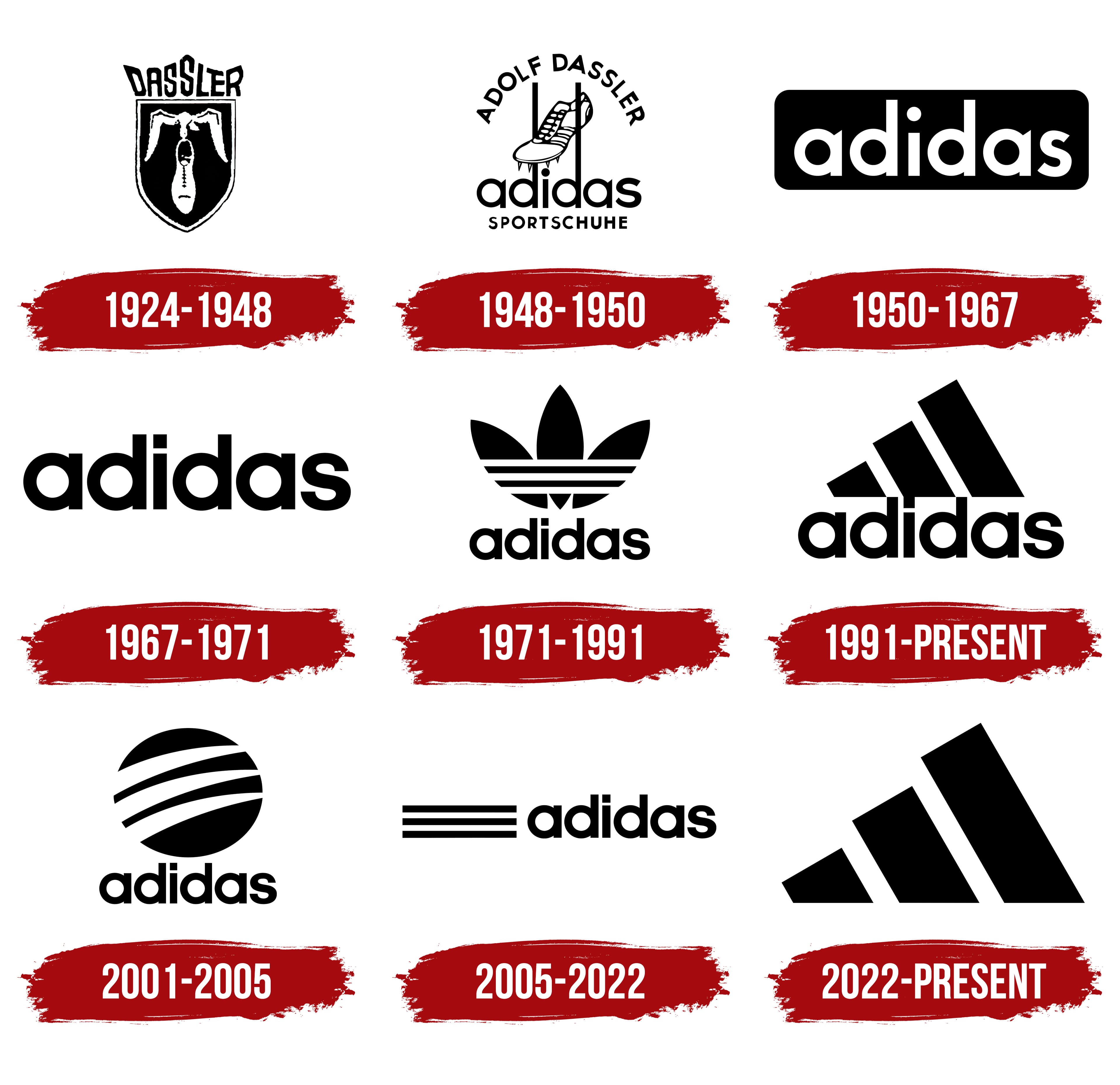
Adidas is unique in that it utilizes multiple logos to represent different facets of its business. Understanding this evolution is key to navigating the brand’s history.
- The Three Stripes: Originally used by the Finnish brand Karhu, Adi Dassler purchased the trademark in 1952 for the equivalent of 1,600 euros and two bottles of whiskey. It remains the primary identifier across all product lines.
- The Trefoil (1972): Introduced during the Munich Olympics, the Trefoil was designed to represent the brand’s diversity. The three leaves symbolize the three main landmasses (Americas, Europe/Africa, and Asia) where Adidas products were sold. Today, the Trefoil is reserved exclusively for the Adidas Originals lifestyle line.
- The "Equipment" Logo (1991): Often called the "Performance" logo or "Badge of Sport," this logo features three slanted bars that form a mountain, symbolizing the challenges athletes must overcome.
- The Simplified Logo (2022): In a move toward modern minimalism, Adidas began phasing out the "Adidas" text from under the Performance logo for its elite sports gear, leaving just the three bars to represent the brand’s high-performance future.
The Cultural Shift: From the Field to the Streets
The 1980s marked a pivotal moment when Adidas transitioned from an athletic brand to a cultural icon. This was largely driven by the emergence of hip-hop culture in New York City. In 1986, the group Run-D.M.C. released the track "My Adidas," an ode to their shell-toe Superstars. Unlike traditional athlete endorsements, this was an organic movement; the group wore the shoes without laces, mirroring prison styles of the time.
Recognizing the shift, Adidas executive Angelo Anastasio attended a concert at Madison Square Garden where the group encouraged the crowd to hold their Adidas shoes in the air. This led to a $1 million endorsement deal—the first of its kind between a sports brand and a music act. This partnership laid the groundwork for future collaborations with non-athletes, including Pharrell Williams, Stella McCartney, and Jerry Lorenzo.
Historical Comparison of Iconic Adidas Silhouettes
The following table outlines the historical significance and primary use of Adidas' most influential models.
| Model | Launch Year | Original Purpose | Cultural Significance |
|---|---|---|---|
| Samba | 1950 | Indoor Football / Ice Training | The cornerstone of "Terrace" culture and the most enduring lifestyle shoe. |
| Stan Smith | 1965 | Tennis | Originally the "Robert Haillet," it became a minimalist fashion staple after being renamed for Smith in 1978. |
| Superstar | 1969 | Basketball | Defined 1980s hip-hop culture; featured the famous rubber "shell-toe" for durability. |
| Gazelle | 1966 | Multi-sport Training | Known for being the first Adidas shoe made of suede, becoming a Britpop and streetwear icon. |
| Ultraboost | 2015 | Performance Running | Introduced Boost technology to the masses, bridging the gap between high-performance and luxury fashion. |
| Adizero Adios Pro | 2020 | Marathon Racing | Utilizes "EnergyRods" to revolutionize long-distance running records in the carbon-plate era. |
The Modern Era: Innovation and Sustainability (2013–2026)
In the 21st century, Adidas has focused on two primary pillars: advanced material science and environmental responsibility. In 2013, the brand introduced Boost technology, a cushioning material made from expanded Thermoplastic Polyurethane (eTPU). Developed in partnership with the chemical company BASF, Boost provided superior energy return compared to traditional EVA foam. This technology not only revitalized the brand’s running category but also dominated the "sneakerhead" market throughout the mid-2010s.
Furthermore, Adidas has been a pioneer in sustainable manufacturing. Through its partnership with Parley for the Oceans, which began in 2015, the brand has produced millions of pairs of shoes made from upcycled plastic waste intercepted on beaches. By 2024, Adidas had reached its goal of using recycled polyester in nearly all of its products, a commitment that remains a core part of its corporate strategy in 2026.
The brand also explored digital manufacturing through Futurecraft 4D. Using Carbon’s Digital Light Synthesis technology, Adidas began mass-producing 3D-printed midsoles tailored to specific movement patterns, offering a glimpse into the future of personalized athletic gear.
Navigating the Post-Yeezy Landscape
A significant chapter in recent Adidas history was the partnership with Kanye West (Ye) and the subsequent termination of the Yeezy line in late 2022. The partnership, which began in 2015, was a massive financial success but ended due to the artist's controversial public statements.
In 2023 and 2024, under the leadership of CEO Bjørn Gulden, Adidas successfully managed the liquidation of remaining Yeezy inventory while donating a portion of the proceeds to organizations combating hate speech. This period also saw a strategic return to "core" Adidas identity, with a massive resurgence of Terrace footwear—classic styles like the Samba, Gazelle, and Handball Spezial—which became the dominant fashion trend globally leading into the mid-2020s.
Frequently Asked Questions
Why did the Adidas and Puma founders split?
Adolf and Rudolf Dassler split due to a combination of personal grievances, political differences during World War II, and a breakdown in communication. The rift was so severe that it divided the town of Herzogenaurach for decades, with residents often identified by which brother's brand they wore.
What does the "Adidas" name actually stand for?
The name is a combination of the founder’s name: Adi (nickname for Adolf) and Das (the first three letters of Dassler). A common urban myth suggests it stands for "All Day I Dream About Sport," but this is a backronym created long after the company was established.
Who owns Adidas today?
Adidas is a publicly traded company (Aktiengesellschaft) listed on the Frankfurt Stock Exchange. It is not owned by a single individual or the Dassler family but by a diverse group of institutional and private shareholders.
How did the three stripes become the logo?
Adi Dassler added three leather stripes to the sides of his shoes to provide structural support and stability. In 1949, he realized the stripes were a powerful visual identifier and registered them as a trademark. He later famously bought the rights to the "Three Stripes" from the Finnish brand Karhu to ensure global exclusivity.
What is the most sold Adidas shoe of all time?
The Adidas Stan Smith and the Adidas Samba are perennially the top-selling models. While exact numbers fluctuate, the Stan Smith has historically been cited as the highest-selling model, with over 50 million pairs sold since its debut.
Guidelines for Today’s Adidas Enthusiasts
As of 2026, Adidas continues to operate at the intersection of performance and style. For those looking to engage with the brand, whether as an athlete or a collector, focusing on the "Originals" line offers a connection to the brand's deep historical roots. If you are looking for performance, the Adizero line remains the gold standard for competitive running, utilizing the latest in carbon-rod technology and Lightstrike Pro foam. For collectors, the 2026 focus remains on high-quality reissues of archival models from the 1970s and 80s, which preserve the legacy of Adi Dassler’s original vision.