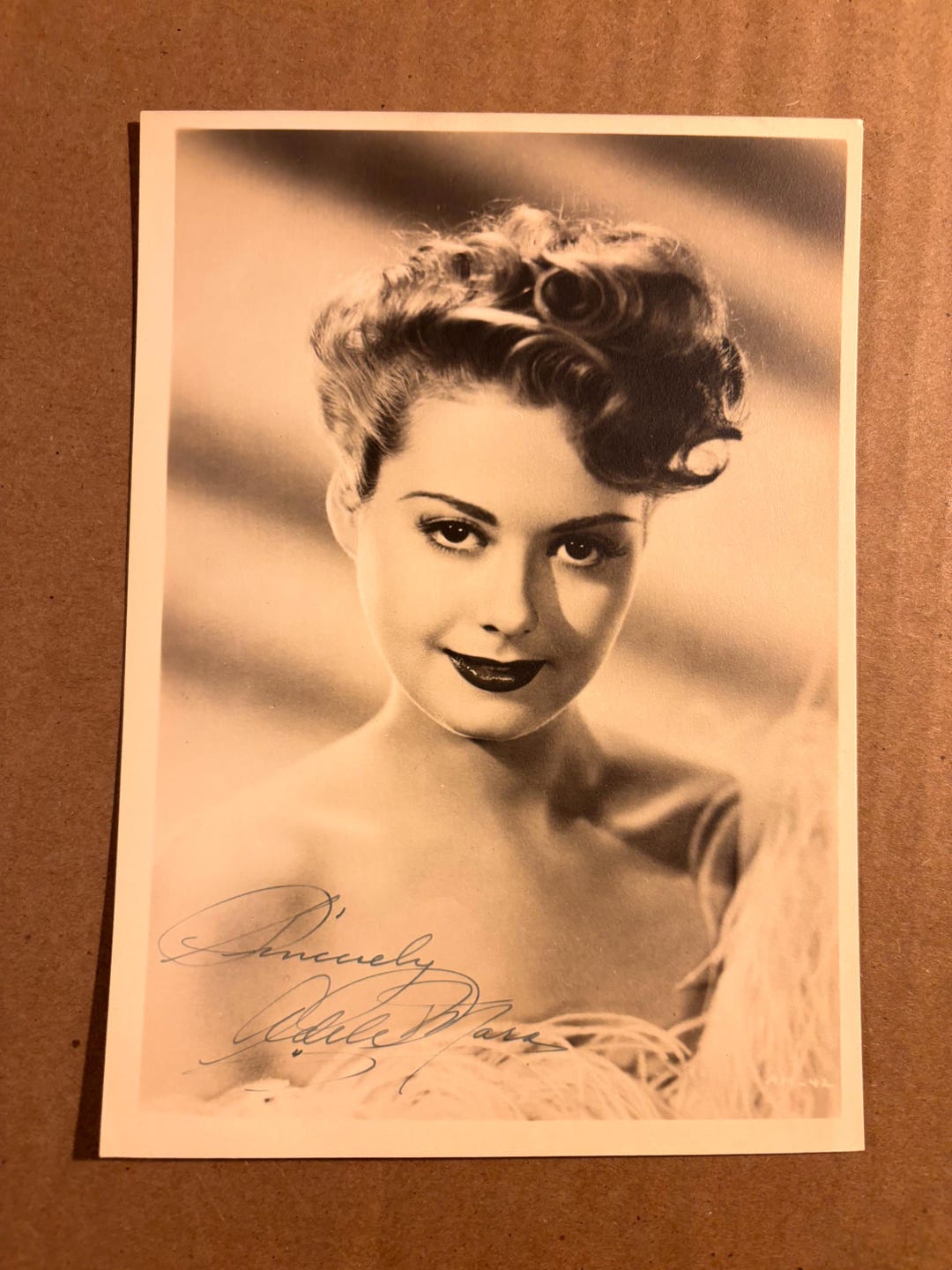
Adele Mara was a prolific American actress, singer, and dancer who became a defining figure of Hollywood's Golden Age, particularly through her association with Republic Pictures. Active primarily from the 1940s through the 1960s, she transitioned from a professional dancer to a versatile leading lady in westerns, adventure films, and television.
Early Life and the Xavier Cugat Connection
Born Adelaide Sylvia Delgado on April 28, 1923, in Highland Park, Michigan, the artist who would become Adele Mara was of Spanish heritage. Her background played a pivotal role in her early career trajectory, as her inherent talent for dance and performance was nurtured within a cultural framework that prized rhythmic precision and stage presence. Long before she was a household name in cinema, she was a dedicated student of dance, a skill that eventually served as her passport to the entertainment industry.
Her professional breakthrough occurred when she was discovered by the legendary bandleader Xavier Cugat. Cugat, known as the "Rumba King," was instrumental in popularizing Latin music in the United States and had a keen eye for talent. He hired the teenage Adelaide to perform with his orchestra, providing her with invaluable exposure on some of the country’s most prestigious stages. This period was crucial because it taught her the mechanics of public performance, the rigors of touring, and the importance of a curated public image. It was under Cugat’s mentorship that she began to refine the "Latin bombshell" persona that early Hollywood studios would later exploit, though she would eventually prove her range far exceeded such narrow typecasting.
By the early 1940s, her success as a dancer caught the attention of talent scouts at Columbia Pictures. Upon signing with the studio, her name was changed to Adele Mara, a moniker deemed more "marketable" by studio executives of the era. Her time at Columbia was characterized by small, often uncredited roles, but it provided her with a foundational understanding of film sets and the technical requirements of acting for the camera versus performing for a live audience.
The Republic Pictures Era and the Rise to Leading Lady
Adele Mara’s career reached its zenith when she moved from Columbia to Republic Pictures. In the 1940s and 50s, Republic was the preeminent "Poverty Row" studio, specializing in "B-movies," westerns, and serials. While these films often had lower budgets than those produced by MGM or Warner Bros., they offered actors like Mara something far more valuable: the opportunity for consistent, leading roles and high-volume screen time.
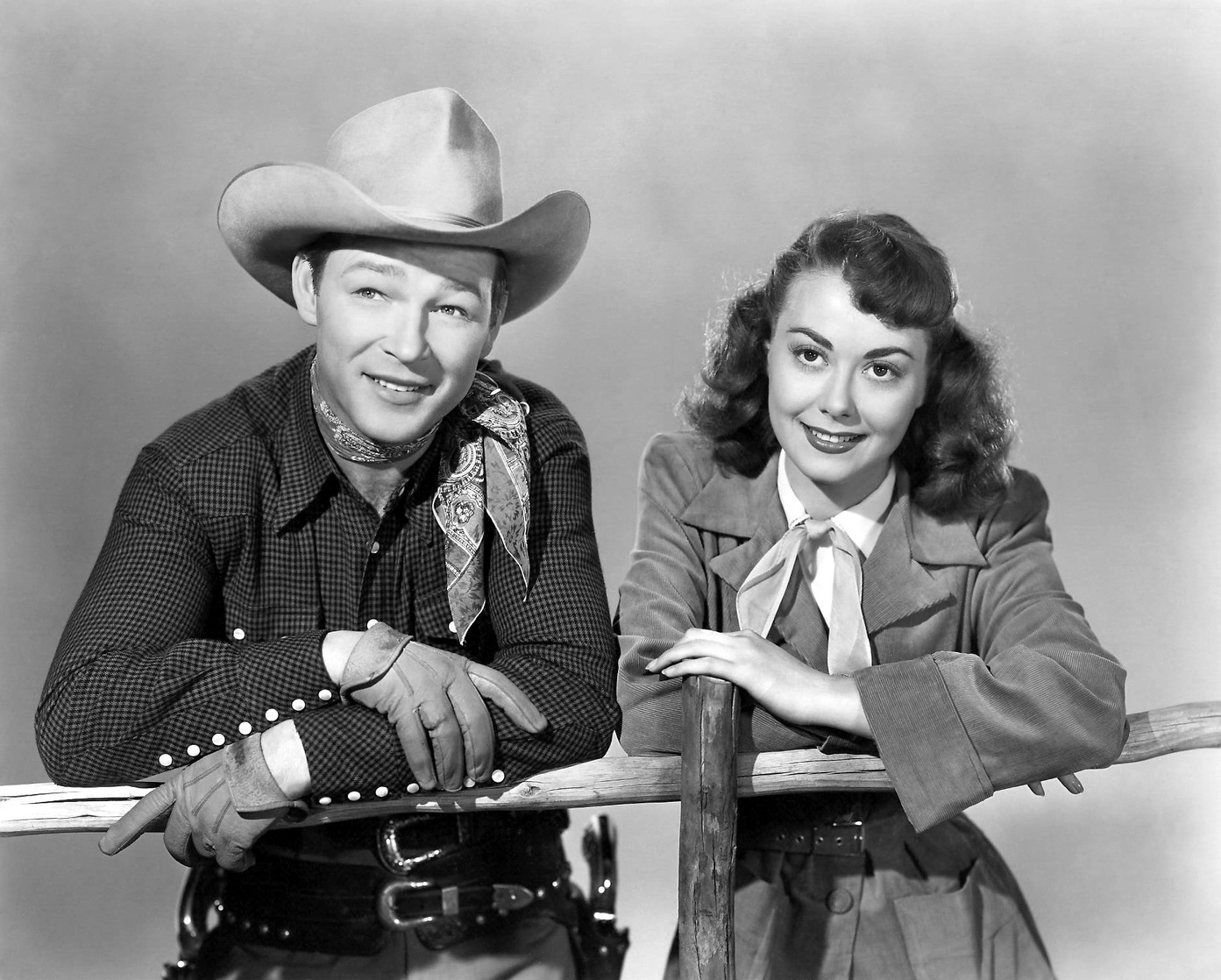
At Republic, Mara became one of the studio's most reliable and recognizable stars. She was frequently cast as the female lead in westerns, often playing the love interest of established stars like Roy Rogers or Gene Autry. However, her roles were rarely one-dimensional. Because of her athletic background as a dancer, she brought a physical grace and energy to the screen that made her particularly suited for the action-heavy requirements of the western genre.
The studio system at Republic was demanding. Actors were expected to move from one production to the next with minimal downtime. Mara’s ability to memorize scripts quickly and perform her own dance numbers made her an asset to the studio’s bottom line. During this period, she appeared in dozens of films, including The Vampire's Ghost (1945), where she showcased an early aptitude for the burgeoning horror/thriller genre, and Wake of the Red Witch (1948), where she shared the screen with John Wayne. These films cemented her status as a versatile actress capable of holding her own alongside the industry’s biggest masculine icons.
Critical Success in Sands of Iwo Jima
While many of her roles were in standard genre fare, Adele Mara’s performance in the 1949 war epic Sands of Iwo Jima remains perhaps her most significant contribution to cinematic history. Directed by Allan Dwan and starring John Wayne, the film was a massive critical and commercial success, earning multiple Academy Award nominations.
In Sands of Iwo Jima, Mara played Allison Bromley, a role that required more emotional depth than the typical "damsel in distress" archetypes of her earlier westerns. The film focused heavily on the psychological and physical tolls of World War II, and Mara’s character provided a crucial humanizing element to the narrative. Her performance was noted for its sincerity and warmth, proving to critics and audiences alike that she possessed the dramatic weight necessary for "A-list" prestige productions.
The success of Sands of Iwo Jima did not immediately lead to a permanent shift into big-budget dramas, largely due to the rigid nature of studio contracts at the time. However, it significantly elevated her profile. She became a symbol of the American woman of the era—resilient, supportive, and elegant—which further fueled her popularity during the post-war years.
Adele Mara as a Cultural Icon and Pin-Up
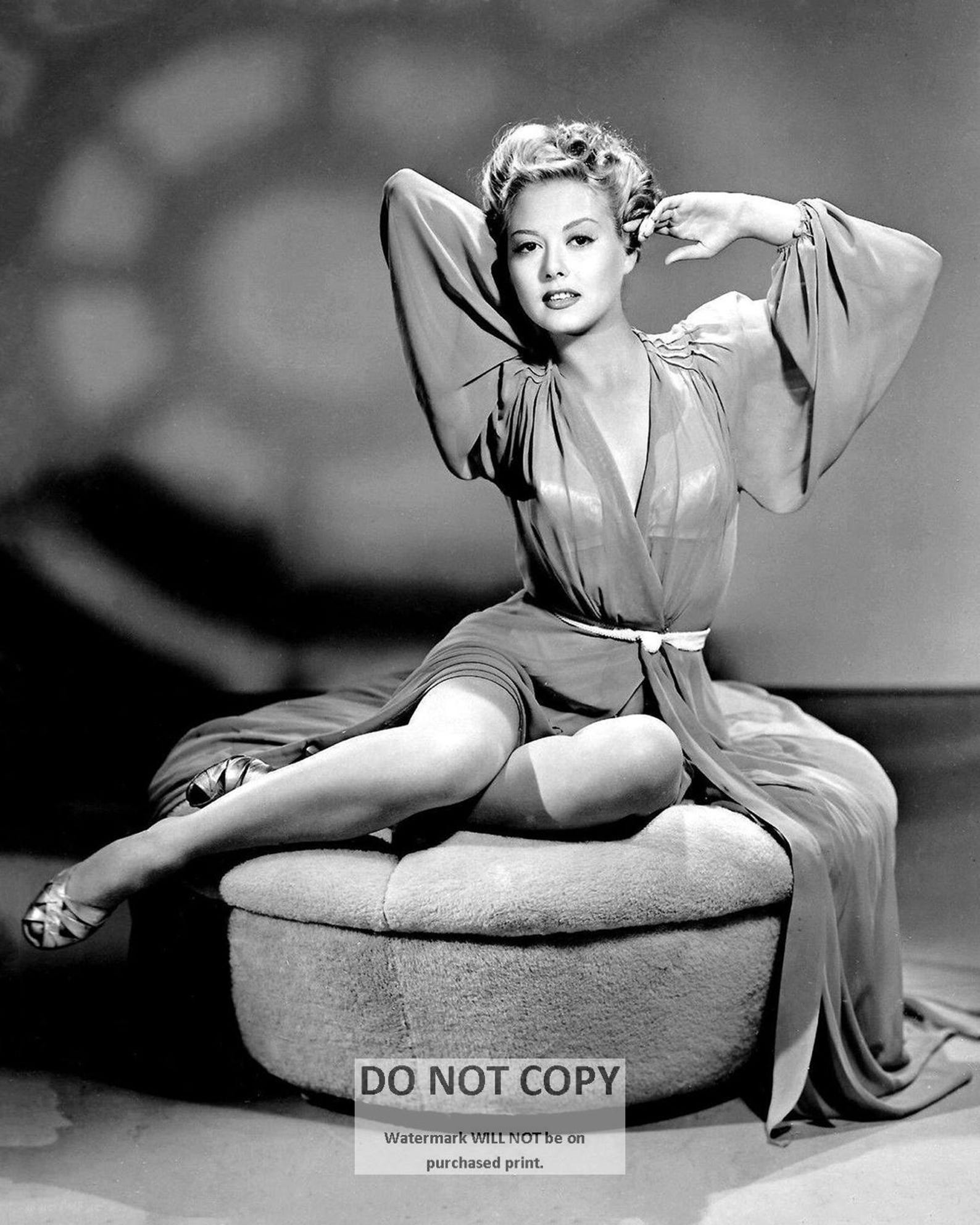
Beyond her filmography, Adele Mara occupied a unique space in American popular culture during the 1940s as a major pin-up girl. During World War II, her image was widely circulated among servicemen, appearing in magazines such as Yank, the Army Weekly. Her background as a dancer meant she was comfortable with the choreographed poses required for pin-up photography, and her "girl next door" charm mixed with an exotic allure made her a favorite of the troops.
The pin-up phenomenon was more than just a marketing tool; it was a vital component of wartime morale. Mara’s image was reportedly painted on the nose art of several American bombers, a testament to her widespread recognition. This facet of her career ensured that she remained in the public eye even when her films were not in active release. Unlike some stars who found the pin-up label restrictive, Mara embraced the visibility it provided, using it as a springboard to maintain her relevance as the film industry began to change in the early 1950s.
Marriage to Roy Huggins and Transition to Television
In 1952, Adele Mara married Roy Huggins, a writer and producer who would become one of the most influential figures in American television history. Huggins was the creative force behind legendary series such as Maverick, The Fugitive, and 77 Sunset Strip. Their marriage marked a significant shift in Mara’s career and personal life.
As the 1950s progressed, the traditional studio system began to dissolve, and television started to overtake cinema as the primary medium for home entertainment. Mara made the transition with remarkable ease. Under the guidance of Huggins, and through her own established reputation, she became a frequent guest star on many of the era's most popular shows.
Her television work allowed her to explore a wider variety of characters than she had in her film career. She appeared in episodes of Maverick, Alfred Hitchcock Presents, and The Life and Legend of Wyatt Earp. Her appearances were often highlight moments for these series, as she brought a cinematic "old Hollywood" polish to the small screen. However, as the 1960s began, Mara chose to gradually step back from the spotlight to focus on her family and raising her three sons. While she continued to make occasional appearances—notably in the 1978 television movie The City—she largely retired from the grueling schedule of full-time acting.
Summary of Notable Career Milestones
The following table highlights key films and projects that defined Adele Mara's professional journey, illustrating her range across different genres.
| Year | Title | Role | Genre | Significance |
|---|---|---|---|---|
| 1942 | Alias Boston Blackie | Eve Sanders | Crime/Mystery | Early role at Columbia Pictures. |
| 1945 | The Vampire's Ghost | Lisa Webb | Horror | Showcased her ability to lead in genre-specific "B-movies." |
| 1948 | Wake of the Red Witch | Teleia Retz | Adventure | Early collaboration with John Wayne at Republic. |
| 1949 | Sands of Iwo Jima | Allison Bromley | War/Drama | Her most critically acclaimed dramatic performance. |
| 1950 | California Passage | Beth Vane | Western | Solidified her status as a premier western leading lady. |
| 1958 | Maverick (TV Series) | Various Roles | Western/Comedy | Successful transition to television guest-starring. |
Personal Life, Legacy, and Death
Adele Mara’s personal life was notably stable compared to the tumultuous lives of many of her contemporaries. Her marriage to Roy Huggins lasted until his death in 2002, a rarity in the entertainment industry. She was known among her peers as a professional who was easy to work with, lacking the temperament often associated with stars of her caliber.
Mara passed away of natural causes on May 7, 2010, at her home in Pacific Palisades, California, at the age of 87. At the time of her death, she was remembered not just as a beautiful face from a bygone era, but as a hard-working veteran of the industry who had navigated the complex transition from the big screen to television and from "B-movie" stardom to a respected family life.
In the context of 2026, Mara is increasingly recognized by film historians for her role in diversifying the screen presence of Spanish-American actors. While she was often forced into the "Latin" stereotypes prevalent in the 1940s, her long-term success and ability to play "All-American" roles helped pave the way for later generations of Hispanic performers to seek a broader range of characters. Her films continue to be a staple of classic cinema channels and archival streaming services, where her dance-trained poise and expressive acting continue to find new audiences.
What was Adele Mara's real name?
Adele Mara was born Adelaide Sylvia Delgado. She adopted her stage name upon signing with Columbia Pictures in the early 1940s, as the studio felt it was better suited for the leading lady roles they intended for her.
How did Adele Mara get her start in entertainment?
She began her career as a professional dancer. She was discovered by the famous bandleader Xavier Cugat and performed with his orchestra as a teenager, which eventually led to a film contract in Hollywood.
Is Adele Mara related to the Mara family of the New York Giants?
No, Adele Mara was not related to the Mara family that owns the New York Giants (which includes actresses Rooney and Kate Mara). Her stage name was a professional creation, and her family background was Spanish-American from Michigan.
Which John Wayne movie did Adele Mara star in?
Mara appeared in two significant films with John Wayne: Wake of the Red Witch (1948) and the highly acclaimed war film Sands of Iwo Jima (1949).
Why did Adele Mara retire from acting?
Mara did not have a single "retirement" event but gradually phased out her acting career in the 1960s to focus on her personal life and family after her marriage to television producer Roy Huggins.
Where can I watch Adele Mara's films today?
As of 2026, many of Adele Mara’s films, particularly those from the Republic Pictures library, are available on classic movie streaming services like TCM or through specialized archival platforms like Kino Lorber, which has restored several of her westerns.
Exploring the Golden Age Through Adele Mara
For those looking to understand the mechanics of the Hollywood studio system during the 1940s, studying the career of Adele Mara offers a clearer picture than focusing solely on "A-list" stars like Elizabeth Taylor or Bette Davis. Mara represents the "working actor" of the Golden Age—a performer who possessed immense talent and beauty but who worked within the high-output "B-movie" and television environments.
To truly appreciate her contribution to film, viewers should seek out her work in Sands of Iwo Jima for her dramatic range, and then compare it to her early musical numbers in Cugat-era shorts. This contrast reveals an artist who was highly adaptable, moving from the rhythmic requirements of the dance floor to the emotional requirements of a war drama with seamless professionalism. For classic film enthusiasts, her filmography serves as a comprehensive tour through the genres that defined mid-century American cinema.