Adam Sandler’s career trajectory, from the chaotic, youth-centric humor of the 1990s to the more nuanced, emotionally resonant portrayals of mid-life complexity, mirrors a distinct evolution in how he presents romantic relationships. By balancing his signature slapstick energy with a maturing vulnerability, Sandler has transformed from a caricature of the immature bachelor into a nuanced actor capable of exploring the fragile, grounded realities of love, devotion, and domestic stability.
The Early Era: Immaturity and the Search for Validation
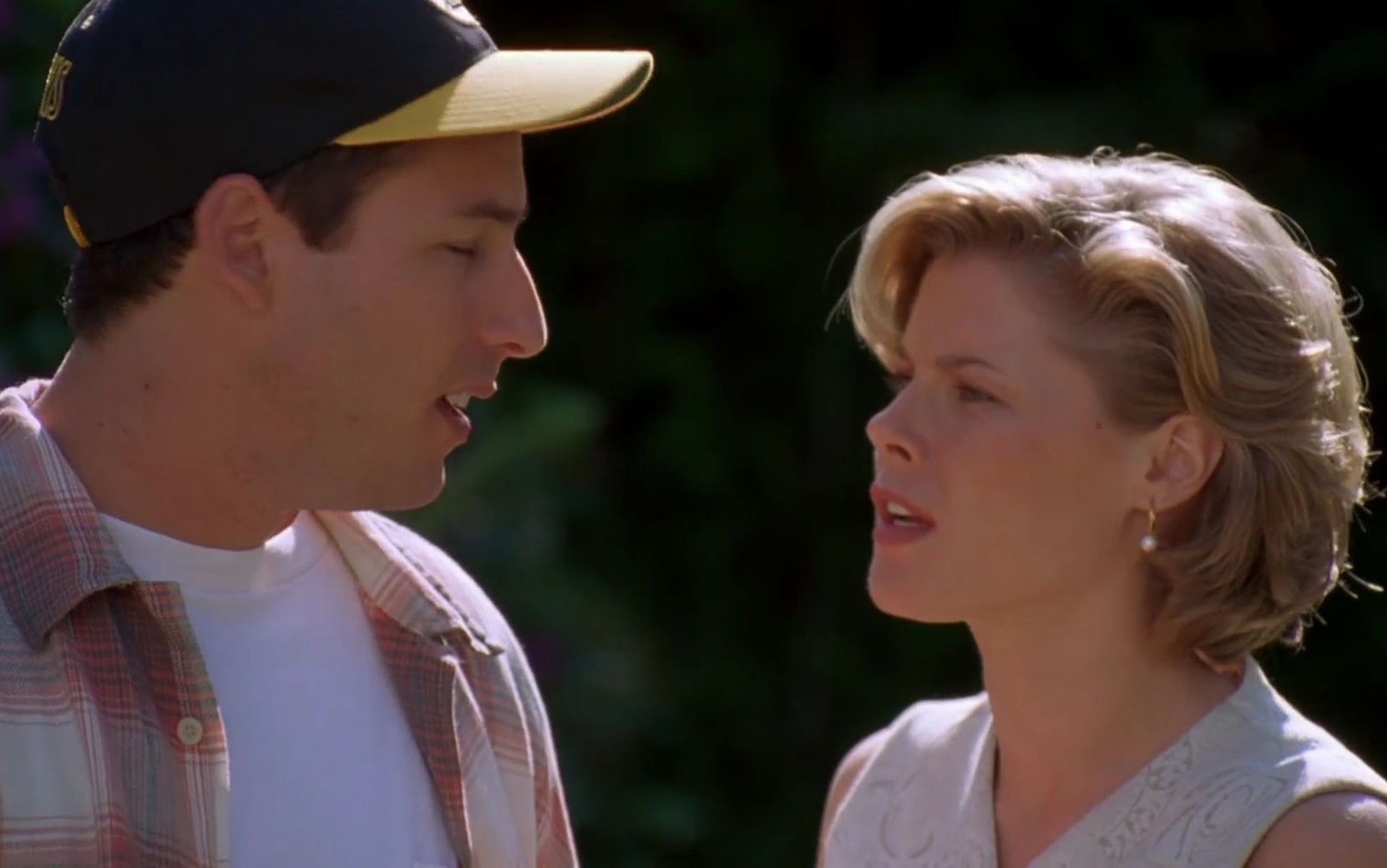
In the early stages of his career, specifically throughout the mid-1990s, Adam Sandler’s cinematic relationships were defined by high-concept comedy and the premise of the "lovable loser." Films like Billy Madison (1995) and The Wedding Singer (1998) established a foundational pattern: the protagonist is often an immature, socially awkward figure who must prove his worth to an idealized partner.
During this phase, love was frequently depicted as a prize—a transformative reward for the protagonist’s self-actualization. The Wedding Singer stands as the definitive example of this era. While it contains the absurdity associated with his Saturday Night Live persona, it also introduced a sincere, tender side to his performance. The character of Robbie Hart sought authenticity in a world of superficiality, establishing the trope that would follow Sandler for decades: the man who uses humor as a defense mechanism against a world that rarely takes him seriously.
The Mid-Career Pivot: From Slapstick to Sentimentality
As Sandler moved into the 2000s, his exploration of relationships began to shift. He moved away from the "man-child" narrative and toward the "man burdened by domestic reality." Punch-Drunk Love (2002), directed by Paul Thomas Anderson, serves as the critical junction in this evolution. By stripping away the traditional safety nets of his comedies, Sandler portrayed Barry Egan, a man whose struggles with anger and loneliness were deeply rooted in his lack of healthy interpersonal connections.
This film signaled to audiences and critics alike that Sandler’s ability to depict love was not limited to romantic comedy tropes. He demonstrated an aptitude for showing the quiet, often painful work required to build a relationship when one has difficulty communicating. This period marked the introduction of the "Sandler Romantic Arc," where the humor no longer fuels the relationship, but rather serves as a backdrop to the deeper, often fraught, emotional labor required to maintain a connection.
Sustaining Reality: The Influence of Private Life on Screen
It is impossible to discuss the evolution of Sandler's on-screen relationships without acknowledging the stability of his personal life. His marriage to Jackie Sandler (née Titone) in 2003 occurred as his filmography began to pivot toward projects that emphasized family, fatherhood, and the preservation of long-term partnership.
The nature of these later films often involves characters navigating the mundane stressors of long-term commitment—aging, parenting, and the fading of youthful idealism. In films like Blended (2014) or even the more grounded The Meyerowitz Stories (2017), the "love and laughter" dynamic is redefined. The laughter is no longer an explosion of adolescent energy; it becomes a tool for survival and communication between partners. The evolution is clear: Sandler shifted from pursuing romance as a goal to maintaining intimacy as a sustained, daily practice.
Comparative Analysis of Relationship Dynamics
The following table categorizes the shifts in how Sandler’s characters approach romantic and social bonds across his professional timeline.
| Era | Primary Theme | Laughter Mechanism | View of Relationship |
|---|---|---|---|
| 1990s | Man-Child Maturity | Slapstick & Outbursts | A transformative reward/prize |
| 2000s | Emotional Vulnerability | Dark irony & Stifled anger | A mechanism for self-discovery |
| 2010s-Present | Domestic Stability | Mutual comfort & Shared history | A necessary endurance and anchor |
The Mechanics of Intimacy in Modern Sandler Films
In his more recent work, Sandler has leaned into a style of performance that prioritizes the chemistry between ensemble casts. His later films often focus on the idea that "laughter is the glue" of a relationship. Rather than using grand gestures to woo a partner, his characters often bond through small, repeated interactions, shared jokes, and the quiet acceptance of each other's flaws.
This approach reflects a broader trend in his creative output where the "Sandler persona" acts as an everyman who is finally tired of the fight. The humor in his current relationships is internal—it is the kind of humor that only exists between two people who have witnessed each other’s growth. This shift highlights a departure from the external, performative humor of his early career toward an internal, collaborative humor that sustains a partnership through the complexities of modern life.
Navigating the Challenges of Domestic Comedies
Critics often point to the formulaic nature of Sandler's collaborative projects, yet this very formula allows him to explore the "evolution of love" in a consistent, controlled environment. By placing his characters in domestic settings, he is able to tackle topics such as:
- Communication Gaps: The transition from needing to be heard to needing to listen.
- Life Transitions: Adapting to the roles of spouse and parent, rather than just romantic partner.
- Conflict Resolution: Moving from explosive, reactionary disagreements to quiet, deliberate reconciliation.
These elements require a different set of acting skills than those used in his Happy Gilmore (1996) days. The requirement here is for stillness—a willingness to let the camera linger on a look or a moment of hesitation. It is in these moments of silence that the "evolution" of his approach is most visible, revealing an actor who finds as much value in the quiet space between lines as he once did in the punchline itself.
Frequently Asked Questions
How has Sandler’s depiction of romance changed over time?
Sandler shifted from the "romantic pursuer" trope of the 1990s, where love was a prize for the immature protagonist, to a more mature focus on the maintenance and navigation of long-term, stable relationships. The evolution reflects a move from externalized comedy to internalized emotional resonance.
Does Sandler’s real-life marriage influence his film roles?
While Sandler maintains a strict separation between his private life and his creative work, his transition into marriage and fatherhood in the early 2000s coincided with a noticeable shift toward projects that value domestic stability, family dynamics, and the endurance of long-term commitment.
What is the significance of the "Sandler Romantic Arc"?
The "Sandler Romantic Arc" is the trajectory where a character moves from a state of emotional or social disconnection toward a realization that sustained love requires vulnerability. This arc replaces the initial, purely comedic motivation of his early characters with a more complex, grounded human motivation.
Why is humor essential to his characters' relationships?
In Sandler’s films, humor acts as a bridge. In early roles, it was a barrier used to keep others at arm's length; in his later roles, humor serves as a shared language that allows partners to navigate conflict, build intimacy, and handle the routine challenges of adult life.
Recommendations for Further Exploration
To fully appreciate this evolution, it is recommended that viewers engage with a chronological viewing of his work. Start with The Wedding Singer to understand the baseline of his romantic character tropes, proceed to Punch-Drunk Love to witness the fundamental shift in his acting style, and conclude with The Meyerowitz Stories or his recent Netflix collaborations. This progression provides a clear view of how an actor can refine his craft to reflect his own growth, ensuring that the "love and laughter" he presents on screen continues to resonate with an audience that has aged alongside him.