Adam Guettel is a preeminent American composer and lyricist recognized for his sophisticated harmonic language and emotionally complex storytelling. Best known for the Tony Award-winning The Light in the Piazza and the landmark Floyd Collins, Guettel is a critical figure in contemporary musical theater, bridging the gap between classical art song and Broadway narrative.
As we look at the landscape of American musical theater in 2026, few figures command as much reverence and analytical scrutiny as Adam Guettel. Often categorized alongside Stephen Sondheim for his refusal to prioritize "hummability" over dramatic truth, Guettel has carved out a niche that is uniquely his own. His work is characterized by a "restless" melodic sense—melodies that do not merely resolve but instead explore the psychological architecture of his characters. This deep dive examines his lineage, his technical contributions to the genre, his major masterworks, and his enduring influence on the next generation of theatrical composers.
The Rodgers Legacy and the Burden of Genius
To understand Adam Guettel, one must first acknowledge the extraordinary musical dynasty from which he emerged. He is the grandson of Richard Rodgers, perhaps the most influential composer in the history of the American musical, and the son of Mary Rodgers, the composer of Once Upon a Mattress and an accomplished author.
Growing up in such a household provided Guettel with an innate understanding of the "Great American Songbook" structure, yet his own artistic impulses led him toward a more dissonant and through-composed style. Rather than imitating the populist melodies of his grandfather, Guettel sought to expand the boundaries of what a theater score could achieve. He studied at Yale University and later at the School of American Ballet, where he honed his technical skills.
His early career was marked by a search for a distinct voice—one that could honor his heritage while dismantling its constraints. This tension is evident in his first major theatrical efforts, where folk music, bluegrass, and 20th-century classical music collide to create a soundscape that feels both ancient and avant-garde.
Masterworks: A Detailed Analysis of the Guettel Canon
Guettel’s output is relatively small compared to his peers, but each project is a seismic event in the theater community. His process is famously meticulous, often taking a decade or more to bring a project from conception to the stage.
Floyd Collins (1996)
Considered by many critics to be the finest musical of the 1990s, Floyd Collins tells the true story of a man trapped in a cave in Kentucky in 1925. This work established Guettel’s signature style: the use of Americana-inspired folk motifs layered with complex, Stravinsky-like polytonality.
- The Yodeling Motif: Guettel uses yodeling not as a gimmick but as a technical device to represent the echoes of the cave and Floyd’s internal psychological state.
- "How Glory Goes": This closing number has become a standard in the musical theater repertoire, lauded for its searing exploration of mortality and the afterlife through a soaring, unconventional melodic line.
Myths and Hymns (1998)
Originally titled Saturn Returns, this song cycle explores the intersection of Greek mythology and ancient Christian hymns. It is Guettel’s most experimental work, blending rock, gospel, and operatic elements. It functions as a psychological inventory of a soul searching for meaning, demonstrating his ability to write across a vast spectrum of genres while maintaining a unified intellectual rigor.
The Light in the Piazza (2005)
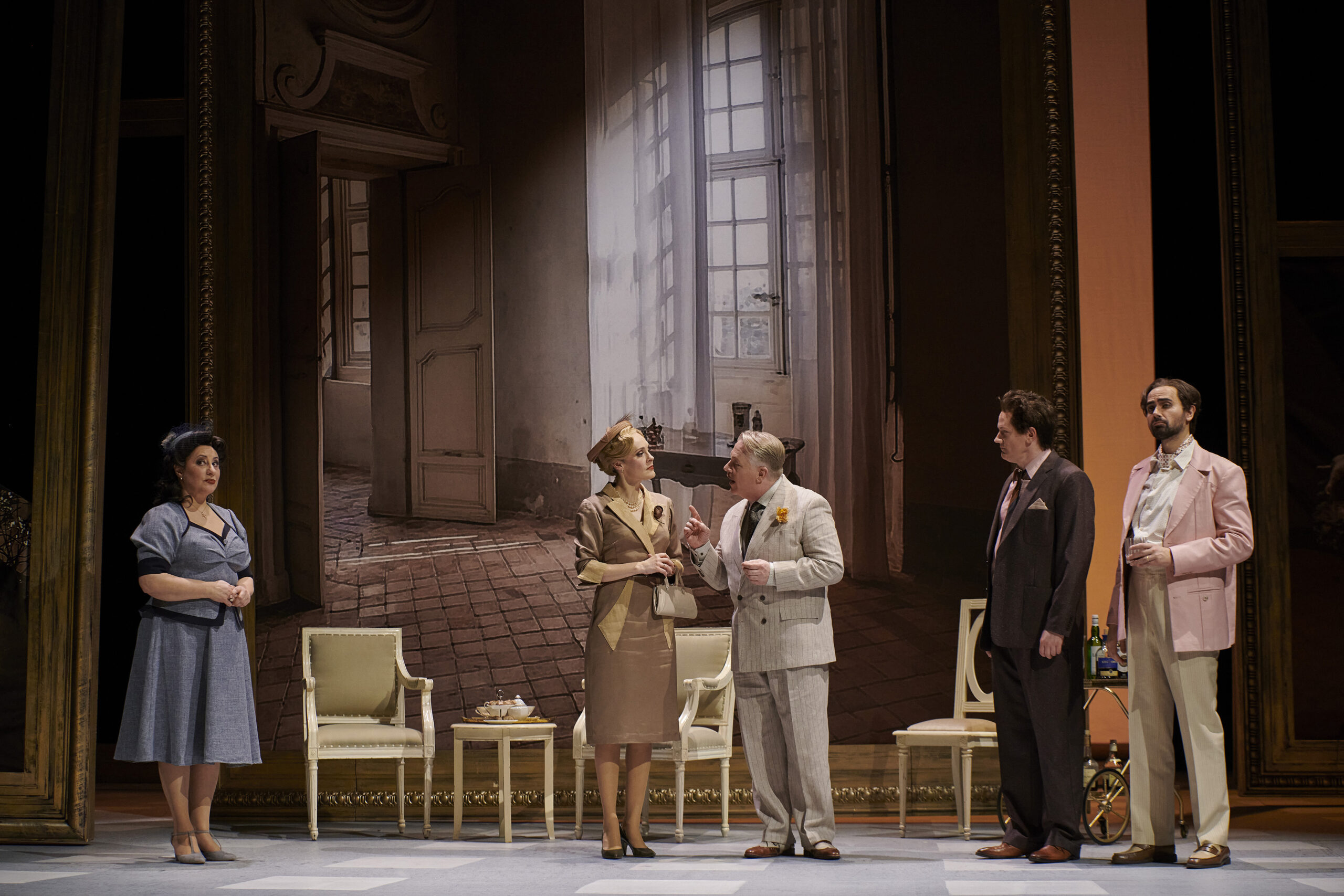
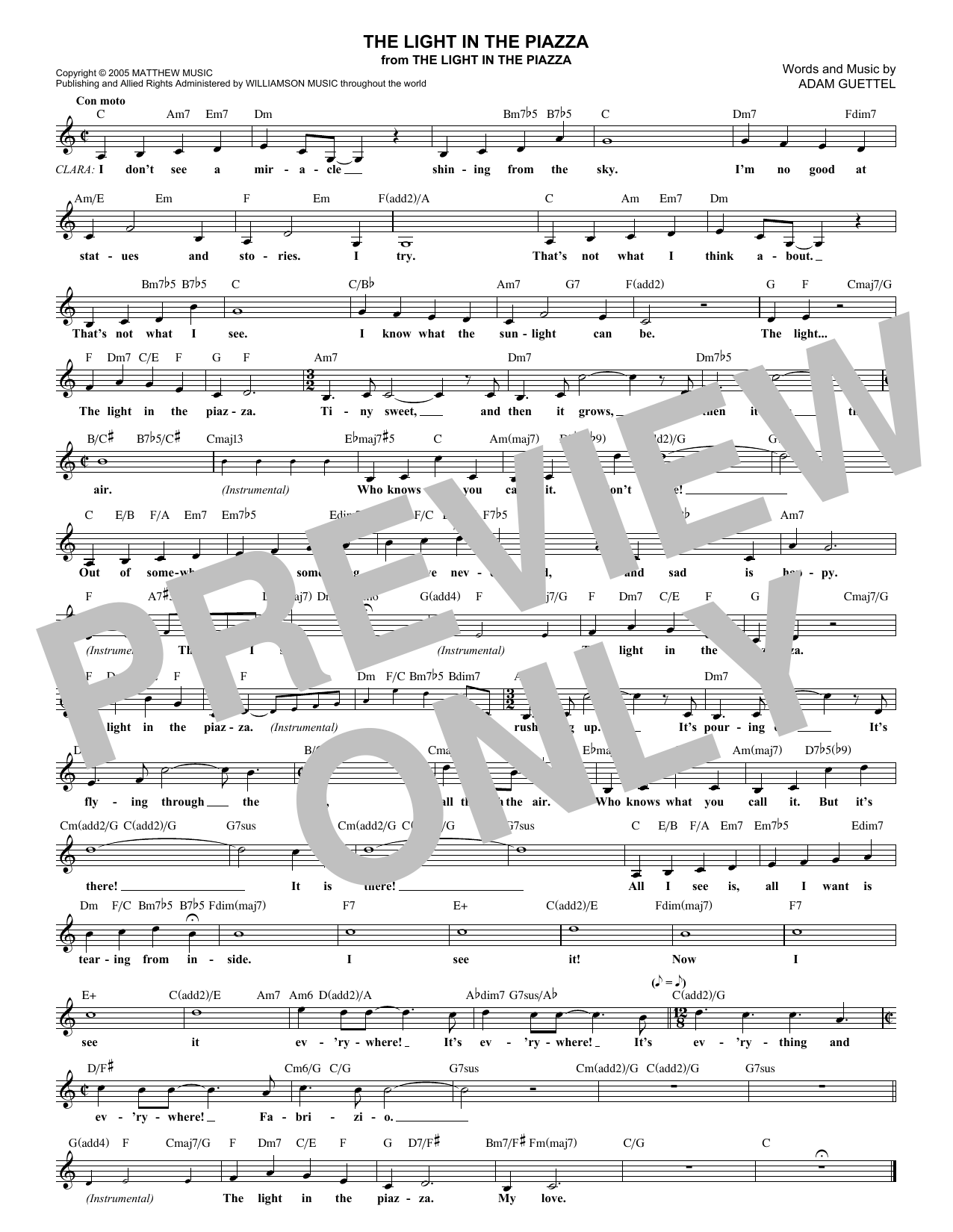
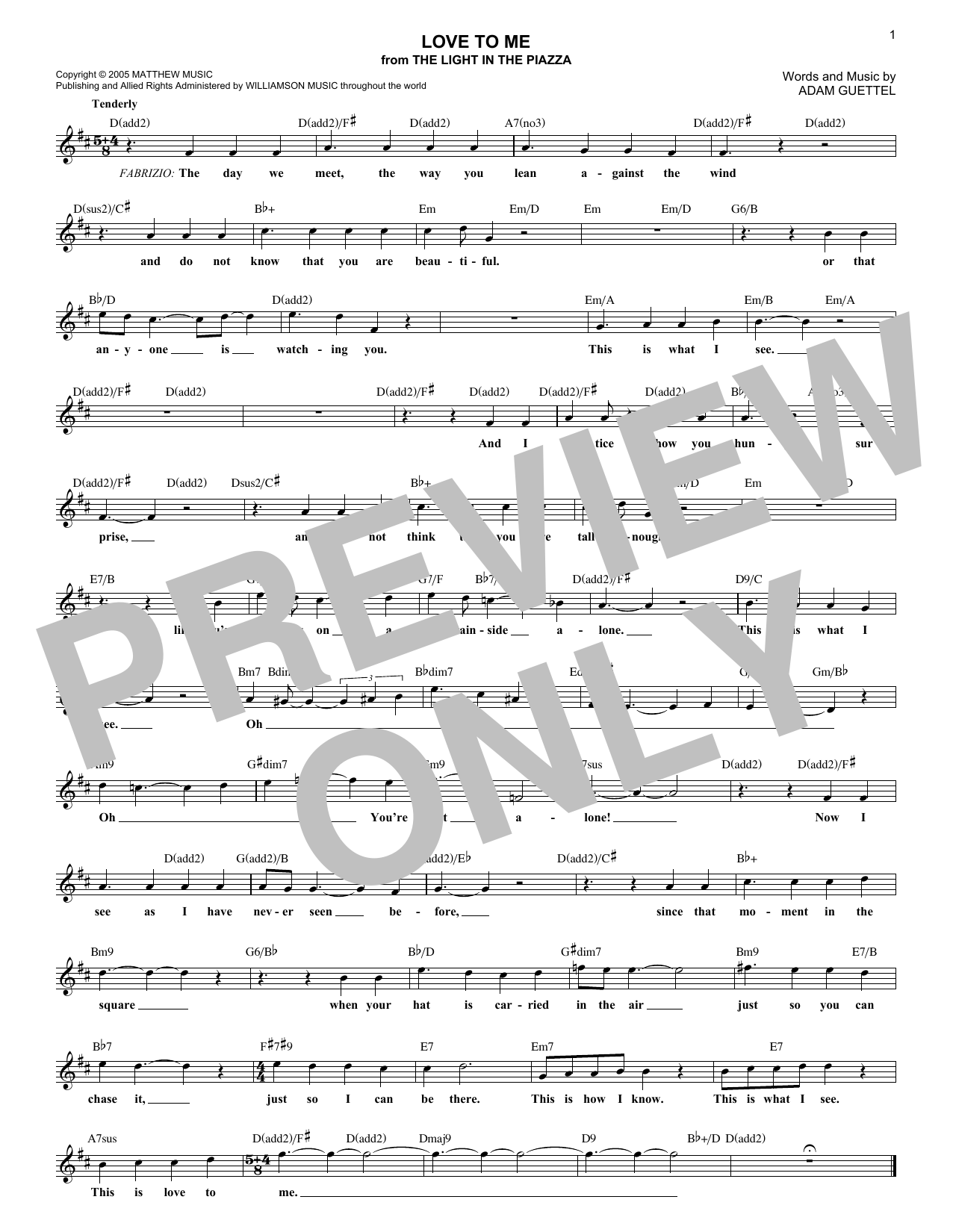
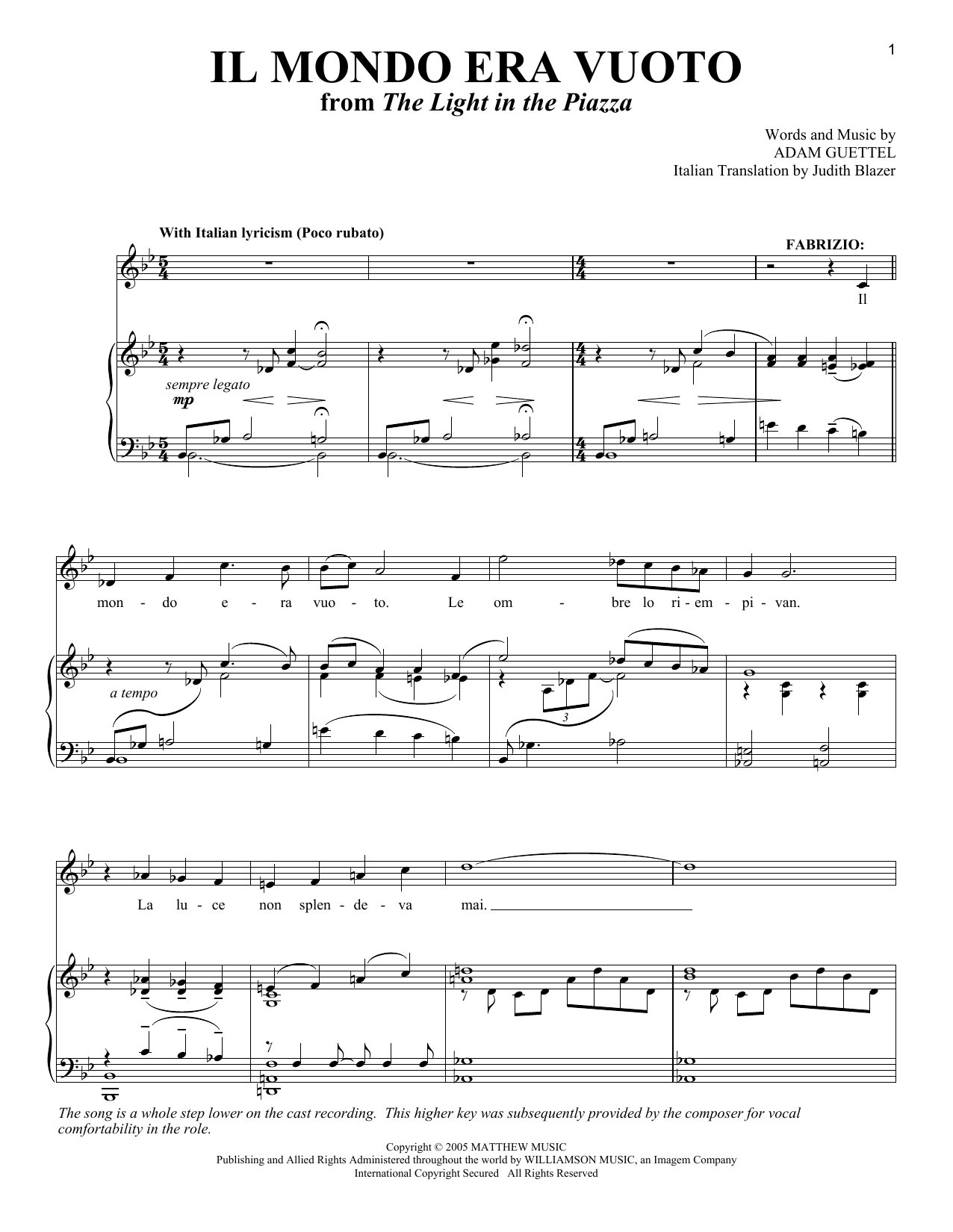
This show remains Guettel’s greatest commercial and critical success. Set in 1950s Florence, the score is a love letter to neo-romanticism. It utilizes lush orchestrations (originally by Guettel, Bruce Coughlin, and Ted Sperling) that evoke the feeling of a mid-century film score while maintaining a rigorous contemporary structure.
- Technical Achievement: The score frequently uses shifted meters and non-traditional cadences to mirror the protagonists' confusion and the linguistic barriers between the American and Italian characters.
- Awards: The show earned Guettel Tony Awards for Best Original Score and Best Orchestrations, cementing his place in the Broadway pantheon.
Days of Wine and Roses (2023/2024)
Entering the mid-2020s, Days of Wine and Roses (based on the JP Miller teleplay/film) stands as Guettel’s most harrowing work. Reuniting with Piazza star Kelli O'Hara, Guettel crafted a score that chronicles the slow disintegration of a marriage due to alcoholism. The music is jagged, jazz-influenced, and deeply empathetic, avoiding the melodrama typically associated with "addiction stories" in favor of a visceral, harmonic descent into chaos.
Technical Innovation and Compositional Style
Guettel’s music is often described as "difficult," but this label overlooks the profound emotional payoff his structures provide. Technically, his work is defined by several recurring elements:
- Extended Tonality: Guettel frequently uses quartal and quintal harmony (chords built on fourths and fifths) rather than traditional thirds. This creates an open, often "searching" sound that avoids easy resolution.
- Rhythmic Dislocation: He employs frequent time signature changes to simulate the natural cadences of human speech. This makes his lyrics feel organic, even when the underlying music is mathematically complex.
- Lyrical Precision: As his own lyricist, Guettel exhibits a preference for internal rhyme and vowel placement that complements the singer's vocal tract. He writes with a singer's sensibility, often tailoring roles to the specific technical capabilities of his leads.
- Integration of Folk and High Art: Whether it is the Kentucky bluegrass of Floyd Collins or the Italian operatic flourishes of Piazza, Guettel possesses an encyclopedic ability to absorb vernacular music and elevate it through the lens of formal composition.
| Work | Premiere Year | Primary Genre/Style | Key Themes | Notable Awards |
|---|---|---|---|---|
| Floyd Collins | 1996 | Folk-Opera / Americana | Isolation, Media Circus, Mortality | Lucille Lortel Award (Best Musical) |
| Myths and Hymns | 1998 | Song Cycle / Fusion | Spirituality, Mythology, Desire | Obie Award |
| The Light in the Piazza | 2005 | Neo-Romantic / Operetta | Love, Disability, Italian Culture | Tony Award (Best Score/Orchestrations) |
| Days of Wine and Roses | 2023 | Jazz-influenced Drama | Addiction, Marriage, Redemption | Outer Critics Circle Nominee |
The "Invisible" Process: Perfectionism and Productivity
One of the most discussed aspects of Adam Guettel’s career is the lengthy intervals between his major premieres. Between The Light in the Piazza (2005) and Days of Wine and Roses (2023), nearly two decades passed without a new full-scale musical on Broadway.
This "silence" was not a lack of activity but rather a testament to a rigorous developmental process. During this time, Guettel worked on several projects, most notably an adaptation of H.G. Wells' The Invisible Man and a project based on the life of Danny Kaye. His perfectionism is legendary; he has been known to scrap entire scores if the "harmonic engine" of the show does not feel fundamentally sound.
In an industry that often demands rapid output and "content creation," Guettel’s commitment to the slow burn of artistic development has made him a polarizing figure. However, for scholars and fans, the result of this wait is usually a work of unparalleled depth that rewards repeated listening and academic analysis.
Comparisons: Guettel vs. the Contemporary Broadway Landscape
Guettel is frequently compared to his contemporary, Michael John LaChiusa. Both composers emerged in the 1990s as the "heirs" to Sondheim’s intellectual throne. While LaChiusa is often more prolific and experimental with non-linear narrative forms, Guettel’s work tends to be more grounded in a specific, lush emotionality.
When compared to the "pop-rock" movement of 21st-century Broadway (e.g., Lin-Manuel Miranda or Pasek & Paul), Guettel stands as a guardian of a more formal musical tradition. He does not utilize the rhythmic drive of hip-hop or the anthemic builds of contemporary pop. Instead, he relies on the interplay of acoustic instruments and the dramatic capabilities of the unamplified-style human voice. This distinguishes him as a "composer’s composer," whose work is studied in conservatories as much as it is performed in theaters.
Frequently Asked Questions
Is Adam Guettel related to Richard Rodgers?
Yes, Adam Guettel is the grandson of the legendary composer Richard Rodgers. He is also the son of Mary Rodgers, who wrote Once Upon a Mattress. This lineage is a central part of his identity in the theater world, though his musical style is significantly more modern and complex than his grandfather's.
How many Tony Awards has Adam Guettel won?
Adam Guettel won two Tony Awards in 2005 for The Light in the Piazza: Best Original Score and Best Orchestrations. His work on this show was widely praised for its lush, romantic sound and technical brilliance.
Why does it take so long for Adam Guettel to write a musical?
Guettel is known for an extremely meticulous and self-critical writing process. He often spends years researching, composing, and revising his scores to ensure they meet his high standards for harmonic and dramatic integrity. This resulted in an 18-year gap between his major Broadway/Off-Broadway premieres.
What is Adam Guettel's most famous song?
"How Glory Goes" from Floyd Collins is arguably his most famous individual song. It has been recorded by numerous Broadway stars, including Audra McDonald and Brian d'Arcy James, and is frequently performed in concerts and auditions as a showcase of vocal range and emotional depth.
Did Adam Guettel write the lyrics for his shows?
Yes, for his major theatrical works (Floyd Collins, The Light in the Piazza, Days of Wine and Roses), Guettel served as both the composer and the lyricist. This allows for a seamless integration of the music and the text, a hallmark of his "through-composed" style.
Engaging with the Guettel Repertoire
For those looking to explore the works of Adam Guettel, the best entry point is the Original Broadway Cast Recording of The Light in the Piazza. It serves as an accessible introduction to his harmonic palette. From there, a transition into the more rugged and experimental Floyd Collins provides a deeper understanding of his range.
In 2026, Guettel remains a vital force, likely continuing his work on long-gestating projects. His influence can be heard in the works of younger composers like Dave Malloy or Jeanine Tesori, who similarly prioritize unique sonic landscapes over traditional Broadway formulas. To study Guettel is to study the evolution of the American musical from a popular entertainment form into a high-art medium capable of profound psychological and spiritual exploration.
His next major step—whether it be the final realization of The Invisible Man or a completely new commission—will undoubtedly continue to challenge performers and audiences alike, demanding a level of attention and emotional vulnerability that few other contemporary composers can elicit.