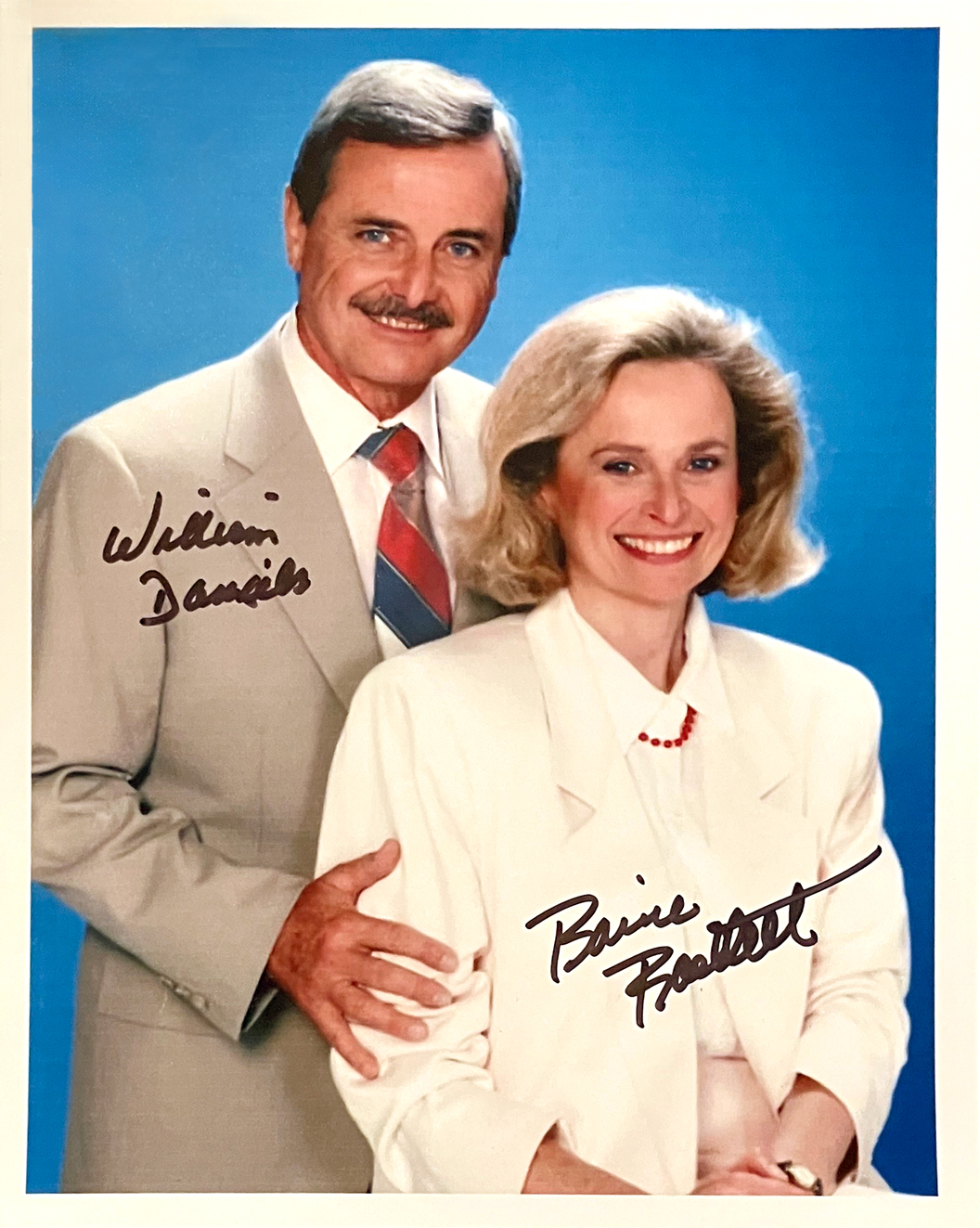
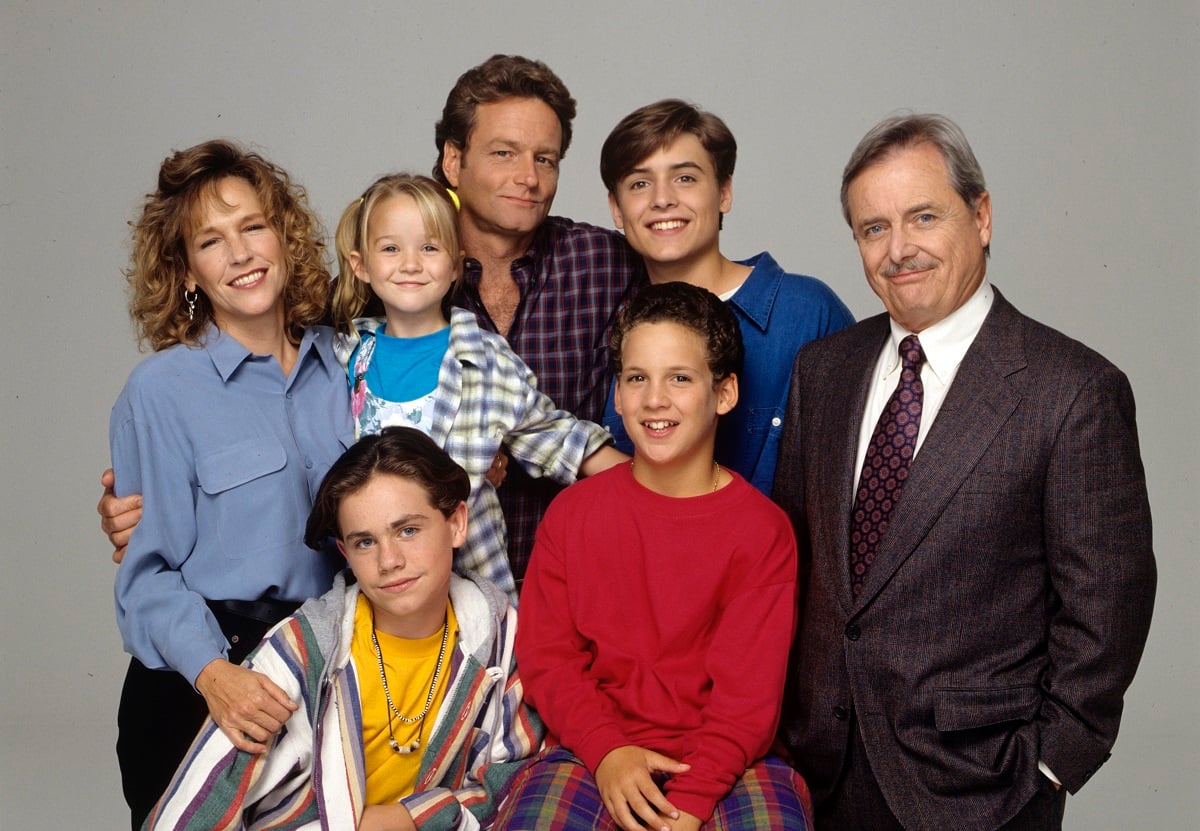
William Daniels is a titan of American acting whose career spans eight decades, defined by his iconic portrayals of intellectually rigorous and authoritative characters. He is most recognized for his roles as Mr. Feeny in Boy Meets World, Dr. Mark Craig in St. Elsewhere, and the voice of KITT in Knight Rider.
The Foundation of a Disciplined Performer
William Daniels’ journey into the performing arts began not in Hollywood, but on the stages of New York and the early circuits of live television. Born in 1927, his career was forged during the "Golden Age" of television, though his childhood was spent as part of "The Daniels Family" singing and dancing act. This early exposure to the rigors of live performance instilled a discipline that would become his trademark: a precise, staccato delivery and a command of dialogue that few of his peers could match.
Daniels' transition to serious acting was marked by his studies at Northwestern University and his subsequent work on Broadway. One of his most pivotal early roles was John Adams in the musical 1776. His portrayal of the "obnoxious and disliked" founding father showcased his ability to make a difficult, uncompromising character deeply sympathetic and even heroic. When the play was adapted into a film in 1972, Daniels reprised the role, cementing his status as a leading man who specialized in intellectual intensity rather than traditional Hollywood glamour.
Breaking Into Cinema: The Graduate and Beyond
Before becoming a household name on television, Daniels made significant waves in film. His performance in Mike Nichols' 1967 masterpiece The Graduate remains a masterclass in supporting character work. Playing Mr. Braddock, the father of Dustin Hoffman’s Benjamin Braddock, Daniels captured the stifling expectations and suburban disconnect of the era. His performance provided the necessary friction that made Benjamin’s existential crisis feel grounded and urgent.
Throughout the 1960s and 70s, Daniels appeared in a variety of films that utilized his sharp wit and refined presence. In Two for the Road (1967), he acted alongside Audrey Hepburn and Albert Finney, playing a fastidious American tourist. These roles established a pattern: Daniels was the actor directors turned to when they needed a character who was intelligent, perhaps a bit condescending, but always undeniably human. This "stern-yet-principled" archetype would eventually lead him to the roles that would define his legacy.
The Voice of an Era: Knight Rider and KITT
In 1982, William Daniels took on a role that would make him a pop-culture icon without his face ever appearing on screen. As the voice of KITT (Knight Industries Two Thousand) in Knight Rider, Daniels provided the sentient supercar's personality. While David Hasselhoff was the face of the show, Daniels provided its soul.
His approach to KITT was unique. Rather than playing a robotic or monotone AI, he played KITT as a sophisticated, slightly fussy, and deeply protective partner. The chemistry between Hasselhoff’s impulsive Michael Knight and Daniels’ logical KITT was the engine that drove the show's success. Interestingly, Daniels initially requested that his name be kept out of the credits, preferring to maintain the illusion that the car was truly talking. This decision underscored his commitment to the craft over personal celebrity—a trait he maintained throughout his life.
St. Elsewhere and the Evolution of Dr. Mark Craig
While Knight Rider dominated the ratings, Daniels was simultaneously delivering one of the most acclaimed performances in television history on the medical drama St. Elsewhere. Playing Dr. Mark Craig, a brilliant but notoriously abrasive heart surgeon, Daniels won two Primetime Emmy Awards for Best Lead Actor in a Drama Series.
The character of Dr. Craig was revolutionary for 1980s television. He was often unlikable, demanding perfection from his residents and showing little patience for incompetence. However, the show’s writers—and Daniels’ nuanced performance—slowly revealed the man behind the surgical mask. His real-life wife, Bonnie Bartlett, played his on-screen wife, Ellen Craig. Their portrayal of a long-term, complicated marriage earned them both Emmys in 1986, making them one of the few real-life couples to win in the same year for the same show. This era solidified Daniels’ reputation as a "prestige" actor who could anchor a complex ensemble cast.
The Mentor of a Generation: George Feeny and Boy Meets World
For many viewers, particularly Millennials and Gen Z, William Daniels is synonymous with one name: Mr. Feeny. From 1993 to 2000, he portrayed George Feeny on the ABC sitcom Boy Meets World. As the neighbor, teacher, and eventually principal and professor to Cory Matthews and his friends, Feeny became the ultimate television mentor.
What made Mr. Feeny resonate was Daniels’ refusal to play the character as a caricature of a teacher. He brought the same gravitas to a TGIF sitcom that he brought to the operating room of St. Elsewhere or the Continental Congress in 1776. Feeny didn't just teach history; he taught life, ethics, and the importance of "doing good" rather than just "doing well."
The relationship between Daniels and the young cast, particularly Ben Savage, was rooted in genuine respect. When the spin-off Girl Meets World premiered in 2014, Daniels’ return for several guest appearances was met with widespread emotional acclaim, proving that his impact on the audience had only grown with time.
Leadership and the Screen Actors Guild
William Daniels’ influence extended beyond his performances into the political and professional realm of the entertainment industry. From 1999 to 2001, he served as the President of the Screen Actors Guild (SAG). His tenure was marked by a period of significant labor unrest, including the 2000 commercial actors' strike, which at the time was the longest strike in the union's history.
As president, Daniels applied the same steadfast principles that characterized his acting roles. He was a vocal advocate for actors' rights and residuals in the changing media landscape. His leadership was often described as "no-nonsense," a reflection of his belief that acting was a dignified profession that required both artistic discipline and economic protection.
Comparison of Major Television Roles
The following table highlights the diversity and impact of Daniels' three most significant television roles, demonstrating his range across different genres.
| Role | Show | Years | Character Archetype | Key Achievement |
|---|---|---|---|---|
| Dr. Mark Craig | St. Elsewhere | 1982–1988 | The Abrasive Genius | 2 Primetime Emmy Awards |
| KITT (Voice) | Knight Rider | 1982–1986 | The Logical Partner | Defined AI personality in media |
| George Feeny | Boy Meets World | 1993–2000 | The Moral Compass | Iconic status as TV mentor |
| John Adams | 1776 (TV/Film) | 1972 | The Revolutionary | Definitive historical portrayal |
Longevity and Legacy in 2026
As of 2026, William Daniels’ career is viewed as a blueprint for professional longevity. His ability to adapt to changing mediums—from radio and live TV to streaming platforms—while maintaining a consistent standard of excellence is rare. His 2017 autobiography, There I Go Again: How I Came to Be Mr. Feeny, John Adams, Dr. Craig, and Others, provided deep insight into his philosophy of acting, emphasizing the importance of "knowing your lines and showing up on time."
His legacy is not just the awards or the iconic characters, but the standard of professionalism he set for the industry. He proved that an actor does not need to be a "chameleon" in the traditional sense; instead, he demonstrated that a strong, distinct persona can be applied to vastly different roles to create something memorable and true.
Who is William Daniels’ wife, and did they work together?
William Daniels has been married to actress Bonnie Bartlett since 1951. Their partnership is one of the longest in Hollywood history. They frequently worked together, most notably on the drama St. Elsewhere, where they played husband and wife Mark and Ellen Craig. Both won Emmy Awards for their roles on the show in 1986, a rare feat for a real-life couple.
Was William Daniels actually inside the car for Knight Rider?
No, William Daniels was rarely on the set of Knight Rider. He recorded his lines for KITT in a studio, often after the scenes had been filmed. He and lead actor David Hasselhoff didn't actually meet in person until the show’s Christmas party several months into the first season. This separation helped maintain the distinct "otherness" of the car's voice.
How did William Daniels get the role of Mr. Feeny?
Daniels was initially hesitant to take a role in a sitcom, fearing it might be beneath the dramatic standards he had set. However, after meeting with the creators and realizing that George Feeny was intended to be a character of substance and dignity rather than a punchline, he accepted. He famously insisted that the character be treated with respect and not be made a "buffoon."
What was William Daniels' first major award?
While he had a successful stage career, his first major televised recognition came from his work on St. Elsewhere. He won the Primetime Emmy for Outstanding Lead Actor in a Drama Series in 1985 and again in 1986. Prior to this, he had received critical acclaim for his Broadway work, particularly in 1776 and A Thousand Clowns.
Did William Daniels serve in the military?
Yes, William Daniels served in the United States Army during the late 1940s. He was stationed in Italy, where he served as a disc jockey for the Armed Forces Radio Service. This experience helped him hone his vocal delivery and presence, which would later become one of his most defining professional traits.
Exploring the Daniels Filmography
For those looking to understand the full breadth of his talent, a chronological viewing of his work is highly recommended. Start with the film version of 1776 to see his musical and theatrical roots, then move to The Graduate to observe his subtle cinematic acting. Following this with select episodes of St. Elsewhere and Boy Meets World will provide a complete picture of why he remains one of the most respected figures in American entertainment history. Watching these performances chronologically allows viewers to see how he refined his "intellectual authority" persona across different decades and genres.