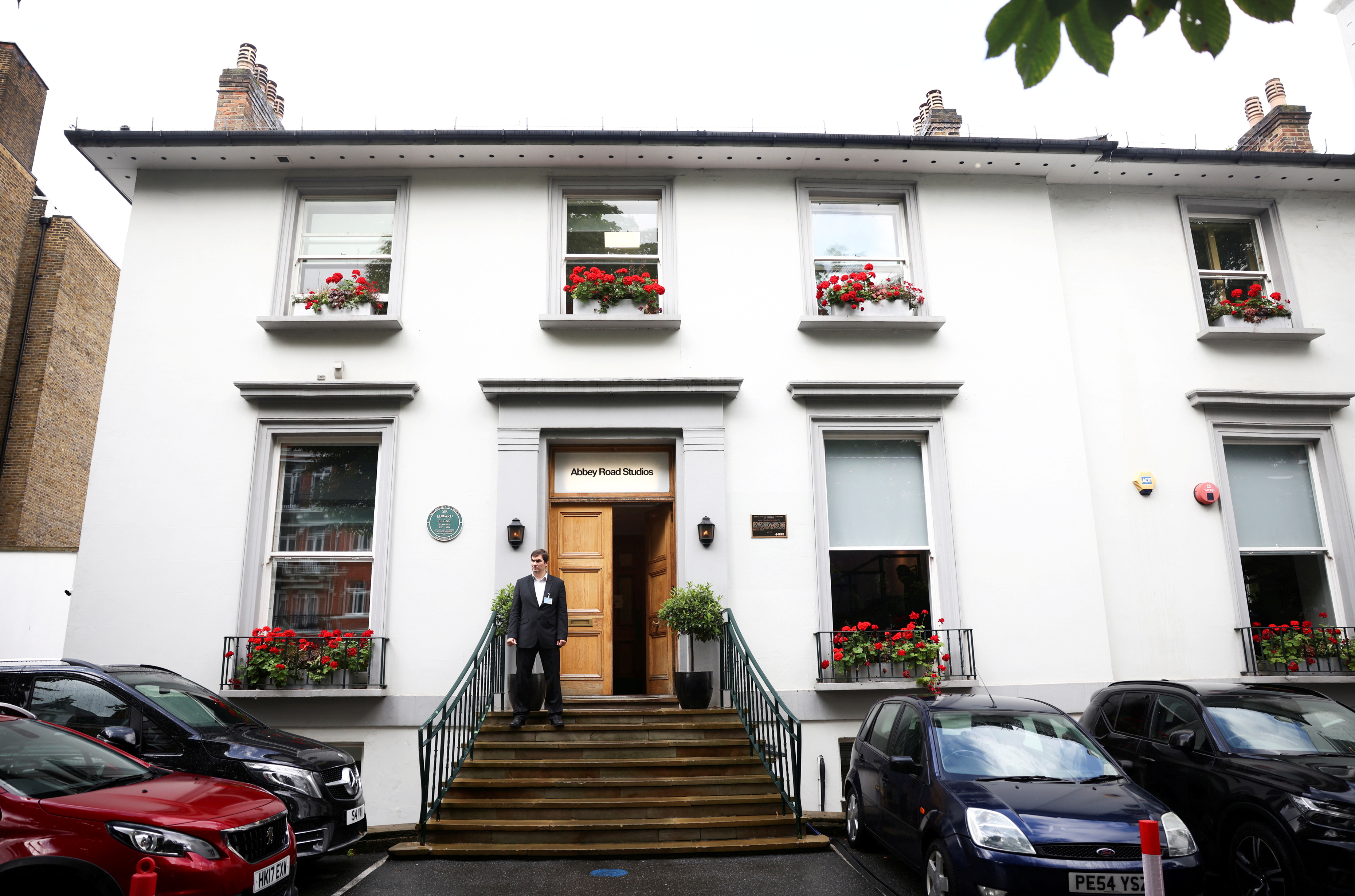
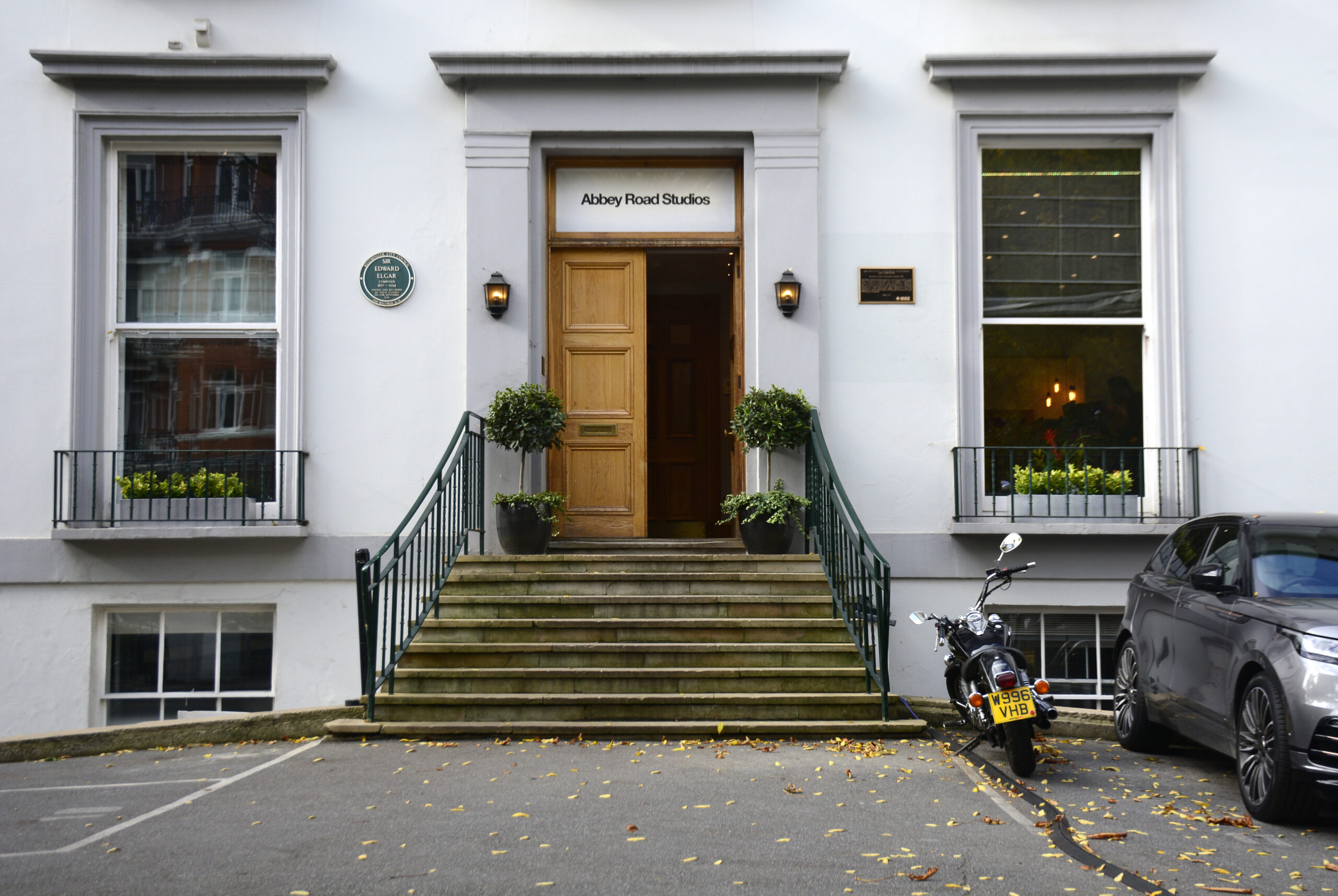
Abbey Road Studios is the world’s most iconic recording facility, located at 3 Abbey Road in St John's Wood, London. Established in 1931 by EMI, the studio revolutionized sound engineering through groundbreaking work with The Beatles, Pink Floyd, and cinematic film scoring. Today, it remains an active, state-of-the-art commercial production center offering recording, mixing, online mastering, and software emulation.
The Architectural and Cultural History of 3 Abbey Road
The facility at 3 Abbey Road began as a nine-bedroom Georgian townhouse constructed in 1831. In 1929, the Gramophone Company purchased the property for £16,500, recognizing its quiet suburban location and substantial garden plot as ideal conditions for building large-scale, purpose-built acoustic rooms. Following the merger of the Gramophone Company and Columbia Graphophone Company in 1931 to form Electric and Musical Industries (EMI), the complex officially opened as EMI Studios on November 12, 1931. The opening ceremony featured Sir Edward Elgar conducting the London Symphony Orchestra in Studio One, recording "Land of Hope and Glory."
For its first three decades, EMI Studios primarily focused on classical recordings, big band performances, and spoken-word projects. The acoustic spaces were designed to capture full acoustic ensembles with high fidelity using early mono and stereo microphone techniques developed by EMI engineer Alan Blumlein. Blumlein’s patented inventions at Abbey Road—including stereo recording, binaural processing, and specialized microphone configurations—laid the technical foundation for modern audio recording.
- [1831] Townhouse Built in St John's Wood
- [1929] Purchased by The Gramophone Company
- [1931] EMI Formed; Studio Opens (Sir Edward Elgar)
- [1960s] Beatles Era & Audio Innovation (REDD/TG)
- [1970] Officially Renamed "Abbey Road Studios"
- [2010] Grade II Listed Heritage Status Granted
The cultural landscape of the studio shifted permanently in the late 1950s and 1960s. Under the direction of producer George Martin and pioneering sound engineers such as Norman Smith, Geoff Emerick, Ken Scott, and Alan Parsons, Studio Two became the experimental hub for pop and rock music. The Beatles recorded over 190 of their songs at the property between 1962 and 1970, ultimately naming their landmark 1969 LP Abbey Road after the street. In response to the album's global success, EMI officially renamed the complex Abbey Road Studios in 1970.
Beyond pop music, the studio evolved into a global powerhouse for orchestral film scoring and post-production. In 2010, the UK Department for Culture, Media and Sport declared the building a Grade II listed historic structure on the advice of Historic England, protecting its architectural elements, staircases, and historic acoustic design from modern structural alterations. Today, under the ownership of Universal Music Group (UMG), Abbey Road maintains its heritage while operating as a high-tech production powerhouse.
Recording Spaces and Facilities Breakdown
Abbey Road Studios houses multiple specialized recording environments, each designed for specific performance dynamics, acoustic character, and technical workflows.
| TRACKING & SCORING ROOMS | POST-PRODUCTION & MIXING |
|---|---|
| • Studio One (Large Orchestra)• Studio Two (Pop / Rock / Band)• Studio Three (Intimate/Vocal) | • Dolby Atmos Mix Stage• Penthouse & Writing Rooms• Mastering Suites 1-6 |
Studio One
Studio One is the largest purpose-built recording space in the world. Originally constructed to host complete symphonic orchestras, the hall features high ceilings, a physical volume exceeding 5,000 cubic meters, and an adjustable acoustic wall panel system.
- Acoustic Character: Wide, natural reverberation with warm low-end response and extended spatial decay.
- Capacity: Comfortably accommodates over 110 musicians alongside a full choir.
- Primary Application: Large-scale orchestral tracking, cinematic film scores, video game soundtracks, and massive live ensemble recordings.
- Technical Infrastructure: Anchored by a custom 72-channel Neve 88RS analogue mixing console outfitted with custom Neve SPM microphone preamps and comprehensive surround-sound monitoring arrays.
Studio Two
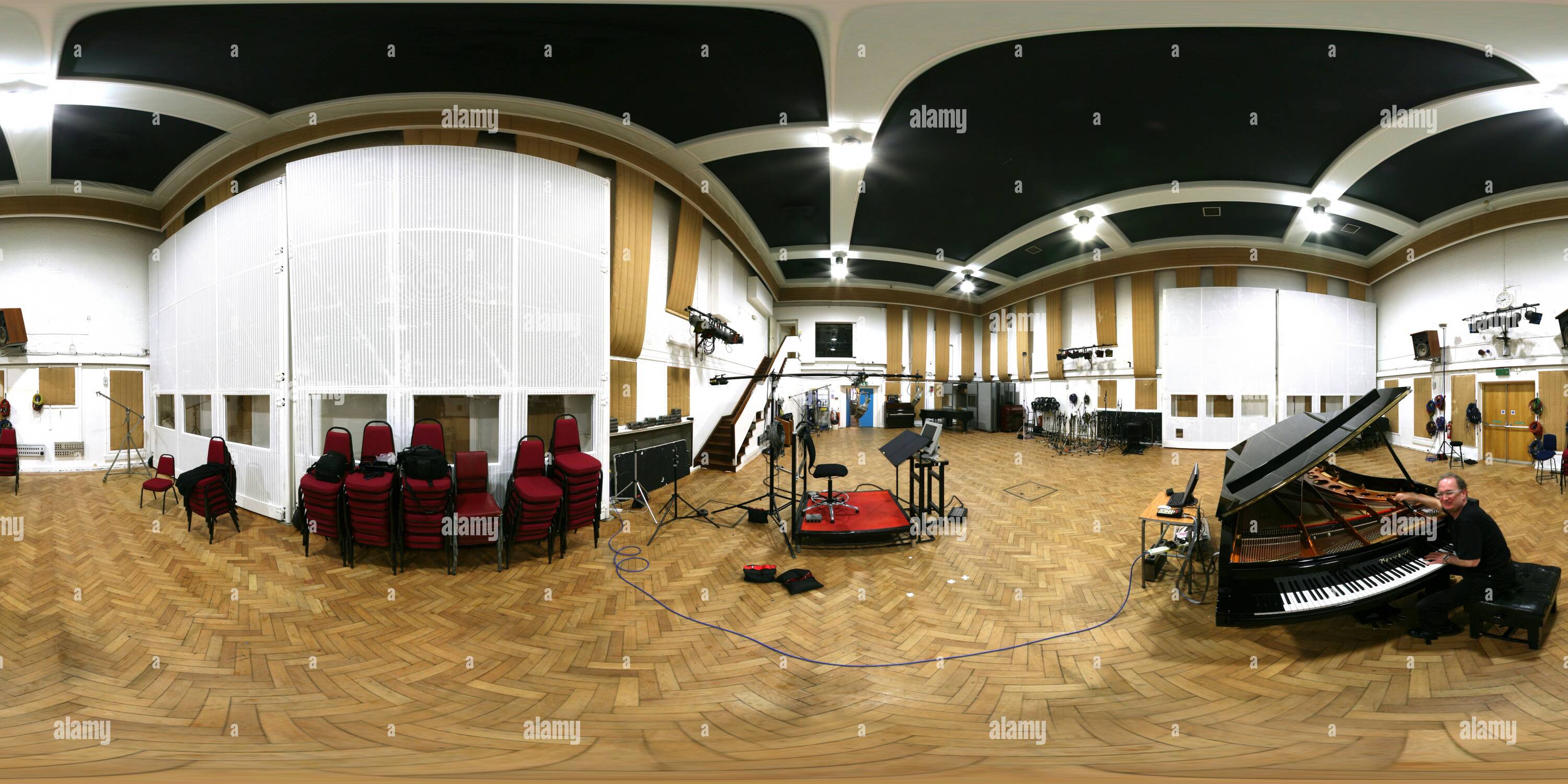
Studio Two is arguably the most famous recording room in modern music history. Its unique rectangular shape, high ceiling, parquet wood flooring, and original sound-absorbing wall blankets create a instantly recognizable mid-range warmth and punch.
- Acoustic Character: Controlled yet vibrant reverberation, defined upper-midrange projection, and tight acoustic focus.
- Capacity: Ideal for 4- to 8-piece bands, small chamber groups, pop setups, and vocal sessions.
- Primary Application: Rock, pop, indie, urban tracking, and acoustic instrument sessions.
- Technical Infrastructure: Features a 60-channel Neve 88RS console with remote-controlled mic preamps, alongside an extensive patchable inventory of vintage outboard compressors, equalizers, and tape delay systems.
Studio Three
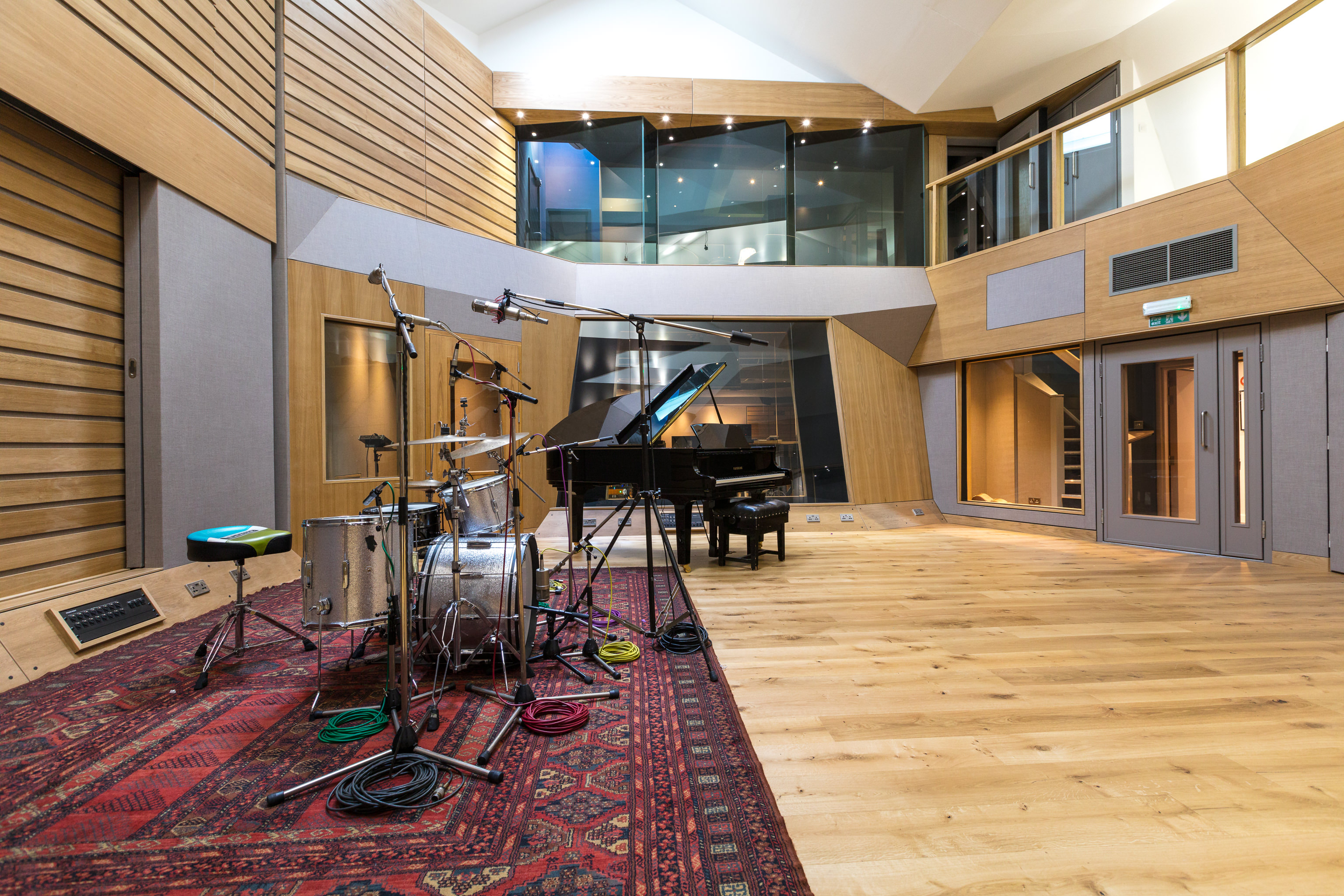
Studio Three is an intimate, highly adaptable tracking and mixing space re-architected to handle contemporary pop, hip-hop, electronic, and vocal production.
- Acoustic Character: Tight, modern, dry acoustic environment with minimal room decay, optimal for precise isolation and crisp vocal detail.
- Capacity: Designed for solo artists, producers, beatmakers, and small acoustic rhythm sections.
- Technical Infrastructure: Centered around a 48-channel Solid State Logic (SSL) Duality Delta console, combining traditional analog signal paths with integrated DAW control parameters.
Dolby Atmos Mix Stage and Production Rooms
Designed specifically for immersive multi-channel audio production, the Dolby Atmos Mix Stage features a certified speaker setup for film scoring, streaming post-production, and spatial audio mastering. Additional production rooms and writing suites provide visiting producers with private environments equipped with modern digital audio workstations (DAWs), high-end conversion, and direct routing to the studio’s central tape and outboard archives.
Vintage Gear, Custom Engineering, and the "Abbey Road Sound"
The legendary sonic signature associated with Abbey Road Studios stems from a combination of proprietary hardware, pioneering engineering techniques, and an extensive collection of vintage instruments and microphones.
- [Microphone]
- Neumann U47
- AKG C12
- [Console]
- EMI REDD / TG
- Neve 88RS
- [Outboard]
- Fairchild 660
- RS124 Limiter
- [Tape]
- Studer J37
Custom Consoles and Signal Processors
During the 1950s and 1960s, commercial mixing desks could not satisfy the rigorous technical standards of EMI engineers. The Recording Engineering Development Department (REDD) created a series of custom vacuum-tube mixing consoles, including the REDD.17, REDD.37, and the famous REDD.51. These desks featured valve-driven Siemens V72 amplifier circuits that imparted harmonic richness, warmth, and headroom.
In 1968, Abbey Road introduced the solid-state EMI TG12345 console. This desk delivered a smoother, punchier, and more detailed sound than its valve predecessors, directly shaping the sonic clarity of albums like Pink Floyd's The Dark Side of the Moon and The Beatles' Abbey Road.
Key proprietary outboard hardware includes:
- Fairchild 660 and 670 Limiters: Ultra-fast tube limiters used heavily on vocals, drums, and master buses.
- EMI RS124 Compressor: A modified Altec tube compressor known for smooth variable-mu gain reduction.
- RS106 and RS127 Equalizers: Custom passive EQ boxes used to shape specific frequency bands before console processing.
Historic Microphones and Tape Recorders
Abbey Road maintains one of the largest working collections of historic microphones in existence. The inventory includes classic valve condensers such as the Neumann U47, U67, M49, and AKG C12, alongside Coles 4038 and STC 4033 ribbon microphones.
Tape machines played an equally vital role. The Studer J37 four-track 1-inch tape machine was central to the multi-track bouncing techniques utilized during the recording of Sgt. Pepper's Lonely Hearts Club Band. Additionally, Abbey Road engineers invented Artificial Double Tracking (ADT)—a technique designed by technical engineer Ken Townsend that used tape speed manipulation to duplicate vocal signals automatically, eliminating the need for singers to double-track vocals manually.
Software Emulations and Digital Legacy
To make these proprietary signal chains available to global producers, Abbey Road has collaborated with audio software manufacturers such as Waves Audio and hardware builders like Chandler Limited. Plug-ins and hardware reissues faithfully model the official TG mastering channels, REDD consoles, RS124 limiters, and the studio’s physical echo chambers.
Architectural and Acoustic Comparison of Primary Tracking Spaces
| Studio Environment | Acoustic Volume / Dimensions | Typical Musician Capacity | Primary Mixing Desk | Key Historic & Modern Projects |
|---|---|---|---|---|
| Studio One | ~5,000 m³ / 28m x 16m x 13m | 110+ musicians, full choir | 72-Channel Neve 88RS | Star Wars, Lord of the Rings, Harry Potter, Marvel Soundtracks |
| Studio Two | ~1,250 m³ / 18m x 11m x 8m | 1 to 25 musicians | 60-Channel Neve 88RS | The Beatles (1962–1970), Pink Floyd, Oasis, Radiohead, Adele |
| Studio Three | ~350 m³ / 11m x 8m x 4m | 1 to 8 musicians | 48-Channel SSL Duality Delta | Pink Floyd (Wish You Were Here), Amy Winehouse, Frank Ocean, Brockhampton |
| Dolby Atmos Stage | Dedicated Spatial Suite | Post-production crew & mixers | Hybrid Avid S6 / Atmos System | Spatial Audio Remixes (Sgt. Pepper, Dark Side of the Moon), Film Post |
Audio Services: Scoring, Mixing, Mastering, and Online Production
While Abbey Road Studios built its reputation on legacy analog recording, it operates as a full-service commercial audio facility providing services to independent artists, international record labels, and film production companies.
- ON-SITE TRACKING & SCORING: Studio One, Two, & Three Booking
- POST-PRODUCTION & MIXING: Stereo & Dolby Atmos Mixing
- ANALOGUE & DIGITAL MASTERING: Vinyl Cutting & Digital Masters
- REMOTE PRODUCTION SERVICES: Online Audio Mastering Portal
- EDUCATIONAL INITIATIVES: Abbey Road Institute Programs
Film Scoring and Audio Post-Production
Studio One remains a primary destination for Hollywood film scoring. Equipped with high-definition projection systems, low-latency cue feeds, and direct optical routing to audio control suites, the room allows full orchestras to perform synchronized scores alongside film playback. Soundtracks recorded or mixed at Abbey Road include major franchises such as Star Wars, The Lord of the Rings, Harry Potter, Indiana Jones, and numerous Marvel Cinematic Universe films.
Audio Mastering and Vinyl Cutting
Abbey Road’s mastering department consists of dedicated suites equipped with custom playback monitoring, high-precision digital-to-analog converters, and vintage analogue mastering chains.
- Vinyl Disc Cutting: The mastering rooms feature restored Neumann VMS 80 and VMS 70 vinyl cutting lathes. Mastering engineers cut master lacquer discs for vinyl pressing plants worldwide, offering half-speed mastering—a process where master tape and lathe operate at half speed (16 2/3 RPM or 22.5 RPM) to achieve superior high-frequency detail and dynamic range.
- Digital and Streaming Mastering: Tracks are optimized for digital distribution systems, ensuring dynamic compliance with loudness normalization standards used by major streaming platforms.
Online Audio Mastering
To make its mastering engineers accessible to independent music creators, Abbey Road offers an Online Mastering platform. Recording artists upload unmastered mix files (WAV or AIFF formats) through an online portal, select their preferred delivery formats (streaming, CD, or vinyl), choose an engineer, and receive professionally mastered files remotely.
Educational Initiatives: Abbey Road Institute
Founded to train the next generation of recording professionals, the Abbey Road Institute offers specialist audio engineering and music production diplomas. Operating in key global cities alongside the main London campus, the institute’s curriculum is developed by studio engineers, combining practical studio experience with theoretical acoustics, signal processing, and music business management.
Visitor Guide: Access Rules, The Zebra Crossing, and The Abbey Road Shop
Because Abbey Road Studios is a working commercial facility hosting high-profile recording artists, public access is strictly regulated.
- [ABBEY ROAD SITE LOCATION]
- [PRIVATE FACILITY]
- 3 Abbey Road Studios Building (Client-only tracking/mixing suites)
- [PUBLICLY ACCESSIBLE]
- Famous Pedestrian Zebra Crossing
- Abbey Road Shop (Souvenirs & Vinyl)
- Graffiti Wall (Front Boundary)
- [PRIVATE FACILITY]
Public Access vs. Private Recording Facilities
- Interior Access: The interior studios (Studio One, Studio Two, Studio Three, and mastering rooms) are closed to the general public. Unscheduled walk-in tours are not permitted.
- Public Events: On rare occasions, Abbey Road Studios hosts ticketed public events, such as historical lecture series ("Sound of the Studio"), live panel discussions, or open-house weekends. These events require advance booking through official channels.
The Zebra Crossing
Located directly outside the studios on Abbey Road (at the intersection with Grove End Road), the famous pedestrian zebra crossing featured on The Beatles' 1969 album cover is an internationally recognized landmark.
- Heritage Protection: In 2010, the crossing was granted Grade II listed status by Historic England due to its cultural significance.
- Visitor Safety Notice: The zebra crossing is located on an active, busy public highway. Visitors taking photographs must remain alert to oncoming motor vehicle traffic and show courtesy to local drivers and residents.
The Abbey Road Shop
Adjacent to the main studio building, The Abbey Road Shop is fully open to the public without prior appointment. The store carries official studio merchandise, Beatles memorabilia, vinyl records, technical audio books, high-end apparel, and studio gear accessories. Visitors can also sign their names on the white brick perimeter wall in front of the studio complex, a tradition maintained by fans for decades.
Frequently Asked Questions
Can the general public take a tour inside Abbey Road Studios?
No, Abbey Road Studios is an active commercial facility and does not offer daily public tours. Interior access is reserved for recording clients, engineers, and production staff. However, the studio occasionally hosts ticketed public lectures and special anniversary open-house events that allow limited access to historical rooms like Studio Two.
Which famous albums and film scores were recorded at Abbey Road?
Abbey Road Studios has hosted landmark sessions across multiple genres. Iconic rock and pop albums recorded here include The Beatles’ Sgt. Pepper's Lonely Hearts Club Band and Abbey Road, Pink Floyd’s The Dark Side of the Moon and Wish You Were Here, Radiohead’s The Bends, Adele’s 21, and Kanye West’s Late Orchestration. Legendary film scores include the Star Wars saga, The Lord of the Rings trilogy, the Harry Potter series, Gravity, and Black Panther.
How does Abbey Road’s Online Mastering service work for independent artists?
Abbey Road’s Online Mastering service allows independent musicians to submit their mixed audio tracks remotely through a web portal. Tracks are assigned to an Abbey Road mastering engineer who processes the audio using the studio's hybrid analogue/digital signal chains. Once mastering is complete, the final files are delivered digitally for streaming, CD, or vinyl manufacturing formats.
What hardware defined the famous "Beatles sound" in Studio Two?
The Beatles' sonic signature in Studio Two was created using custom EMI valve equipment, including the REDD.37 and REDD.51 consoles, Fairchild 660 limiters, EMI RS124 compressors, and Studer J37 4-track tape machines. Microphones such as the Neumann U47, Neumann KM54, and AKG D19 were paired with technical innovations like Artificial Double Tracking (ADT) and tape flanging.
Where is Abbey Road Studios located and how can visitors reach it?
Abbey Road Studios is located at 3 Abbey Road, St John's Wood, London NW8 9AY. The easiest public transport route is via the London Underground. Visitors can take the Jubilee Line to St. John's Wood Station, followed by a short five-minute walk west along Grove End Road directly to the Abbey Road intersection.
Planning Your Session or Visit: Practical Next Steps
Whether you are an artist seeking studio time or a music fan planning a visit to the historic location, follow these practical steps:
For Recording and Mastering Clients
- Determine Session Scope: Identify the tracking requirements of your project (e.g., solo vocal recording vs. a 60-piece orchestral score) to select the appropriate space (Studio One, Two, or Three).
- Submit Booking Enquiries: Contact the Abbey Road Studios booking department directly via the official commercial contact portal. Include project dates, instrumentation breakdown, target budget, and required technical staff (house engineers vs. dry room hire).
- Utilize Remote Services: If traveling to London is not practical, submit stereo mixes to the online mastering portal. Ensure your audio files are exported in 24-bit or 32-bit float WAV format at their native sample rate with no peak limiting applied to the master bus.
For Tourists and Music Historians
- Plan Transport to St. John's Wood: Take the Jubilee Line to St. John's Wood Station. Walk west along Grove End Road to reach the Abbey Road intersection.
- Prioritize Road Safety: When taking photos at the zebra crossing, remain aware that Abbey Road is a busy arterial route for London traffic. Use quick, safe photo opportunities and avoid obstructing vehicular flow.
- Visit the Official Shop: Stop by the Abbey Road Shop adjacent to the studio gates to purchase official merchandise and sign the historic wall. Check the official studio website in advance for announcements regarding rare public lecture tickets.