The ABA Championship refers to the annual title series conducted by the original American Basketball Association (ABA) during its nine-season run from 1968 through 1976. Renowned for introducing the three-point field goal, the red, white, and blue ball, and a fast-paced style of play, the ABA Championship featured iconic franchises like the Indiana Pacers and New York Nets before the 1976 ABA-NBA merger.
Disambiguation and Context: Understanding the ABA Championship
When researching the term "ABA Championship," sports historians and basketball fans are almost universally referring to the historic American Basketball Association that operated from 1967 to 1976. However, because the acronym "ABA" is shared across multiple sporting bodies, it is essential to clarify the primary focus while recognizing secondary uses of the name.
The dominant search intent centers on the original American Basketball Association (1967–1976), the revolutionary rival league to the National Basketball Association (NBA). The original ABA staged nine championship series before merging four of its surviving teams—the Indiana Pacers, New York Nets, Denver Nuggets, and San Antonio Spurs—into the NBA in June 1976.
Beyond the historic American league, two other organizations use similar terminology:
- The ABA League (Adriatic Basketball Association / ABA Liga): A top-tier regional basketball league founded in 2001, featuring elite club teams across Southeastern Europe (including Serbia, Croatia, Slovenia, and Montenegro). Its postseason determines the ABA Liga Champion, a title vital for European basketball qualification.
- The Modern ABA (American Basketball Association, 2000–present): A contemporary semi-professional basketball league operating in the United States, established as a distinct entity using the legacy ABA trademark and red, white, and blue ball.
- Amateur Boxing Association (ABA) Championships: Historically referred to the national amateur boxing tournament in the United Kingdom, now reorganized under England Boxing.
This guide focuses comprehensively on the historic 1967–1976 American Basketball Association Championship, detailing its playoff structure, year-by-year winners, Hall of Fame MVP performances, and lasting impact on modern professional basketball.
Evolution and Structure of the ABA Playoff System (1968–1976)
The ABA playoff format was designed to maximize fan engagement and regional rivalries while accommodating a rapidly changing league structure. Throughout most of its history, the ABA divided its teams into Eastern and Western Divisions, using a multi-round playoff format that mirrored the competitive rigor of the established NBA.
From 1968 through 1975, the top four teams in each division qualified for the postseason. The first round featured Division Semifinals, followed by the Division Finals. The winners of the Eastern and Western Divisions then met in the ABA Finals, played in a best-of-seven format. Home-court advantage was awarded to the team with the superior regular-season record.
- Division Semifinals (Best-of-7)
- Division Finals (Best-of-7)
- ABA Finals (Best-of-7)
In the league's final campaign (1975–1976), financial instability forced several franchises to fold before or during the regular season. As a result, the ABA abandoned division play entirely and consolidated its remaining seven teams into a single single-table standings format. The top five teams qualified for the 1976 playoffs: the first-place team received a first-round bye, while the fourth and fifth seeds played a mini-series to advance to the semifinals. The 1976 ABA Finals marked the culmination of this single-division playoff format, culminating in one of the most exciting championship series in basketball history between the New York Nets and Denver Nuggets.
Year-by-Year Breakdown of ABA Champions (1968–1976)
Over nine seasons, only five franchises won the ABA Championship. The Indiana Pacers emerged as the dominant dynasty, capturing three titles, followed by the New York Nets with two. Below is the historical chronicle of every ABA Finals series.
1968: Pittsburgh Pipers Defeat New Orleans Buccaneers (4–3)
The inaugural ABA season concluded with a hard-fought seven-game series between the Pittsburgh Pipers and the New Orleans Buccaneers. Led by league MVP and scoring champion Connie Hawkins, the Pipers overcame a 3–2 series deficit to win Games 6 and 7. Hawkins averaged 31.9 points per game across the postseason, cementing his legacy as the first star of the ABA and securing the initial championship for Pittsburgh.
1969: Oakland Oaks Defeat Indiana Pacers (4–1)
Coached by basketball legend Alex Hannum, the Oakland Oaks dominated the 1968–1969 season behind the stellar play of Warren Jabali and Rick Barry (who missed the finals due to a knee injury). Jabali stepped up in the ABA Finals, earning Playoffs MVP honors by averaging over 25 points per game as Oakland defeated the emerging Indiana Pacers in five games.
1970: Indiana Pacers Defeat Los Angeles Stars (4–2)
The Indiana Pacers captured their first franchise title in 1970 under head coach Slick Leonard. Featuring a powerhouse roster with Mel Daniels, Roger Brown, and Bob Netolicky, the Pacers defeated the Los Angeles Stars in six games. Roger Brown delivered one of the greatest individual final performances in history, scoring 45 points in Game 4 and 53 points in Game 5 to secure the championship trophy.
1971: Utah Stars Defeat Kentucky Colonels (4–3)
After relocating from Los Angeles to Salt Lake City, the Utah Stars captured the 1971 championship in front of a passionate home crowd. Led by veteran center Zelmo Beaty, who was named Playoffs MVP, Utah battled the Kentucky Colonels in a dramatic seven-game series. Game 7 ended in a narrow 131–121 victory for Utah, marking the pinnacle of professional basketball in the state prior to the arrival of the NBA.
1972: Indiana Pacers Defeat New York Nets (4–2)
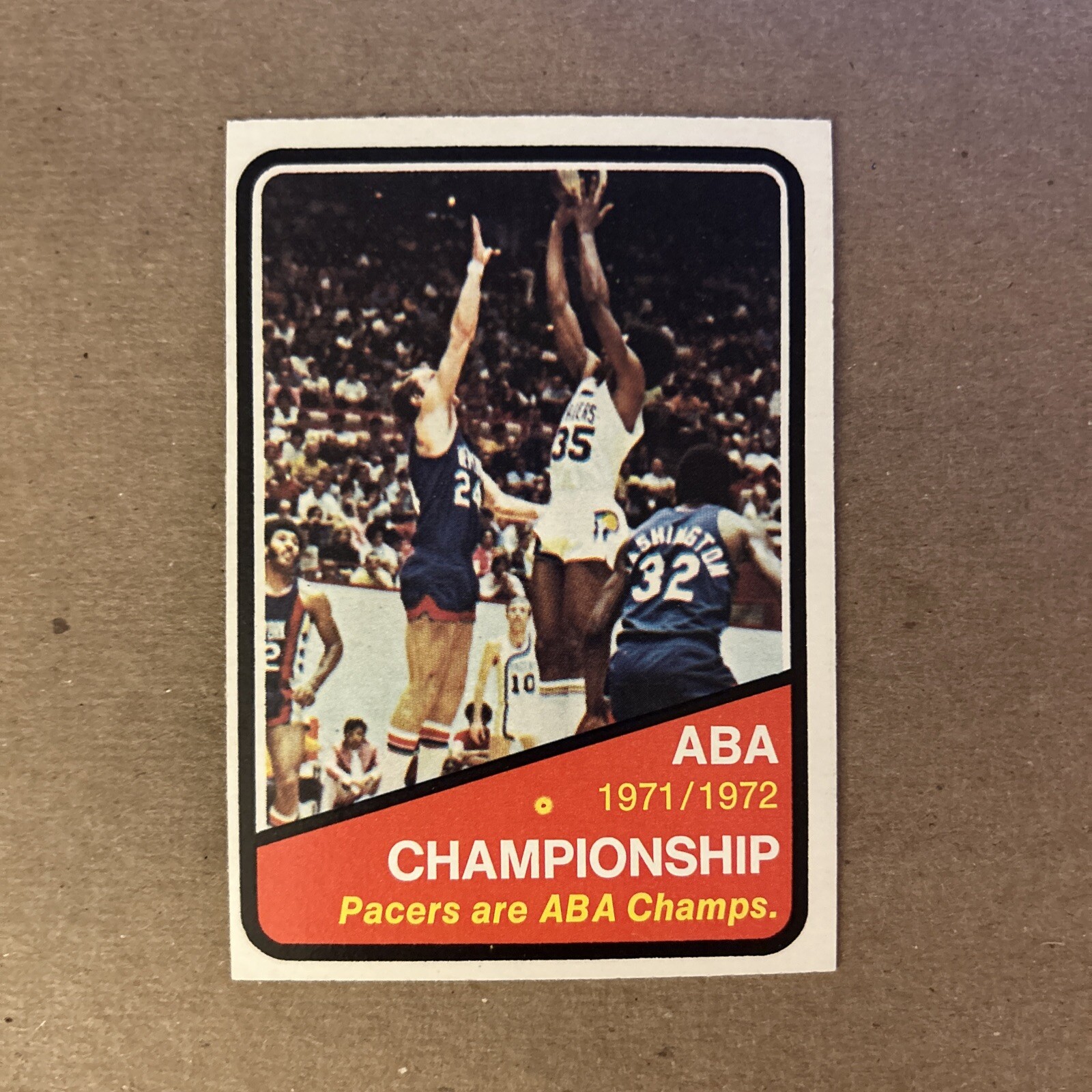
The Indiana Pacers returned to championship dominance in 1972, taking on Rick Barry and the New York Nets. Guard Freddie Lewis earned Finals MVP honors by directing Indiana's balanced offense, while Mel Daniels anchored the defense. Indiana closed out the series in Game 6 on the Nets' home court at the Nassau Veterans Memorial Coliseum, securing their second ABA title.
1973: Indiana Pacers Defeat Kentucky Colonels (4–3)
The Indiana Pacers achieved the first and only back-to-back championship run in ABA history by defeating the Kentucky Colonels in seven games. The series was a physical battle between Indiana's power forward George McGinnis and Kentucky's 7-foot-2 center Artis Gilmore. McGinnis earned Playoffs MVP recognition, bringing Indiana its third championship in four years and establishing the Pacers as the preeminent franchise of the ABA.
1974: New York Nets Defeat Utah Stars (4–1)
The balance of power in the ABA shifted dramatically in 1973 when the New York Nets acquired forward Julius Erving ("Dr. J") from the Virginia Squires. Erving led the ABA in scoring and won the regular-season MVP award before carrying New York through the 1974 playoffs. The Nets defeated the Utah Stars in five games, with Erving dominating both ends of the floor to capture his first ABA Championship and Finals MVP award.
1975: Kentucky Colonels Defeat Indiana Pacers (4–1)
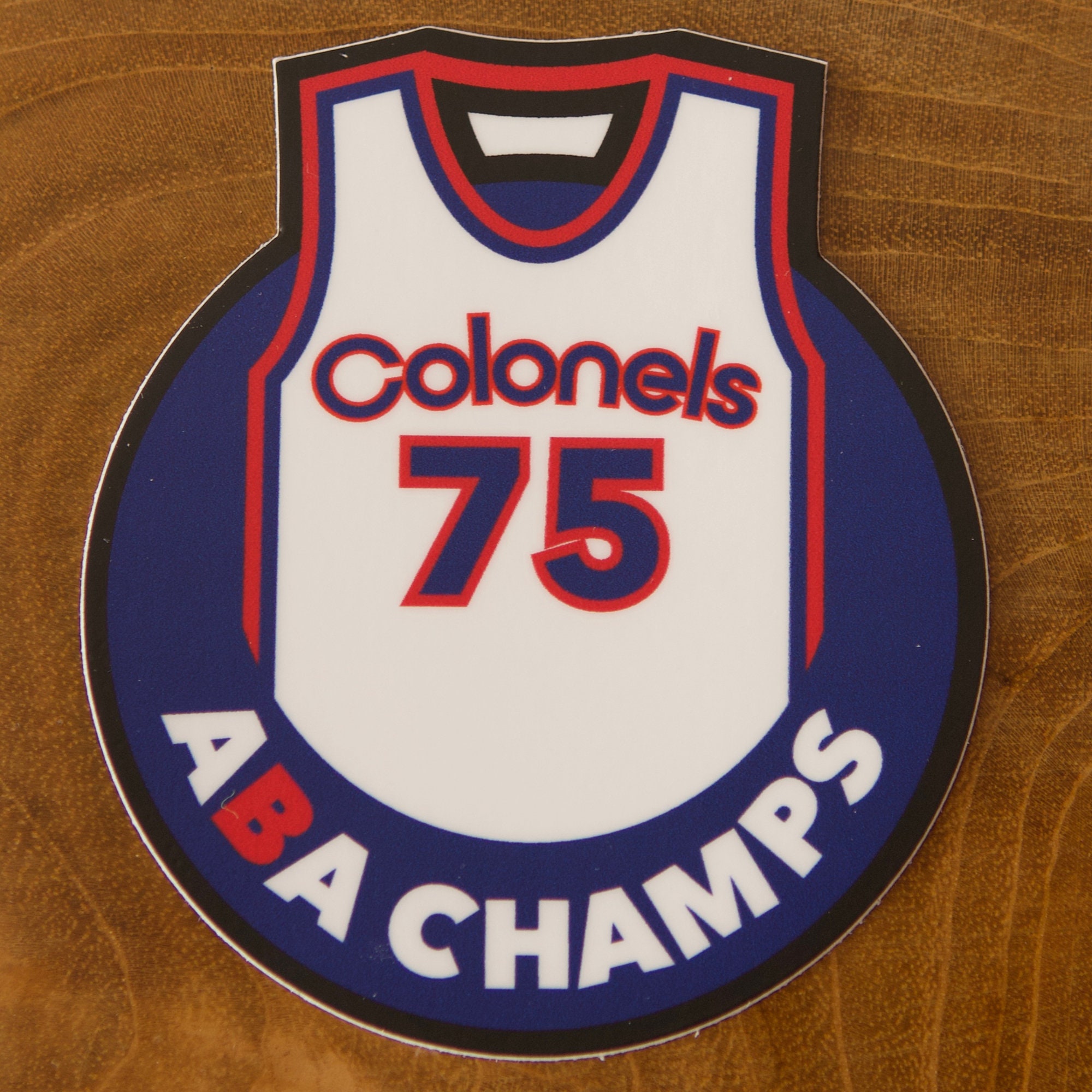
After years of playoff heartbreak, the Kentucky Colonels finally captured an ABA title in 1975. Coached by Hubie Brown, Kentucky boasted a formidable frontcourt featuring Artis Gilmore and Dan Issel. The Colonels decisively defeated their long-time rivals, the Indiana Pacers, in five games. Gilmore delivered a legendary performance in the championship-clinching Game 5, recording 28 points and 31 rebounds to earn Playoffs MVP honors.
1976: New York Nets Defeat Denver Nuggets (4–2)
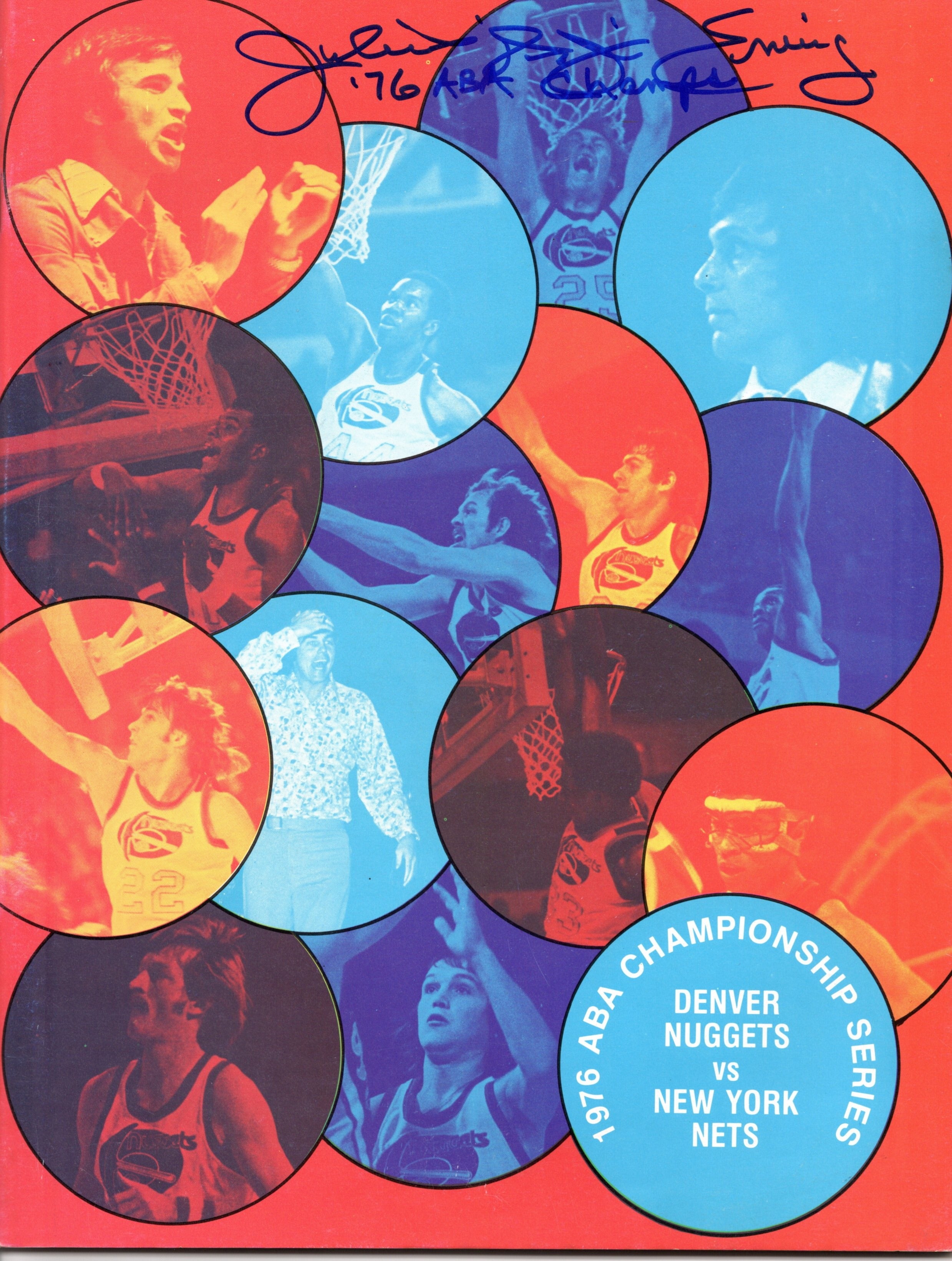
The final ABA season ended with a historic matchup between the league's two top franchises: Julius Erving's New York Nets and Larry Brown's 60-win Denver Nuggets. Erving put on an unmatched display of athleticism and scoring, averaging 37.7 points, 14.2 rebounds, and 6.0 assists per game during the series. In Game 6, the Nets rallied from a 22-point third-quarter deficit to defeat Denver 112–106 at Nassau Coliseum, crowning the Nets as the final ABA Champions.
Complete ABA Championship Finals Records
The following table details the results, series scores, head coaches, and Playoff MVPs for all nine ABA Championship series from 1968 to 1976.
| Year | ABA Champion | Runner-Up | Series Score | Champion Head Coach | Playoffs / Finals MVP |
|---|---|---|---|---|---|
| 1968 | Pittsburgh Pipers | New Orleans Buccaneers | 4–3 | Vince Cazzetta | Connie Hawkins |
| 1969 | Oakland Oaks | Indiana Pacers | 4–1 | Alex Hannum | Warren Jabali |
| 1970 | Indiana Pacers | Los Angeles Stars | 4–2 | Slick Leonard | Roger Brown |
| 1971 | Utah Stars | Kentucky Colonels | 4–3 | Bill Sharman | Zelmo Beaty |
| 1972 | Indiana Pacers | New York Nets | 4–2 | Slick Leonard | Freddie Lewis |
| 1973 | Indiana Pacers | Kentucky Colonels | 4–3 | Slick Leonard | George McGinnis |
| 1974 | New York Nets | Utah Stars | 4–1 | Kevin Loughery | Julius Erving |
| 1975 | Kentucky Colonels | Indiana Pacers | 4–1 | Hubie Brown | Artis Gilmore |
| 1976 | New York Nets | Denver Nuggets | 4–2 | Kevin Loughery | Julius Erving |
Note: Playoff MVP awards were officially recognized across the ABA postseason performance.
The Four Merger Franchises and Their Post-ABA Trajectory
When the ABA ceased operations in June 1976, the NBA agreed to absorb four ABA franchises upon payment of a $3.2 million expansion fee per team. These four teams played a central role in ABA Championship history:
- Indiana Pacers: The most successful franchise in ABA history, reaching five finals and winning three titles (1970, 1972, 1973). The Pacers brought a passionate fanbase and a established culture of success into the NBA.
- New York Nets: Winners of two ABA titles (1974, 1976), the Nets were the premier media-market franchise of the ABA. Financial obligations stemming from the merger forced the Nets to sell Julius Erving's contract to the Philadelphia 76ers shortly before their NBA debut. The franchise later relocated to New Jersey before becoming the modern Brooklyn Nets.
- Denver Nuggets: Originally founded as the Denver Rockets before changing their name in 1974, Denver was one of the league's most stable franchises. Though they fell short in the 1976 ABA Finals, the Nuggets featured stars like David Thompson and Dan Issel, transitioning smoothly into an NBA playoff contender.
- San Antonio Spurs: Originally the Dallas Chaparrals, the franchise moved to San Antonio in 1973 and developed a massive regional following. Led by George "The Iceman" Gervin, the Spurs competed in multiple Eastern and Western Division Finals, establishing the groundwork for what would become one of the most successful NBA franchises in modern history.
The remaining ABA teams were either folded prior to the merger (such as the Virginia Squires) or received financial buyouts to cease operations, most notably the Kentucky Colonels and Spirits of St. Louis. Detailed historical accounts of these team transitions are documented by the Naismith Memorial Basketball Hall of Fame, which honors many of the key players and executives involved in the merger.
Hall of Fame Stars Who Defined the ABA Finals
The competitive caliber of the ABA Championship was regularly validated by the extraordinary talent of its marquee stars, many of whom went on to dominate the NBA and earn induction into the Naismith Memorial Basketball Hall of Fame.
Julius Erving ("Dr. J")
Julius Erving revolutionized the game of basketball with his above-the-rim athleticism, swooping dunks, and fluid floor movement. Erving won two ABA Championships with the New York Nets (1974, 1976) and three consecutive ABA MVP awards (1974–1976). His performance in the 1976 ABA Finals remains one of the most spectacular individual postseason runs in basketball history.
Connie Hawkins
Connie Hawkins provided the ABA with instant credibility during its inaugural 1967–1968 season. Known for his large hands and effortless ball handling, Hawkins led the Pittsburgh Pipers to the first ABA Championship while earning both regular-season MVP and Playoff MVP honors.
Rick Barry
Rick Barry made national headlines in 1967 when he became the first major NBA star to jump to the ABA, signing with the Oakland Oaks. Barry led Oakland to the best record in the league during the 1968–1969 season and later guided the New York Nets to the 1972 ABA Finals, showcasing the high level of play present in the rival league.
Mel Daniels and Roger Brown
The foundation of the Indiana Pacers dynasty rested on the shoulders of center Mel Daniels and swingman Roger Brown. Daniels was a two-time ABA MVP who anchored the interior defense, while Brown was widely considered one of the most clutch playoff performers in professional basketball, leading Indiana to three titles.
Artis Gilmore and Dan Issel
The Kentucky Colonels' frontcourt pair of Artis Gilmore and Dan Issel created one of the most dominant inside combinations in basketball history. Gilmore's rim protection and rebound prowess paired perfectly with Issel's scoring versatility, culminating in their 1975 ABA Championship victory over Indiana.
Structural Innovations Introduced by the ABA Championship
The American Basketball Association was widely regarded as an innovative laboratory for professional basketball. Many rules and fan-focused elements tested during the ABA regular season and showcased during the ABA Finals were later adopted by the NBA and international basketball federations:
- The Three-Point Field Goal: While rejected by the NBA for decades, the ABA adopted the three-point line in 1967 to open up the court, enable quick comebacks, and reward outside shooting. The NBA eventually adopted the three-point line for the 1979–1980 season.
- The Slam Dunk Contest: The ABA hosted the first professional Slam Dunk Contest during the 1976 ABA All-Star Game in Denver, featuring Julius Erving's iconic leap from the free-throw line. The NBA adopted the event as a permanent feature of All-Star Weekend starting in 1984.
- Up-Tempo Pace of Play: ABA coaches prioritized fast breaks, high-scoring offenses, and aggressive pressing defenses over the slower, more rigid half-court sets common in the 1960s NBA.
- The Red, White, and Blue Basketball: Designed to provide visual excitement for television audiences and arena spectators, the multi-colored ball became the ultimate visual symbol of the ABA's distinct identity.
Historians and sports analytics organizations, such as Basketball Reference, maintain comprehensive stat records confirming that the ABA played at a faster pace and higher possession count than its NBA counterpart throughout the early 1970s.
Frequently Asked Questions
Which team won the most ABA Championships?
The Indiana Pacers won the most ABA Championships, capturing three titles in 1970, 1972, and 1973. They also appeared in two additional finals (1969 and 1975), making them the most successful franchise in the league's nine-year history.
Who was the final ABA Champion before the NBA merger?
The New York Nets were the final ABA Champions. Led by superstar forward Julius Erving, the Nets defeated the Denver Nuggets 4 games to 2 in the 1976 ABA Finals, closing out the series on May 13, 1976.
How many former ABA teams are in the NBA today?
Four former ABA teams joined the NBA during the 1976 merger and continue to play in the NBA today: the Indiana Pacers, Brooklyn Nets (formerly New York Nets), Denver Nuggets, and San Antonio Spurs.
Did the ABA use the three-point line in championship games?
Yes, the ABA used the three-point line in all official games, including every ABA Championship series from 1968 through 1976. The three-point shot was a defining tactical feature of the league's high-scoring playoff games.
Who won the 1976 ABA Slam Dunk Contest?
Julius Erving ("Dr. J") won the inaugural 1976 ABA Slam Dunk Contest held during halftime of the ABA All-Star Game in Denver, Colorado. Erving famously secured the victory by executing a dunk after taking off from the free-throw line.
Verifying ABA Historical Records and Continuing Research
To explore official statistics, game box scores, and detailed player archives from the ABA Championship era, researchers and fans can consult established basketball databases and historical preservation societies:
- Naismith Memorial Basketball Hall of Fame Archives: Contains primary biographies, oral histories, and artifacts from ABA players, coaches, and contributors.
- Official NBA Encyclopedia and Historical Records: Documents the statistical integration of ABA career totals into merged NBA-ABA historical leaderboards.
- Remember the ABA Educational Resource: Dedicated to preserving the complete game-by-game results, roster movements, arena histories, and uniform designs of all 11 original ABA franchises.
Understanding the history of the ABA Championship provides crucial context for how modern professional basketball evolved into a high-scoring, perimeter-oriented, and global sport.