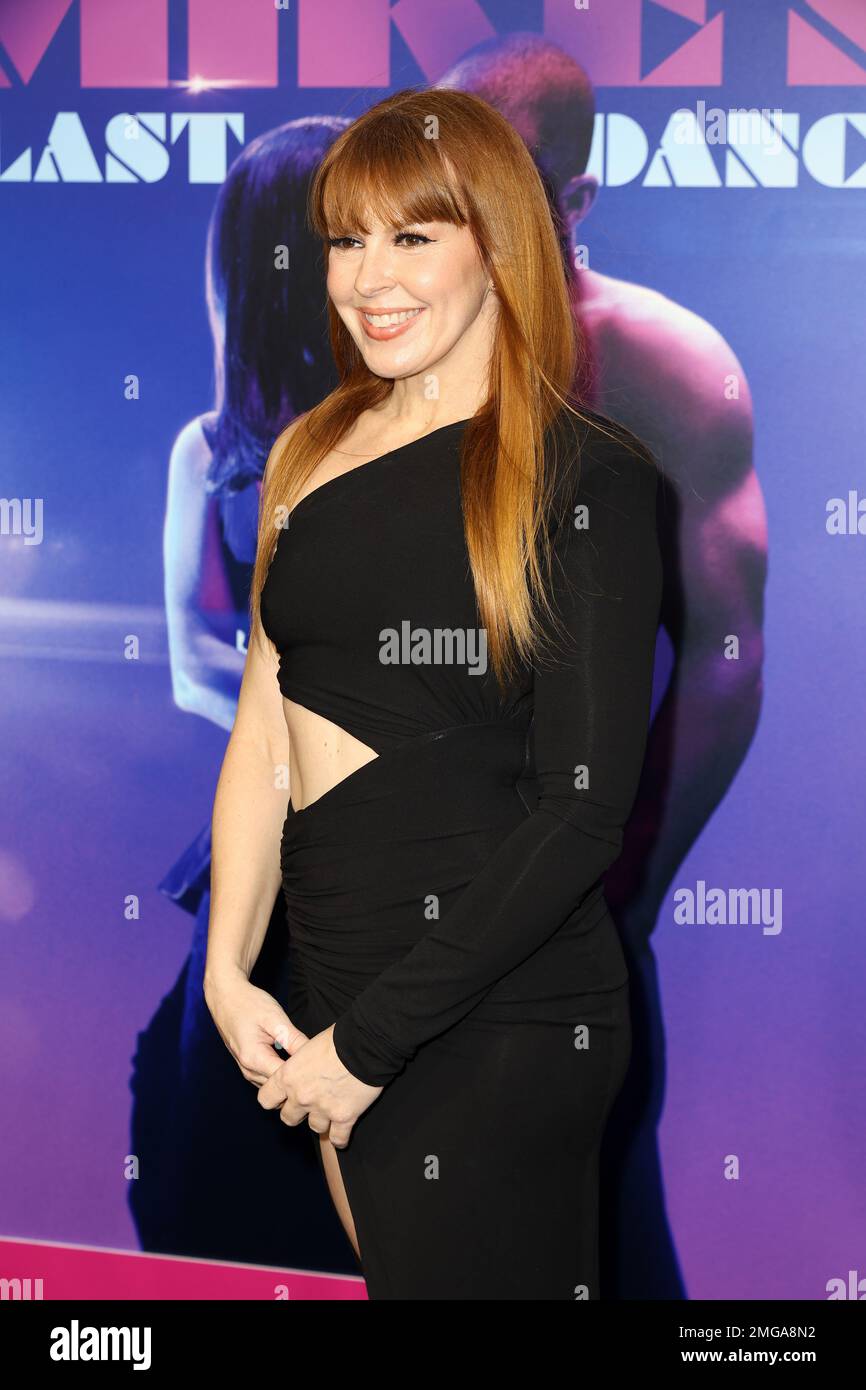
Alison Faulk is a world-renowned choreographer and dancer celebrated for her high-impact, athletic style and her transformative work in the Magic Mike franchise. By 2026, her career spans three decades of industry-defining choreography for global pop icons, major motion pictures, and immersive live stage productions worldwide.
The Formative Years and Professional Origins of Alison Faulk
Alison Faulk’s journey into the upper echelons of the commercial dance world began with a rigorous foundation in both gymnastics and various dance disciplines. Originally from Florida, Faulk’s transition to Los Angeles marked the start of a career that would bridge the gap between street dance authenticity and high-budget commercial production. Her background as a gymnast provided her with a unique physical vocabulary—characterized by explosive power and precise body control—that would later become a hallmark of her choreographic "thumbprint."
In the early stages of her career, Faulk gained recognition as a formidable performer. She toured with legendary artists such as Janet Jackson, who is widely considered the gold standard for precision in commercial hip-hop and jazz-funk. Working under the direction of visionary choreographers during the Janet Jackson eras allowed Faulk to absorb the "theatre" of dance—the understanding that every movement must serve a narrative or an aesthetic purpose. This period was essential for her development, as it taught her the technical requirements of large-scale touring, from managing stage presence to maintaining physical longevity under grueling schedules.
By the time she transitioned from dancer to choreographer, Faulk had already established a reputation for "musicality"—the ability to catch subtle nuances in a track that others might overlook. This skill, combined with her ability to translate masculine energy into fluid movement, made her one of the most sought-after creators in Hollywood.
Defining the "Magic Mike" Movement Language
Perhaps no project has defined Alison Faulk’s public profile more than the Magic Mike film series and its subsequent live incarnations. Alongside her frequent collaborators Teresa Espinosa and Luke Broadlick, Faulk was tasked with reinventing the concept of male dance. Before Magic Mike, male revue dancing was often associated with kitsch and dated tropes. Faulk revolutionized this by injecting genuine hip-hop, contemporary floorwork, and sophisticated partnering into the routines.
Technical Breakdown of the Magic Mike Style
The choreography Faulk developed for Channing Tatum and the rest of the "Kings of Tampa" is characterized by "groundedness." Instead of performing vertical, balletic leaps, the dancers utilize the floor as a secondary partner. This involves intricate slides, knee-spins, and weight-shifts that require immense core strength. Faulk’s choreography emphasizes the "cool" factor—movements are often executed with a relaxed upper body (upper-body "swag") while the lower body performs highly technical footwork.
In Magic Mike Live, which has seen immense success in Las Vegas, London, and beyond through 2026, Faulk expanded this vocabulary into a 360-degree immersive environment. This required a shift in technical depth; the choreography had to look impressive from every angle, not just a single camera lens. The use of props—ranging from chairs and water features to aerial straps—demonstrates Faulk’s versatility in integrating external elements into a seamless dance narrative.
Collaborations with Global Pop Icons: Pink and Madonna
Beyond the world of film, Alison Faulk has been a primary architect behind some of the most successful concert tours of the 21st century. Her long-standing relationship with Pink (Alecia Moore) resulted in some of the most physically demanding choreography in pop history. Faulk contributed heavily to the Truth About Love and Beautiful Trauma world tours, where the challenge was to blend high-intensity dance with Pink’s signature aerial acrobatics.
Choreographing for an artist like Pink requires an understanding of "athletic grace." Faulk’s routines for Pink often utilize a mix of street-jazz and combat-inspired movements, reflecting the artist’s rebellious and powerful persona. The technical difficulty of these routines is amplified by the fact that the dancers must often transition from a high-energy dance sequence directly into an aerial harness or a high-speed lift.
Faulk’s work with Madonna on the Confessions and Sticky & Sweet tours further cemented her status. Madonna is known for her meticulous attention to detail and her demand for perfection. Faulk’s ability to deliver choreography that was both avant-garde and technically precise met the high standards of the "Queen of Pop." In these tours, Faulk helped blend disco-era revivalism with modern hip-hop, showing her range as a stylistic chameleon who can adapt to any musical genre.
The Beat Freaks and the Influence of Street Dance
A significant chapter in Alison Faulk’s bio is her membership in the Beat Freaks, an all-female dance crew that rose to mainstream fame on MTV’s America’s Best Dance Crew. The Beat Freaks represented a shift in the dance industry, proving that female dancers could compete at the highest levels of "breaking" and "popping"—styles traditionally dominated by men.
Within the Beat Freaks, Faulk was known for her "top-rocking" and her ability to execute power moves with a feminine flair. The crew’s motto, "Respect the Female," resonated throughout the dance community and influenced Faulk’s later choreographic work. She often incorporates "tomboy" aesthetics into her choreography, prioritizing strength and technical skill over traditional "pretty" dancing. This influence is visible in her work for films like Step Up 2: The Streets, where the battle-hardened, raw energy of street dance was the primary focus.
Analysis of Signature Dance Moves and Choreographic Habits
To understand Alison Faulk’s work is to understand her use of levels and rhythm. Unlike choreographers who stay on a single plane, Faulk’s routines frequently move from high (jumping/standing) to mid (crouched/kneeling) to low (floorwork/slides).
- The Power Slide: A staple in her male-focused choreography, this involves a dancer launching into a horizontal slide across the floor, often ending in a controlled pose or a "freeze." It requires specific knee-protection techniques and a mastery of momentum.
- The Syncopated Isolation: Faulk often breaks down a single beat into three or four micro-movements. For example, a head-snap might be followed by a shoulder-drop and a hip-tick within a single second, creating a visual "stutter" effect that looks incredibly sharp to the audience.
- Partnering Tension: In her duo work, Faulk uses "resistance" as a tool. Instead of simple lifts, the dancers often pull away from each other or use each other’s weight to create a slingshot effect. This adds a layer of emotional tension and physical realism to the performance.
Historical Milestones and Career Credits
The following table summarizes the key milestones in Alison Faulk's career up to 2026, highlighting her diverse range across film, stage, and music.
| Year | Project / Production | Role | Primary Dance Style |
|---|---|---|---|
| 2004 | Madonna: Re-Invention Tour | Dancer | Contemporary / Jazz-Funk |
| 2008 | Step Up 2: The Streets | Associate Choreographer | Street Dance / Hip-Hop |
| 2009 | America's Best Dance Crew | Performer (Beat Freaks) | Breaking / Popping |
| 2012 | Magic Mike (Film) | Lead Choreographer | Urban / Male Revue |
| 2013 | Pink: Truth About Love Tour | Choreographer | Athletic Pop / Aerial |
| 2015 | Magic Mike XXL | Lead Choreographer | Contemporary / Hip-Hop |
| 2017 | Magic Mike Live (London/Vegas) | Co-Director / Choreographer | Immersive / Acrobatic |
| 2023 | Magic Mike's Last Dance | Lead Choreographer | Ballroom-Infused Urban |
| 2024-26 | Global Dance Workshops | Master Instructor | Technical Hip-Hop |
Technical Innovation in Dance Cinematography
In 2026, Faulk is also recognized for her contributions to how dance is filmed. In the Magic Mike films, she worked closely with directors like Steven Soderbergh to ensure the camera was an active participant in the dance. This involves "choreographing the camera," where the lens moves in sync with the dancers to emphasize the speed and impact of the moves.
Faulk advocates for long takes and wide shots in dance films, a departure from the "shaky cam" and fast-cutting style that can often obscure a dancer’s skill. Her philosophy is that if the choreography is strong enough, the audience should be allowed to see the full body in motion. This technical preference has influenced a new generation of dance filmmakers who prioritize the integrity of the movement over post-production editing tricks.
FAQ: Common Questions About Alison Faulk
What is Alison Faulk's background in gymnastics?
Alison Faulk was a competitive gymnast before transitioning to professional dance. This background is the foundation of her "power-based" choreography. It allows her to incorporate flips, handstands, and high-degree flexibility moves into standard hip-hop routines, making her work appear more acrobatic and physically demanding than traditional commercial dance.
How did she get involved with the Magic Mike franchise?
Faulk was brought on because of her ability to create "cool," authentic hip-hop movement that felt masculine yet accessible. She collaborated closely with Channing Tatum, who already had a background in street dance, to develop a language that felt like a natural extension of his character. Her success in the first film led her to become the creative backbone of the entire franchise, including the live stage shows.
Is Alison Faulk still a member of the Beat Freaks?
Yes, Alison Faulk remains an integral part of the Beat Freaks legacy. While the individual members often pursue solo choreography careers, the crew reunites for special projects, workshops, and advocacy for women in the street dance community. Their influence continues to be a major part of Faulk’s professional identity.
What are the "signature moves" to look for in her choreography?
Look for "knee-work" and "floor-slides." Faulk is a master of using the ground as a tool for momentum. Additionally, her choreography often features sudden changes in tempo—moving from very slow, liquid motions to explosive, high-speed bursts. This "texture" is what makes her routines stand out in the commercial industry.
Has Alison Faulk won any awards for her choreography?
Faulk has been nominated for and won several prestigious awards, including the World Choreography Awards for her work on Magic Mike and Pink’s tours. She has also received Emmy nominations for her contributions to television specials and live performances, cementing her status as a top-tier industry professional.
Advancing Your Dance Education Through Faulk’s Methods
For aspiring dancers and choreographers in 2026, studying Alison Faulk’s work offers a masterclass in versatility and physical storytelling. To move like a "Faulk-trained" dancer, one must prioritize core strength and floor-to-standing transitions. Practicing "isolations" with a focus on heavy, grounded beats is the first step in mastering her style.
Those interested in following her career path should seek out her authorized masterclasses or digital tutorials, which often focus on the intersection of athleticism and musicality. By analyzing her film work—specifically the uncut dance sequences in the Magic Mike series—students can learn the importance of lines, spacing, and the "energy" required to command a stage. The next step for any serious student is to focus on "cross-training"; just as Faulk blended gymnastics with hip-hop, the modern dancer must be proficient in multiple physical disciplines to meet the demands of current high-production choreography.