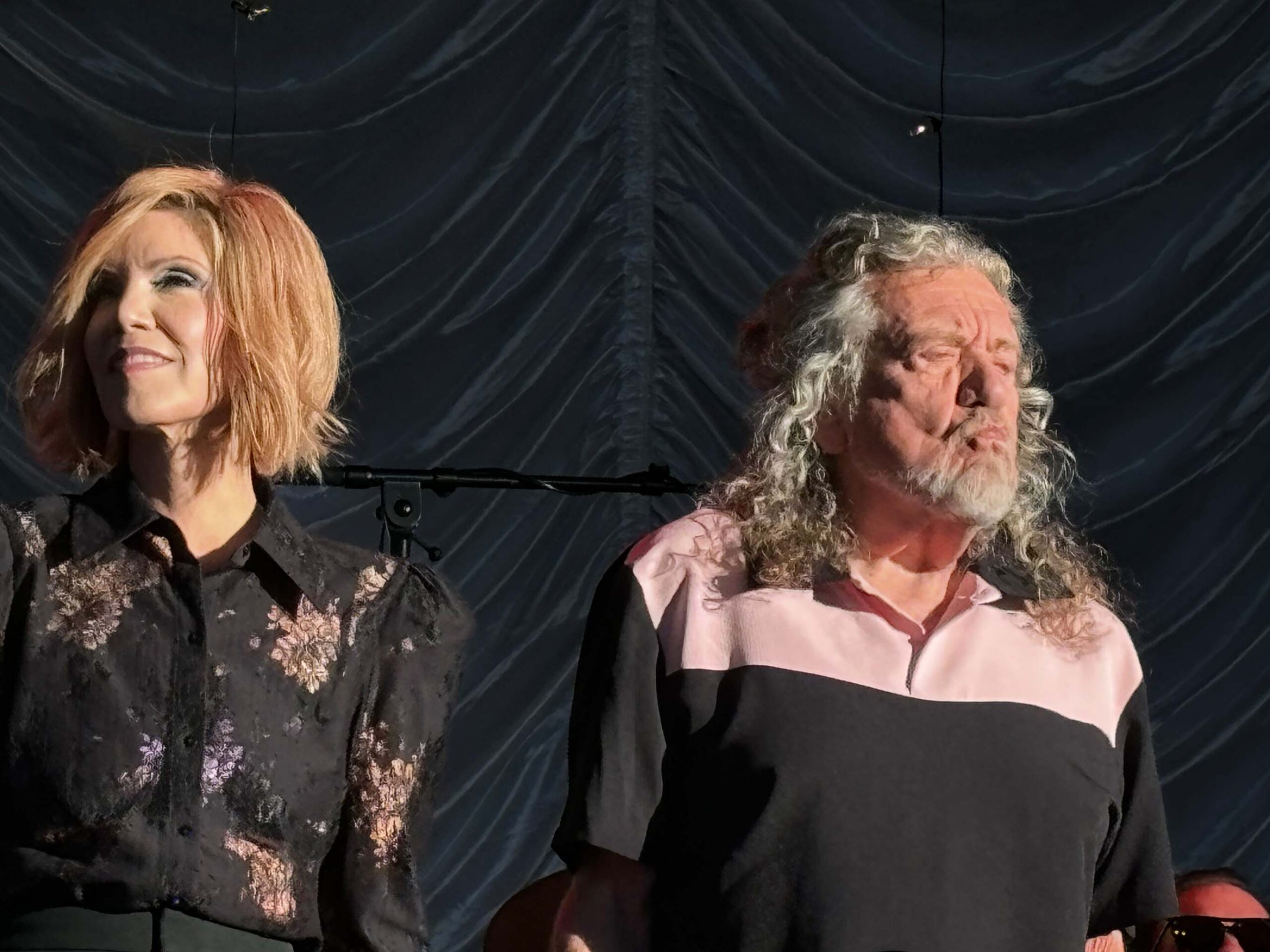
The relationship between Alison Krauss and Robert Plant is a profoundly successful professional partnership and a deep friendship that has redefined the boundaries of Americana and roots music. While fans have long speculated about a romantic connection, the duo has consistently maintained that their bond is strictly "musical and platonic," characterized by a shared obsession with vocal harmony and historical songcraft.
The Genesis of an Unlikely Partnership
The collaboration between Robert Plant, the legendary frontman of Led Zeppelin, and Alison Krauss, the most decorated female artist in Grammy history (within the bluegrass/country realm), seemed improbable to many music critics when it was first announced. The two occupied entirely different sonic universes: Plant was the "Golden God" of 1970s hard rock, while Krauss was the pristine, precision-focused voice of modern bluegrass.
Their paths first crossed in 2004 during a tribute concert for blues legend Lead Belly at Case Western Reserve University. It was here that the seeds of a partnership were sown. Despite their disparate backgrounds, they discovered a mutual reverence for the "High Lonesome" sound and traditional American music. This shared curiosity led them to seek out a producer who could bridge the gap between British rock sensibility and Appalachian tradition. They found that bridge in T Bone Burnett.
Burnett’s involvement was the catalyst for their debut collaboration. He curated a selection of obscure tracks that forced both artists out of their comfort zones. For Plant, it meant reigning in his stadium-filling belts to find a delicate, hushed resonance. For Krauss, it meant leaning into the grit and shadows of blues and folk-rock.
Raising Sand: A Cultural Phenomenon
Released in October 2007, Raising Sand became one of the most celebrated albums of the 21st century. It was not merely a "duet album" but a transformative sonic experience. The record featured covers of artists ranging from Tom Waits and Gene Clark to Townes Van Zandt and Mel Tillis.
The success of Raising Sand can be attributed to the specific vocal chemistry between the two. Krauss’s ethereal, crystalline soprano acted as a counterpoint to Plant’s weathered, baritone-leaning tenor. Instead of traditional "call and response" styles, they often sang in a tight, haunting unison or close harmony that made their two voices sound like a single, complex instrument.
The album’s impact was cemented at the 51st Annual Grammy Awards in 2009, where it swept all five categories for which it was nominated, including the prestigious Album of the Year. This win was significant because it validated the "Americana" genre at a time when mainstream radio was dominated by pop and high-gloss country.
Clarifying the Nature of Their Relationship
Whenever a male and female artist exhibit intense creative chemistry, rumors of a romantic relationship inevitably follow. Throughout their two decades of intermittent collaboration, both Plant and Krauss have addressed these rumors with a mix of humor and firm denial.
As of 2026, the nature of their relationship remains defined by the following characteristics:
- Mutual Artistic Respect: Plant has frequently described Krauss as a "teacher," noting that her rigorous attention to vocal detail and pitch forced him to become a better singer. Krauss, in turn, has praised Plant's fearless creativity and his ability to inhabit a song's narrative.
- The "Odd Couple" Dynamic: They often joke about their personality differences. Krauss is known for her meticulousness and organization, while Plant retains a more bohemian, improvisational approach to life and performance.
- Strictly Professional Boundaries: In various interviews, they have referred to their partnership as a "musical marriage" that thrives precisely because it lacks the complications of a personal romantic involvement. They share a deep bond of friendship, often spending time together offstage discussing obscure vinyl records and historical folk traditions.
The chemistry seen on stage is a result of technical mastery and a genuine liking for one another’s company, rather than a hidden romance. Their ability to maintain this professional distance while delivering such intimate vocal performances is a testament to their skill as interpretive artists.
The Fourteen-Year Hiatus and Raise the Roof
Following the massive success of Raising Sand and the subsequent 2008 tour, fans expected a quick follow-up. However, the duo famously struggled to capture the same magic during early recording sessions for a second album in 2009. Rather than force a mediocre product, they chose to walk away and return to their respective solo careers. Plant focused on his Band of Joy and the Sensational Space Shifters, while Krauss continued her work with Union Station and released solo projects.
It wasn't until 2021 that they finally released their sophomore effort, Raise the Roof. Again produced by T Bone Burnett, the album followed the successful blueprint of its predecessor—carefully selected covers that emphasized mood and atmosphere over technical flash.
Raise the Roof proved that the chemistry between Plant and Krauss was not a one-time fluke. The album featured tracks by Merle Haggard, Lucinda Williams, and Bert Jansch, showing a continued dedication to the roots of Anglo-American music. The critical reception was overwhelmingly positive, leading to several more Grammy nominations and a multi-year world tour that extended through 2024 and 2025.
Key Collaborations and Discography
The collaborative output of Alison Krauss and Robert Plant is lean but exceptionally high in quality. They have prioritized the "curation" of songs, searching for tracks that fit their specific harmonic blend.
| Year | Release / Event | Key Tracks | Major Accolades |
|---|---|---|---|
| 2007 | Raising Sand (Album) | "Please Read the Letter," "Gone Gone Gone," "Rich Woman" | 6 Grammy Awards including Album of the Year |
| 2008 | Raising Sand World Tour | Live renditions of Led Zeppelin and Bluegrass classics | Sold-out venues globally |
| 2015 | "Light of Christmas Day" | Featured on Love the Coopers Soundtrack | Notable holiday collaboration |
| 2021 | Raise the Roof (Album) | "Can't Let Go," "High and Lonesome," "It Don't Bother Me" | Multi-Grammy nominations, Billboard #1 Americana/Folk |
| 2022-24 | "Can't Let Go" World Tour | Reimagined "When the Levee Breaks" and "The Battle of Evermore" | Critical acclaim for vocal evolution |
Live Performances and Touring Dynamics
One of the most fascinating aspects of the Plant-Krauss collaboration is how they handle their individual legacies during live performances. In their tours spanning from 2008 to 2025, the setlists were carefully balanced to honor both their collaborative work and their individual histories.
Specifically, the reimagining of Led Zeppelin songs became a highlight of their shows. Under the influence of Krauss and Burnett, tracks like "Black Dog," "When the Levee Breaks," and "The Battle of Evermore" were stripped of their heavy rock orchestration. They were transformed into eerie, folk-driven pieces featuring banjos, fiddles, and the duo's signature harmonies. This approach allowed Plant to revisit his past without attempting to replicate the youthful banshee wail of his 20s, while Krauss provided a haunting atmospheric layer that changed the emotional weight of the songs.
On stage, their interaction is characterized by subtle cues. Plant often defers to Krauss for vocal direction, while Krauss provides the steady melodic foundation that allows Plant to improvise. This dynamic has remained consistent throughout their decades-long friendship.
Three Pillars of Their Collaborative Sound
- Vocal Restraint: Unlike many modern duets that focus on "diva" moments and power-singing, Plant and Krauss prioritize the "hush." Their best moments occur when they are singing at a near-whisper, forcing the audience to lean in.
- Rhythmic Reinterpretation: They often take upbeat rock or country songs and slow them down, emphasizing the lyrics' darker or more melancholic themes.
- Instrumental Textures: By utilizing T Bone Burnett’s "junk shop" percussion and tremolo-heavy guitars, they create a soundscape that feels both ancient and modern.
Frequently Asked Questions
Are Robert Plant and Alison Krauss married?
No, they are not married to each other and have never been a romantic couple. Robert Plant has been married once (to Maureen Wilson, divorced in 1983) and has had several high-profile relationships since. Alison Krauss was married to Pat Bergeson from 1997 to 2001. They describe their relationship as a deep, platonic friendship built on a shared love of music.
How many albums have they recorded together?
As of 2026, they have recorded two full-length studio albums together: Raising Sand (2007) and Raise the Roof (2021). They have also contributed to a few soundtracks and performed numerous live specials together, such as CMT Crossroads and various NPR Tiny Desk sessions.
Why did it take 14 years to release a second album?
The duo attempted to record a follow-up shortly after the success of Raising Sand, but they felt the material and the "vibe" weren't right. They both believe that their collaboration cannot be forced and must happen organically when they find the right collection of songs that suit their current vocal stages. They waited until the timing and the repertoire felt as strong as their first outing.
Who produces their collaborative work?
The majority of their collaborative work has been produced by T Bone Burnett. Burnett is widely credited with being the "third member" of the group, responsible for the distinct, atmospheric, and reverb-drenched sound that defines their records.
Do they perform Led Zeppelin songs together?
Yes. During their tours, they frequently perform reimagined versions of Led Zeppelin classics. These versions usually replace the hard rock electric guitar with acoustic instruments and emphasize the folk and blues roots of the original songs. Common selections include "The Battle of Evermore," "Rock and Roll," and "When the Levee Breaks."
Continuing the Legacy into 2026
As we look at their standing in 2026, the collaboration between Robert Plant and Alison Krauss serves as a gold standard for cross-genre partnerships. They have demonstrated that age and differing backgrounds are no barrier to creating vital, contemporary art. Their work has influenced a new generation of Americana artists who prioritize harmony and song selection over genre labels.
For those looking to explore their work further, the best entry point remains the Raising Sand album, followed by their 2022 Glastonbury or Bonnaroo live performances, which are widely available in digital archives. Their story is a reminder that sometimes the most unlikely pairings yield the most enduring results. Whether they decide to record a third album or continue their individual paths, their place in music history as one of the greatest duos of the 21st century is firmly secured.