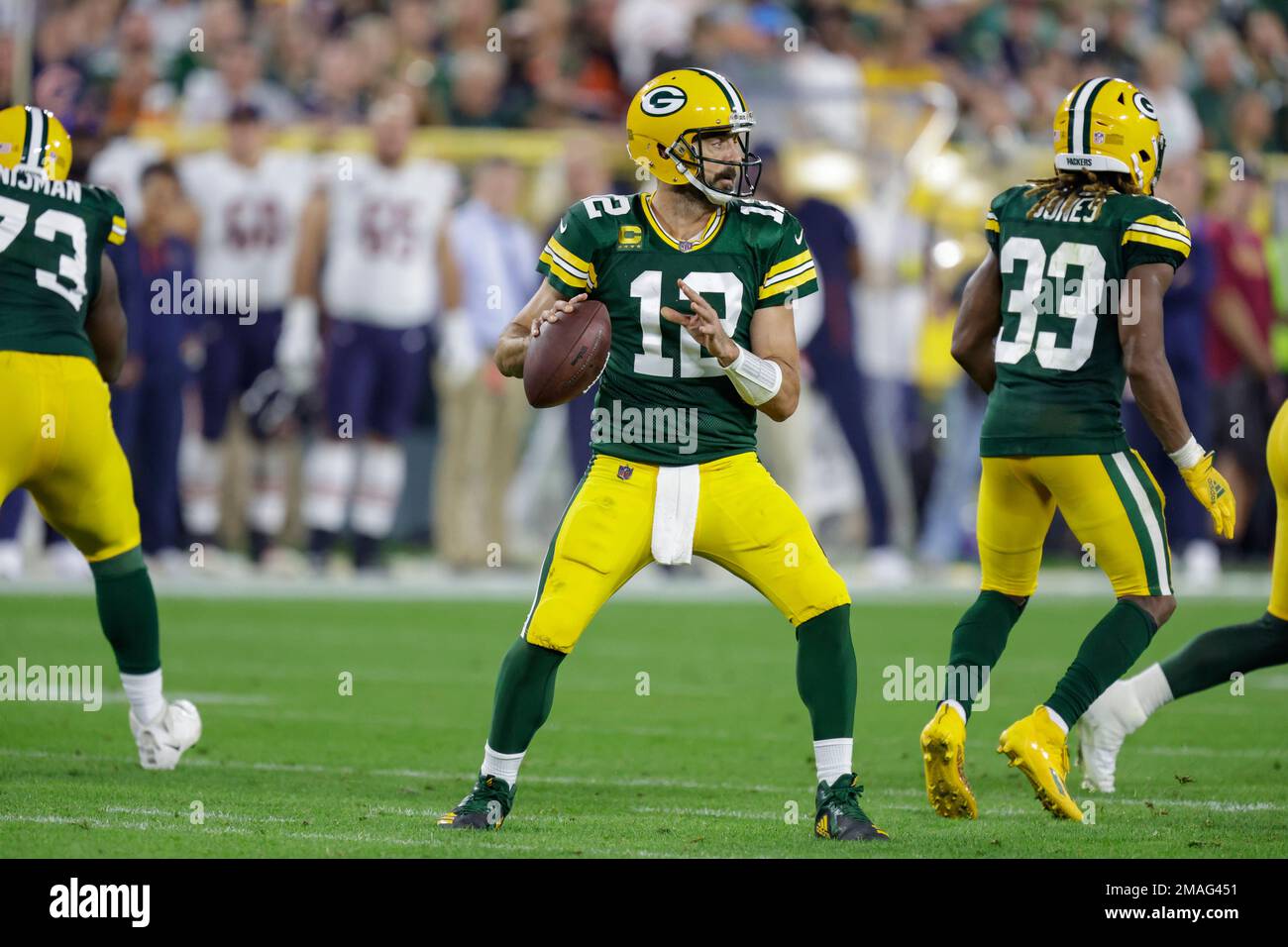
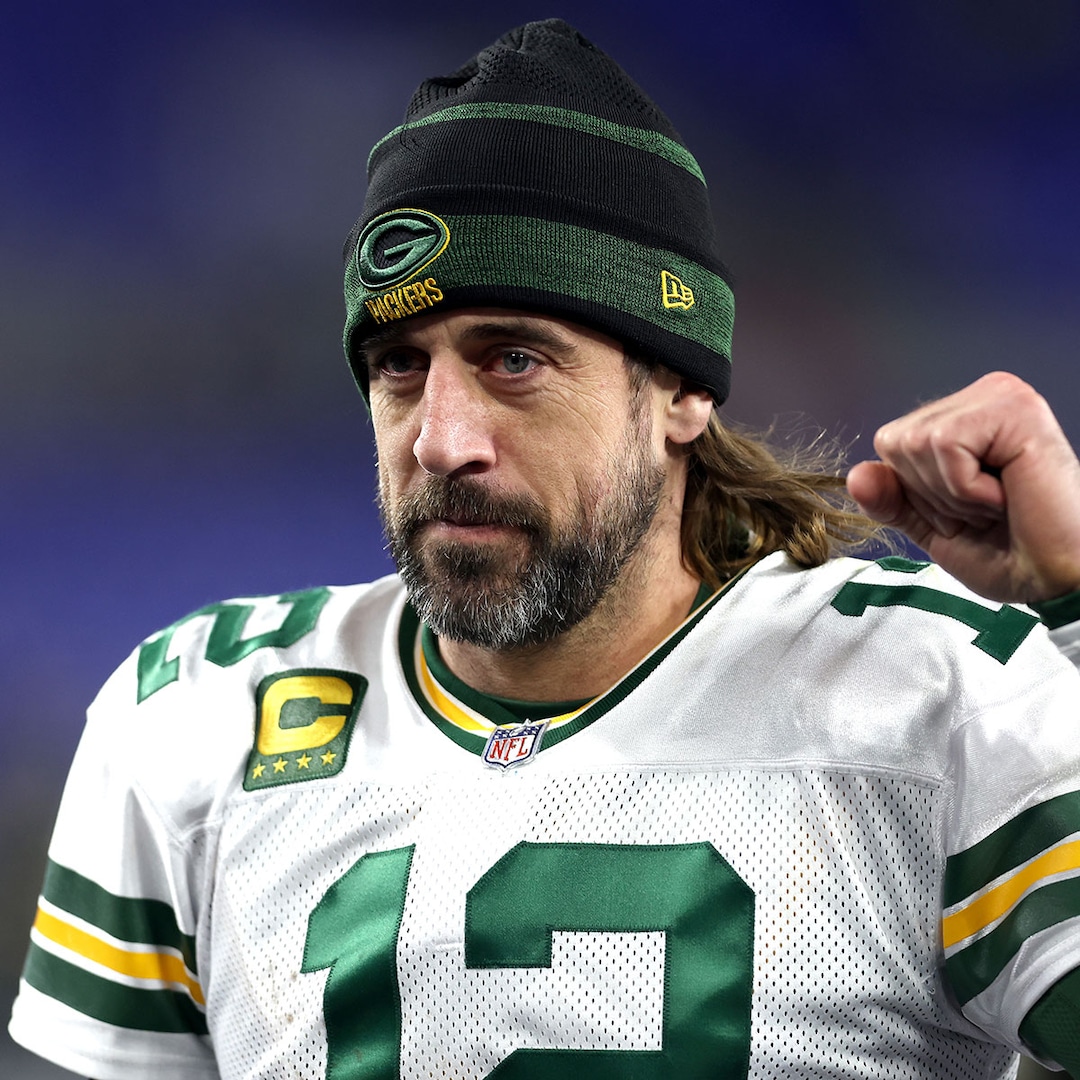
Aaron Rodgers earned approximately $305.6 million in total cumulative salary and bonuses during his 18-season tenure with the Green Bay Packers. His final contract with the team, signed in 2022, was a three-year extension worth $150.8 million, which at the time established him as the highest-paid player in NFL history per year.
The Architecture of a Record-Breaking Legacy
To understand how much Aaron Rodgers "really" earned with the Green Bay Packers, one must look beyond the base salary listed on a standard roster sheet. NFL contracts are notoriously complex, often structured with heavy front-loading, signing bonuses, and "void years" designed to manipulate the league's salary cap. From the time he was drafted in 2005 until his eventual trade in early 2023, Rodgers’ financial trajectory mirrored his ascent from a backup behind Brett Favre to a four-time NFL MVP.
During his nearly two decades in Wisconsin, Rodgers signed multiple market-setting extensions. Each deal was a reaction to the rising NFL salary cap and the premium placed on elite quarterback play. By 2026, looking back at these figures reveals a player who was not just a generational talent on the field but a pioneer in pushing the boundaries of player compensation and leverage within the collective bargaining framework.
The Final Green Bay Extension: The $150.8 Million Deal
In March 2022, following months of speculation regarding his future with the franchise, Rodgers signed what would be his final contract with the Green Bay Packers. This agreement was a three-year extension that effectively replaced the final two years of his existing deal. The headline figure was a staggering $150,815,000, with a massive $101,515,000 guaranteed at the time of signing.
Understanding the Per-Year Average
The 2022 contract carried an average annual value (AAV) of over $50.2 million. This was a psychological and financial milestone for the league, as it was the first time a player's yearly compensation crossed the $50 million threshold. For the Packers, this investment was a calculated risk aimed at maximizing a championship window, though it created significant challenges for the team's overall roster depth.
Signing Bonuses and Cash Flow
A significant portion of Rodgers' "real" earnings came via the signing bonus. In the 2022 deal, the structure was specifically designed to provide immediate liquidity to the player while allowing the team to spread the "cap hit" over several years. This is a standard NFL practice: the player receives the cash upfront, but for accounting purposes, the league allows the team to divide that bonus across the length of the contract. This explains why a player might "earn" $60 million in a single calendar year while only counting for $20 million against the team's salary cap.
Historical Progression of Rodgers' Packers Contracts
Rodgers’ earnings did not start at the $50 million mark. His financial journey reflects the massive growth of the NFL's television revenue and overall profitability over the first quarter of the 21st century.
- The Rookie Contract (2005): As the 24th overall pick, Rodgers signed a five-year deal worth approximately $7.7 million. At the time, rookie wages were not as strictly regulated as they are under the current collective bargaining agreement, but as a late first-round pick, his initial earnings were modest compared to his later output.
- The First Extension (2008): Before he had even completed a full season as a starter, the Packers showed faith in Rodgers with a six-year, $65 million extension. This moved him into the upper echelon of starters and secured his future in Green Bay.
- The 2013 Mega-Deal: Following his first Super Bowl victory and MVP award, Rodgers signed a five-year, $110 million extension. This made him the highest-paid player in the league at that moment, a recurring theme in his career.
- The 2018 Extension: This four-year, $134 million deal included a record-breaking $57.5 million signing bonus. It was structured to ensure Rodgers remained the cornerstone of the franchise through his mid-30s.
Real Earnings vs. Salary Cap Hits
It is vital to distinguish between what the Packers paid Rodgers (cash) and how he was accounted for on the books (cap hit). For example, in 2022, Rodgers received a massive influx of cash, yet his salary cap number was kept relatively manageable to allow the team to retain other veteran players.
When Rodgers was eventually traded to the New York Jets in April 2023, he left behind a "dead money" hit of approximately $40.3 million on the Packers' 2023 salary cap. This was the accounting "bill" coming due for the bonuses the team had already paid him in previous years. To "really" earn money in the NFL, players prefer large signing bonuses because that money is virtually always guaranteed, whereas base salaries are often only guaranteed for injury or can be cut if the player’s performance declines.
| Contract Year/Period | Total Value | Guaranteed Amount | Average Annual Value (AAV) | Key Feature |
|---|---|---|---|---|
| 2005 (Rookie) | $7.7 Million | $5.4 Million | $1.54 Million | Initial 5-year entry deal |
| 2008 Extension | $65 Million | $20 Million | $10.8 Million | First major veteran contract |
| 2013 Extension | $110 Million | $54 Million | $22.0 Million | Signed after Super Bowl XLV |
| 2018 Extension | $134 Million | $98.7 Million | $33.5 Million | Included record $57.5M bonus |
| 2022 Extension | $150.8 Million | $101.5 Million | $50.27 Million | Final Packers deal; record AAV |
Off-Field Earnings and the "Star" Premium
While the Packers paid Rodgers over $300 million in football salary, his "real" earnings were significantly higher due to endorsements. During his peak years in Green Bay, Rodgers was one of the most marketable figures in American sports.
- State Farm: The "Discount Double Check" campaign was one of the longest-running and most successful athlete-brand partnerships in history. Estimates suggest Rodgers earned between $2 million and $3 million annually from this partnership alone.
- Other Major Partnerships: Deals with Adidas, Zenith Watches, and TaylorMade added several million more to his annual take-home pay.
- Investments: Rodgers was also active in venture capital, including a minority stake in the NBA's Milwaukee Bucks, further diversifying his wealth beyond his NFL paycheck.
By 2026 standards, the intersection of NFL salary and personal branding that Rodgers pioneered has become the blueprint for modern stars like Patrick Mahomes and Joe Burrow.
The Impact of State Taxes and Fees
When discussing how much an NFL star "really" earns, one must account for the "jock tax" and standard deductions. NFL players pay income tax in every state where they play a game. Since the Packers are based in Wisconsin, Rodgers was subject to the state's top income tax bracket, which historically hovered around 7.65%.
Additionally, players typically pay 3% to agent fees and an additional percentage to financial advisors and managers. Out of a $50 million gross annual salary, a player might take home closer to $25 million to $28 million after taxes, escrow, and professional fees. Despite these deductions, Rodgers remains one of the wealthiest athletes in the history of the sport.
Why Guaranteed Money Matters
In the NFL, the "Total Value" of a contract is often a vanity metric used by agents to generate headlines. The "Real" value is the guaranteed money. Rodgers was a master at ensuring his contracts had high "rolling guarantees"—money that becomes fully guaranteed if the player is on the roster by a certain date in the league year. This structure made it financially difficult for the Packers to move on from him until they finally reached a breaking point in 2023.
FAQ
What was Aaron Rodgers' highest single-season earnings in Green Bay?
In 2022, following his contract extension, Rodgers' total cash earnings for the year reached approximately $42 million. This was primarily due to the heavy front-loading of his signing bonus and workout bonuses. While his cap hit was lower, the actual cash deposited into his account that year was the highest of his Packers career.
Did Aaron Rodgers take a pay cut to help the Packers?
Unlike some other veteran quarterbacks who restructured deals to take less total cash (most notably Tom Brady), Rodgers typically opted for restructures that converted base salary into signing bonuses. This helped the team's immediate salary cap situation but did not reduce the total amount of money Rodgers was owed. He generally maintained a "market value" approach to his compensation.
How much did the Packers have to pay him after he was traded?
Once the trade to the Jets was finalized in 2023, the Packers were no longer responsible for his future base salaries. However, they were required to account for the $40.3 million in dead money—which represented the prorated portions of signing bonuses already paid to Rodgers but not yet accounted for against the cap.
Who is the highest-paid Green Bay Packer of all time?
As of 2026, Aaron Rodgers remains the highest-paid player in the history of the Green Bay Packers organization in terms of total career earnings. While subsequent quarterbacks may eventually surpass his annual salary figures due to inflation and the rising cap, his 18-year tenure provided a cumulative total that is difficult to match.
Determining the Legacy of the Packers' Investment
The Green Bay Packers' financial commitment to Aaron Rodgers was a reflection of the modern NFL's "Quarterback-First" economy. While his salary often limited the team’s ability to sign high-priced free agents at other positions, the stability and elite performance he provided were deemed worth the cost for nearly two decades. For fans and analysts, Rodgers' salary serves as a case study in how elite talent can leverage professional success into generational wealth while fundamentally altering the financial landscape of a historic franchise.
For those interested in the ongoing evolution of player compensation, tracking the yearly adjustments to the NFL Salary Cap via official resources like the NFL Players Association (NFLPA) or independent salary databases like Spotrac and OverTheCap provides the most accurate real-time data on how these gargantuan contracts are managed.