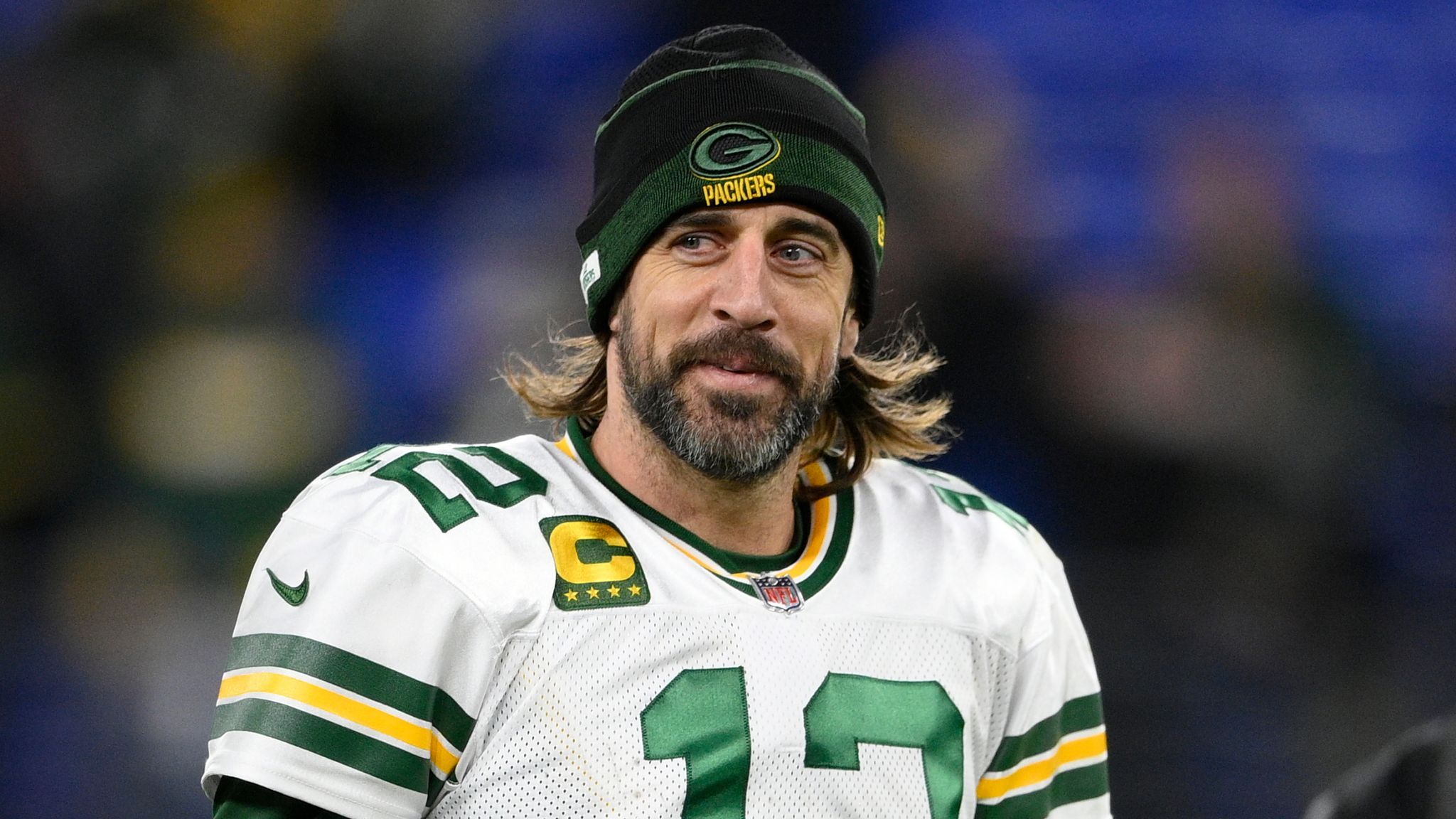
In 2026, Aaron Rodgers' tenure with the Green Bay Packers is viewed as a dualistic era of unprecedented individual brilliance and complex organizational friction. While his statistical achievements and 2010 Super Bowl victory cement his "hero" status, the emotional "hurt" from his protracted departure remains a central theme in Wisconsin sports discourse.
The Evolution of a Legend: From Backup to Super Bowl Hero
The narrative of Aaron Rodgers as a "hero" in Green Bay began under the most pressurized circumstances imaginable. Following the departure of Brett Favre, Rodgers inherited a fractured locker room and a skeptical fanbase in 2008. However, his transition from a first-round draft pick holding a clipboard to a surgical passer redefined the modern quarterback position. By the time he led the Packers to a victory in Super Bowl XLV, Rodgers had established a standard of efficiency and "clutch" performance that few in NFL history could match.
During his peak years, Rodgers wasn't just a player; he was a cultural phenomenon in Wisconsin. His ability to manipulate defenses with a hard count, his legendary "Hail Mary" completions against Detroit, Arizona, and New York, and his four NFL MVP awards (2011, 2014, 2020, 2021) created a sense of inevitability for the Packers. For over a decade, fans believed that as long as No. 12 was under center, the Packers were Super Bowl contenders. This era of sustained excellence is the bedrock of his "hero" legacy, characterized by a level of ball security and arm talent that many analysts still consider the gold standard of the position.
Navigating the "Hurt": The Complex Departure and the New York Transition
The "hurt" associated with the Rodgers era isn't related to physical injury alone—though his 2013 and 2017 collarbone fractures and his 2023 Achilles tear were pivotal—but rather the emotional and structural damage caused by a deteriorating relationship with the front office. The tension began in earnest with the 2020 NFL Draft, when the Packers selected Jordan Love without notifying Rodgers. This move signaled the beginning of the end, creating a rift that played out across national media for three years.
From the perspective of 2026, we can see that this period was marked by a fundamental disagreement over "player empowerment." Rodgers sought a level of input into personnel decisions that the Packers' traditional corporate structure was unwilling to provide. The resulting "hurt" was felt by a fanbase caught between loyalty to a legendary player and loyalty to the "Packer Way." When the trade to the New York Jets was finally executed in April 2023, it left a vacuum in Green Bay that took years to fill, characterized by "dead cap" hits and the difficult task of moving on from a franchise icon who had become increasingly vocal about his grievances.
Statistical Comparison: The Rodgers Era vs. The Transition Era
To understand the magnitude of the shift from Rodgers to the current 2026 landscape, we must examine the production levels and efficiency metrics that defined his time in Green Bay compared to the initial years of the Jordan Love era.
| Metric | Aaron Rodgers (Packers Career Avg) | Jordan Love (2023-2025 Transition) |
|---|---|---|
| Touchdown-to-Interception Ratio | 4.52:1 (Elite) | 2.8:1 (Developing/Solid) |
| Average Passer Rating | 103.6 | 94.2 |
| Completion Percentage | 65.3% | 63.8% |
| Division Titles (Per 5 Years) | 3.5 | 1.0 |
| MVP Awards | 4 | 0 |
| Postseason Wins | 11 | 2 (As of 2025) |
This data highlights why the "hero" narrative persists. Rodgers’ ability to protect the football while maintaining an aggressive vertical passing game was statistically anomalous. While the Packers have found stability in 2026, the pure efficiency of the Rodgers years remains the benchmark against which all future Green Bay quarterbacks are measured.
Latest 2026 Analysis: Reconciliation and the Path to the Packers Hall of Fame
As of 2026, the dust has largely settled on the Rodgers-Packers divorce. The narrative has shifted from the bitterness of the trade to the inevitable celebration of his career. In Green Bay, there is a growing movement to formally retire his No. 12 jersey, a move that requires a level of reconciliation between Rodgers and General Manager Brian Gutekunst.
Recent reports suggest that the "hurt" is being replaced by a mutual respect for the results achieved during their partnership. The Packers’ success in the mid-2020s under Jordan Love has actually accelerated this reconciliation; because the team did not collapse after Rodgers left, the organization feels less "defensive" about the move, and Rodgers, looking back from the twilight of his career, has begun to speak more fondly of his time at Lambeau Field. The analysis in 2026 suggests that Rodgers will eventually follow the Favre path: a messy exit followed by a triumphant return for a Ring of Honor ceremony that heals the remaining wounds of the fanbase.
The Strategic Impact: How the Rodgers Trade Built the 2026 Roster
One cannot analyze the "hero or hurt" dynamic without looking at the tangible assets gained from his departure. The trade with the New York Jets provided the draft capital that allowed the Packers to rebuild their defense and surround Jordan Love with a young, affordable receiving corps. By 2026, the "hurt" of losing a Hall of Fame talent has been offset by the "heroic" scouting and development of the current roster.
The 2023 trade involved a swap of first-round picks and a conditional second-round pick that became a second-round pick due to Rodgers' injury in his first Jets game. These assets were leveraged into key starters who are now the backbone of the 2026 team. This strategic pivot illustrates that while Rodgers was the hero on the field, the organization’s decision to prioritize the future—despite the short-term PR "hurt"—was the correct move for the long-term health of the franchise.
Media Narratives and the Polarization of a Fanbase
Even in 2026, Rodgers remains a polarizing figure in sports media. His outspoken nature on topics ranging from medicine to philosophy created a divide. For some, he was a hero for "thinking for himself" and challenging the status quo. For others, his rhetoric was a source of "hurt" to the team's brand and a distraction from the primary goal of winning championships.
This polarization is a key part of the "latest news analysis" regarding his legacy. Unlike previous legends who were universally beloved, Rodgers' legacy is nuanced. In Green Bay, you will find fans who wear his jersey with pride and others who still harbor resentment for the "off-season dramas" of 2021 and 2022. Understanding the Rodgers era requires acknowledging that both perspectives—the brilliant athlete and the complicated personality—are equally valid.
Will the Green Bay Packers retire Aaron Rodgers' No. 12 jersey?
Yes, it is widely expected that the Packers will retire the number, likely before 2030. While the relationship was strained during his exit to the New York Jets, the precedent set by Brett Favre's jersey retirement in 2015 shows that the organization prioritizes long-term historical legacy over short-term personal conflicts. Rodgers' four MVPs and Super Bowl title make him an undeniable candidate for the franchise's highest honors.
What was the final outcome of the 2023 trade to the Jets?
The trade resulted in the Packers receiving a 2023 first-round pick (swapped), a 2023 second-round pick, a 2023 sixth-round pick, and a 2024 second-round pick. Because Rodgers did not play 65% of the plays in 2023 due to his Achilles injury, the 2024 selection remained a second-round pick rather than elevating to a first-round pick. Green Bay utilized these assets to build the depth that sustains their 2026 roster.
How does Rodgers' postseason record affect his "hero" status?
Rodgers finished his Packers career with an 11-10 playoff record. While critics point to the lack of multiple Super Bowl appearances as a "hurt" to his legacy, supporters argue that his consistent ability to get the team into the postseason (11 appearances) is a heroic feat in itself. In 2026, most analysts view his postseason career as a mix of individual brilliance and team-wide failures, particularly in NFC Championship games.
Is Aaron Rodgers still playing in 2026?
By the start of the 2026 season, Aaron Rodgers is either in the final year of a specialized veteran contract or has transitioned into a post-playing career in media or wellness. At 42 years old, his physical durability became a major storyline following the 2023 Achilles injury, and his 2026 status reflects a player who has prioritized legacy and specific championship windows over longevity.
Navigating the Legacy: A Recommendation for Packers Fans
For fans and collectors looking to contextualize the Aaron Rodgers era today, the best approach is to separate the "on-field hero" from the "off-field hurt." His contributions to the Green Bay community and the team's trophy case are permanent. When evaluating his place in history, focus on the 2010–2014 window as the peak of his powers and the 2020–2021 seasons as a masterclass in late-career adaptation.
To honor this legacy, fans should look forward to the inevitable Hall of Fame induction in Canton, which will serve as the final reconciliation point. Whether you viewed him as a hero or were hurt by the ending, there is no denying that Aaron Rodgers provided Green Bay with two decades of elite relevance that few franchises will ever replicate.